Executive Overview
Stepping into the world of electric vehicles (EVs) introduces a brand-new lexicon of technical terms, infrastructure requirements, and lifestyle adjustments. Among the most critical learning curves for any new EV owner is understanding how, where, and at what speed to replenish their vehicle’s battery. The industry has standardized a clear tier system for EV charging—categorized as Level 1, Level 2, and Level 3. However, these basic numeric labels often obscure the nuanced realities of installation costs, daily driving habits, regional electricity rates, and long-term battery health.
While the temptation for new drivers is to assume that faster is always better, the reality of EV ownership is far more nuanced. A Level 1 charger utilizes standard household outlets, requiring overnight sessions to add modest range, whereas a Level 3 DC fast charger can pump hundreds of miles of range into a vehicle within an hour. Yet, bridging the gap between these two extremes involves navigating significant financial investments for home electrical upgrades, understanding the mechanics of alternating current (AC) versus direct current (DC) power conversion, and preparing for the winter weather variables that can severely impact battery performance.
This deep-dive investigation explores the mechanics, economics, and practical applications of all three EV charging tiers, helping drivers determine the optimal strategy for their specific driving patterns and infrastructure constraints.
The Technical Anatomy: How EV Charging Works
To truly understand which charging tier suits your lifestyle, one must first grasp the fundamental electrical architecture powering electric vehicles. At its core, the primary difference between the charging levels lies in power delivery, voltage thresholds, and whether the AC-to-DC power conversion occurs inside or outside the vehicle.
Level 1 Charging: The Standard Household Plug
A Level 1 EV charger operates on the most basic electrical infrastructure available in North America: the standard 120-volt household alternating current (AC) outlet. Because of this voltage limit, Level 1 chargers typically cap their output at approximately 1.4 kilowatts (kW).
Electricity flowing from a standard wall outlet is AC, but an EV’s battery stores energy exclusively as direct current (DC). Therefore, when utilizing a Level 1 or Level 2 charger, the electricity passes through the vehicle’s onboard charger—a built-in power converter—before entering the battery pack. Because converting AC to DC is not 100 percent efficient, it generates heat and operates under strict power intake limits dictated by the vehicle’s onboard hardware.
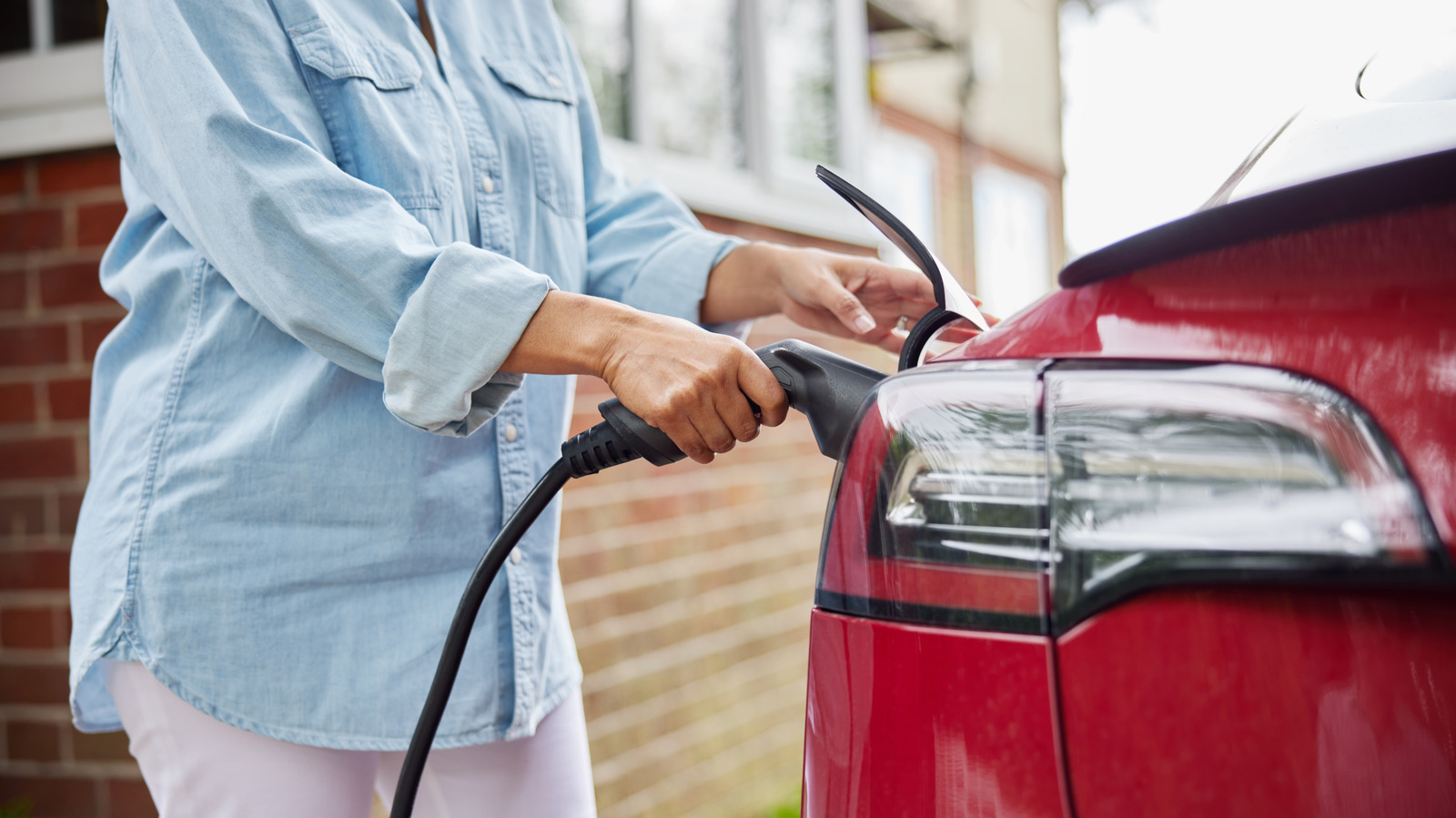
According to the U.S. Environmental Protection Agency (EPA), Level 1 chargers generally replenish about 5 miles of range per hour. While this pace sounds agonizingly slow to drivers accustomed to five-minute stops at a gasoline station, it remains entirely adequate for vehicle owners with modest daily commutes.
Level 2 Charging: The Residential and Workplace Standard
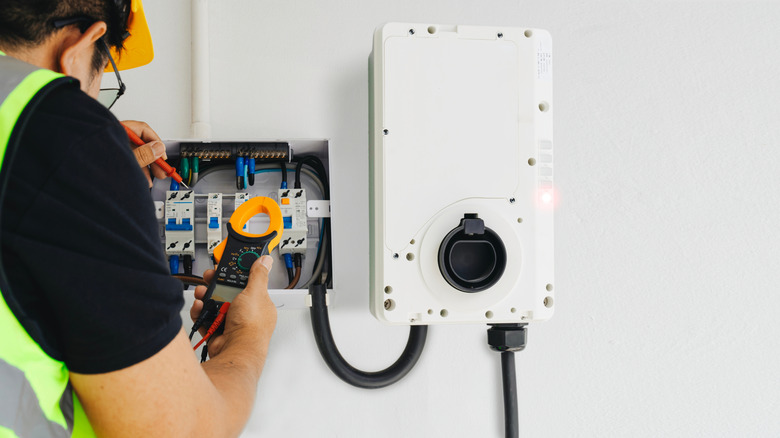
Stepping up to a Level 2 charger requires upgrading to a 240-volt circuit—the same electrical standard used by heavy-duty household appliances like electric clothes dryers and ovens. These systems operate at significantly higher currents, dramatically scaling up power delivery.
A standard 40-amp Level 2 charger running on a 50-amp circuit delivers up to 9.6kW of power. For homes and commercial properties equipped with heavy-duty electrical services, 80-amp Level 2 chargers exist as well, pushing output up to 19.2kW. Like Level 1, Level 2 systems still feed AC power into the vehicle, relying on the car’s onboard converter to manage the transformation into DC power.
Level 3 Charging: DC Fast Charging (DCFC)
Level 3 chargers—commonly referred to as DC fast chargers—throw out the rules of conventional household electricity. With Level 3 charging, the heavy lifting of converting AC power to DC takes place outside the vehicle at the charging station itself. By bypassing the car’s onboard charger entirely, these high-voltage stations pump massive amounts of direct current straight into the battery pack.
Operating on commercial-grade high-voltage lines, Level 3 chargers typically push anywhere from 50kW to a staggering 500kW of power. Modern electric vehicles are increasingly designed to exploit these ultra-fast rates; for instance, premium models like the Lucid Gravity can accept up to 400kW under optimal conditions, while mainstream vehicles like the Tesla Model Y feature peak charging speeds ranging from 175kW to 250kW.
It is worth noting, however, that charging speeds are dynamic. As an EV’s battery fills up and approaches capacity, the vehicle’s battery management system throttles the intake rate to protect the cells from degradation. Consequently, cars rarely maintain their absolute peak charging rate for an extended duration.
At-Home Charging: Level 1 vs. Level 2 Economics
For the vast majority of EV owners, the vast majority of charging occurs at home while the vehicle is parked overnight. Choosing whether to rely on a standard Level 1 setup or invest hundreds—sometimes thousands—of dollars into a professional Level 2 installation requires careful cost-benefit analysis.
The Case for Level 1: Simplicity and Zero Upfront Costs
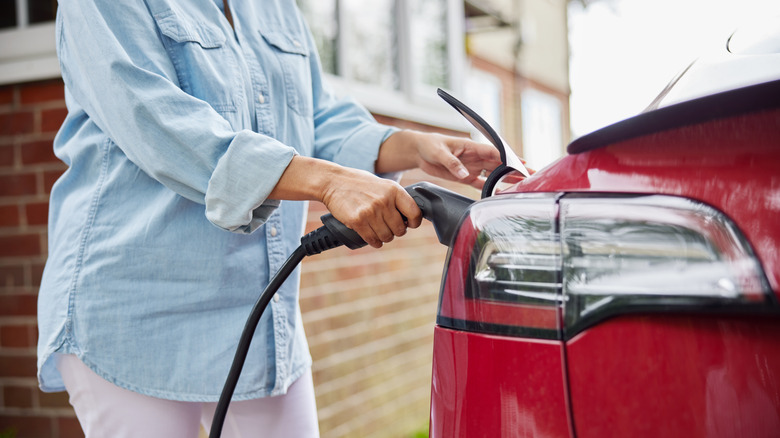
If your daily commute involves just a few miles of driving, a dedicated Level 2 home charger is largely redundant. Relying on a standard 120V outlet means avoiding electrician fees, permitting costs, and panel upgrades.
Furthermore, many utility providers utilize time-of-use (TOU) electricity pricing, charging lower rates during off-peak hours overnight. By plugging your vehicle into a standard Level 1 outlet before going to bed, you can easily recover enough range for a standard urban commute the following morning.
Consider the math: Over an 8-hour overnight charging window, a Level 1 charger replenishes roughly 40 miles of range. For remote workers, retirees, or short-distance commuters, this trickle charge covers weekly driving needs effortlessly. Even on weekends, if the vehicle sits parked for extended periods, full-day charging windows under off-peak weekend utility rates can accumulate significant mileage without any special equipment.
The Case for Level 2: Speed, Capacity, and Cold-Weather Resilience
Conversely, drivers with long daily commutes or multiple daily trips will quickly find Level 1 charging insufficient. A 40A Level 2 home charger adds over 30 miles of range per hour, transforming a 40-hour trickle charge into an effortless overnight top-up that eliminates range anxiety entirely.
Beyond simple convenience, climate variables heavily favor Level 2 installations. During freezing winter months, EV batteries require thermal management systems to warm up before they can accept a charge. A standard Level 1 charger may struggle to simultaneously generate enough power to warm the battery cells and charge the pack effectively. Furthermore, cold weather inherently reduces an EV’s overall driving range. For owners living in regions with severe winters—particularly those parking in unheated garages or street parking—a Level 2 charger becomes less of a luxury and more of an operational necessity.
On-the-Road Infrastructure: When to Use Level 3 Chargers
While home charging serves as the bedrock of EV ownership, long-distance travel relies entirely on public charging infrastructure, dominated by Level 3 DC fast chargers.
The Public Fast-Charging Experience
Because Level 3 chargers require massive industrial-grade electrical hookups, they are virtually nonexistent in residential neighborhoods and are instead deployed strategically along highway corridors, travel plazas, and commercial parking lots. They serve as the closest technological equivalent to pulling up to a traditional petroleum gas station, capable of restoring over a hundred miles of range in roughly 15 to 30 minutes.
However, public charging introduces unique friction points, notably concerning hardware compatibility. North America is currently undergoing a massive historical transition regarding charging plugs. The industry is moving away from legacy J1772 and Combined Charging System (CCS) connectors in favor of the North American Charging Standard (NACS)—the proprietary plug design pioneered by Tesla. With NACS now widely adopted by virtually every major automaker, newer EVs rolling off assembly lines are increasingly shipping with native NACS ports.
Drivers operating a vehicle with a NACS port who encounter a public charging station equipped solely with older CCS hardware must utilize physical adapters to bridge the connection. To navigate this patchwork landscape, EV drivers rely heavily on third-party routing applications like PlugShare and ChargePoint. These digital tools provide real-time status updates on charger availability, output speeds, and connector types, ensuring motorists can locate compatible high-speed stalls when traveling.
The Tradeoffs: Cost and Long-Term Battery Health
Despite their undeniable convenience on road trips, Level 3 chargers come with notable caveats. Public DC fast charging is significantly more expensive per kilowatt-hour than residential electricity rates, frequently pricing close to or exceeding the cost equivalent of operating a hybrid internal combustion vehicle.
Additionally, the intense thermal stress induced by rapid high-voltage charging can accelerate long-term battery degradation over the vehicle’s lifespan. While modern battery management software implements sophisticated cooling protocols to mitigate this risk, automotive engineers consistently advise drivers to rely primarily on slower home-based AC charging for day-to-day driving, reserving Level 3 DC fast chargers primarily for long-distance travel and emergency top-ups.
Future Outlook: The Evolution of EV Power Delivery
As the electric vehicle market matures past early adopters into mass-market adoption, the charging ecosystem continues to evolve at a rapid pace. Utility companies are increasingly deploying smart-grid infrastructure that incentivizes off-peak charging through automated software, allowing vehicles to negotiate with the grid to pull power when electricity demand—and carbon emissions—are at their lowest.
Concurrently, hardware advancements are pushing the boundaries of charging speeds. Emerging solid-state battery architectures promise to drastically reduce charging times across all levels while neutralizing the thermal degradation risks currently associated with rapid DC charging. At the same time, bidirectional charging capabilities (Vehicle-to-Home and Vehicle-to-Grid) are transforming EVs from passive power sinks into active mobile energy storage units capable of powering homes during grid outages.
Ultimately, whether an electric vehicle owner leans on a basic 120-volt wall outlet or invests in a high-powered residential Level 2 station, the overarching principle remains clear: matching your charging infrastructure to your actual driving habits is the single most effective way to optimize both your wallet and your vehicle’s long-term health.