Executive Overview
In an era dominated by homogenous gamepad layouts—where the asymmetric analog stick configuration pioneered by Microsoft’s Xbox controllers has become the undisputed industry standard—hardware experimentation is often treated by major publishers as a costly and unnecessary risk. Yet, years after its commercial discontinuation, Valve’s idiosyncratic Steam Controller continues to command fierce loyalty among a dedicated segment of PC gamers.
Far from being a forgotten relic of a transitional hardware era, the device is increasingly viewed as an avant-garde masterpiece of ergonomics, modular software integration, and input flexibility. Originally launched in late 2015 alongside the ill-fated Steam Machines initiative, the controller was polarizing upon arrival. Traditionalists baffled by its dual trackpads and lack of a second traditional analog stick frequently dismissed it as an unwieldy novelty.
However, time has proven kind to Valve’s ambitious vision. Driven by continuous and profound updates to Steam Input—Valve’s backend software layer that allows virtually any controller to map to any game—the Steam Controller has evolved. Today, enthusiasts praise its peerless responsiveness, exceptional battery life, understated aesthetic, and transformative rear paddle buttons. For a vocal contingent of the PC gaming community, it remains the definitive gamepad of choice, bridging the gap between the precision of a mouse and the couch-bound comfort of a console.
Detailed Chronology
2013–2015: Conception, Prototyping, and the Bold Leap into Trackpads
The genesis of the Steam Controller dates back to Valve’s early-decade push to bring the Steam ecosystem into the living room. Recognizing that traditional gamepads were fundamentally ill-suited for strategy games, simulations, and complex computer role-playing games (CRPGs) that relied on the speed and accuracy of a desktop mouse, Valve’s hardware division sought a radical solution.
Early prototypes famously featured a high-resolution touchscreen embedded directly in the center of the gamepad. However, user testing quickly revealed a critical flaw: players had to look down away from their displays to operate the screen, breaking immersion. Valve pivoted decisively, replacing the screen with dual circular haptic trackpads.
Engineered with dual linear resonant actuators, these trackpads were designed to mimic the tactile physical feedback of trackballs, offering customizable friction, acceleration, and "weight." Coupled with a deep-seated commitment to open-source software customization, the device was positioned not merely as an input device, but as a universally programmable interface.
November 2015: Commercial Launch and Mixed Reception
When the Steam Controller officially hit shelves in November 2015, bundled alongside the Steam Link and various Steam Machines, the reception was deeply fragmented. Mainstream gaming outlets and console purists struggled to adapt to the lack of a secondary analog stick. The learning curve was steep; games that required rapid camera adjustments using the right trackpad felt unnatural to players conditioned by decades of standard thumbstick architecture.
Despite initial critical friction, the device found an ardent cult following. Power users discovered that, when configured correctly through Steam’s burgeoning software suite, games like Civilization, XCOM, and even fast-paced first-person shooters could be played from a living room couch with a level of precision previously thought impossible without a desk and mouse.
2019: The Fire Sale and Premature Eulogies
In late 2019, Valve officially discontinued the Steam Controller. In a move that delighted bargain hunters and panicked collectors, the company cleared out its remaining inventory by putting the devices on sale for a mere $5 each (plus shipping).
The internet responded with a stampede of traffic that temporarily crashed Steam’s storefront. Hundreds of thousands of units were snapped up almost overnight. At the time, many industry analysts interpreted the blowout sale as an admission of failure—a quiet burial of a failed experiment. In hindsight, however, it successfully seeded millions of units into the wild, ensuring a permanent user base that would continue to advocate for its unique capabilities long after production ceased.
Present Day: The Resurgence of Appreciation and Cultural Stature
Today, the legacy of the Steam Controller lives on not just in the memories of its users, but in the evolution of Valve’s hardware ecosystem. Technologies developed for the Steam Controller—specifically its advanced haptics and trackpad layout philosophies—directly influenced the design of the Steam Deck, Valve’s critically acclaimed handheld gaming PC.
Far from fading into obscurity, the original standalone gamepad is frequently celebrated by contemporary hardware critics and communities as an ahead-of-its-time triumph. The realization that modern PC gaming platforms demand adaptable input methods has transformed the Steam Controller from a misunderstood outcast into a revered icon of engineering courage.
Supporting Context & Metrics
The Architecture of Innovation: Trackpads, Haptics, and Paddles
To understand why the Steam Controller inspires such fervent devotion, one must examine its technical composition. The device’s defining feature remains its dual trackpads. Powered by dual linear resonant actuators—heavy-duty magnetic voice coil motors capable of generating complex, high-frequency vibrations—the trackpads do not merely click; they feel. Developers and users can program them to simulate the mechanical rolling of a heavy steel ball, the subtle ticking of a geardoctor’s watch, or the sharp recoil of a firearm.
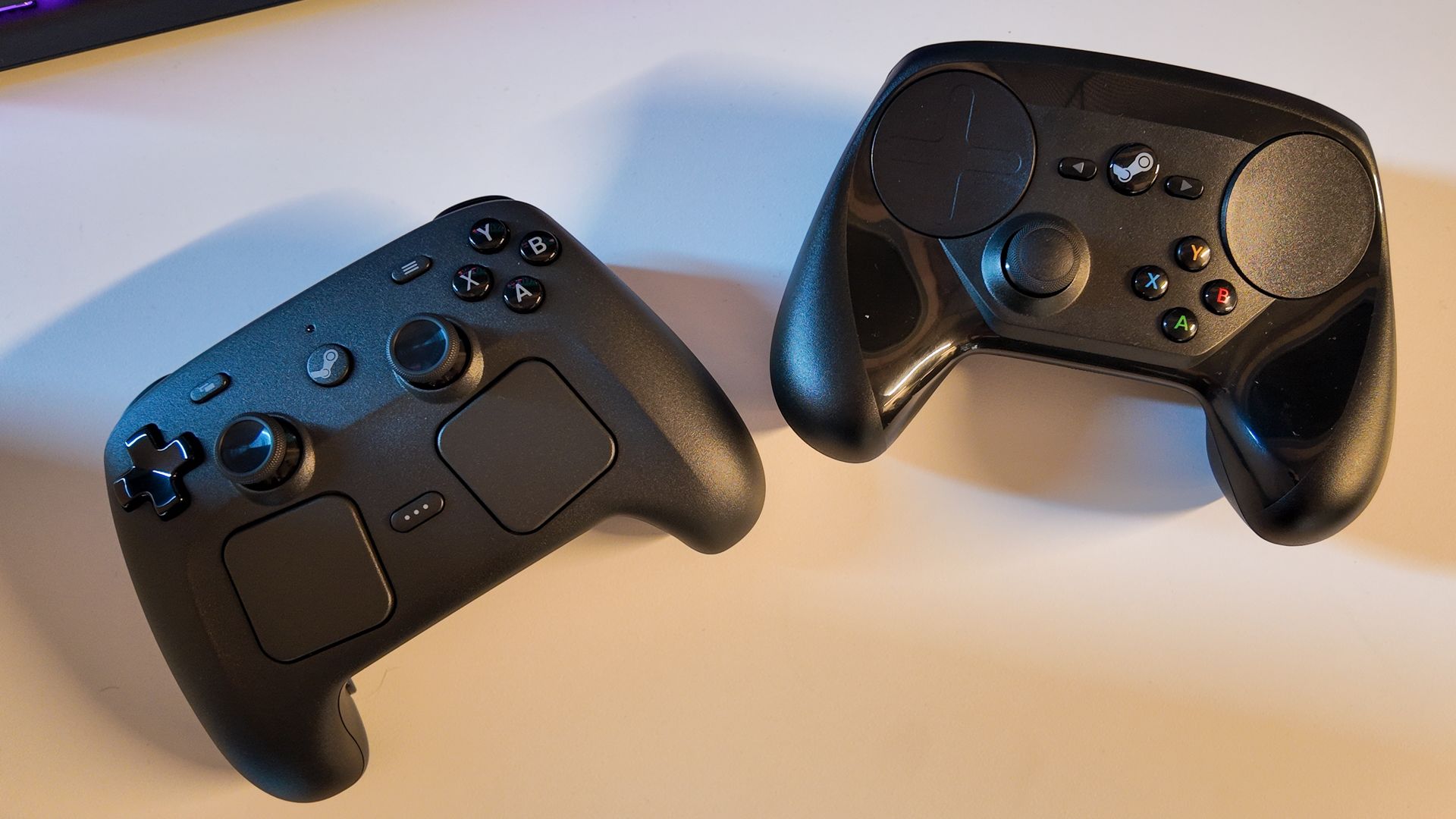
Furthermore, the integration of rear grip buttons (often referred to as paddles) anticipated an industry-wide trend. While elite, premium-priced controllers from Microsoft (the Xbox Elite series) and Sony (the DualSense Edge) eventually popularized rear paddles for competitive edge, the Steam Controller democratized this feature from day one.
As passionate users frequently note, mapping simple yet critical functions—such as capturing screenshots via the right rear paddle (R4)—fundamentally alters everyday muscle memory, streamlining the user experience without requiring awkward thumb gymnastics across the face buttons.
Battery Life and Ergonomics: The Unsung Victories
While input precision captured headlines, everyday usability sealed the controller’s long-term reputation. Powered by just two standard AA batteries, the Steam Controller boasts astonishing longevity, frequently lasting for hundreds of hours of gameplay before requiring a swap. This design choice stands in stark contrast to many modern first-party gamepads that rely on internal, integrated lithium-ion batteries notorious for degrading after a few years of heavy use.
Ergonomically, the chassis was sculpted to accommodate a wide variety of hand sizes. Its broad, sweeping wings distribute weight evenly, reducing hand fatigue during marathon gaming sessions. Combined with a robust, reliable wireless connection via a dedicated USB dongle (or Bluetooth connectivity added via later firmware updates), the hardware execution was remarkably sturdy.
Official Statements & Community Perspectives
Valve has historically maintained a pragmatic, user-centric philosophy regarding its hardware ventures. While the company has not announced plans for a direct "Steam Controller 2," executives and engineers have frequently acknowledged the profound impact the device had on their internal hardware design pipelines.
In various developer roundtables and post-mortems following the launch of the Steam Deck, Valve representatives noted that the lessons learned from overcoming consumer resistance to the Steam Controller directly informed the physical layout of the handheld console. The inclusion of dual trackpads on the Steam Deck is widely viewed as a direct inheritance from the 2015 gamepad.
Within the community, the sentiment is overwhelmingly positive and often tinged with affectionate humor. A prominent example comes from ongoing discussions across enthusiast forums and hardware blogs, where users frequently highlight the seamless blend of comfort and utility:
"Taking some time here on the PC Gamer Hyperfeed to praise my favorite hardware purchase of the past year and go-to gamepad for the foreseeable future, the Steam Controller. I love its responsiveness, ergonomics, looks, ease of use, battery life, all of it. I’m not usually much of a paddle button user, but being able to map screenshot to R4 has been a real game-changer for me."
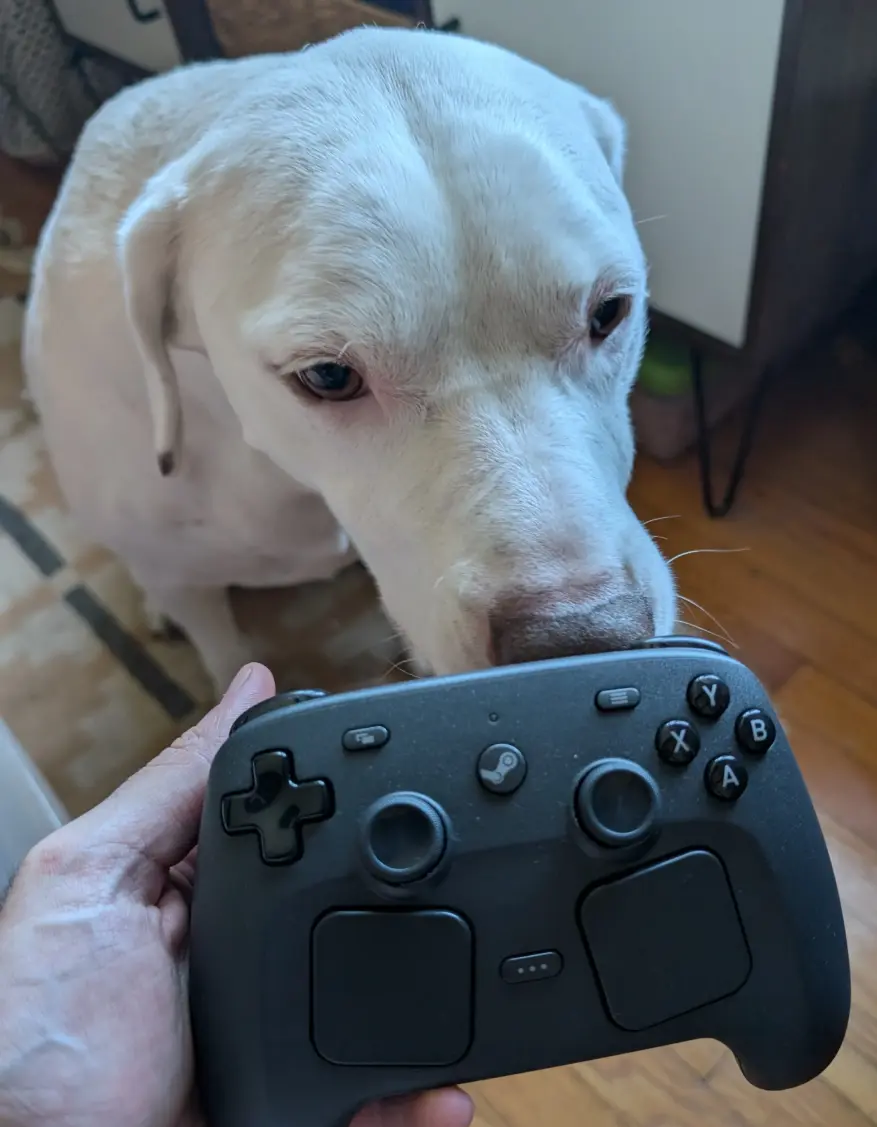
This quote encapsulates the core appeal of the hardware: it wins over users not through aggressive marketing or standard feature parity, but through quiet, reliable excellence in daily execution. (Note: As playful community reviews often remind prospective buyers, beloved pets like white pitbulls named Goose are unfortunately not included in the standard retail box.)
Future Outlook
As the PC gaming landscape continues to expand into living rooms, home theaters, and portable form factors, the philosophy championed by the Steam Controller feels more relevant than ever. With the massive success of the Steam Deck proving that PC gamers are more than willing to embrace complex, non-traditional control schemes, the appetite for advanced input hardware is at an all-time high.
While secondary market prices for pristine, unboxed original Steam Controllers have steadily climbed due to high demand and finite supply, the underlying technology lives on. Software innovations pioneered for the controller—specifically Steam Input—continue to support thousands of games, ensuring that legacy hardware remains fully functional and deeply customizable well into the future.
Whether Valve will eventually surprise the industry with a long-awaited successor remains one of PC gaming’s most persistent questions. Until that day arrives, the original Steam Controller stands secure in its legacy: a bold, unapologetic triumph of engineering that dared to imagine a better way to play games on a computer.