Executive Overview
In the volatile landscape of modern digital communication, few events have so perfectly encapsulated the intersection of corporate vulnerability, platform engineering failure, and digital activism as the November 2022 Eli Lilly Twitter impersonation scandal. What began as a chaotic product rollout by Elon Musk—who had recently acquired Twitter and instituted a paid verification model known as Twitter Blue—became the catalyst for one of the most consequential corporate PR disasters in recent memory.
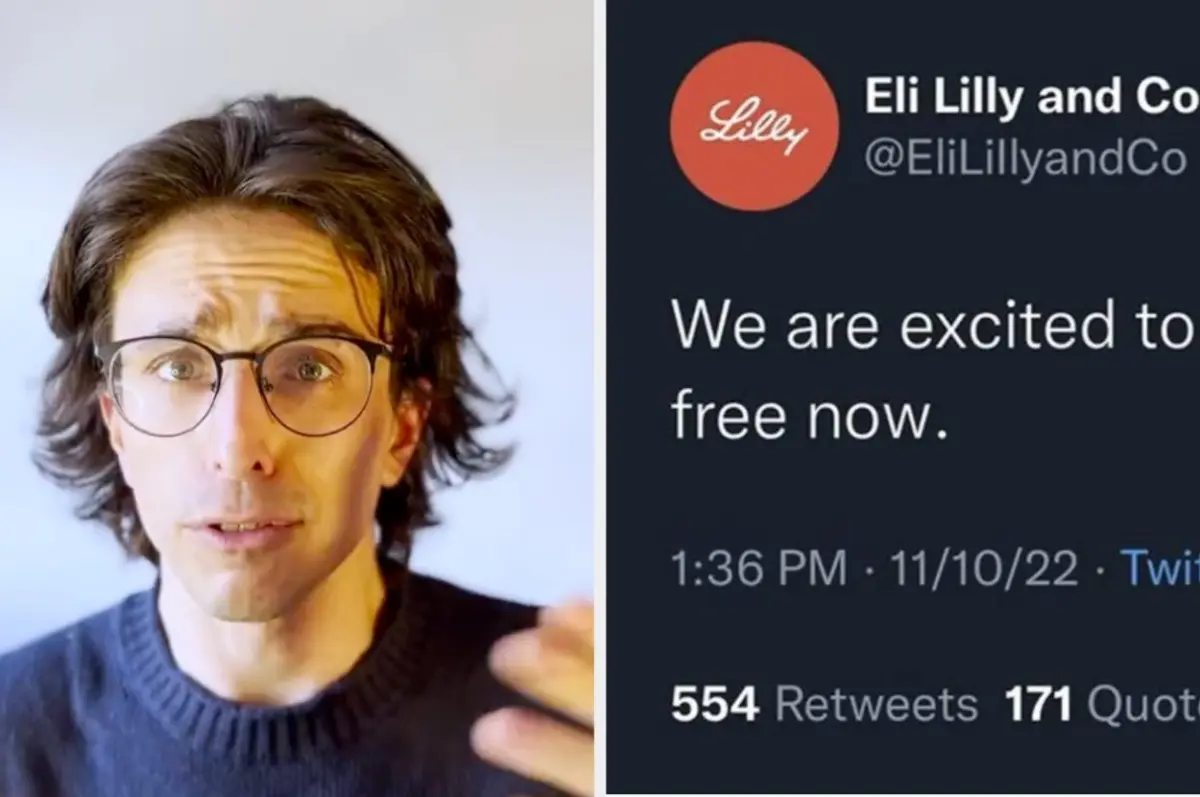
At the center of this storm was Sean Morrow, a 34-year-old writer for the advocacy outlet More Perfect Union. Armed with an $8 subscription fee and a repurposed novelty account, Morrow pulled off a masterclass in modern digital guerrilla theater. By changing his handle to @EliLillyandCo and broadcasting a single, profoundly disruptive sentence—“We are excited to announce insulin is free now”—Morrow triggered a chain reaction that exposed the fragile underpinnings of social media verification, wiped billions in market value off a pharmaceutical titan, and thrust the grim reality of American healthcare pricing back into the center of the national conversation.
This comprehensive investigation examines the anatomy of that viral moment. We explore the structural flaws of Twitter Blue, the socioeconomic background of exorbitant insulin pricing in the United States, the immediate financial and reputational fallout for Eli Lilly, and the broader implications for corporate accountability in an era where trust can be bought for the price of a latte.
Detailed Chronology: The Anatomy of a Digital Uprising
The Rollout of Chaos: Early November 2022
When Elon Musk finalized his acquisition of Twitter in late 2022, he moved swiftly to overhaul the platform’s monetization and verification infrastructure. Central to this strategy was the revamp of Twitter Blue, a subscription tier that would henceforth grant the coveted blue checkmark—previously reserved for verified journalists, politicians, public figures, and institutions of note—to any user willing to pay $8 a month.
Cybersecurity experts, tech journalists, and platform insiders immediately raised alarms. Removing identity verification hurdles while retaining the visual authority of the blue checkmark was, critics argued, an open invitation to bad actors, scammers, and satirists.
They were not wrong. Within days of the feature’s launch, the platform descended into a theater of the absurd. Impersonators ran roughshod across the timeline. A fake account pretending to be aerospace giant Lockheed Martin announced it was halting arms sales to Saudi Arabia, Israel, and the United States. Another account, posing as gaming conglomerate Nintendo, tweeted an image of Mario—one of the world’s most recognizable intellectual properties—giving the middle finger.
The market reacted swiftly. Stock prices for targeted corporations wobbled as algorithms and unwitting human traders processed satirical declarations as bona fide press releases. Yet, among the sea of digital pranksters, one particular intervention struck a nerve that resonated far beyond the confines of tech Twitter.
Enter Sean Morrow: The Queens Writer Who Took a Shot
Sean Morrow, a resident of Queens, New York, and a writer for More Perfect Union, watched the unfolding disaster with a mixture of amusement and indignation. Morrow did not suffer from diabetes himself, but like millions of Americans, he nursed a deep-seated anger toward the pharmaceutical industry’s handling of life-saving therapeutics.
"I always saw it as one of the worst corporate exploitations of everyone else in a world of terrible corporate exploitations of everyone else," Morrow reflected in an interview with BuzzFeed News.
Seizing upon the systemic vulnerability of Musk’s new verification system, Morrow dusted off an old novelty account he no longer actively used. He updated the display name, secured the handle @EliLillyandCo, and paid the $8 tribute to secure his blue checkmark.
On a quiet afternoon in early November, Morrow hit "publish" on a tweet that would echo across global financial markets:
“We are excited to announce insulin is free now.”
The Viral Wave and the Corporate Stumble
The reaction was instantaneous. The tweet struck a chord because it operated on multiple levels simultaneously. For casual users, it was a hilarious, high-stakes prank that exposed the sheer incompetence of Twitter’s new management. For others, it was an acutely painful piece of performance art highlighting a moral imperative: a corporation valued at roughly $300 billion should arguably be making a molecule discovered a century ago, and costing mere dollars to manufacture, entirely free to those whose lives depend on it.
The tweet went viral at breakneck speed, amplified organically by two distinct camps: those who genuinely believed the pharmaceutical giant had experienced an unprecedented corporate epiphany, and those who understood it was an elaborate goof designed to hold power to account.
For hours, Eli Lilly’s communications team was caught flat-footed. Because the account bore the coveted blue checkmark, algorithmic news feeds, retail investors, and even some journalists treated the missive as legitimate. By the time the pharmaceutical titan realized what had happened and managed to contact Twitter support to have the account suspended, the damage was already done.
Supporting Context & Metrics: The Financial Fallout and Insulin Economics
The Stock Market Ripple Effect
In the wake of the tweet, Eli Lilly’s stock price suffered a sharp downward trajectory. Shares fell by over 4.37%, wiping billions of dollars off the company’s market capitalization in a matter of hours.
While financial analysts debated the exact attribution—noting that broader macroeconomic headwinds and sector-wide pharmaceutical dips were also occurring that day—the correlation between the fake tweet and the panic selling was undeniable. The incident laid bare the terrifying fragility of modern corporate equity valuations in the age of algorithmic trading and unvetted social media verification.
More importantly, the stunt succeeded in doing what years of traditional advocacy had struggled to achieve: it dragged the predatory pricing of insulin into the immediate, inescapable spotlight of mainstream news cycles.
The Human Cost of Insulin Pricing
To understand why Morrow’s tweet resonated so deeply, one must examine the grim financial reality of diabetes management in the United States.
- The Century-Old Discovery: Insulin was discovered in 1921 by Canadian researchers Frederick Banting, Charles Best, and James Collip. In a remarkable act of humanitarian altruism, the patents were sold to the University of Toronto for a mere $1 so that the treatment could remain accessible to everyone who needed it. Banting famously remarked, "Insulin does not belong to me, it belongs to the world."
- The Corporate Monopoly: Over the decades, the manufacturing process was consolidated among a trio of pharmaceutical giants—often referred to as the "Big Three"—which includes Eli Lilly, Novo Nordisk, and Sanofi. Through patent evergreening, continuous minor modifications to delivery devices, and anticompetitive pricing strategies, these corporations transformed a public health necessity into an elite luxury commodity.
- The Financial Burden: Prior to recent legislative caps, a month’s supply of insulin in the United States frequently exceeded $300 to $500 out-of-pocket, forcing millions of Americans to ration their doses. Studies have repeatedly shown that one in four diabetic Americans has admitted to rationing their insulin due to cost—a practice that carries severe risks of diabetic ketoacidosis, organ failure, and death.
By promising that insulin would be free, Morrow’s satirical tweet threw a glaring spotlight on the ethical bankruptcy of maintaining profit margins on a medication required for basic human survival.
Official Statements & Institutional Reactions
The fallout from the fake tweet forced a chaotic scramble within both corporate boardrooms and Silicon Valley tech offices.
Eli Lilly’s Damage Control
Eli Lilly’s official communications team issued rapid clarifications across multiple channels, emphasizing that the rogue account was entirely fraudulent and that the company’s actual pricing structures remained unchanged. However, the corporate response was widely perceived as defensive and tone-deaf, contrasting sharply with the overwhelming public enthusiasm for the idea of free insulin.
Public relations experts noted that the company missed a golden opportunity to pivot the narrative. Instead of engaging defensively, critics argued, Eli Lilly could have used the viral moment to announce patient assistance programs or engage constructively in the pricing debate. Instead, the company retreated behind legal threats and standard corporate boilerplate.
Elon Musk and the Collapse of Twitter Blue 1.0
For Elon Musk, the Eli Lilly impersonation was a public relations disaster that forced a rapid, humiliating retreat. Within 48 hours of the rollout, Twitter was forced to pause the Twitter Blue subscription service entirely.
Musk subsequently introduced a tiered verification system—employing gold checkmarks for official businesses, grey checkmarks for government entities, and blue checkmarks for individual subscribers—in a frantic bid to restore institutional credibility to the platform.
When asked about the incident, Musk and his defenders pointed to the chaotic nature of legacy media and the challenges of scaling content moderation. Yet, the damage to the platform’s brand authority was permanent. Advertisers fled the platform in droves, wary of association with unverified impersonators capable of manipulating stock prices with a single keystroke.
Sean Morrow’s Reflection
Two weeks after the dust had settled, Sean Morrow publicly unmasked himself as the mastermind behind the viral account. In subsequent interviews, he maintained a pragmatic perspective on the long-term impact of his actions.
While acknowledging that major pharmaceutical companies operate on long-term strategic timelines—meaning Eli Lilly’s subsequent policy adjustments were likely already under internal review—Morrow suggested that public pressure undoubtedly served as a catalyst.
"I did have an emotional reaction to this news," Morrow confessed to BuzzFeed News, reflecting on the complex mix of corporate maneuvers and public pressure. "I haven’t really cried since the season finale of The Leftovers, but I felt some welling up, even if I don’t trust Lilly’s motivations here."
Future Outlook: Accountability in the Digital Age
The saga of the fake Eli Lilly tweet offers enduring lessons for corporate governance, platform design, and digital activism.
1. The Vulnerability of Corporate Reputations
In an interconnected global economy, corporate reputation is a fragile asset. As demonstrated by the events of November 2022, traditional barriers between satirical commentary and institutional communications have collapsed. Corporations can no longer rely on official letterheads and walled-garden press releases to control their narrative. Trust, once eroded by predatory pricing or tone-deaf responses, can be dismantled in seconds by a single internet user armed with an $8 subscription fee.
2. The Limits and Power of Digital Satire
Morrow’s intervention demonstrated that digital satire remains a potent weapon of the disenfranchised. When institutional checks and balances fail to curb corporate excess, internet culture possesses a unique capacity to bypass traditional gatekeepers and expose systemic absurdities to a global audience. Public shaming, while imperfect, remains a powerful instrument for forcing accountability onto entities insulated by wealth and legal protection.
3. The Ongoing Battle for Healthcare Equity
Ultimately, the fake Eli Lilly tweet was never really about Twitter, Elon Musk, or even corporate stock dips. It was about a profound moral failure in the American healthcare system. While the tweet was a joke, the suffering of millions of Americans forced to choose between purchasing life-saving insulin and paying rent is an ongoing tragedy.
As public pressure continues to mount and legislative bodies increasingly scrutinize pharmaceutical pricing practices, the legacy of Sean Morrow’s $8 experiment endures. It stands as a stark reminder to corporate boardrooms everywhere: in the digital age, accountability can arrive unannounced, unverified, and entirely unstoppable.