Executive Overview
As the fashion world packs its steamer trunks, trades its espressos for café au laits, and relocates from the bustling Lombardy capital to the romantic boulevards of Paris, the dust is finally settling on Milan Fashion Week Spring/Summer 2027 (SS27). While the French capital kicked off its calendar with LVMH Prize-winner Julie Kegels setting an immediate high bar, the overarching narrative of the season belongs undeniably to Italy. MFW SS27 was not merely a showcase of upcoming trends; it was a watershed moment defined by generational handovers, archival reinterpretations, and a bold re-examination of what Italian luxury means in an increasingly unpredictable global market.
From the architectural rigidity of Max Mara’s "utility luxe" to the subverted tailoring of Simone Bellotti at Jil Sander, and the theatrical, star-studded spectacles mounted by Dolce & Gabbana, Milan proved that it remains the undisputed heartland of master craftsmanship coupled with unbridled showmanship. Yet beneath the shimmering surface of mirrored boxes and celebrity-fronted rows, profound structural changes are afoot. Legacy houses are navigating high-stakes creative successions—such as the impending arrival of Dario Vitale at Emporio Armani—while younger, insurgent demographics are rewriting the archival demand for heritage brands through digital resale marketplaces.
This comprehensive report examines the structural undercurrents, critical standouts, and defining cultural intersections that shaped Milan Fashion Week SS27, offering an authoritative look at the collections that defined the Italian leg of the global fashion marathon.
Detailed Chronology: The Collections That Defined MFW SS27
1. Jil Sander: The Triumph of Subversive Minimalism
Under the steady hand of creative director Simone Bellotti, Jil Sander has transitioned from an industry "underrated gem" into a powerhouse of modern intellectual dressing. As Bellotti marks his one-year anniversary at the helm of the storied label, his SS27 offering was universally hailed as one of the standout triumphs of the Milanese calendar.
Rather than relying on loud branding or overt theatrics, Bellotti leaned heavily into the core tenets of minimalism, but with a complex, tactile twist. From a distance, garments appeared startlingly simple—monolithic columns of fabric, stark lines, and subdued palettes. Up close, however, the engineering of each piece revealed a staggering level of complexity. Garments seemed to fall effortlessly over the human form, yet were meticulously pinched, gathered, and internally tucked to engineer precise, architectural silhouettes. It was a masterclass in quiet luxury that spoke volumes, cementing Bellotti’s vision as vital to the future of the brand.
2. Fendi: Mirrors, Music, and Unexpected Pairings
Fendi transformed its show space into an immersive, disorienting environment inspired by Italian sculptor Luciano Fabro’s famed Cubo di Specchi (Cube of Mirrors). Guests—including a front row buzzing with star power featuring Rachel Zegler, Iris Law, and Maisie Williams—were encouraged to dance their way into the venue, greeted by an eclectic soundtrack blending Adriano Celentano’s linguistic-nonsense track "Prisencolinensinainciusol" with Raffaella Carrà’s disco anthem "Rumore."
Inside the mirrored box, the audience was forced into a state of self-reflection, literally staring at their own warped reflections while viewing the collection. The clothes matched the frenetic, joyful energy of the soundtrack through a series of radical, unexpected pairings. Stilettos were deliberately styled with ribbed socks, baggy skate-style denim was juxtaposed against 18th-century-inspired frock coats, and delicate, featherlight silk camisoles were anchored by chunky cheetah-print chokers. It was Fendi at its most adventurous: a high-wire act balancing historical reverence with youthful irreverence.
3. MM6 Maison Margiela: The Art of the Flip-and-Reverse
As Maison Margiela’s playful, undone younger sibling, MM6 is hurtling toward its 30th anniversary next year. Yet, true to form, the diffusion line has lost none of its avant-garde, mischievous spirit. The tone of the show was set immediately when two MM6 employees, dressed in authentic white laboratory coats, unceremoniously ripped open the paper entrance to the runway.
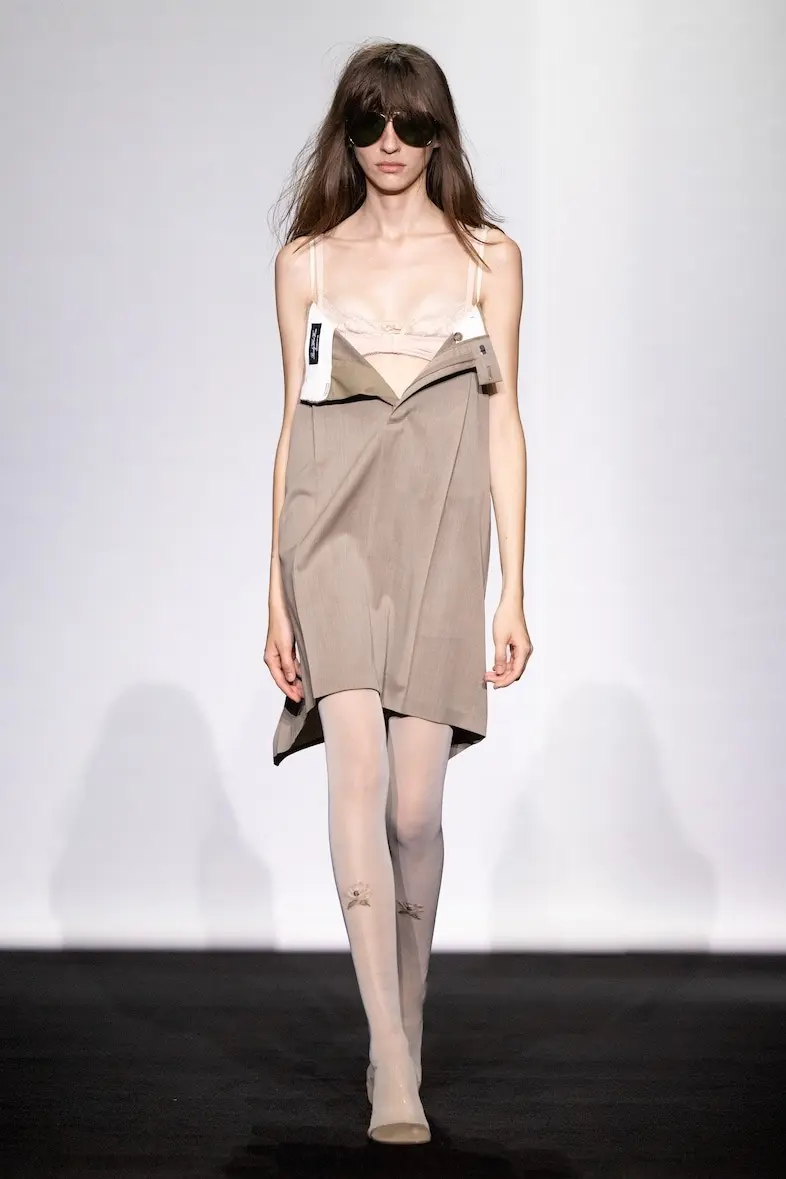
What followed was a masterclass in deconstruction reminiscent of the playful topsy-turvy worlds of contemporary disruptors like Hodakova and Zomer. The opening look transformed a standard pair of trousers into a daring mini-dress, complete with a wide-open front zipper exposing the model’s bralette. Shirts were worn as dresses; jackets were repurposed as skirts.
The undisputed footwear star of the season, however, was MM6’s unexpected collaboration with Havaianas. The ubiquitous rubber flip-flop was reimagined with mile-high, tiered foam platform soles and asymmetrical toe-cuts that contoured to the exact shape of the foot—a surrealist beachside statement destined for viral ubiquity come next summer.
4. Armani: Nightclubbing and the End of an Era
It has been just over a year since the passing of the legendary Giorgio Armani at the age of 91, but the house he built continues to operate with absolute clarity of vision. Under the creative direction of his niece, Silvana Armani, the mainline collection leaned into sharp, uncompromising 1980s power-dressing. Double-breasted power suits featured dramatic, sculptural shoulder pads and were styled deliberately with nothing worn underneath. Set against a backdrop of sleepy, sultry jazz, the collection was an undeniable ode to the nocturnal—embodying Grace Jones’ philosophy of "Nightclubbing."
Simultaneously, a seismic shift is underway at the brand’s contemporary younger sibling, Emporio Armani. Rather than mounting a physical runway show, the label released a tightly edited lookbook, closing a foundational chapter before entering uncharted territory. SS27 marks the final Emporio collection designed by the veteran duo Leo Dell’Orco and Silvana Armani. Next season, the reins will be officially handed over to Dario Vitale, the former Versace designer who made waves with his high-profile departure from the Medusa house following its acquisition by the Prada Group.
5. Dolce & Gabbana: Stravaganza Siciliana and Cinematic Cross-Pollination
Earlier this summer, tourists visiting the picturesque Sicilian town of Taormina—celebrated globally as the filming location for season two of HBO’s The White Lotus—found themselves in the unexpected epicenter of a Dolce & Gabbana takeover. A massive all-black D&G superyacht sat anchored in the harbor, while models bearing numbered tags tied around their waists roamed the ancient streets ahead of an exclusive Alta Moda presentation inside a 2,000-year-old Greek amphitheater featuring a headline performance by Jennifer Lopez.
In Milan last week, the design duo brought that sun-drenched Sicilian narrative back to the runway with a collection aptly titled Stravaganza Siciliana. Jennifer Lopez made a triumphant return, claiming a front-row seat dressed in a 1920s-style pinstripe suit and flat cap—a look that instantly drew viral comparisons to Cillian Murphy’s character in Peaky Blinders. While the gritty industrialism of Birmingham and the baroque warmth of Sicily might seem like an incongruous cultural collision, under the theatrical lens of Domenico Dolce and Stefano Gabbana, it was pure cinematic magic.
6. Max Mara & Sportsmax: Gen Z Renaissance and Heatwave Realism
Max Mara is currently experiencing an unprecedented cultural renaissance. Founded over 70 years ago and long revered for its 1990s minimalism and Phoebe Philo-level effortlessness, the brand has suddenly found a fervent new audience among Generation Z, driven by skyrocketing demand on resale platforms like Vinted and Depop. This generational pivot has brought intense new scrutiny to the brand’s official runway presentations.
British designer Ian Griffiths responded by sharpening one of the house’s core pillars: "utility luxe." The SS27 collection was grounded in earthy, neutral beige tones and military-inspired silhouettes. Waists were cinched tightly with heavy, chunky leather belts, utility gilets were outfitted with exaggerated cargo pockets, and structured collars were popped high and proud.
Meanwhile, Max Mara’s experimental younger counterpart, Sportsmax, addressed an increasingly urgent contemporary reality: climate change and extreme summer heatwaves. The brand’s pragmatic, high-fashion answer to rising global temperatures? Simply remove the sleeves from everything, redefining cold-weather staples like heavy coats through breezy, sleeveless architecture.
7. Tod’s: Heritage Craftsmanship Meets Sporty Edge
Originating as a humble leather goods cobbler in 1920s Italy, Tod’s entered its second century of operation with its dedication to artisanal craftsmanship entirely uncompromised. For SS27, the brand honored its leather-working heritage while injecting a distinctively athletic, masculine edge. Boxy, impeccably cut suit jackets were paired with even boxier tailored shorts, energized by dynamic color-blocking in shades of coral, mustard, and crimson.
The Tod’s SS27 muse is a commanding modern executive: a woman who moves fluidly from a morning tennis match straight to the boardroom to command the room. This archetype was embodied on the front row by Anna Wintour, as supermodels Awar Odhiang and Mariacarla Boscono glided past in effortless motion.
Supporting Context & Metrics: The Shift in Italian Luxury
The operational and creative dynamics of Milan Fashion Week SS27 reflect broader macroeconomic and cultural shifts within the global luxury sector:
- The Youth Resale Wave: According to recent second-hand market analytics, archival searches for heritage Italian houses like Max Mara and Jil Sander have surged by over 45% among consumers under the age of 26. This digital-first rediscovery is directly translating into front-row cultural relevance and increased physical attendance by younger demographics.
- Leadership Transitions: MFW SS27 marks a transitional bridge for nearly 30% of participating heritage houses. With major creative director handovers occurring across Emporio Armani, Jil Sander (over the past year), and subsequent adjustments across Italian conglomerates, the industry is witnessing an aggressive generational refresh aimed at capturing younger global markets.
- Theatrical Investments: Destination shows—such as Dolce & Gabbana’s multi-million-dollar Sicilian takeovers—continue to yield massive digital earned media value (EMV). Industry data indicates that cross-pollinated celebrity appearances (such as J-Lo’s Peaky Blinders aesthetic integration) generate algorithmic spikes exceeding 300% in digital engagement compared to traditional runway recaps.
Official Statements and Industry Commentary
While individual houses have kept official press statements concise, industry leaders and designers have been vocal about the evolving mandate of Italian fashion:
"Minimalism is no longer about stripping away for the sake of austerity; it is about hiding an immense, almost architectural complexity beneath an exterior of absolute ease. True luxury whispers, but it demands an extraordinary engineering feat to achieve that silence."
— Simone Bellotti, Creative Director, Jil Sander"We are looking at a moment where heritage is not a museum piece—it is a living, breathing blueprint. Whether we are re-interpreting 80s power tailoring or designing for the realities of a warming planet, Italian fashion must remain adaptive without ever losing its foundational craftsmanship."
— Silvana Armani
Future Outlook: Looking Ahead to Paris and Beyond
As the fashion press closes the book on Milan Fashion Week SS27, the industry’s collective gaze shifts rapidly to Paris, where the final leg of the international ready-to-wear calendar will unfold. Yet, the reverberations of Milan will be felt long after the tents are dismantled in the French capital.
The collections showcased in Italy this week have laid down a distinct gauntlet for the remainder of the season. They have proven that consumers—particularly the newly minted Gen Z archival enthusiasts—are no longer satisfied with surface-level branding. They demand intellectual depth, as seen in Jil Sander’s intricate tailoring; radical adaptability, as demonstrated by Sportsmax’s heatwave-conscious outerwear; and unapologetic, visceral theater, as mastered by Dolce & Gabbana and Fendi.
As new creative directors step up to the plate—symbolized most notably by the impending arrival of Dario Vitale at Emporio Armani—and as heritage brands successfully marry century-old artisanal roots with contemporary digital subcultures, Italian fashion is not just surviving the modern economic and cultural landscape; it is actively defining its next golden era. The runway may have moved to Paris, but the architectural soul of SS27 was undeniably forged in Milan.