Executive Overview
For decades, the standard operating procedure for small and medium-sized business owners has been a frustrating exercise in compromise. To manage client relations, automate email workflows, or track invoicing, entrepreneurs have routinely turned to mass-market software suites. These SaaS (Software as a Service) subscriptions inevitably demand a costly tradeoff: paying inflated annual fees for sprawling libraries of redundant features while essential, bespoke workflows go unsupported.
Today, that paradigm is undergoing a structural collapse.
Fuelled by advanced Large Language Models (LLMs) and a paradigm shift known as "vibe coding"—the practice of directing software creation entirely through natural language prompts—non-technical entrepreneurs are bypassing traditional software vendors altogether. Rather than adapting their daily operations to fit a generic product built for thousands, business owners are designing, deploying, and scaling custom, AI-powered applications engineered exclusively for a "market of one."
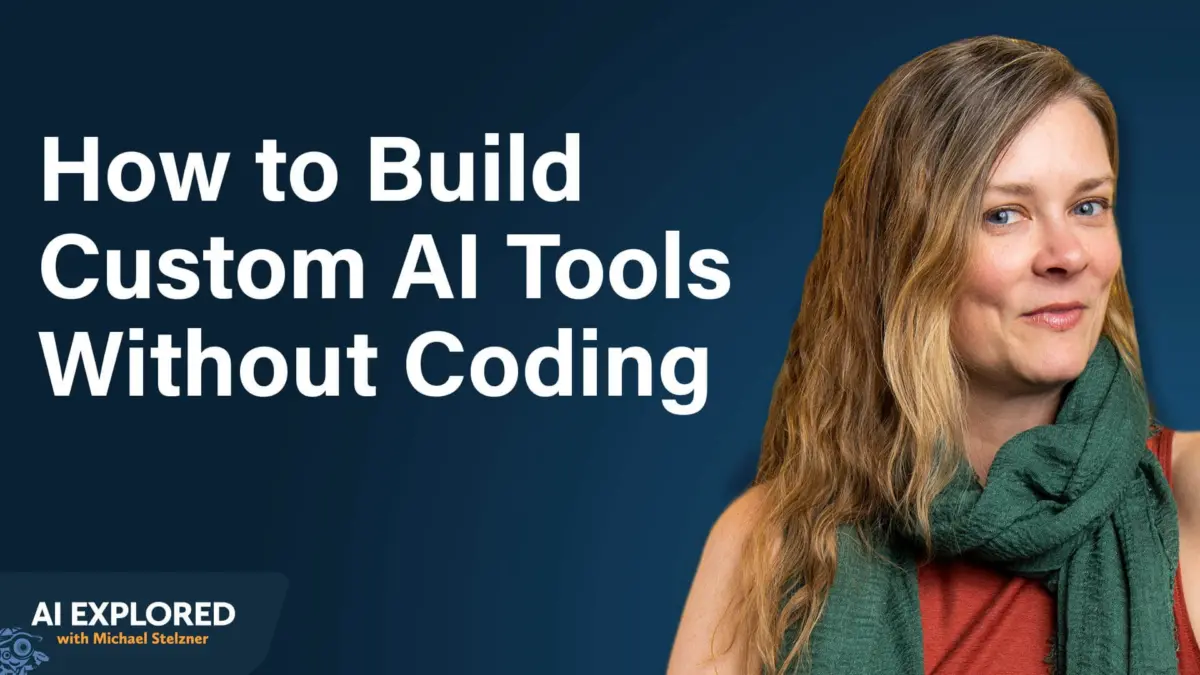
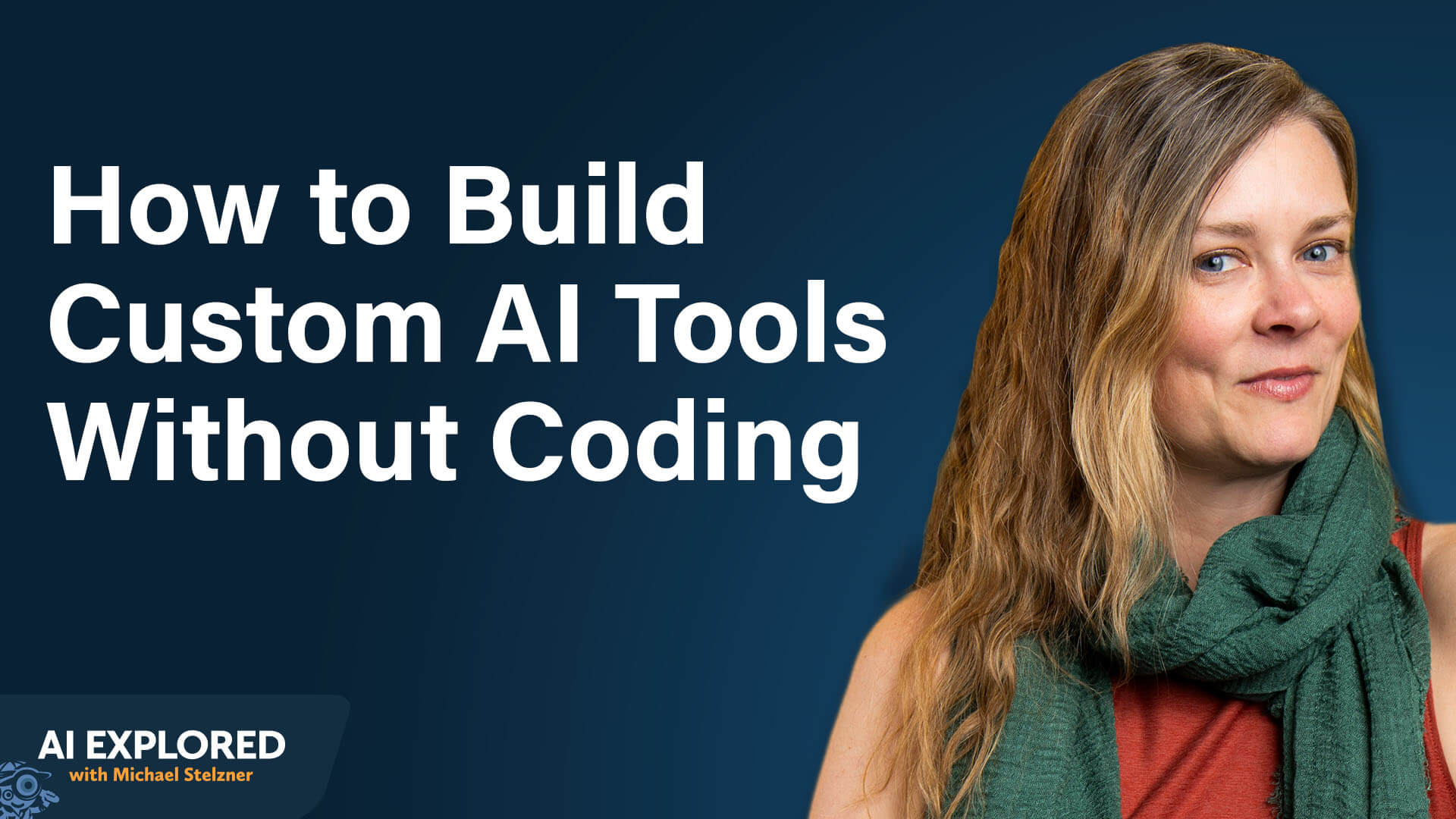
Co-created by AI strategist Erika Stanley and Michael Stelzner, recent insights from the AI Explored podcast reveal a dramatic real-world case study: Stanley, without a single line of traditional coding experience, successfully eliminated more than $1,200 in annual software subscriptions over a two-month span. By upgrading to an advanced LLM tier and leveraging intuitive no-code platforms, she built automated, hyper-specific operational tools in under half a day.
This comprehensive report explores the methodology behind this movement, examining how the convergence of advanced AI models, structured Product Requirements Documents (PRDs), and specialized deployment platforms is empowering non-engineers to construct enterprise-grade software tailored precisely to their needs.
Detailed Chronology: From Concept to Deployed Application
The democratization of software development is not born of a sudden surge in computer science literacy, but rather from the unprecedented capability of LLMs to translate human intent into executable code. To understand how an entrepreneur with zero technical background can transition from identifying a business friction point to deploying a live production app, it is helpful to examine the four-stage framework outlined by Stanley.
Phase 1: Identifying the Friction Point and Embracing the MVP Mindset
The genesis of any custom-built AI tool is not a grand architectural vision, but an operational annoyance. According to Stanley, the most common pitfall for aspiring app builders is scope creep—attempting to engineer an all-encompassing system on day one.
Instead, builders must adopt the Minimum Viable Product (MVP) mindset, symbolized by the classic product analogy of the skateboard.
- The Skateboard Approach: Rather than spending months attempting to build a non-functional car in the garage, the builder starts with a skateboard—four wheels and an axle. It possesses just enough functionality to solve the immediate core problem and get the user from point A to point B faster than walking.
- Iterative Evolution: Once the core mechanism functions, the product evolves organically. Adding steering transforms the skateboard into a scooter; adding pedals yields a bicycle. At every stage, the tool remains completely usable.
Stanley applied this exact philosophy when setting out to replace a $29-per-month subscription tool ("Fixer") that she had relied on for two years. Instead of replicating a massive, multi-faceted dashboard from scratch, she audited Fixer’s core utilities: sorting and color-coding an email inbox, drafting matching tone responses, and transcribing Zoom client calls into automated follow-up emails. Recognizing she already had access to these baseline capabilities through existing tools—such as Fathom’s free transcription tier and Claude’s native connectors—she designed a streamlined, task-specific solution rather than a bloated software clone.
Phase 2: Brainstorming and Drafting the Product Requirements Document (PRD)
Once the friction point is isolated, the builder initiates a brainstorming dialogue with an advanced reasoning model, such as Claude (specifically leveraging high-level reasoning iterations).
Crucially, Stanley emphasizes that users should describe the problem and the desired outcome, rather than attempting to prescribe the technical architecture. By detailing the operational bottleneck to the AI, the model’s internal knowledge base maps out superior integration pathways and workflows that a non-technical user could never conceive independently.
Following this exploratory dialogue, the next critical checkpoint is the generation of a Product Requirements Document (PRD). In traditional software engineering, a PRD serves as the foundational contract between stakeholders and developers, outlining exact interface designs, functional logic, and user action pathways.
- Collaborative Interviewing: For entrepreneurs unsure of what a PRD requires, modern LLMs can conduct an interactive interview. The model systematically asks probing questions regarding user interactions, security constraints, and desired outputs, dynamically drafting the document in real time.
- Line-by-Line Auditing: Because LLMs occasionally make inferential leaps, the builder must review the generated PRD line-by-line to ensure absolute alignment with their original intent.
- Token Conservation Strategy: Stanley strongly advises completing all brainstorming and PRD generation within standard chat interfaces (such as Claude or ChatGPT) before entering vibe coding platforms. Because dedicated building environments consume platform credits rapidly during active development, arriving with a finalized, frozen PRD maximizes efficiency and minimizes token burn.
Phase 3: Executing Development via Vibe Coding Platforms
With a validated PRD in hand, the builder transitions to a vibe-coding platform. Vibe coding eliminates syntax errors and debugging cycles, replacing them with natural language refinement. Platforms such as Lovable, Base44, Replit, and Bolt allow users to paste their PRD, watch the system generate the application in real time, and request modifications via a simple sidebar chat box.
Stanley highlights Lovable (priced around $25 per month) as an ideal end-to-end environment. Unlike local development setups, Lovable encompasses frontend building, database architecture, and hosting within a unified, intuitive workspace.
- Prototyping and Iteration: If a builder decides their app needs a dark-mode toggle or a modified user authentication flow, they simply type the request into the sidebar. The platform generates a live, testable prototype instantly.
- Visual Polish: To ensure aesthetic integrity without formal graphic design training, builders can prompt regular Claude to mock up interface layouts (login pages, dashboards, interior views) or utilize specialized design models to establish color schemes, logos, and typographic hierarchies inspired by visual references like Pinterest mood boards.
- Alternative Approaches: For strictly personal utilities, Claude Code offers a robust local-building alternative, running directly on the user’s machine. However, for multi-user applications requiring public accessibility, web-native deployment environments remain necessary.
Phase 4: Deploying, Hosting, and Securing the Application
The final leg of the development journey involves making the application securely accessible to the public or internal team members.
- Automated vs. External Hosting: Platforms like Lovable and Base44 handle hosting natively, issuing live URLs immediately upon publishing. To maintain brand consistency without purchasing expensive domain extensions, builders can establish simple web server redirects (e.g., directing traffic from
YourBrand.com/appto the hosting environment). For apps built locally via Claude Code, external hosting services like Vercel (free for low-traffic sites) or Railway (approx. $5/month for apps requiring active databases) integrate seamlessly via GitHub repositories for automated version control. - Mandatory Security Audits: Because vibe-coded applications are increasingly targeted by automated exploits, security cannot be treated as an afterthought. Integrated platforms like Lovable feature automated vulnerability scanners that flag high-risk endpoints in red and apply patches instantly. When deploying via local environments like Claude Code, builders must explicitly prompt the LLM to run comprehensive security audits and fix vulnerabilities prior to production release.
Supporting Context & Metrics: The Financial and Operational ROI
The transition from passive software consumer to active app builder carries profound financial implications for modern businesses. To evaluate the economic viability of this approach, it is instructive to examine the micro-economics of Stanley’s personal software audit.
The Math of Subscription Arbitrage
Prior to her pivot toward custom AI apps, Stanley’s operational tech stack included a client management platform exceeding $300 annually, alongside various single-purpose automation subscriptions totaling upwards of $1,200 per year. Many of these tools suffered from "feature bloat"—inflated price tags driven by enterprise-grade capabilities she never utilized, compounded by rigid user interfaces that failed to accommodate her specific business workflows.
By committing to a disciplined subscription restructuring strategy:
- Upgrading Smartly: She upgraded her Claude subscription from the standard $20/month tier to the $100/month Max tier, establishing a strict financial mandate: the upgraded tools had to instantly offset their own cost by eliminating redundant SaaS subscriptions.
- Immediate Cost Elimination: Within two months, the custom AI tools she engineered replaced more than $1,200 in annual recurring software fees.
- Optimized Operational Overhead: By utilizing lean, pay-as-you-go building environments (such as Lovable at $25/month) only during active development phases, her ongoing overhead plummeted while operational efficiency scaled infinitely.
Operational Agility: Eliminating the Support Ticket Lag
Beyond direct monetary savings, custom AI applications deliver an intangible yet vital competitive advantage: velocity.
In a traditional software ecosystem, if a business owner discovers a broken workflow or desires a minor feature enhancement, they are forced to submit a feature request to a customer service queue. The timeline for resolution rests entirely in the hands of third-party product managers, stretching anywhere from weeks to years—if the request is acknowledged at all.
When operating within a vibe-coding framework, the latency between identifying an operational bottleneck and deploying a custom fix is measured in minutes. If a custom client portal requires an additional data field or a reorganized reporting dashboard, the builder opens their development environment, prompts the AI assistant, reviews the prototype, and hits publish. The enterprise adapts at the exact speed of human thought.
Official Statements and Industry Insights
The emergence of non-engineer software creation represents a watershed moment in the broader tech and marketing ecosystem. Industry thought leaders emphasize that this shift transcends mere cost-cutting; it fundamentally redefines who holds the power to shape digital infrastructure.
"We are entering the era of the ‘market of one.’ For decades, entrepreneurs have been forced to contort their unique business logic to fit generic software built for thousands. Today, AI has lowered the barrier to entry to zero, allowing anyone to construct bespoke digital tools that mirror their exact operational reality."
— Erika Stanley, AI Strategist and Founder of AI Queens
Industry observers note that this democratization mirrors historical technological shifts, akin to how desktop publishing software empowered writers to bypass traditional printing presses, or how website builders eliminated the necessity of HTML coding for digital storefronts. Now, the abstraction layer has ascended from web design to full-stack functional application architecture.
Furthermore, forward-thinking organizations are recognizing that these internally developed tools do not merely solve internal bottlenecks—they frequently evolve into lucrative external assets. Simple internal utilities built to streamline a solo operation can be packaged, secured, and monetized as direct-sale software products, gated community perks, or high-value membership resources, opening entirely new revenue streams for agile entrepreneurs.
Future Outlook: The Horizon of No-Code AI Architecture
As LLM reasoning capabilities continue to advance exponentially, the boundary between "non-technical user" and "software architect" will dissolve entirely. Several key trajectories define the future landscape of custom AI applications:
- Autonomous Multi-Agent Development: Future iterations of vibe-coding platforms will likely move beyond reactive prompt responses, employing autonomous multi-agent systems that proactively monitor business workflows, detect inefficiencies, and draft, test, and deploy software patches without human prompting.
- Hyper-Personalized Enterprise Stacks: Rather than relying on monolithic enterprise resource planning (ERP) systems, businesses of all sizes will operate on fluid, modular ecosystems composed entirely of interconnected, micro-AI applications tailored precisely to individual departmental needs.
- The Democratization of Product Creation: As security frameworks mature and hosting costs approach zero, the competitive advantage will no longer belong to corporations with the largest engineering budgets, but to the most creative problem-solvers who can articulate operational friction points with absolute clarity.
For business owners still tethered to rigid, expensive SaaS subscriptions, the message is clear: the era of adapting to someone else’s software is officially over. By embracing the MVP mindset, mastering the art of the Product Requirements Document, and leveraging modern vibe-coding platforms, any entrepreneur can take control of their digital destiny—one custom-built app at a time.