Executive Overview
The vision of a truly borderless world—where language differences no longer present a barrier to human connection—has long been a staple of science fiction. From the Star Trek Universal Translator to the mythical Babel fish of The Hitchhiker’s Guide to the Galaxy, popular culture has envisioned a future where speaking one’s native tongue is all that is required to communicate fluidly across the globe. Today, rapid advancements in artificial intelligence, natural language processing (NLP), and miniature hardware design are bringing this once-fantastical promise into reality through translation earbuds.
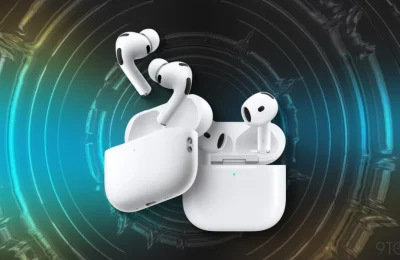
At first glance, the user experience is deceptively simple. Products like the Apple AirPods Pro, Google Pixel Buds, and offerings from brands like Timekettle and Anker allow wearers to slip a pair of earbuds into their ears, tap a smartphone screen, and listen as foreign speech is seamlessly converted into their native language within seconds. Some configurations even require conversation partners to share a bud, creating an intimate, real-time bridge across linguistic divides.
Beneath this sleek consumer exterior, however, lies an extraordinarily complex symphony of audio engineering, edge-computing, cloud architecture, and sophisticated machine learning models. Turning spoken Mandarin into conversational English in real-time requires navigating a multi-step pipeline involving advanced acoustic isolation, speech-to-text transcription, contextual semantic analysis, and synthetic voice generation.
While the technology has evolved exponentially from its clunky, early-generation predecessors, a wide chasm remains between the utopian marketing claims of tech manufacturers and the messy, unpredictable realities of everyday human conversation. This article provides an exhaustive look into the mechanics of translation earbuds, how well they actually perform in the real world, the technological hurdles they still face, and what consumers can realistically expect when investing in these devices today.
Detailed Chronology: The Evolution of Real-Time Translation
To understand how modern translation earbuds operate, it is helpful to trace the technological trajectory that made them possible. The journey from bulky translation software to ultra-compact, ear-worn AI assistants spans decades of breakthroughs in hardware miniaturization and machine intelligence.
1. The Pre-Earbud Era: Rule-Based and Statistical Translation
Before wearable translation hardware existed, computational linguistics relied heavily on rule-based systems and, later, statistical machine translation (SMT). SMT algorithms analyzed massive bilingual text corpora—often official documents like United Nations transcripts—to calculate the statistical probability that a given phrase in one language translated to a phrase in another.
These early systems were computationally heavy, entirely text-dependent, and prone to catastrophic syntactic errors. They required users to type sentences into bulky desktop software or early mobile applications, making live, spoken conversation nearly impossible.
2. The Rise of Neural Machine Translation (NMT)
The mid-2010s marked a watershed moment with the advent of Neural Machine Translation (NMT). Powered by deep neural networks—specifically encoder-decoder architectures and recurrent neural networks (RNNs)—NMT allowed systems to evaluate entire sentences simultaneously rather than breaking them down into isolated words or phrases. This drastically improved grammatical fluency, contextual awareness, and translation accuracy across diverse language pairs.
3. The Hardware Breakthrough: True Wireless Stereo and Dedicated AI Chips
Concurrently, the consumer electronics market experienced a revolution in True Wireless Stereo (TWS) form factors, spearheaded by the removal of headphone jacks and the miniaturization of Bluetooth chips. Brands began packing high-capacity micro-batteries, custom digital signal processors (DSPs), and high-fidelity micro-electromechanical systems (MEMS) microphones into housing small enough to fit comfortably inside the human ear canal.
4. Integration of Large Language Models (LLMs) and On-Device Edge AI
In recent years, the integration of generative AI, Large Language Models (LLMs), and dedicated Neural Processing Units (NPUs) has pushed translation earbuds into a new era. Modern earbuds are no longer limited to rigid, literal word replacements; they leverage transformer-based models capable of understanding slang, cultural idioms, and complex conversational subtext in real-time. Furthermore, advancements in model quantization allow powerful AI models to run locally on smartphone processors or even directly on the earbuds themselves, enabling offline translation capabilities without requiring a persistent cellular or Wi-Fi connection.
How Translation Earbuds Actually Work: The Three-Stage Pipeline
To transform a foreign utterance into a localized voice stream, translation earbuds orchestrate a complex, three-stage sequence in a matter of seconds.

[1. Speech Recognition & Acoustic Isolation]
                       ↓
[2. Machine Translation & Audio Processing (Cloud/Edge)]
                       ↓
[3. Text-to-Speech (TTS) Synthesis & Bluetooth Playback]
Stage 1: Speech Recognition and Acoustic Isolation
The first bottleneck in live translation is capturing clean audio in acoustically hostile environments—such as a bustling Tokyo train station or a crowded Parisian café. If an audio capture system records excessive background noise, the subsequent translation pipeline will fail.
High-end translation earbuds employ sophisticated hardware and software countermeasures to isolate the target speaker:
- Multi-Microphone Arrays: Devices like the Anker Soundcore Liberty 5 Pro utilize expansive arrays (often up to eight microphones) combined with beamforming technology to spatially isolate the speaker’s voice while dampening ambient noise.
- Bone Conduction Sensors: By detecting the physical vibrations of the speaker’s jawbone and vocal cords, advanced earbuds can distinguish between actual speech and environmental sounds, ensuring that only the user’s voice is processed.
- Acoustic AI Models: Dedicated machine learning models filter out wind, traffic, and competing human voices at the hardware level before the audio stream is even packaged for translation.
Stage 2: Audio Processing and Machine Translation
Once the voice is successfully captured and digitized, it enters the processing phase. Depending on the brand, device ecosystem, and network availability, this step occurs either locally on the connected smartphone (Edge computing) or on remote servers via the cloud.
- Edge Processing (e.g., Apple AirPods Pro): Apple processes translations entirely on the connected iPhone once the user downloads specific language packs. This ensures low latency, enhanced privacy, and functionality in areas with poor cellular coverage.
- Cloud Processing (e.g., Google Pixel Buds): Devices like the Pixel Buds Pro route audio data through cloud infrastructure, tapping into massive server-side models (such as Gemini) to achieve superior contextual nuance and support for a broader array of obscure dialects.
- Natural Language Processing (NLP) and LLMs: During this phase, Automatic Speech Recognition (ASR) converts the audio waveform into text. Neural machine translation engines then translate the text into the target language. Crucially, modern systems use NLP and LLMs to evaluate the contextual meaning of the sentence, ensuring that homonyms and idiomatic expressions are translated based on intent rather than literal dictionary definitions.
Stage 3: Text-to-Speech (TTS) Synthesis and Playback
In the final stage, the translated text is converted back into an audible format via Text-to-Speech (TTS) synthesis.
- A synthetic voice generates an audio file of the translated phrase.
- This audio file is transmitted back to the user’s smartphone.
- The smartphone streams the audio via Bluetooth directly to the earbuds, playing the translation to the listener just a few seconds after the original speaker finishes talking.
While some systems (such as Apple’s AirPods Pro and Samsung’s Galaxy Buds Pro) can execute this entire loop completely offline, others require a steady internet connection to query cloud-based translation models.
Supporting Context & Metrics: Marketing Hype vs. Real-World Performance
When consumer technology brands advertise translation earbuds, they frequently tout impressive performance metrics, such as "95% to 99% translation accuracy" and "near-zero latency." While these claims are rarely outright fabrications, they require significant contextual qualification.
The Myth of 99% Accuracy
In controlled, sterile laboratory environments—where professional voice actors speak slowly, clearly, and without regional accents in absolute silence—modern translation algorithms can indeed achieve near-flawed accuracy. However, human conversation in the wild rarely mirrors a lab setting.
In everyday scenarios, translation engines are routinely tripped up by:
- Unclear Speech and Mumbling: Rapid articulation, low speaking volumes, and overlapping conversations degrade ASR performance.
- Regional Dialects and Accents: A model optimized for standard Castilian Spanish may struggle significantly with colloquial Chilean or Argentine dialects.
- Slang, Idioms, and Homonyms: Translating colloquialisms literally often results in nonsensical output. For instance, translating the English phrase "break a leg" literally into a foreign language can lead to comical or confusing misunderstandings if the system’s NLP lacks cultural context.
- Language Pair Asymmetry: While translation between major global languages (e.g., English to Spanish, Mandarin, or French) benefits from vast training datasets and high accuracy, less common language pairs experience significantly higher error rates.
Latency and Conversational Flow
Even under favorable conditions, the physical loop of speech capture, processing, translation, and TTS synthesis introduces a delay ranging from two to several seconds. In casual dialogue, a two-second pause after every sentence disrupts the natural rhythm of human conversation, making interactions feel stilted and mechanical. When network latency is introduced via cloud-processing models in areas with poor reception, these delays can stretch further, frustrating both parties.
Hardware Versatility and Hidden Costs
Consumers should also evaluate whether translation earbuds serve dual purposes. Because high-end translation earbuds double as premium True Wireless earbuds for music playback, phone calls, and active noise cancellation (ANC), buyers must weigh their primary use case.
Furthermore, offline functionality often comes with financial caveats. For example, specialized translation ecosystems like Timekettle charge users for offline language packs beyond a couple of complimentary options, while requiring continuous internet connectivity for advanced AI features, media translation, and voice calling.

Official Statements and Industry Insights
Industry leaders and audio engineers have been vocal about the trajectory of wearable translation technology, balancing consumer enthusiasm with pragmatic acknowledgments of hardware limitations.
In a recent product briefing regarding Apple’s Live Translation implementation in the AirPods ecosystem, senior engineering representatives emphasized the importance of on-device processing:
"Our primary focus has been privacy and reliability. By executing speech recognition and translation pipelines locally via downloaded language packs, we eliminate the latency and security vulnerabilities associated with constant cloud round-trips, ensuring that personal conversations remain strictly between the participants."
Conversely, software architects at Google have defended the cloud-centric approach utilized by the Pixel Buds lineup, noting that cloud infrastructure is currently essential for scaling complex AI models:
"While on-device processing is ideal for speed, the sheer computational weight required to parse nuanced cultural context, idioms, and multi-turn conversational dialogue demands the elastic scaling of the cloud. As mobile silicon advances, that gap will narrow, but cloud connectivity remains the gold standard for deep linguistic comprehension."
Audio hardware specialists have also highlighted the immense physical constraints of earbud design. Packing multiple microphones, bone-conduction sensors, Bluetooth radios, high-performance batteries, and thermal management systems into a chassis weighing less than six grams per bud leaves zero room for error. Every design choice is a delicate compromise between battery life, acoustic performance, and computational power.
Future Outlook: Where Are Translation Earbuds Headed?
As artificial intelligence hardware and software continue to converge, the next generation of translation earbuds is poised to overcome many of the limitations plaguing current-generation devices.
1. Ultra-Low-Power Edge NPUs
The development of ultra-low-power Neural Processing Units designed specifically for wearable form factors will allow increasingly sophisticated Large Language Models to run locally on earbuds. This will eliminate latency issues caused by cloud round-trips, drastically improve offline performance, and protect user privacy by keeping all audio processing on-device.
2. Multimodal Contextual Awareness
Future translation systems will integrate multimodal AI, combining acoustic data with visual input from smart glasses or smartphone cameras. By analyzing facial expressions, body language, and environmental cues alongside spoken audio, these systems will be able to resolve ambiguous phrases and idiomatic expressions with human-like intuition.
3. Biometric and Health Integration
Just as modern smart earbuds have expanded into health monitoring—tracking heart rate, body temperature, and spatial hearing—future translation wearables will likely integrate deeper wellness metrics, positioning themselves as holistic personal assistants rather than single-use translation tools.
Conclusion
Translation earbuds represent a remarkable triumph of modern engineering, bridging the gap between artificial intelligence and human communication. While they are not yet a flawless replacement for a human interpreter—and still struggle with heavy background noise, slang, and conversational latency—they offer an invaluable tool for travelers, business professionals, and cross-cultural explorers. By understanding how these devices work, recognizing their technical boundaries, and managing expectations regarding real-world performance, consumers can better appreciate the staggering complexity humming quietly inside their ears.