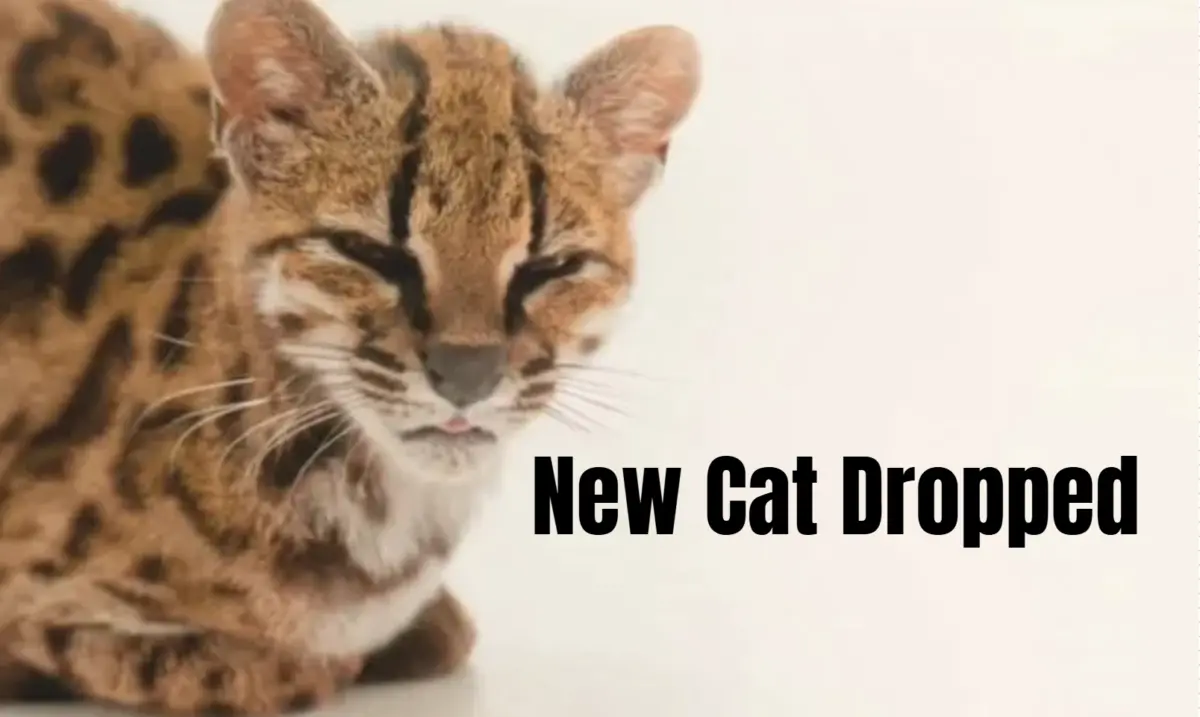
In mid-September 2026, the global scientific community and the digital landscape experienced a rare convergence of events. For the first time in over a century, researchers formally identified, named, and described a brand-new, living species of wild feline: Leopardus tilcayo, colloquially known as the tilcayo. Native to the mist-shrouded Yungas forest ecoregion of Bolivia—where the steep eastern slopes of the Andes Mountains descend into the Amazon basin—this diminutive, leopard-spotted predator immediately captivated public imagination.
However, the journey of the tilcayo transcended traditional academic journals and dusty museum archives. Within hours of major news outlets and scientific organizations publishing the findings on September 17th, 2026, the discovery detonated across social media platforms like X (formerly Twitter) and TikTok. Propelled by viral phrasing such as “new cat dropped” and “wake up babe, new cat just dropped,” internet users transformed a landmark event in mammalian taxonomy into a massive, joyous cultural phenomenon. This report provides an exhaustive journalistic breakdown of the biological breakthrough, the metrics of its digital diffusion, and the unique intersection of modern internet subculture and wildlife conservation.
Detailed Chronology: From the Cloud Forests of Bolivia to Global Virality
The Biological Breakthrough: Reclassifying South American Tiger Cats
The formal identification of Leopardus tilcayo was not an accident of a single field expedition, but rather the culmination of years of rigorous genetic detective work. For generations, taxonomists understood that South American small cats—often referred to broadly as tiger cats or oncillas—possessed complex lineage relationships. However, they were historically categorized under broader umbrella classifications.
A dedicated international research team initiated a comprehensive genetic review to untangle the phylogeny of these elusive felines. Scientists extracted and analyzed DNA samples from 38 wild cats sourced across diverse geographies throughout South America, supplemented crucially by historical genetic material extracted from eight museum specimens.
The analytical results reshaped established taxonomy: the researchers determined that what was once thought of as a single, homogenous group actually comprised five distinct, genetically isolated species. Among them was a distinct population inhabiting the rugged, high-altitude cloud forests of Bolivia. Honoring local nomenclature, the researchers assigned the scientific name Leopardus tilcayo to the newly validated species.
Biologically, the tilcayo is remarkably diminutive. Standing as an archetype of montane dwarfism, an adult tilcayo measures approximately 18 inches (46 cm) in body length and tips the scales at a mere 3 pounds (1.4 kg). This places the wild feline well below the size metrics of an average domestic house cat, though its fur coat features striking, leopard-like rosette patterns designed for camouflage beneath the dense canopy of the Yungas forest.
September 17th, 2026: The Digital Spark
The transition from peer-reviewed phylogenetic revelation to global internet meme occurred almost instantaneously on the morning of September 17th, 2026.
At precisely coordinated intervals, major media institutions and science communicators launched synchronized press rollouts. The official X account of National Geographic (@NatGeo) published the breakthrough announcement at 09:00 AM, framing the discovery through the hook: "New cat alert! A call from a wildlife sanctuary about a ‘weird cat’ has led to the first new cat species discovered in over 100 years in Bolivia’s Yungas forest ecoregion."
The post included a link to deeper editorial coverage and high-resolution imagery captured by wildlife photographer Fernando Faciole. The response was immediate and stratospheric. Within four days, the singular X post amassed an astonishing 71.9 million views and garnered over 378,000 likes.
Simultaneously, the National Geographic TikTok account (@natgeo) deployed a short-form video breakdown highlighting the cat’s micro-dimensions and its cloud-forest habitat. Mirroring the momentum on X, the TikTok feature pulled in 1.7 million views and 174,600 likes within the same four-day window. Major news networks quickly amplified the narrative; @abcnews published a parallel TikTok piece detailing how the discovery was “redrawing the branches of the cat family tree,” capturing an additional 1.9 million views and 330,000 likes.
Supporting Context & Metrics: The Mechanics of a Viral Sensation
While mainstream journalistic outlets focused on the conservation implications and phylogenetic shifts, the denizens of internet subcultures seized upon the news with a distinct brand of digital humor and aesthetic appreciation.
The Memeification of Taxonomy: "New Cat Dropped"
The phrase "new cat dropped"—derived from gaming and software development terminology where updates, patches, or expansions are "dropped" for consumer use—quickly became the unifying caption for the event.
Later in the evening on September 17th, X user @heavyfortress quote-posted the official National Geographic thread with an all-caps declaration: "NEW CAT DROPPED I REPEAT NEW CAT DROPPED THIS IS NOT A DRILL ITS IN FACT A CAT." The hyper-enthusiastic post resonated deeply with online audiences, accumulating 7.7 million views and 245,000 likes in roughly 96 hours.
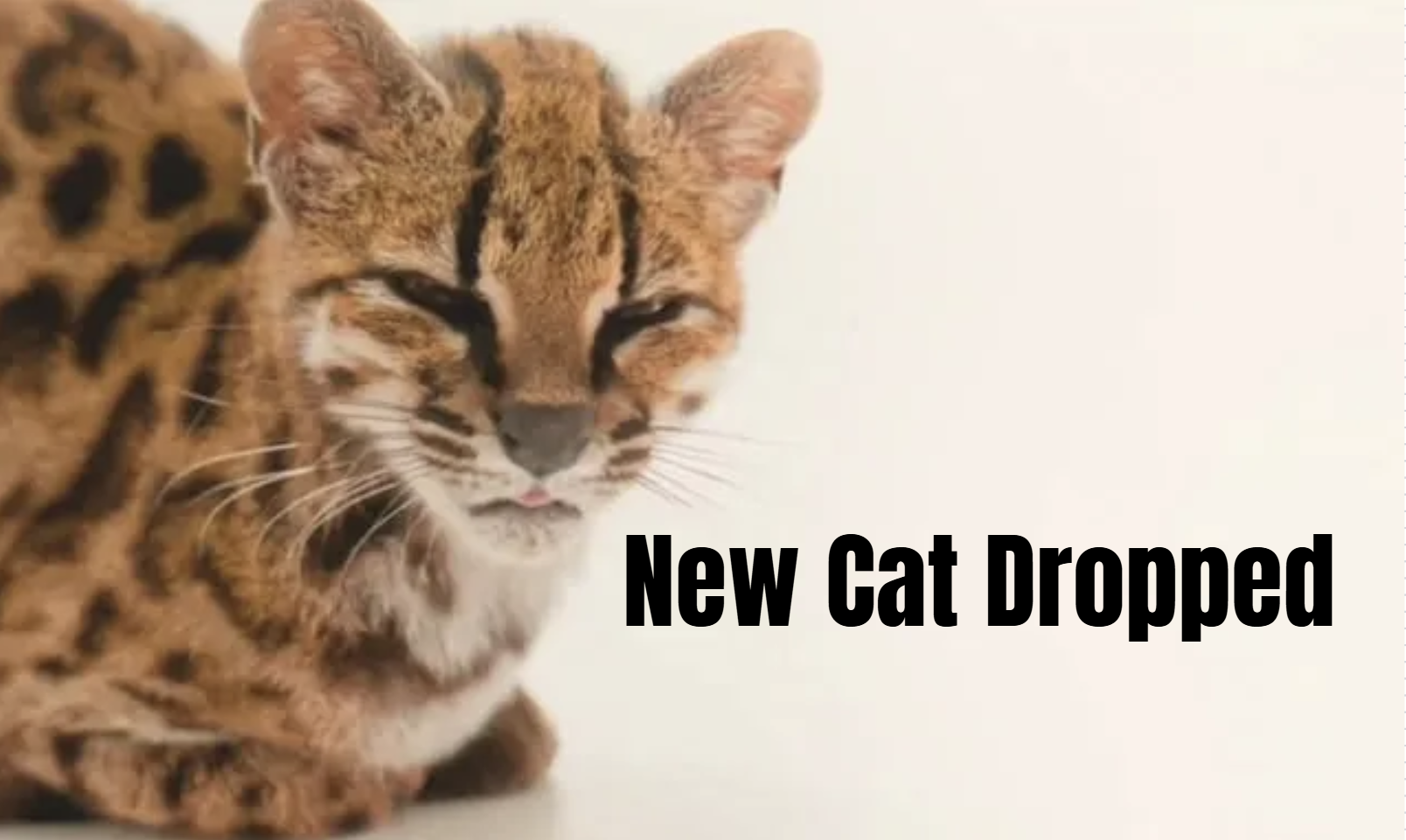
The emotional spectrum of the internet’s reaction ranged from frantic excitement to profound sentimental relief. On the evening of September 17th, X user @pastapilled quote-posted a follow-up NatGeo thread featuring new photographs of the tilcayo with the viral quip: "Never kill yourself they might discover new kitty." The dark-humor-laced expression of existential optimism struck a chord, drawing 3.1 million views and 229,000 likes.
Artistic and Multimodal Explosion on TikTok and X
As the news cycle matured into September 18th, 2026, user-generated content expanded beyond simple text retweets into dedicated multimedia creations:
- Original Artwork: X user
@SWAGVO1Dpublished hand-drawn digital fan art of the tilcayo alongside the mandatory caption "new cat dropped !!," securing nearly 1 million views (994,000) and 99,000 likes. - Video Edits and Aesthetic Moodboards: TikTok creators flooded the algorithm with dedicated tribute videos. User
@kasefxpublished a high-aesthetic wildlife edit captioned "new cat just dropped !" detailing the geography of the Bolivian Yungas, pulling 1.3 million views and 471,000 likes. - Affectionate Characterizations: Content creators like
@lexkomiand@servvalineframed the animal purely through the lens of internet endearment, labeling it "the cutest little guy" and a "new kitty cat," collectively pulling well over a million combined views and hundreds of thousands of likes.
The trend standardized around a specific vocabulary. Variations such as "WAKE UP BABE NEW CAT DROPPED!!!" (popularized by TikToker @honeysrot) became staple comment-section tropes across multiple platforms, effectively treating the natural evolution and discovery of a wild mammal like a highly anticipated software update or pop culture album release.
Official Statements and Scientific Implications
Beyond the memes and view counts, the discovery of Leopardus tilcayo holds profound implications for zoology, conservation biology, and our understanding of South American biodiversity.
Redrawing the Cat Family Tree
In official statements accompanying the release, lead researchers emphasized that the discovery validates modern genetic methodologies. For decades, morphological analysis alone often failed to differentiate cryptic species—animals that look nearly identical externally but possess vastly different genetic blueprints. By applying advanced DNA sequencing techniques to historical museum collections alongside contemporary field samples, researchers successfully resolved centuries-old taxonomic ambiguities.
"The discovery of Leopardus tilcayo is not merely about adding a new name to a checklist; it represents a fundamental recalibration of how we understand felid evolution in South America," noted one lead researcher associated with the project. "If we can overlook a distinct feline species residing in a well-studied continent for over a century, it forces us to question what else might be hiding in plain sight."
The Vulnerability of the Yungas Ecoregion
Conservationists have used the viral attention surrounding the tilcayo to spotlight the precarious ecological health of the Bolivian Yungas forest. Characterized by steep slopes, dramatic microclimates, and dense cloud coverage, the Yungas ecoregion is a biodiversity hotspot. However, it faces mounting anthropogenic pressures, including agricultural expansion, deforestation, and climate disruption.
Because the tilcayo was initially brought to light following a report from a local wildlife sanctuary about a "weird cat," researchers emphasize how vital indigenous communities and local conservation outposts are to frontline discovery. Very little is currently known regarding the tilcayo’s day-to-day behavioral ecology, home range size, or exact population numbers in the wild. Conservation organizations are now urging international funding bodies to direct resources toward non-invasive field studies—such as camera-trapping and environmental DNA (eDNA) sampling—to assess the species’ baseline vulnerability and ensure its protection before habitat loss outpaces scientific understanding.
Future Outlook: Legacy of the Tilcayo Discovery
The viral emergence of Leopardus tilcayo in September 2026 serves as a fascinating case study in modern science communication. In an era dominated by algorithmic fatigue and distressing global headlines, the public demonstrated an insatiable, wholesome appetite for positive biodiversity news.
Re-engaging Youth with Conservation
The translation of complex cladistic research into viral TikTok edits and X memes successfully mobilized millions of younger demographics who might otherwise ignore traditional academic journals. By framing wildlife conservation through accessible internet vernacular ("new cat dropped"), digital communities fostered a collective sense of stewardship and wonder toward the natural world.
What Lies Ahead for Leopardus tilcayo?
As the initial social media wave normalizes, the heavy lifting of conservation science begins. Researchers face the daunting task of securing comprehensive field data on Leopardus tilcayo. Key objectives for the upcoming research cycles include:
- Field Expedition and Monitoring: Establishing baseline population densities via camera traps deployed across the vertical gradients of the Bolivian Yungas.
- Dietary and Behavioral Studies: Analyzing scat samples to determine the trophic role of the tilcayo within its cloud-forest ecosystem.
- Policy and Habitat Protection: Collaborating with the Bolivian government and local stakeholders to establish protected corridors that safeguard the micro-endemic ranges of newly discovered montane species.
Ultimately, Leopardus tilcayo will be remembered historically not only as the first living feline species formally described in over a century, but as the moment the internet collectively paused its cynicism to celebrate the enduring, mysterious richness of planet Earth.