Executive Overview
The enterprise technology landscape is undergoing its most profound structural disruption since the advent of cloud computing. As organizations transition from the exploratory, proof-of-concept (PoC) phase of generative artificial intelligence toward production-grade deployments, the enterprise AI stack is being rewritten in real time. Technology leaders—including Chief Information Officers (CIOs), Chief Technology Officers (CTOs), Vice Presidents of Engineering, and IT Directors—now face unprecedented operational friction, spiraling infrastructure costs, and complex architecture choices that carry severe financial and operational consequences.
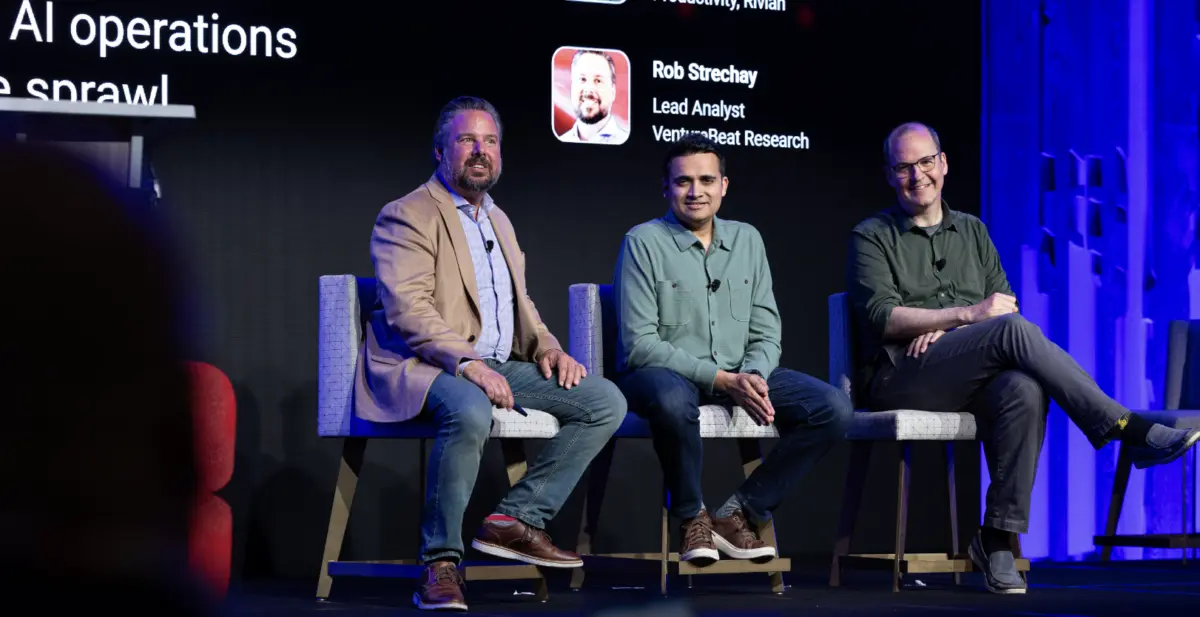
To address a growing marketplace shortage of unvarnished, empirical data, VentureBeat has officially launched VentureBeat Research and appointed industry veteran Rob Strechay as its first Lead Analyst and Founding Analyst. Strechay, who spent recent years as Managing Director and Principal Analyst at theCUBE Research and SiliconANGLE, brings nearly three decades of combined experience as an enterprise IT practitioner, cloud product executive, and market analyst.
Strechay’s arrival signals a deliberate pivot in enterprise technology coverage: shifting from high-level industry news reporting toward deep, architecturally grounded research tailored specifically for technical buyers and builders. VentureBeat Research will focus on the hard architectural realities of modern enterprise deployments, spanning cloud infrastructure, advanced data stacks, platform engineering, DevOps orchestration, agentic security, and artificial intelligence observability. By pairing Strechay’s deep technical domain expertise with VentureBeat’s proprietary empirical data engine—most notably its monthly VB Pulse survey framework—the initiative aims to equip technology decision-makers with the objective metrics required to optimize multi-vendor AI environments, mitigate operational downtime, and eliminate vast systemic waste across AI infrastructure.
Detailed Chronology: Strechay’s Industry Evolution & VentureBeat Research Milestones
The formal rollout of VentureBeat Research represents the convergence of Rob Strechay’s multi-decade career across every facet of the enterprise IT ecosystem and VentureBeat’s systematic expansion into data-driven market intelligence.
+---------------------------------------------------------------------------------------+
|                                CAREER & RESEARCH TIMELINE                             |
+---------------------------------------------------------------------------------------+
|  1990s–2010s : Enterprise IT Practitioner & Infrastructure Operational Executive      |
|  2010s       : Executive Leadership at High-Growth Startups (e.g., Zerto)            |
|  Hyperscale  : Product Executive at Amazon Web Services (AWS) — Analytics Services    |
|  Analyst Era : Senior Analyst at ESG; Managing Director/Principal at theCUBE Research |
|  May 2024    : Co-Authors $401B Enterprise GPU Utilization Benchmark Study on VB      |
|  June 2024   : Formulates Agentic Orchestration Data; Anthropic Outage Validates Study |
|  Present     : Appointed Lead Analyst & Founding Analyst of VentureBeat Research     |
+---------------------------------------------------------------------------------------+
The Practitioner and Executive Era
Strechay’s analyst approach is rooted in nearly 30 years of operational history sitting "on every side of the executive table." Before stepping into market research, he served in senior operational roles across enterprise data center management, enterprise resilience, and storage virtualization.
- Startup Leadership: Strechay held executive positions at key infrastructure startups, including disaster recovery and workload mobility pioneer Zerto, where he oversaw product management and go-to-market strategies prior to the company’s ultimate acquisition by Hewlett Packard Enterprise (HPE).
- Hyperscale Cloud Development: He subsequently joined Amazon Web Services (AWS) as a product executive, where he was directly involved in building, launching, and scaling new cloud-native analytics services from the ground up, gaining first-hand insights into hyperscale control planes, distributed data architectures, and cloud billing mechanics.
- Enterprise Infrastructure Leadership: Throughout his executive career, Strechay led business units across storage, data protection, and cloud-native application orchestration, developing deep operational familiarity with enterprise procurement cycles, integration hurdles, and legacy IT debt.
The Institutional Analyst Phase
Transitioning into market research and strategy, Strechay leveraged his hands-on executive background to deliver practitioner-focused research:
- Enterprise Strategy Group (ESG): Served as a Senior Analyst covering IT infrastructure, cloud platform management, and software-defined storage architectures.
- theCUBE Research & SiliconANGLE: As Managing Director and Principal Analyst, Strechay anchored the platform’s industry coverage. He conducted hundreds of deep-dive broadcast interviews with enterprise CEOs, hyperscale architects, and venture capital partners while regularly publishing core analysis on cloud computing, modern data platforms, multi-cloud networks, and enterprise AI stacks.
The Foundation of VentureBeat Research
Over the first half of 2024, Strechay began collaborating directly with VentureBeat’s research team to establish a rigorous, survey-driven baseline for enterprise AI adoption metrics:
- May 2024 (The Infrastructure Bottleneck Study): Strechay authored a landmark benchmark analysis examining compute inefficiencies across enterprise GPU allocations. The research exposed the systemic, multi-billion-dollar utilization gap sitting inside enterprise AI hardware infrastructure.
- June 2024 (The Agentic Orchestration Survey): Strechay advised on the structure and validation of VentureBeat’s comprehensive enterprise survey on agentic AI workflows. The research sampled 145 enterprise decision-makers, revealing widespread risk-mitigation strategies across AI foundation model choices.
- June 2024 (Market Validation Event): A major outage across Anthropic’s Claude model family disrupted enterprise automation workflows globally, instantly validating the survey’s primary insight: enterprise IT leaders must avoid single-vendor lock-in by implementing multi-model orchestration pipelines.
- Present Day: Strechay officially steps into his role as Lead Analyst and Founding Analyst of VentureBeat Research, leading an expanded editorial research suite and taking over as primary host of the updated VB In Conversation video series.
Supporting Context & Metrics: Inside the $401B Infrastructure Efficiency Gap
The establishment of VentureBeat Research comes at a moment when traditional analyst models—built on annual vendor evaluation quadrants and high-level hype cycles—are struggling to keep pace with the hyper-rapid evolution of cloud-native AI infrastructure.
Enterprise AI Adoption Friction Points
  ├── 1. Compute & Infrastructure
  │     ├── Low GPU utilization (idle compute clusters)
  │     └── Uncontrolled hyperscaler spend ($401B global impact)
  ├── 2. Model & Vendor Risk
  │     ├── Single-API dependency vulnerabilities
  │     └── Rapid shift to multi-model hedging strategies (66% of enterprises)
  └── 3. Operational Governance
        ├── Manual orchestration and agent control gaps
        └── Fragmented retrieval-augmented generation (RAG) context layers
The $401B GPU Compute Efficiency Crisis
As enterprises race to train fine-tuned foundational models, build domain-specific Small Language Models (SLMs), and run low-latency inference pipelines, capital expenditure (CapEx) and operational expenditure (OpEx) dedicated to compute hardware have skyrocketed. However, actual workload performance tells a troubling story.
In his May 2024 analysis published on VentureBeat, Strechay highlighted that enterprise GPU infrastructure often suffers from catastrophic underutilization. Driven by inefficient batch scheduling, data pipeline bottlenecks, cold-start latencies, network fabric choking, and fragmented cluster management, many organizations report actual active compute workloads utilizing only a fraction of their allocated GPU capacity.
With global projections estimating AI infrastructure hardware spend to approach $401 billion, idle or poorly orchestrated GPU cycles represent billions of dollars in enterprise value leakage annually. VentureBeat Research is engineered specifically to help enterprise architects diagnose these back-end infrastructure failures, optimize token throughput, and implement modern platform engineering practices that dramatically increase hardware ROI.
Empirical Insights from the VB Pulse Benchmark Series
Strechay’s technical focus directly complements VentureBeat’s monthly VB Pulse empirical survey engine. Rather than publishing static annual reports, VB Pulse continuously samples active IT buyers, systems architects, and enterprise technology executives across five critical technology pillars:
+-----------------------------------------------------------------------------------+
|                        VB PULSE RESEARCH COVERAGE PILLARS                        |
+-----------------------------------------------------------------------------------+
| 1. Agentic Orchestration         | Multi-agent routing, tool calling, execution    |
| 2. Agent Reliability & Evals     | Output verification, hallucination scoring      |
| 3. Agentic Security & Identity   | Non-human identity governance, zero-trust RBAC   |
| 4. AI Infrastructure & Compute   | GPU provisioning, bare-metal vs. cloud inference |
| 5. Context Layers & RAG          | Vector databases, semantic cache, data pipelines |
+-----------------------------------------------------------------------------------+
Key Empirical Finding: Multi-Vendor Hedging Strategies
In the June 2024 VB Pulse report focusing on Agentic Orchestration, data gathered from 145 enterprise decision-makers revealed a decisive shift in how companies procure foundational model capabilities:
- 66% of Enterprise Buyers (Two-Thirds): Have deliberately structured their AI application architectures to hedge across multiple model providers (e.g., OpenAI, Anthropic, Google Cloud Vertex AI, open-source models like Llama 3) rather than standardizing on a single vendor.
- The Strategic Catalyst: Enterprise leaders view single-vendor reliance as a high-risk operational single-point-of-failure (SPOF). When Anthropic suffered an extended service disruption across its Claude 3 model family in June 2024, organizations with multi-vendor model orchestration layers successfully routed active agent queries to alternate fallback models without customer disruption, proving the necessity of these complex architecture patterns.
- The Ownership Paradox: The June research also highlighted a severe governance gap: while 66% of organizations hedge models, the majority continue to attempt governing, evaluating, and monitoring these agent pipelines using manual, unscalable administrative frameworks—a dynamic VentureBeat described as an "ownership problem, not a technology problem."
Official Statements & Strategic Directives
Leadership from both VentureBeat and VentureBeat Research emphasized that the new research division was created to solve a specific problem: providing technical decision-makers with unbiased, architecture-level validation data to support high-stakes procurement decisions.
Statement on Editorial Philosophy & Research Mandate
VentureBeat leadership articulated the core driver behind the initiative:
"The enterprise AI stack is being rewritten in real time, and the decision-makers I talk with are starved for objective, defendable data. Rob Strechay has the mix of technical rigor and operating experience needed to dissect the architecture behind the next phase of enterprise AI deployment.
"The questions enterprise technology leaders are asking have changed. As organizations move past experimentation with generative AI toward production deployment, they want to know how to orchestrate multi-vendor environments, where the security gaps in their agentic pipelines sit, and how to fix the utilization problems draining their infrastructure budgets. Answering those questions requires more depth than news coverage alone provides, and that is the gap this research offering is built to fill."
Statement from Lead Analyst Rob Strechay
Reflecting on his appointment and the launch of the dedicated analyst platform, Rob Strechay outlined his empirical roadmap for enterprise buyers and builders:
"VentureBeat has built an audience of enterprise builders and technology buyers that any analyst would want to serve. My goal is to use deep empirical metrics and VentureBeat’s proprietary tracking data to help enterprise buyers and the people building for them make sound platform and infrastructure decisions during the most disruptive transition enterprise technology has seen."
Future Outlook: Reimagining Market Research for the AI Era
The launch of VentureBeat Research led by Rob Strechay signals a broader shift in how technical intelligence is produced, distributed, and consumed within the B2B technology ecosystem. As software development velocity accelerates due to AI-assisted coding and automated deployment pipelines, traditional 18-month research update cycles are becoming obsolete.
                  TRADITIONAL ANALYST MODEL              VENTUREBEAT RESEARCH MODEL
              +-------------------------------+      +-------------------------------+
Frequency:    | Annual / Static Quadrants     |  vs. | Continuous Monthly Surveys    |
Focus:        | High-level Vendor Marketing   |  vs. | Production Code & Compute ROI |
Target:       | Procurement & Non-Tech Execs  |  vs. | CTOs, CIOs, VPs, Architects   |
Delivery:     | Gated PDF Reports             |  vs. | Open Metrics & Technical Video|
              +-------------------------------+      +-------------------------------+
Expanding "VB In Conversation": The Technical Blueprint Series
A major vehicle for Strechay’s expanded research agenda will be the overhaul and deepening of VentureBeat’s signature video series, VB In Conversation. Hosted by Strechay, the series is departing from standard corporate PR soundbites to deliver granular architectural discussions.
Key coverage areas for the updated series include:
- Production-Grade Stress Testing: Direct technical discussions with cloud native architects, VP-level engineering heads, and principal systems developers to showcase which platforms perform under real-world cluster strain.
- Architectural Blueprints: Unvarnished look at backend infrastructure topologies, context window optimizations, semantic caching, vector database performance, and Retrieval-Augmented Generation (RAG) pipelines.
- Agentic Security & Identity: Investigating how zero-trust frameworks, non-human service accounts, and API access controls operate within dynamic, autonomous multi-agent orchestration systems.
- DevOps & Platform Engineering: Examining how observability, continuous integration/continuous deployment (CI/CD) pipelines, and container orchestrators (such as Kubernetes) are adapting to non-deterministic AI application design.
The expanded series will broadcast across VentureBeat’s core digital platform and its official YouTube Channel, supported by detailed written research analyses published directly on the site.
Tactical Implications for Executive Tech Leaders
For CIOs, CTOs, and IT directors attempting to execute sustainable enterprise AI roadmaps over the coming 12 to 36 months, the establishment of this research footprint provides an empirical framework to address immediate pain points:
- Eliminating GPU & Cloud Overhead: Leveraging research metrics to identify compute inefficiencies, balance cloud-native vs. on-premises bare-metal workloads, and reduce idle resource drain.
- De-risking Foundational AI Architectures: Utilizing real-time data on multi-vendor model orchestration to deploy resilient, redundant AI gateways capable of seamlessly handling vendor outages or price-performance adjustments.
- Closing the Non-Human Identity Security Deficit: Accessing practical research on securing agentic pipelines where autonomous bots invoke external tools, access core enterprise datastores, and execute transactions without direct human intervention.
Enterprises seeking to participate in upcoming monthly VB Pulse empirical benchmarks or schedule strategic analyst briefings with Rob Strechay can connect directly with the analyst team via email at [email protected]. As the enterprise tech stack continues its rapid evolution, VentureBeat Research aims to deliver the objective, data-driven analysis required to navigate this shift.