Published: October 1, 2026
Author: Thomas Hindmarch
Executive Overview
For three-quarters of a century, Charles M. Schulz’s Peanuts has occupied a singular, unimpeachable space in the pantheon of American pop culture. Decades after its final syndicated panel was drawn, the strip continues to command cultural reverence, largely thanks to comprehensive archival efforts such as Fantagraphics’ monumental 26-volume box set, The Complete Peanuts. For modern readers and lifelong aficionados alike, devouring this definitive collection as an unbroken, chronological run offers a rare narrative lens. It reveals the slow, organic metamorphosis of a comic strip from its early, idiosyncratic gags featuring forgotten players like Violet into an institutionalized, timeless ensemble.
Yet, this immersive reading experience does more than track stylistic and character evolution; it invites deep critical reassessment of characters who have spent over seventy years in the public eye. Among the core ensemble—comprising neurotics, philosophers, blanket-toting dreamers, and literary beagles—stands Patricia Reichardt, better known to millions simply as Peppermint Patty.
While pop culture merchandising frequently paints Peanuts as an uninterrupted festival of unadulterated wholesomeness, the daily source material is notoriously cynical. Charlie Brown’s existence is structurally designed around melancholic perseverance, alienation, and gentle existential defeat. Within this framework, his relationships with his peers are frequently adversarial, defined by the psychological torment doled out by Lucy Van Pelt or the breezy, self-centered indifference of his own dog, Snoopy.
Enter Peppermint Patty. Often distilled by casual fans into a one-note gag about academic underachievement and a perpetually unrequited, poorly disguised crush on "Chuck," Patty is frequently overlooked. A granular, longitudinal read of the strip reveals a starker, more profound truth: Peppermint Patty is, without question, the finest, most fiercely loyal friend Charlie Brown ever had.
Detailed Chronology: The Evolution of Patty and Chuck
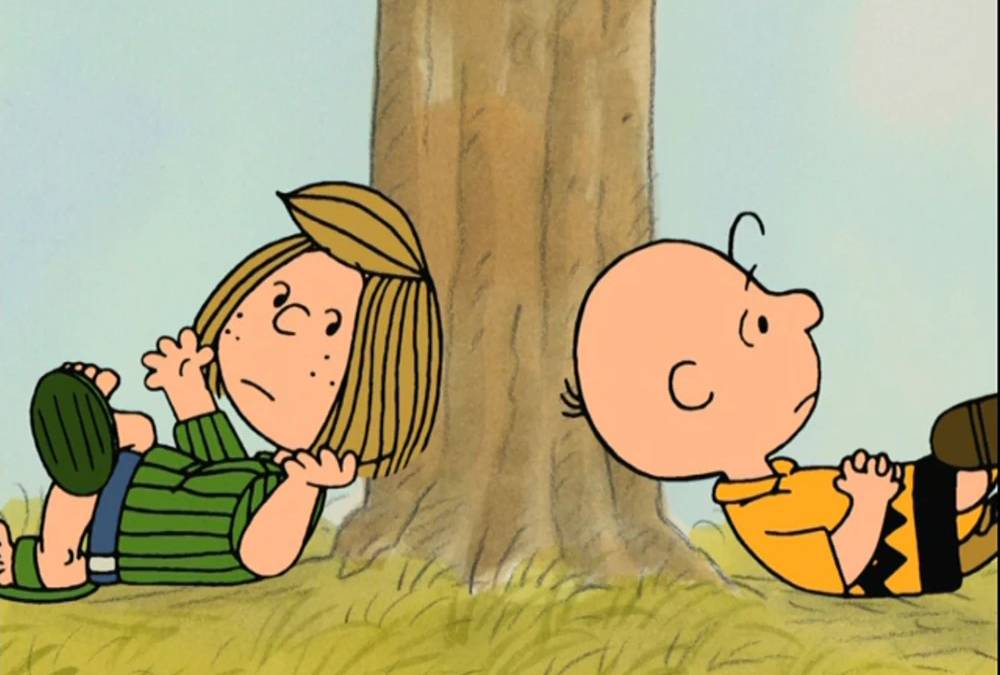
To understand the unique weight of Peppermint Patty’s friendship with Charlie Brown, one must trace its historical trajectory within the timeline of the strip. Introduced in the late 1960s, Patty burst onto the scene not as a traditional suburban girl, but as a tomboy extraordinaire, a natural-born sandlot baseball manager who lived life on her own terms. Her introduction injected a fresh, kinetic energy into a cast that had settled into comfortable suburban routines.
The Misunderstood Crush and Academic Strife
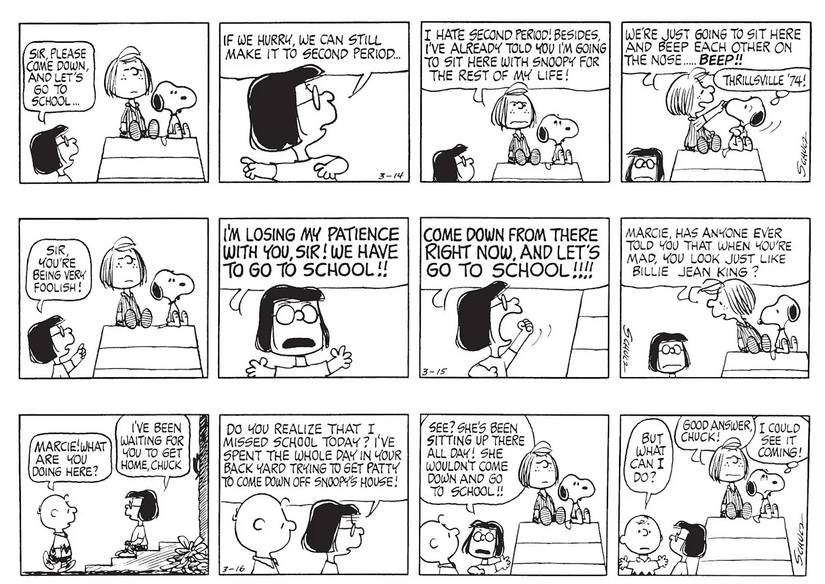
From her earliest appearances, Patty’s dynamic with Charlie Brown was defined by a charming paradox. Academically, she was a disaster, famously sleeping through classes at her alternative school and struggling to grasp basic scholastic concepts—a trait immortalized by her loyal sidekick, Marcie, who spent years calling her "Sir."
Simultaneously, Patty harbored an intense romantic fixation on Charlie Brown. Yet, true to the comedic and tragic ironies of Peanuts, this affection was completely misread by its recipient. To an eight-year-old Charlie Brown—perpetually overwhelmed by the psychological gravity of his own failures—Patty’s forwardness and frequent affectionate overtures registered merely as eccentric friendliness. Lines like, "Let’s not play lover’s games, Chuck!" highlight a tragicomedy of errors where Patty’s emotional vulnerability is repeatedly met with blank incomprehension.
The 1974 Shifts and the 1979 Hospital Arc
As the strip progressed through the 1970s, Schulz began to deepen the psychological underpinnings of his secondary cast. While characters like Lucy doubled down on their antagonism—frequently pulling away footballs and reminding Charlie Brown of his comprehensive inadequacy—Patty’s role crystallized into something far more tender.
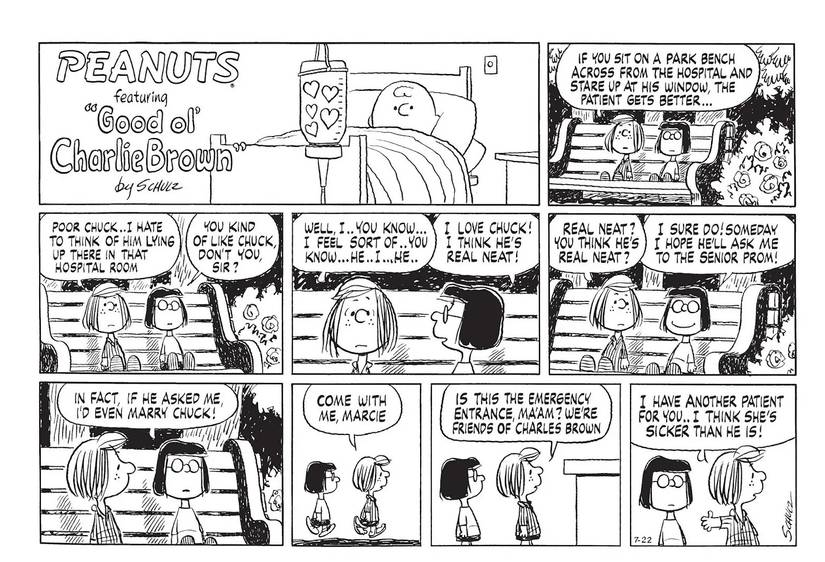
This maturation reached a narrative peak in a landmark, month-long storyline in the summer of 1979. In this arc, Charlie Brown is abruptly hospitalized. The exact nature of his ailment is never explicitly disclosed to the reader; Schulz wisely sidesteps medical melodrama to focus entirely on the behavioral ripples the hospitalization causes across the neighborhood.

The storyline serves as a masterclass in character psychology:
- Lucy Van Pelt privately admits to her own secret affection for the round-headed boy, though pride prevents her from ever voicing it to his face.
- Snoopy, wrapped up in his own solipsistic fantasy worlds, takes an uncharacteristically long time to even notice that his owner is missing from the doghouse.
- Peppermint Patty and Marcie, however, take decisive, concrete action.
In a sequence that highlights both the charming absurdity of Peanuts logic and the profound depth of Patty’s loyalty, the duo travels clear across town to visit their hospitalized friend. Upon discovering that hospital regulations prohibit young children from entering the wards, they refuse to turn back. Instead, they improvise a vigil, planting themselves on an exterior park bench to stare fixedly upward at what they deduce to be Charlie Brown’s window until the lights go out.
Patty’s justification to Marcie remains one of the defining thesis statements of friendship in the strip’s entire run:
"It’s a well-known fact, Marcie, that a patient will recover faster if he knows a friend is staring up at his room."
Supporting Context & Metrics: The Economics and Aesthetics of Peanuts
To contextualize the enduring impact of these narrative choices, it is valuable to examine the production and commercial footprint of Charles M. Schulz’s masterwork.
| Metric / Category | Historical / Archival Data |
|---|---|
| Total Run Duration | October 2, 1950 – February 13, 2000 (Nearly 50 years) |
| Total Syndicated Strips | Approximately 17,897 daily and Sunday strips |
| Peak Readership | Reached an estimated 355 million readers in 75 countries, translated into 21 languages |
| Fantagraphics Complete Set | 26 hardcover volumes, spanning roughly two years of strips per book |
| Key Merchandise Compilations | Dedicated thematic anthologies, including The Peanuts Guide to Friendship (2016) |
The Subversion of Wholesomeness
Cultural historians and comic scholars often point out a fascinating dichotomy in how Peanuts is consumed. In the public consciousness—fueled heavily by holiday television specials like A Charlie Brown Christmas (1965) and ubiquitous greeting card campaigns—the franchise is synonymous with gentle, comforting sentimentality.
However, anyone who reads the daily newspaper strips from the 1960s through the 1980s discovers a much sharper, occasionally biting work of art. Schulz was a master of structural pathos. Charlie Brown’s world is one where the kite-eating tree is a constant menace, where the football is perpetually snatched away, and where emotional isolation is a daily weather pattern.
Because genuine displays of unselfish affection and systemic kindness are so carefully rationed within the daily continuity, they carry immense narrative weight. When Lucy exhibits hidden warmth, it is an accidental slip behind an iron-clad persona. When Snoopy shows affection, it is often transactional or filtered through daydreams of being a World War I flying ace. But when Peppermint Patty sits on a cold park bench staring at a hospital window, her actions are stripped of irony, cynicism, or hidden motives. She is simply there for Chuck—full stop.
Official Statements & Critical Reception
Literary critics and cartooning historians have long debated the precise structural function of Peppermint Patty within the Peanuts universe.
In retrospective essays accompanying archival releases, comic historians have frequently highlighted how Patty bridged the gap between the mid-century suburban angst of the original cast and the more socially integrated, diverse ensemble of the late-stage strip (which welcomed characters like Franklin in 1968).
"Peppermint Patty represents an emotional bridge in Schulz’s work," notes prominent comic essayist Thomas Hindmarch. "She possesses all the eccentricities, neuroses, and stubborn pride of the original gang, but her flaws are never weaponized against Charlie Brown. While Lucy’s comedy is derived from dominance and deflation, Patty’s comedy—and her profound humanity—is derived from unconditional, albeit chaotic, solidarity."
Furthermore, animation historians note that Patty’s dynamic with Marcie and Charlie Brown helped transition the strip into television animation with remarkable ease. In specials like A Charlie Brown Valentine (2002), the tension between Patty’s aggressive romantic pursuits and her underlying emotional loyalty to "Chuck" provided a narrative engine that kept modern adaptations relevant to contemporary audiences without betraying Schulz’s foundational voice.
Future Outlook: The Timeless Legacy of Peanuts
As Peanuts moves further into its eighth decade of cultural dominance, the methods by which new generations consume the material continue to evolve. With physical compendiums like The Complete Peanuts remaining staples of graphic novel libraries and digital platforms expanding access to rare archival runs, analytical appreciation of the strip is deepening.
The modern consensus among comic scholars is shifting away from viewing Peanuts as a flat, nostalgic artifact of mid-century Americana. Instead, it is increasingly analyzed as a complex, serialized psychological landscape. Within this scholarly reassessment, characters like Peppermint Patty are shedding their superficial reputation as mere comedic foils.
Ultimately, Patty’s legacy in the strip goes far beyond her baseball cap, her academic struggles, or her perennial misreadings of romance. She provides the ultimate counter-narrative to Charlie Brown’s perpetual state of rejection. In a universe specifically engineered to make its protagonist miserable, Peppermint Patty stands out as the ultimate ride-or-die companion. She proves that even in a world where the football is always pulled away, true friendship means someone is always willing to sit in the cold dark staring up at your window, hoping you feel a little less alone.