Executive Overview
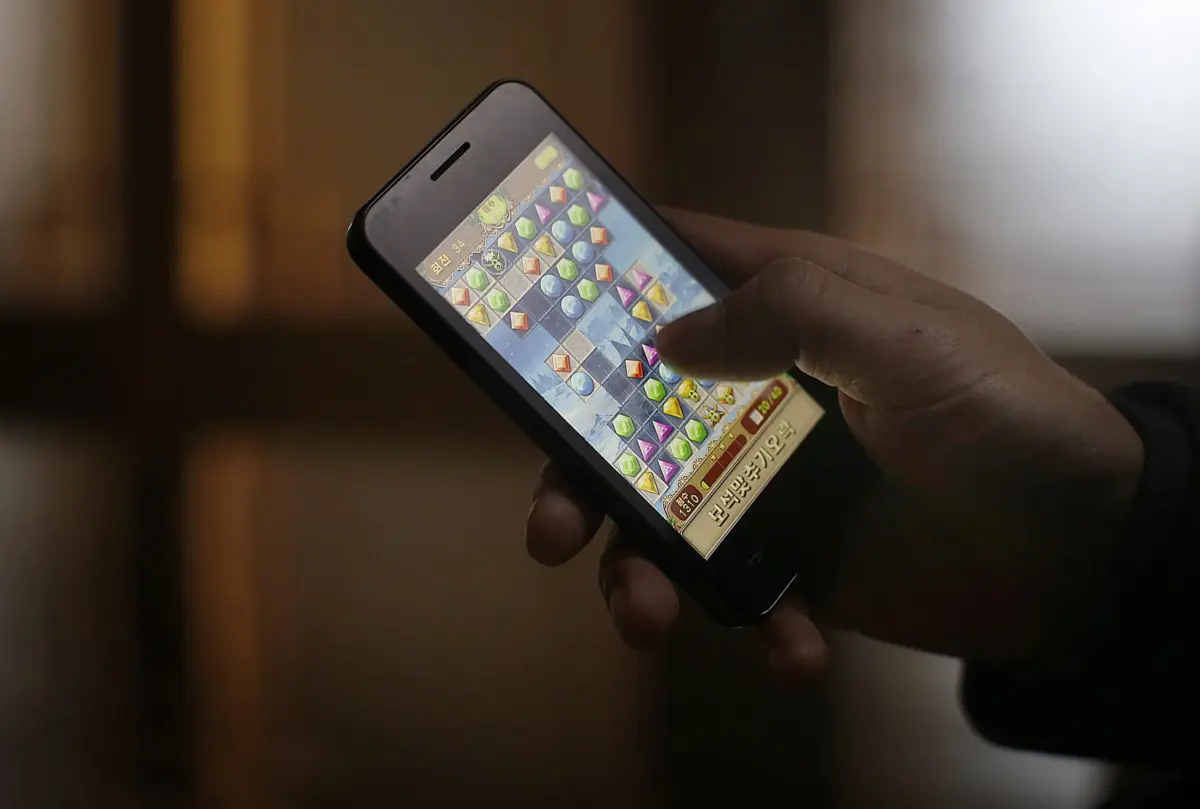
With an estimated 95 percent of American adults carrying a smartphone within arm’s reach nearly 24 hours a day, mobile devices have become an indispensable extension of modern life. However, this ubiquitous technology has ignited a persistent debate regarding its long-term biological consequences. Marking a significant regulatory turning point, the California Department of Public Health (CDPH) released the state’s first comprehensive advisory detailing actionable steps to minimize exposure to radiofrequency (RF) energy emitted by cellphones.
The advisory emerges amid mounting public scrutiny, heightened scientific inquiry, and legal pressure demanding transparency regarding potential health risks—ranging from localized tissue heating to theoretical links with brain tumors, fertility decline, and sleep disruption. While federal and international health agencies maintain that definitive proof of severe long-term harm remains elusive, public health officials emphasize a precautionary approach. By implementing basic, commonsense adjustments to everyday habits—such as avoiding keeping phones under pillows, limiting use in moving vehicles, and prioritizing speakerphone or headsets—individuals can exponentially reduce their cumulative electromagnetic exposure.
Detailed Chronology: The Road to Transparency
The release of California’s safety guidelines was not a spontaneous regulatory action; rather, it was the culmination of years of advocacy, institutional resistance, and legal battles.
- 2009: Dr. Joel Moskowitz, a psychologist and public health researcher at the University of California, Berkeley, filed a lawsuit against the California Department of Public Health. The legal action was prompted by the state’s refusal to release draft internal documents outlining potential health risks associated with cellphone radiation. For years, public health agencies remained cautious, reluctant to publish guidelines that might alarm consumers without conclusive, long-term epidemiological proof.
- Spring 2017: Following a protracted legal struggle, Dr. Moskowitz won his landmark lawsuit against the state. The court ruling compelled public health authorities to make their draft warnings accessible to the public. Dr. Moskowitz criticized the prolonged bureaucratic delay, noting that the suppression of accessible health guidance deprived citizens of the ability to make informed decisions about their daily technology consumption.
- December 2017: Prompted by the court ruling, mounting public inquiries, and historical data from the Pew Research Center indicating near-total saturation of mobile phone use across the United States, the CDPH formally published its advisory: "How to Reduce Exposure to Radiofrequency Energy from Cellphones." This document provided the public with the first official state-level framework for mitigating device-related radiation exposure.
- Present Day: The debate continues to evolve alongside multi-decade longitudinal studies like the international COSMOS project, which is currently tracking the health outcomes of over half a million mobile phone users across Europe to establish definitive long-term correlations between RF exposure and human pathology.
Supporting Context & Metrics: The Science of Non-Ionizing Radiation
To understand the necessity of precautionary guidelines, one must examine the physics of mobile communication and the biological mechanisms of non-ionizing radiation.
The Physics of Radiofrequency Energy
Cellphones communicate with cellular base stations by transmitting radio waves, a form of electromagnetic energy categorized as non-ionizing radiation. Unlike ionizing radiation (such as X-rays or gamma rays), non-ionizing radiation lacks sufficient energy to directly break chemical bonds or damage DNA through direct ionization.
However, non-ionizing radiation is fully capable of thermal agitation. Regulatory bodies, including the U.S. Food and Drug Administration (FDA), the American Cancer Society (ACS), and the National Cancer Institute (NCI), acknowledge that radiofrequency energy heats the biological tissues immediately adjacent to a phone’s antenna. When individuals hold a smartphone directly against their ear, the target tissues—specifically the skin, superficial bone structure, and localized areas of the brain—absorb this thermal energy.
The Inconclusive Landscape of Long-Term Health Risks
Because widespread consumer cellphone adoption is a relatively recent phenomenon spanning only the last three decades, researchers face significant limitations in studying multi-decade health effects.
- Oncological Concerns: While the National Cancer Institute maintains that current scientific consensus does not establish a clear link between short-term cellphone use and cancer, certain epidemiological investigations suggest caution. A prominent study published in PLOS ONE identified a statistically significant association between long-term mobile phone usage and the incidence of glioma, a malignant type of brain tumor. Conversely, critics and independent reviewers have noted limitations in historical data quality, emphasizing the necessity for ongoing, high-rigor research.
- Systemic and Physiological Effects: Beyond oncology, peer-reviewed literature indexed in the National Institutes of Health (NIH) repository highlights correlations between high mobile device exposure and secondary health complaints. These include diminished sperm motility and concentration, chronic tension headaches, structural hearing loss, and acute interference with rapid eye movement (REM) sleep architecture and memory consolidation.
Official Statements and Regulatory Perspectives
The public health establishment remains divided not on the physical facts of RF energy absorption, but on the threshold required to declare public harm.
Dr. Karen Smith, speaking on behalf of the California Department of Public Health during the 2017 rollout, underscored that the release of the guidelines was a direct response to widespread public anxiety. "We do know that there is a great deal of concern out there regarding cellphone safety," Smith noted, framing the guidelines as a proactive educational tool rather than an alarmist decree.
In contrast, federal bodies maintain a more measured stance. The NCI’s official safety fact sheet explicitly states: "Radiofrequency exposure from cellphone use does cause heating to the area of the body where a cellphone or other device is held… However, it is not sufficient to measurably increase body temperature, and there are no other clearly established effects on the body from radiofrequency energy."
Independent public health advocates, however, argue that institutional caution should not supersede the precautionary principle. Dr. David O. Carpenter, director of the Institute for Health and the Environment at the State University of New York, has observed that radiofrequency radiation consistently triggers biological effects in cellular and animal models. "We really cannot say for certain what the adverse effects are in humans," Carpenter remarked. "But the indications are that there may be—and I use the words ‘may be’—very serious effects in humans."
Five Common Cellphone Practices to Avoid
Based on the official CDPH guidelines, radiation exposure fluctuates exponentially depending on user behavior. By altering a few routine habits, consumers can dramatically curtail their absorption of radiofrequency energy. Public health officials recommend eliminating these five common practices:
1. Don’t Hold Your Phone Directly Against Your Ear
When engaging in prolonged phone calls, holding the device flush against the head maximizes local thermal absorption in the ear and brain.
- The Correction: Utilize the device’s speakerphone function whenever possible, or invest in wired and wireless (Bluetooth) headsets. Both wired and wireless earpieces emit substantially lower RF energy fields than the primary handset. Additionally, users are advised to prioritize text messaging over voice calls to minimize continuous transmission duration.
2. Avoid Using Your Phone in Fast-Moving Vehicles
When traveling in a car, train, or bus, a smartphone must constantly switch its connection from one cellular base station to the next to prevent dropped calls. Unless placed in airplane mode, the device automatically ramps up its internal transmitter power to maintain a stable link against physical barriers and distance.
- The Correction: Refrain from streaming high-bandwidth media, making long voice calls, or downloading large files while commuting at high speeds. If connectivity is required, enable airplane mode.
3. Refrain from Using Your Phone with Low Signal Bars
When a mobile device displays only one or two service bars, it indicates a weak connection to the nearest cell tower. To compensate for this distance or structural interference, the phone’s internal amplifier automatically increases its radiofrequency output to bridge the communication gap.
- The Correction: Avoid making calls or browsing data-heavy applications in remote areas, subterranean basements, or heavily shielded concrete structures where signal reception is severely compromised.
4. Never Carry Your Phone Directly Against Your Body
Many individuals routinely slip smartphones into pockets, waist holsters, or tuck them into garments directly against the skin. Because electromagnetic field (EMF) strength diminishes rapidly with distance (following the inverse-square law), keeping a device flush against bodily tissue maximizes localized exposure.
- The Correction: Transport mobile devices in a backpack, briefcase, or handbag, ensuring a physical buffer of several inches between the hardware and human tissue. When body carriage is unavoidable, switch the phone to airplane mode to eliminate continuous background transmission.
5. Never Sleep with Your Phone Under Your Pillow
A deeply ingrained modern habit is placing a smartphone directly under a pillow, on a nightstand adjacent to the head, or charging it within arm’s reach throughout the night. This results in uninterrupted, multi-hour cumulative exposure during a vulnerable restorative period.
- The Correction: Keep your smartphone at least an arm’s length away from the bed. Furthermore, configure the device to "Airplane Mode" or power it down completely before retiring for the night to eliminate all active radiofrequency emissions while sleeping.
Future Outlook
As the global telecommunications infrastructure rapidly expands—transitioning from legacy 4G networks to dense 5G architectures requiring a proliferation of small-cell base stations—public exposure to electromagnetic fields will only intensify.
While researchers await the definitive, decades-long conclusions of large-scale epidemiological investigations like the COSMOS study, regulatory bodies are increasingly embracing risk mitigation strategies. The California Department of Public Health’s guidelines signal a paradigm shift in public health communication: acknowledging that in the absence of absolute scientific certainty, empowering citizens with simple, commonsense behavioral modifications remains the most prudent defense against the invisible waves of the digital age.