The landscape of software development is undergoing a fundamental paradigm shift. Traditional application monitoring—relying on static metrics, log aggregations, and predefined error rates—is increasingly insufficient in an era defined by non-deterministic agentic artificial intelligence. When an AI agent misbehaves, standard error counters often remain completely silent. A minor prompt tweak, a subtle change in system architecture, or an unexpected tool-selection loop can drastically degrade output quality and user experience while passing traditional health checks without triggering a single system alarm.
To address this critical industry bottleneck, Amazon Web Services (AWS) has announced the general availability of Amazon CloudWatch Omni. Positioned as a unified, app-centric, and AI-powered observability experience, CloudWatch Omni is explicitly designed to tackle the unique monitoring, evaluation, and experimentation hurdles associated with modern AI workloads and autonomous agents.
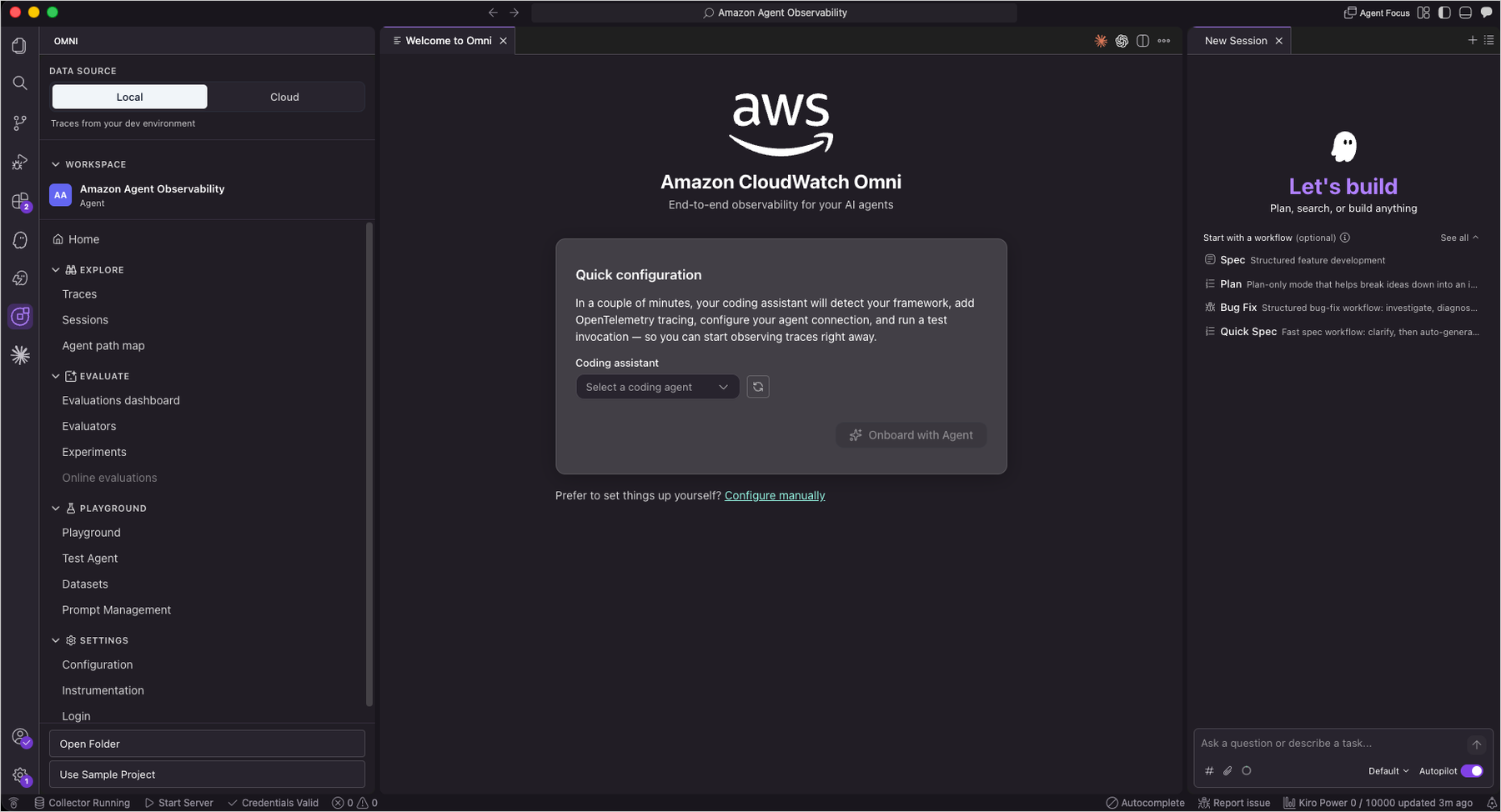
Built on open standards like OpenInference and the AWS Distro for OpenTelemetry (ADOT), CloudWatch Omni decouples deep developer tooling from traditional cloud consoles. It delivers its comprehensive suite of features across two distinct yet interconnected surfaces: a native integrated development environment (IDE) extension for tools like VS Code and Kiro, and a standalone, browser-based web experience accessible via Single Sign-On (SSO) entirely independent of the AWS Management Console. By uniting local developer debugging with fleet-wide operational oversight into a single, cohesive framework, CloudWatch Omni aims to bridge the long-standing divide between how code is written and how production systems are maintained.
Detailed Chronology
The Breaking Point of Non-Deterministic Systems
As enterprises rapidly transition from simple prompt-response interactions to complex, multi-turn autonomous agents capable of chaining sub-calls, invoking external APIs, and dynamically selecting tools, development teams have encountered a profound observability crisis.
Historically, debugging meant tracking down stack traces and reviewing linear logs. With agentic AI, behavior is inherently non-deterministic. A system might successfully execute a task in ninety-nine cases out of a hundred, only to fail catastrophically on the hundredth due to a subtle shift in context or a minor drift in model token generation. Previously, engineering teams spent tedious hours manually scraping and correlating logs across fragmented, siloed AI monitoring utilities. Developers were forced into constant context-switching, leaping haphazardly between their localized coding environments and external web-based dashboards just to trace a single aberrant tool invocation.
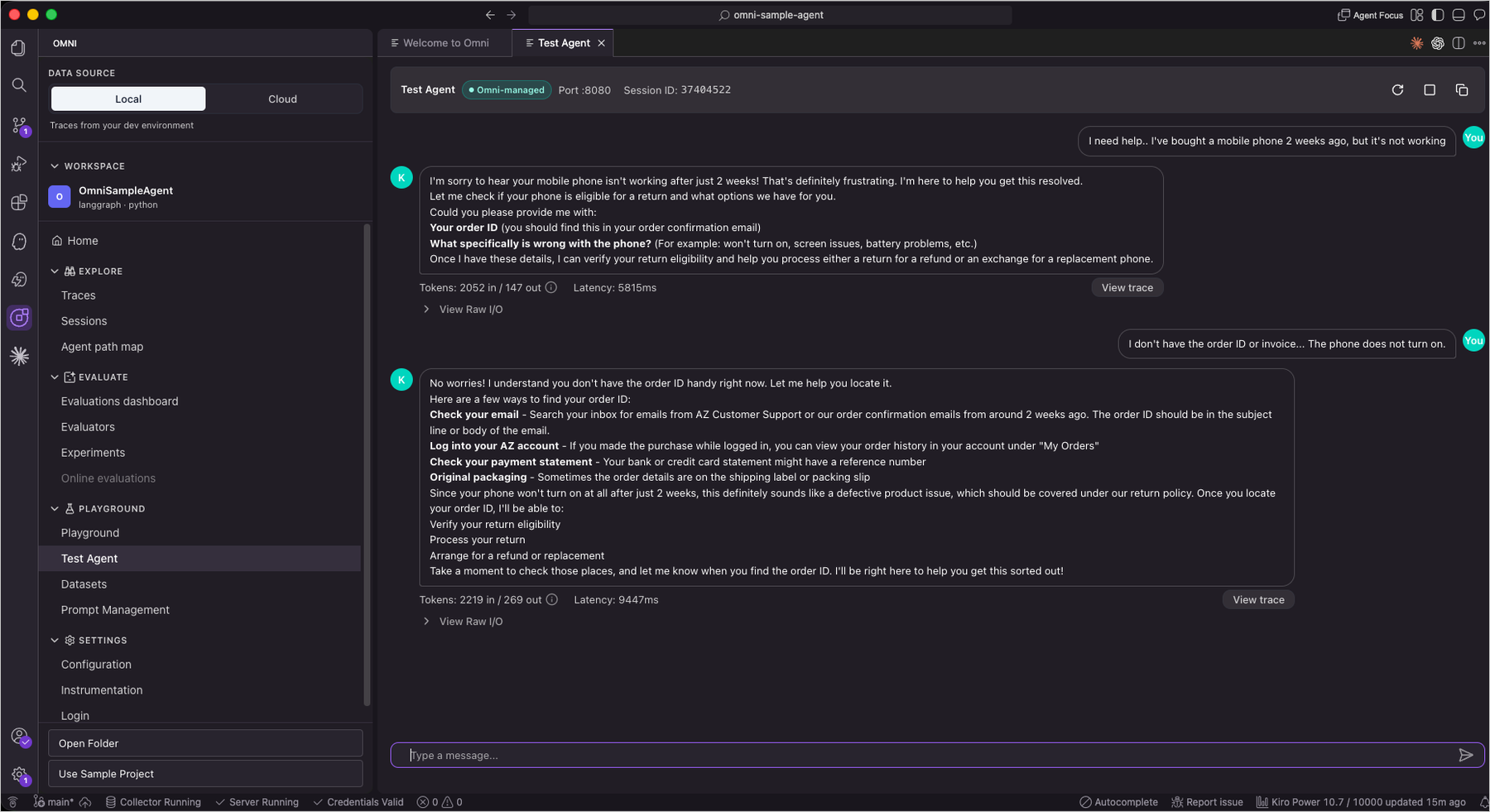
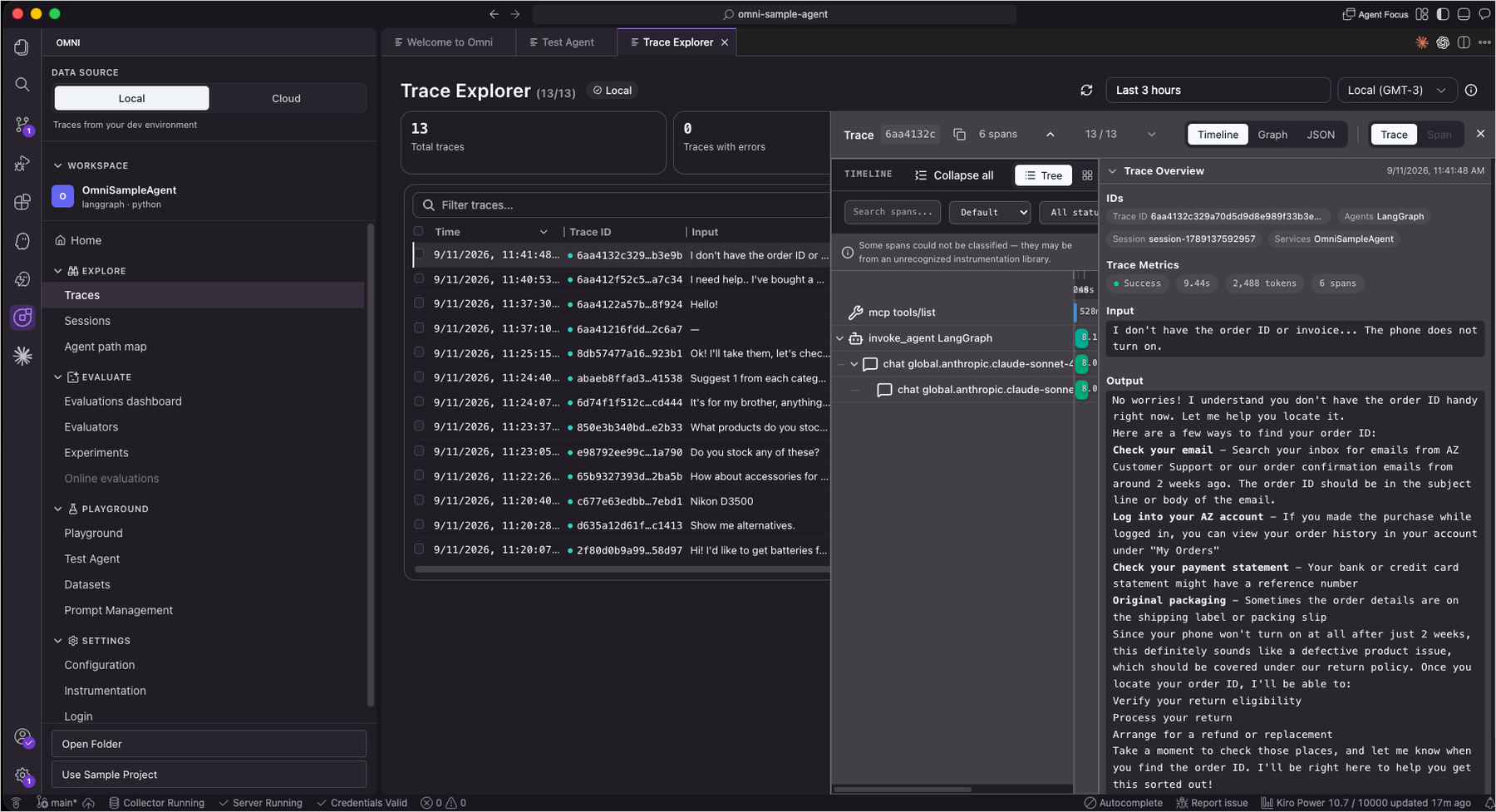
Recognizing this operational friction, AWS engineered CloudWatch Omni to capture the entire lifecycle of an AI agent’s execution. By recording every trace—spanning model calls, decision loops, prompt generations, and programmatic tool selections—the platform provides a structured, hierarchical timeline that demystifies agentic behavior.

From Local Development to Production Operations
The rollout of CloudWatch Omni introduces a dual-surface architecture engineered to eliminate friction throughout the software development lifecycle (SDLC):
- The IDE Extension Surface: Tailored specifically for developers using supported environments like VS Code and Kiro, the local extension operates seamlessly within the developer’s normal workflow. Traces populate automatically as agents execute locally. Developers can immediately interact with a built-in playground, run prompt comparisons, and invoke evaluators without ever leaving their code editor.
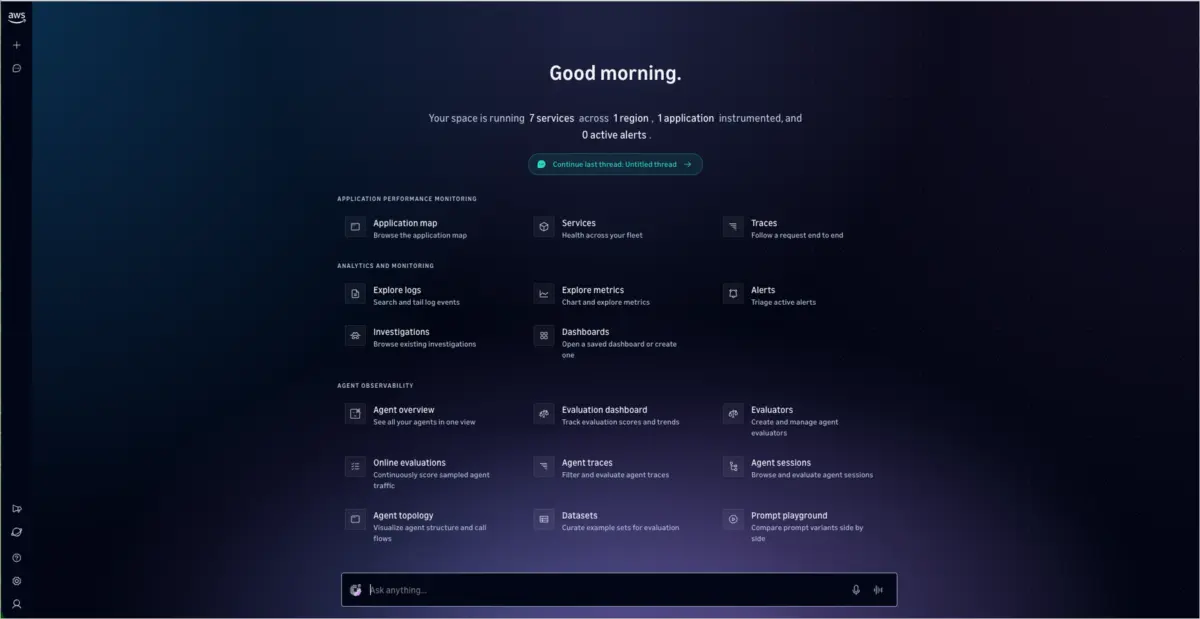
- The Standalone Web Experience: Designed for operations teams, product managers, and reliability engineers, this web portal operates completely separate from the traditional AWS Management Console. Accessible via enterprise SSO, it provides a centralized dashboard for monitoring production fleets, evaluating system health, and conducting collaborative, AI-powered investigations.
Crucially, these two worlds are bridged by a unified data architecture. The exact trace a developer troubleshoots on their local machine during a late-night debugging session is the exact same trace an operator analyzes when investigating a production anomaly downstream.
Furthermore, CloudWatch Omni introduces flexible cloud connectivity. Through the Cloud Login feature, developers can choose to keep their telemetry entirely local during early-stage prototyping to maintain data privacy and speed. When the agent is ready for staging or production, a simple authentication step securely transmits telemetry to Amazon CloudWatch for persistent storage, team-wide trace sharing, and historical metric tracking.
Supporting Context & Metrics
Comprehensive Evaluation and Open Framework Compatibility
Observability without evaluation is merely data accumulation. To transform telemetry into actionable quality improvements, CloudWatch Omni features 17 built-in evaluators that score agent responses across vital quality dimensions—including coherence, helpfulness, faithfulness, and routing correctness.
Instead of forcing engineering teams to construct bespoke evaluation harnesses from scratch, CloudWatch Omni allows developers to:
- Select live production traces directly from the Trace Explorer.
- Execute batch evaluations instantly against pre-configured or custom test datasets.
- Leverage Compare mode to place two distinct execution paths side-by-side, visually contrasting how modified prompts or upgraded model variants impact execution time, token consumption, and output accuracy.
- Utilize the Ask Assistant feature, an embedded AI co-pilot capable of analyzing intricate traces to answer complex diagnostic queries, such as identifying precisely why an agent redundantly invoked a specific database tool.
Ecosystem Integration and Standards-Based Instrumentation
A primary barrier to modern observability adoption is vendor lock-in. CloudWatch Omni deliberately circumvents this limitation by embracing open standards. The platform natively supports instrumentation libraries built on OpenInference and the AWS Distro for OpenTelemetry (ADOT).
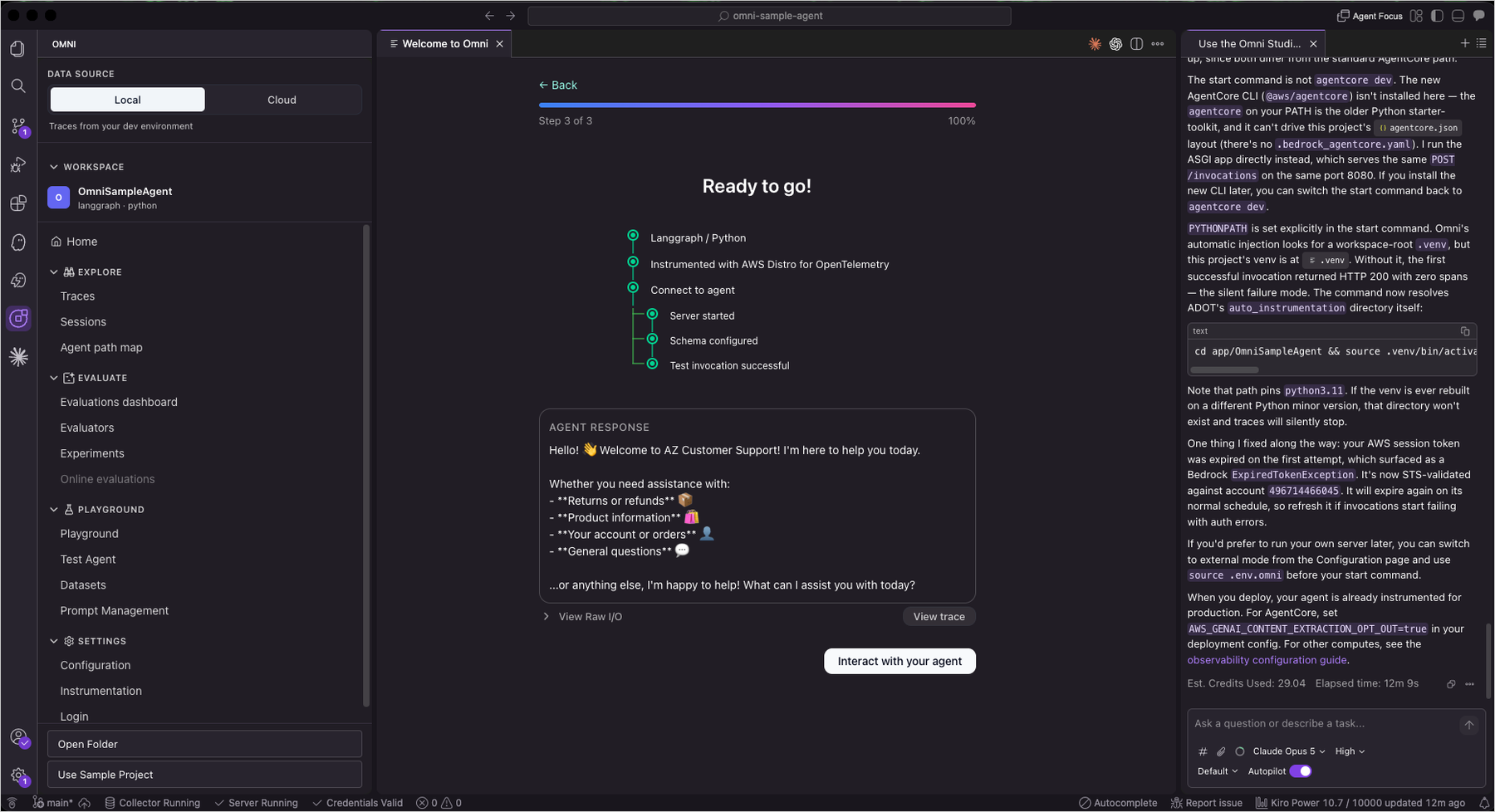
Whether agents are deployed on serverless architectures like AWS Lambda, containerized clusters on Amazon ECS and EKS, or alternative cloud providers, integration requires no disruptive re-platforming. CloudWatch Omni natively integrates with the industry’s most popular agent frameworks, including LangChain, LangGraph, CrewAI, the OpenAI SDK, Strands, and the Vercel AI SDK—supporting both Python and TypeScript development environments. Additionally, it offers first-class observability for agents constructed using Amazon Bedrock AgentCore, smoothly incorporating Bedrock’s native evaluation capabilities directly into the Omni workflow.
For teams managing legacy or custom codebases, the platform provides automated setup pathways. AI code assistants such as Kiro, Claude Code, and Codex can automatically detect project frameworks, install required dependencies, configure local development servers, and insert OpenTelemetry instrumentation in a matter of minutes.
Official Statements
Industry analysts and AWS architects alike have underscored the significance of CloudWatch Omni in standardizing how modern organizations build and maintain intelligent systems.
Daniel Abib, principal product lead behind the release, emphasized the critical need to unite application and AI observability into a singular, frictionless experience:
"Organizations deploying agentic AI systems face observability challenges that traditional monitoring simply cannot address. Agent behavior is non-deterministic: a prompt change can degrade response quality even when standard metrics show zero errors. CloudWatch Omni is built to bridge the gap between local development and cloud operations, giving teams the exact trace visibility, eval-driven workflows, and automated diagnostic tools required to move from guesswork to engineering certainty."
AWS engineering leadership has further highlighted that CloudWatch Omni represents a fundamental evolution in cloud-native telemetry. By shifting evaluation left into the developer’s IDE while simultaneously elevating operational visibility through console-independent web dashboards, AWS aims to eliminate the context-switching tax that has historically plagued artificial intelligence engineering teams.
Future Outlook
As autonomous agents transition from experimental toys to mission-critical enterprise infrastructure, the demand for rigorous, scalable, and transparent oversight will only intensify. The launch of Amazon CloudWatch Omni establishes a powerful new benchmark for what development teams should expect from their monitoring stacks.
Looking ahead, the roadmap for agentic observability points toward deeper automation in regression testing and continuous agent self-correction. Features like golden dataset curation, automated experiment scoring, and prompt versioning (Prompt Management) lay the groundwork for CI/CD pipelines tailored specifically for generative AI. In these pipelines, code changes will not only be tested for syntax and latency, but continuously benchmarked against qualitative correctness dimensions before hitting production environments.
Ultimately, CloudWatch Omni signals a maturation of the generative AI sector. By democratizing access to enterprise-grade tracing, evaluation, and experimentation tools—while remaining free to use at the IDE level without requiring an immediate AWS account—Amazon has lowered the barrier to entry for robust AI engineering. As organizations increasingly anchor their operational strategies around multi-model, multi-framework agent ecosystems, unified solutions like CloudWatch Omni will likely transition from optional developer luxuries to absolute operational necessities.