Executive Overview
In the hyper-accelerated ecosystem of modern digital culture, memes are born, monetized, and discarded with dizzying velocity. However, every so often, a phenomenon emerges that transcends the standard lifecycle of viral content, morphing into a meta-commentary on the very nature of internet virality itself. Enter the "Sleepy Jerry" meme—a cultural touchstone that dominated social media timelines throughout the summer and autumn of 2026.
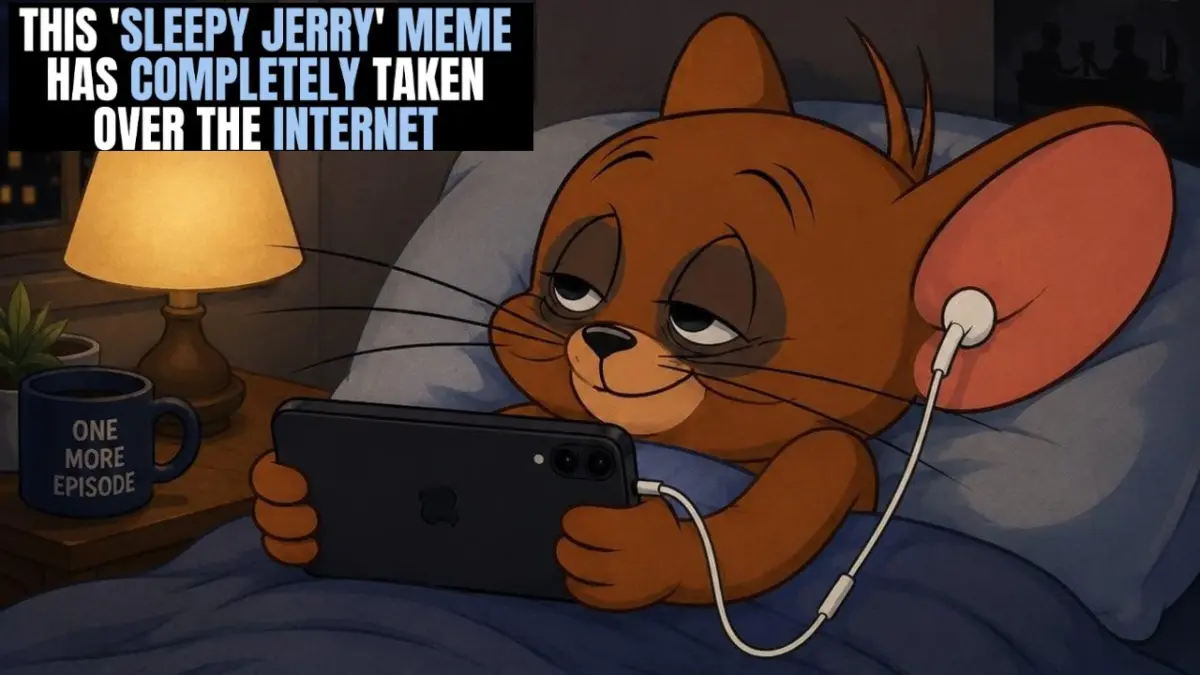
At its core, the phenomenon features a deceptively simple image: an artificial intelligence-generated depiction of Jerry, the iconic mouse from Hanna-Barbera’s classic Tom and Jerry cartoon, lying awake in bed with heavy, exhausted eyes while scrolling late-night content on a smartphone. While the image initially resonated as a deeply relatable reaction format for late-night binge-watching, sleep deprivation, and the desperate post-work search for "me time," it quickly mutated.
The true catalyst for the meme’s cultural permanence was an ironic companion format: the bold proclamation, "This ‘Sleepy Jerry’ meme has completely taken over the internet." Shared on platforms like Instagram, X (formerly Twitter), Reddit, and TikTok, this declaration was paired with an inherent absurdity. For many users encountering the phrase for the very first time, the claim that an obscure, AI-generated cartoon mouse had "taken over" was patently false. This paradox—claiming universal ubiquity for a niche meme—transformed the format into a sophisticated weapon of internet irony. It became the ultimate tool for calling out "forced memes," synthetic corporate marketing pushes, and the exaggerated hyperbolic metrics used by modern media outlets to describe digital trends.
This report provides an exhaustive journalistic investigation into the origin, chronological spread, sociological mechanics, and long-term implications of the "Sleepy Jerry" phenomenon, charting its trajectory from an innocuous Facebook image macro to a masterclass in digital satire.
Detailed Chronology
To understand how a tired cartoon rodent captured the collective consciousness of millions, one must trace the timeline of its evolution across the fragmented landscape of social media. The "Sleepy Jerry" phenomenon is a textbook study in decentralized content creation, shifting from organic relatability to meta-irony over the course of several months in 2026.
Phase 1: Genesis and Early Adoption (May – June 2026)
The groundwork for the phenomenon was laid on May 8th, 2026, when the Facebook page Who Cares? published an unassuming image macro. The post featured an AI-generated rendering of Jerry the mouse, his whiskers slightly disheveled, propped up on pillows in a dark bedroom, staring blankly at the glowing screen of a mobile device. The overlay text read: "When I find a perfect old series with 6 seasons and 16+ episodes each."
While technically unsophisticated, the image struck a chord. It visually encapsulated the modern dread and comfort of late-night media consumption—the psychological trap of embarking on a massive television archive when one should clearly be sleeping. Over the next month, the image trickled through secondary networks, appearing on smaller community pages like the Avryanna Burch Facebook page on June 8th. At this stage, Sleepy Jerry was merely a standard reaction image, functioning similarly to existing formats depicting sleep deprivation or digital exhaustion.
Phase 2: The Meta-Irony Influx and Viral Acceleration (Late June 2026)
The trajectory of the meme shifted permanently on June 22nd, 2026. Instagram user memegod published a carousel collection of Sleepy Jerry memes. Crucially, the very first slide of the carousel featured a bold declaration: "This ‘Sleepy Jerry’ meme has completely taken over the internet."
This rhetorical framing was brilliant in its audacity. By asserting that a modest, moderately shared Facebook image had already achieved absolute cultural dominance, the post created an immediate cognitive dissonance. Users who had never seen the mouse before were forced to question their own digital literacy. Had they missed a massive trend? Was the internet moving too fast for them to keep up?
Rather than accepting the premise, the digital community leaned heavily into the irony. The phrase "This ‘Sleepy Jerry’ meme has completely taken over the internet" was ripped from its original context and weaponized. It became a punchline deployed against the very concept of forced virality.
Phase 3: Mainstream Saturation and Cross-Platform Migration (July – August 2026)
By July 2026, the meme had broken containment, spreading across virtually every major social platform through distinct stylistic adaptations:
- July 14th: X user
@Okay_Bye___published an AI-driven video variant of the meme captioned, "Me refusing to sleep because i didn’t get enough me time after work." The post exploded, accumulating over 578,000 likes within three months and proving that the core emotional appeal of the image remained universally potent. - July 15th: An Instagram humor page deployed the format to comment on temporal distortion, posting: "We went from July 1 to July 15 in about 7 business seconds."
- July 24th: Redditor Next-Rub7159 shared a screenshot of the original memegod claim to the tongue-in-cheek subreddit
r/lies, explicitly mocking the falsehood that the meme was ubiquitous, garnering over 3,300 upvotes. - August 22nd: TikTok creator
@eloh.gdshowcased a Discord screenshot featuring a derivative mutation of the format, introducing "Sleepy Verity" (drawing from the Minecraft ARG Verity) and proving that the template was endlessly expandable to other fandoms and digital characters.
Phase 4: Peak Saturation and Institutional Critique (October 2026)
By the autumn of 2026, the "Sleepy Jerry" template had evolved into a sophisticated tool for critiquing media hype cycles. On October 1st, X user @xaviersonline_ deployed the meme in direct response to a news report from Dexerto concerning a supposedly viral AI character named "Benjamin Stachio"—a three-mustached man with an unusually thick neck making the rounds on digital platforms.
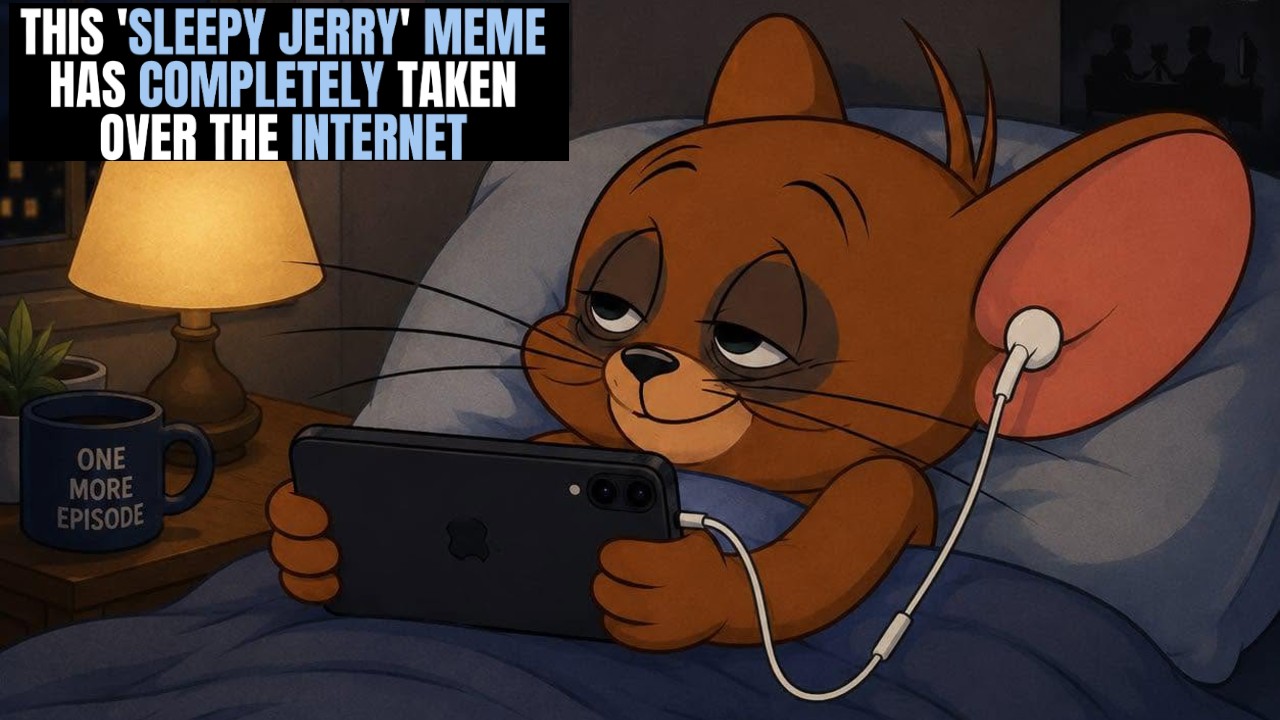
By replying with the memegod "Sleepy Jerry" declaration, @xaviersonline_ delivered a biting critique of manufactured internet trends. The message was clear: modern media platforms and algorithmic content generators were manufacturing "viral" personalities out of thin air, and the Sleepy Jerry reaction served as a cynical, exhausted antidote to these artificial spectacles.
Supporting Context & Metrics
To fully appreciate the scope of the "Sleepy Jerry" phenomenon, one must examine the quantitative footprint it left across digital platforms, as well as the underlying cultural anxieties it tapped into.
Quantitative Engagement Breakdown
While exact platform-wide impressions are difficult to aggregate due to the decentralized nature of meme sharing, key milestone posts offer a clear window into audience reception:
| Date | Platform / User | Content Summary | Engagement Metrics |
|---|---|---|---|
| May 8, 2026 | Facebook (Who Cares?) | Original "Old series binge" image macro | 4,400+ likes, 500+ shares |
| June 22, 2026 | Instagram (memegod) | Carousel introducing the "taken over the internet" claim | 900+ shares |
| July 14, 2026 | X (@Okay_Bye___) |
"Me refusing to sleep" video variant | 578,000+ likes |
| July 24, 2026 | Reddit (r/lies) |
Screenshot questioning the meme’s actual reach | 3,300+ upvotes |
| August 22, 2026 | TikTok (@eloh.gd) |
"Sleepy Verity" Discord adaptation | 119,000+ views |
| October 1st, 2026 | X (@xaviersonline_) |
Critique of the "Benjamin Stachio" AI trend | 68,000+ likes |
The Sociology of "Forced Memes" and AI Fatigue
The rapid adoption of Sleepy Jerry cannot be separated from two broader trends defining the mid-2020s internet: AI fatigue and the anxiety surrounding manufactured virality.
By 2026, generative artificial intelligence tools had flooded social media feeds with hyper-stylized, uncanny, and often low-effort imagery. Users were increasingly exhausted by content generated by prompt engineers designed to game recommendation algorithms. The original Sleepy Jerry image—generated via AI—ironically became a vessel to mock the very medium of its creation.
Furthermore, the phrase "This meme has completely taken over the internet" directly targets the hyperbole endemic to modern digital journalism and corporate marketing. When media aggregators and brand accounts routinely label every minor trending audio or visual glitch as "breaking the internet," audiences develop an acute cynicism. The Sleepy Jerry meme operationalized this cynicism, giving internet users a shared vocabulary to push back against institutional exaggeration. By falsely claiming that a tired cartoon mouse was the most important cultural artifact of the year, users engaged in collective satire, mocking the metrics-obsessed reality of contemporary online life.
Official Statements and Cultural Commentary
As the "Sleepy Jerry" format spilled over from niche meme pages into mainstream discourse, cultural commentators, digital sociologists, and internet historians weighed in on its significance. While the meme lacks a centralized corporate entity or official spokesperson, its trajectory has been analyzed extensively across creator spaces and digital culture forums.
Dr. Elena Vance, a media theorist specializing in digital folklore, noted in a recent essay on contemporary meme structures:
"The Sleepy Jerry phenomenon represents a fascinating evolution in internet self-awareness. In the past, memes relied on shared reference points from television or cinema. Today, memes frequently reference their own distribution mechanics. By declaring that an AI-generated mouse has ‘taken over,’ users are engaging in a form of hyper-ironic gaslighting. It is a collective agreement to artificially inflate the importance of a mundane object simply to expose the ridiculousness of how media velocity operates today."
Similarly, prominent content creators on X and TikTok highlighted the format’s utility as a psychological safety valve. In an era marked by relentless algorithmic pressure to consume, produce, and engage, the image of Jerry staring blankly into his phone at 3:00 AM served as an uncanny mirror for the modern digital worker and late-night scroller. It transformed private exhaustion into public camp.
Future Outlook
As the calendar turns and new digital fads threaten to overwrite current timelines, the legacy of the "Sleepy Jerry" meme offers valuable insight into the future of internet culture.
- The Rise of Meta-Satire: Formats that mock the very concept of "viral trends" will likely become more prevalent. As audiences grow increasingly sophisticated—and increasingly skeptical of algorithmic curation—memes that rely on transparent exaggeration and ironic self-deprecation will outperform traditional, unironic templates.
- The Normalization of AI in Pop Culture Folk Art: Despite initial resistance to generative AI in creative communities, memes like Sleepy Jerry demonstrate how synthetic imagery can be subverted, reclaimed, and integrated into grassroots digital folklore. Jerry did not become famous because he was generated by a sophisticated neural network; he became famous because human beings weaponized his tired expression to articulate their own modern malaise.
- Endurance of the Template: While the specific phrase "This ‘Sleepy Jerry’ meme has completely taken over the internet" will eventually fade into digital archives alongside predecessors like "Loss" or "Doge," its structural DNA—the declaration of false ubiquity—has established a permanent archetype for internet irony.
Ultimately, Sleepy Jerry reminds us that beneath the relentless churn of algorithmic feeds, endless content notifications, and synthetic AI creations, humanity’s greatest coping mechanism remains our shared, exhausted laughter in the dark.