Executive Overview
With industry reports indicating that Naughty Dog is quietly setting the wheels in motion for a potential Uncharted 5, the studio faces a monumental creative challenge. How does a developer successfully resurrect one of the most celebrated action-adventure franchises in video game history after Uncharted 4: A Thief’s End (2016) provided a definitive, emotionally resonant conclusion to Nathan Drake’s globetrotting career?
The answer, paradoxically, does not lie in looking forward to a brand-new protagonist from scratch, nor does it rely on attempting to recreate the sprawling cinematic weight of Drake’s final hurrah. Instead, the blueprint for the franchise’s future has already been written—and perfected—in the immediate aftermath of Uncharted 4.
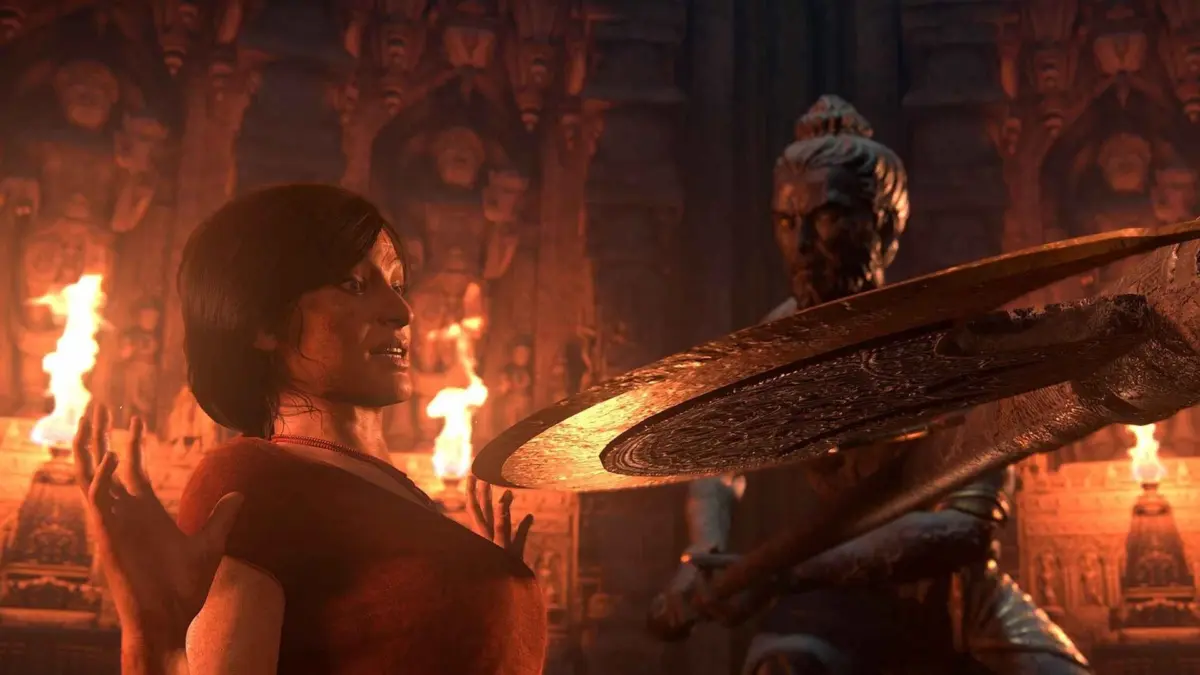
Released in 2017 as a standalone expansion, Uncharted: The Lost Legacy stepped away from Nathan Drake entirely, placing franchise veteran Chloe Frazer and former antagonist Nadine Ross in the spotlight. Co-directed by Shaun Escayg—who is reportedly poised to lead Naughty Dog into this newly rumored era—The Lost Legacy managed the impossible: it preserved the core mechanical DNA of the franchise while trimming away its systemic fat. By refining the series’ scope, mastering its pacing, and introducing a compelling interpersonal dynamic, The Lost Legacy ultimately surpassed every mainline entry that preceded it. As Naughty Dog looks toward the horizon of a post-Drake era, examining this 2017 gem reveals precisely how the franchise can thrive in the years to come.
Detailed Chronology: The Evolution of Naughty Dog’s Cinematic Formula
To understand the triumph of The Lost Legacy, one must trace the evolutionary trajectory of the Uncharted series from its 2007 origins on the PlayStation 3 to its modern iterations on current-gen hardware.

The Golden Era and the Original Trilogy (2007–2011)
When Uncharted: Drake’s Fortune debuted in 2007, it established Naughty Dog as a master of cinematic action-adventure, blending platforming, gunplay, and witty banter. This foundation was expanded exponentially in 2009’s critically acclaimed Uncharted 2: Among Thieves, a game widely credited with defining the aesthetic and narrative standards of the PlayStation 3 generation. By the time Uncharted 3: Drake’s Deception arrived in 2011, the formula was well-established: brisk 8-to-10-hour campaigns featuring escalating set pieces, globe-spanning lore, and Nathan Drake serving as the roguish, wisecracking anchor of every chaotic scenario.
The Outlier: Uncharted 4: A Thief’s End (2016)
When Uncharted 4 launched on the PlayStation 4, it arrived with the heavy burden of closing out a beloved icon’s journey. Naughty Dog leaned heavily into a mature, introspective narrative tone. While the game achieved critical acclaim for its graphical fidelity, character depth, and emotional closure, it also introduced structural changes that divided purists. At roughly 14 to 16 hours long, Uncharted 4 was significantly longer than its predecessors. In stretching the narrative canvas, however, the studio invited pacing issues that previous entries had largely avoided.
The Course Correction: Uncharted: The Lost Legacy (2017)
Recognizing the structural drag of its previous magnum opus, Naughty Dog pivoted swiftly. Developed initially as a piece of downloadable content before expanding into a full standalone release, The Lost Legacy reunited players with Chloe Frazer—previously introduced in Uncharted 2 and 3—alongside Uncharted 4 mercenary Nadine Ross. Co-directed by Shaun Escayg and Kurt Margenau, the 2017 release served as a masterclass in concise design. It stripped away the exhaustive preamble of Uncharted 4, returning the series to its punchy, breathless roots while executing a bold new chapter for characters outside the Drake bloodline.
Supporting Context & Metrics: Scope, Pacing, and Design Philosophy
The success of Uncharted: The Lost Legacy can be quantified and understood through three primary pillars: runtime scope, narrative momentum, and environmental design.

1. The Sweet Spot of Runtime and Pacing
According to industry data aggregators like HowLongToBeat, the traditional Uncharted trilogy averages a brisk 8 to 10 hours of gameplay. Uncharted 4, by contrast, nearly doubles that investment. While a longer runtime works well for epic role-playing games, a linear cinematic blockbuster risks wearing out its welcome when the adrenaline-pumping highs are separated by bloated exploration and repetitive driving segments.
The Lost Legacy clocks in at an efficient 7 to 8 hours. Far from feeling like a "nice snack between meals," this trimmed-down runtime recontextualizes the game’s density. Every set piece feels earned, every gunfight serves a narrative or mechanical purpose, and the game entirely eliminates the sluggish, drawn-out flashbacks (such as Drake’s teenage years) that bogged down the pacing of its immediate predecessor. It is, simply put, all killer and no filler.
| Game Title | Average Main Story Playtime | Core Focus / Structural Approach |
|---|---|---|
| Uncharted: Drake’s Fortune (2007) | ~8 Hours | Linear, atmospheric foundation-building |
| Uncharted 2: Among Thieves (2009) | ~9.5 Hours | Cinematic escalation, iconic set pieces |
| Uncharted 3: Drake’s Deception (2011) | ~9 Hours | Spectacle-driven set-piece choreography |
| Uncharted 4: A Thief’s End (2016) | ~15 Hours | Emotional closure, sprawling environments, variable pacing |
| Uncharted: The Lost Legacy (2017) | ~7.5 Hours | Streamlined focus, refined mechanics, singular open interlude |
2. Mastering the Semi-Open World: The Western Ghats
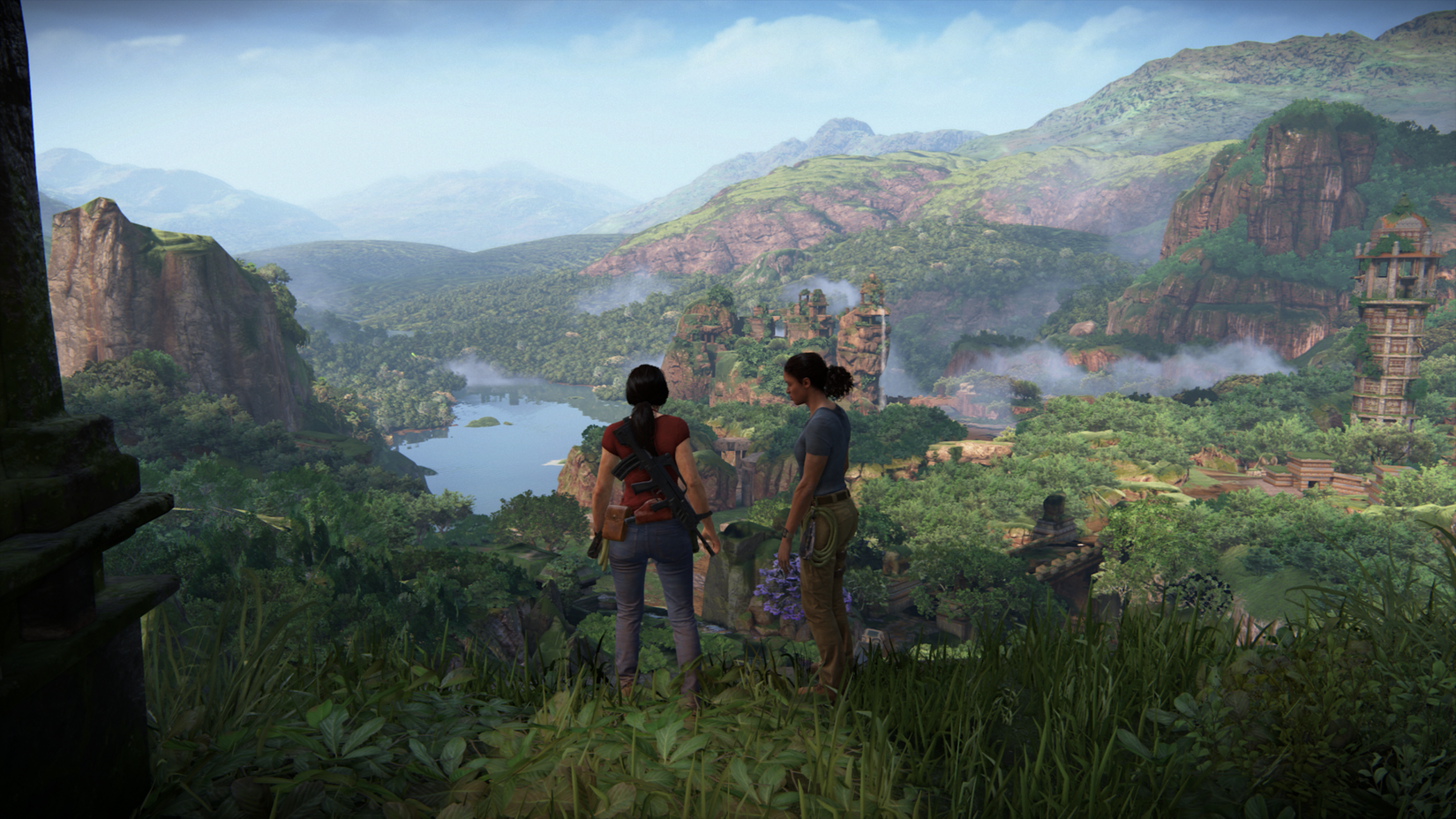
One of the major criticisms leveled at Uncharted 4 was its inclusion of overly large, dreary vehicular exploration segments that often ground the game’s momentum to a halt. The Lost Legacy brilliantly corrected this misstep in Chapter 4: The Western Ghats.
Acting as a single, beautifully designed semi-open-air interlude between the game’s narrative acts, the Western Ghats drops Chloe and Nadine into a sprawling Indian landscape dotted with ancient towers, optional puzzles, and hidden collectibles. Players are given the freedom to tackle objectives in any order they choose. Crucially, Naughty Dog exercised restraint: this style of level design appears only once in the entire game. Because of its singularity, it serves as a refreshing change of pace without ever overstaying its welcome or bleeding into tedious open-world fatigue.
Official Statements and Industry Insights
The legacy of The Lost Legacy and its foundational importance to Naughty Dog’s future has been a frequent topic of discussion among the studio’s creative leads and industry analysts alike.
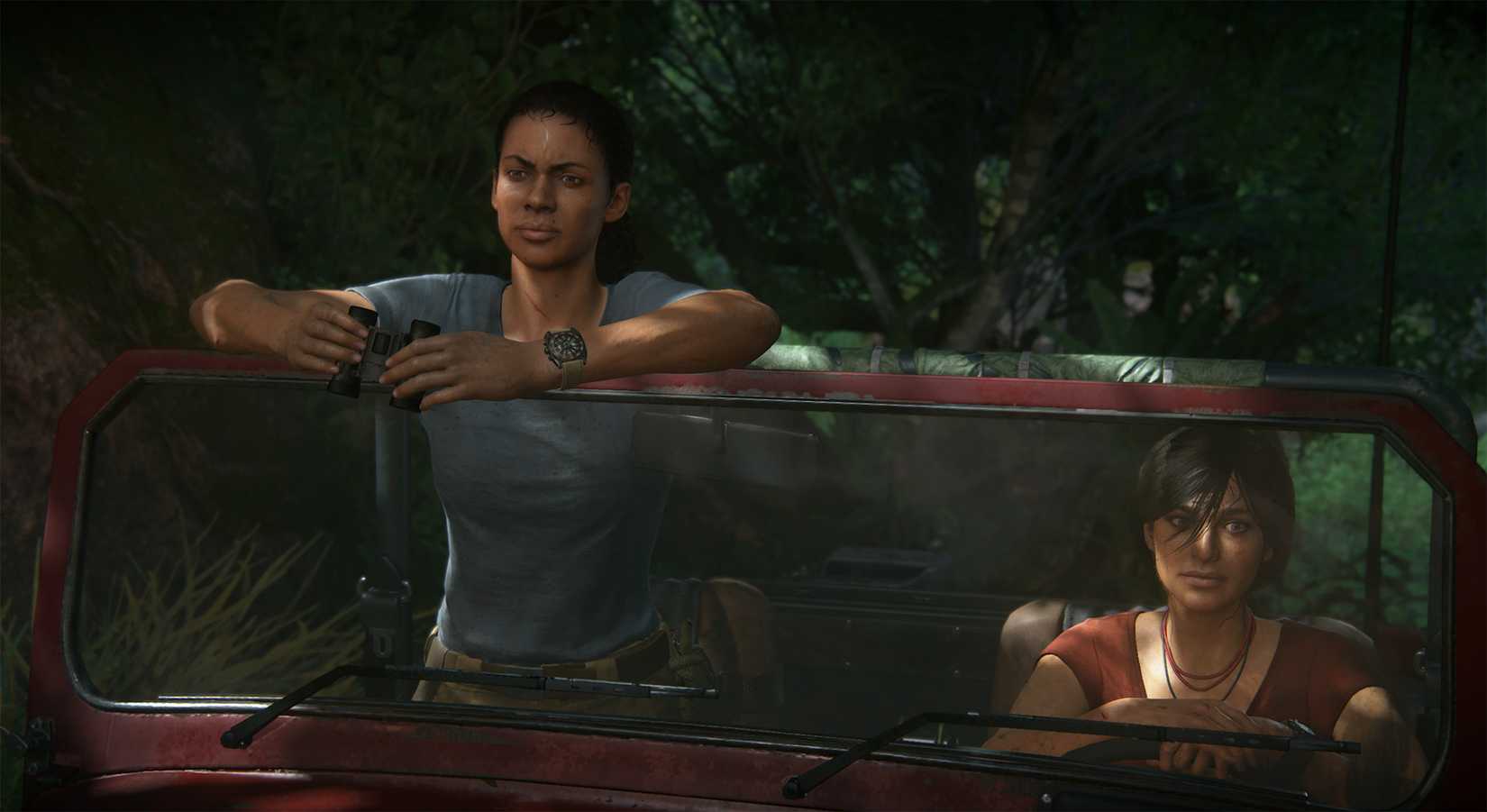
Reflecting on the challenges of stepping away from Nathan Drake, co-director Shaun Escayg previously emphasized the necessity of finding characters who could match the franchise’s historical wit while bringing entirely new emotional baggage to the table. In interviews surrounding the game’s 2017 launch, production teams noted that Chloe Frazer—portrayed with electric charisma by Claudia Black—offered a distinct moral ambiguity that set her apart from Drake’s classic "hero with a heart of gold" archetype.
Paired with Laura Bailey’s grounded, pragmatic performance as Nadine Ross, the dynamic functioned as a masterclass in character friction and growth. Industry analysts frequently cite this partnership as proof that the Uncharted universe was never exclusively about Nathan Drake’s bloodline, but rather about the timeless allure of historical myth-making, human resilience, and sparkling repartee.
Furthermore, with Kurt Margenau—co-director of The Lost Legacy—currently spearheading Naughty Dog’s upcoming sci-fi intellectual property, Intergalactic: The Heretic Prophet, the design sensibilities forged during the development of Chloe and Nadine’s adventure continue to ripple outward across the entire studio.
Future Outlook: What Uncharted 5 Can Learn From Its Predecessor
As rumors surrounding Uncharted 5 continue to circulate within the gaming community, the path forward for Naughty Dog is simultaneously daunting and crystal clear.
Re-entering the jungle without Nathan Drake is no longer an untested experiment; it is a proven methodology. The Lost Legacy demonstrated definitively that fans do not need the original protagonist to care about lost treasures, crumbling ruins, and high-stakes cinematic escapes. What players do need—and what Naughty Dog must prioritize in any future installment—is the disciplined adherence to sharp pacing, memorable character chemistry, and respectful respect for the player’s time.
If Shaun Escayg takes the helm of Uncharted 5, he brings with him a proven track record of knowing how to distill the Uncharted formula down to its absolute best components. By learning from the narrative bloat that occasionally hampered Uncharted 4 and leaning into the kinetic, focused brilliance of The Lost Legacy, Naughty Dog has a golden opportunity. They can honor the past while carving out a thrilling, uncompromised future for a franchise that still has plenty of hidden history left to unearth.