Executive Overview
In the fast-paced, ever-shifting landscape of web development, standing still is tantamount to moving backward. For nearly two decades, CSS-Tricks has served as an indispensable beacon for front-end engineers, designers, and web architects. Yet, even the most enduring institutions require a revitalization to stay aligned with modern technological standards. Five years after its last major design iteration—an epoch in web years—the platform has officially rolled out its Version 20 theme.
Rather than executing a disruptive, ground-up rebuild that risks alienating its loyal readership, the site’s caretakers opted for a meticulous, iterative modernization. This update focuses heavily on invisible architecture: purging legacy scripts, modernizing build tools, tightening site security, refactoring the Sass codebase, and establishing a unified design system. Simultaneously, Version 20 introduces delightful aesthetic enhancements, including a native theme toggle, playful SVG-driven textures, cutting-edge CSS shapes, and overhauled index pages for its iconic Almanac and Guides.

The results speak for themselves. By stripping away nearly a decade of technical debt, the platform achieved a staggering reduction in total page weight—plummeting from 2.03 MB down to 1.24 MB—while simultaneously boosting accessibility, security compliance, and overall interactivity metrics. This comprehensive architectural audit demonstrates how mature web properties can successfully bridge the gap between historical legacy and cutting-edge web capabilities.
Detailed Chronology: Excavating Ghosts and Modernizing Foundations
The journey toward Version 20 began weeks prior to its public deployment, driven by an urgent need to shed accumulated technical debt. Over 19 years of continuous publication, websites inevitably accumulate digital debris. The primary objective of the v20 initiative was a process appropriately described as "excavating ghosts."
Trimming the JavaScript and Database Bloat
The global compiled JavaScript file was a graveyard of obsolete scripts. Hidden within its lines were remnants of embedded newsletter handlers from an era before the site self-hosted its posts, specific Flexbox Guide toggles predating native HTML <details> tags, and legacy jQuery lazy-loaders rendered redundant by modern WordPress core updates. Furthermore, scripts dedicated to serving third-party advertisements were completely excised following the site’s transition to self-hosted ads. This surgical pruning trimmed the overall JavaScript footprint from 151.6 KB (55.3 KB gzipped) down to a lean 133.8 KB (48.1 KB).
Simultaneously, a major structural decision was made regarding community infrastructure: the long-dormant CSS-Tricks Forum, placed in archive mode in 2018, was officially retired. Deactivating the underlying bbPress plugin and purging its database carved a massive 400 MB out of the system database, while allowing developers to completely drop several custom templates from the theme directory.
Workflow Revitalization and Security Hardening
For years, the development environment relied on a static Gulp workflow that, while functional, remained frozen in time. The v20 update modernizes this local development pipeline, banishing the persistent terminal errors that plagued initial setups and significantly accelerating build speeds.
Security underwent a rigorous overhaul. Recognizing that front-end developers are rarely specialized security auditors, the project utilized AI-driven assistance via Claude to review recent WordPress security release notes and flag unescaped custom field calls. This holistic security pass allowed engineers to harden the theme against modern vulnerabilities without diverting focus from core user experience design.
The Sass Refactor and Design Token Integration
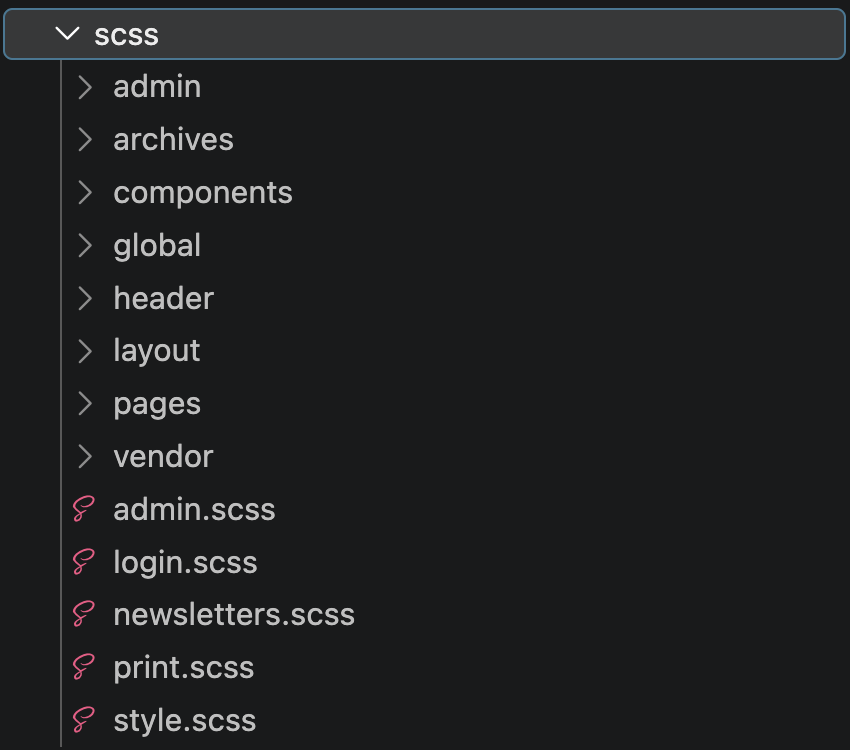
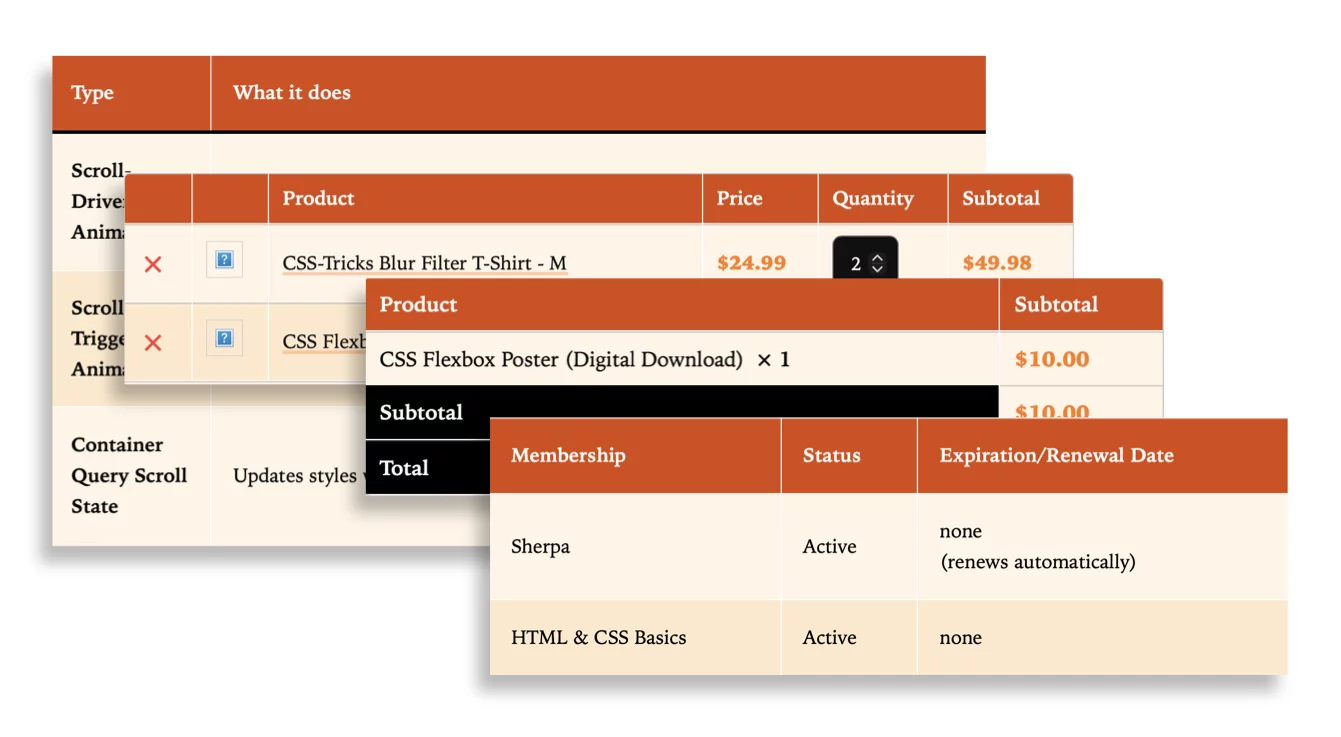
The styling architecture received a thorough reorganization. While the previous theme utilized a relatively flat Sass structure, the v20 update introduces a more structured, component-driven directory. To achieve optimal file-size reductions—dropping CSS from 180 KB (31.7 KB gzipped) down to 169 KB (24.6 KB)—conditional loading was implemented. Specialized form styles for integrations like WooCommerce, Restrict Content Pro, and Gravity Forms were decoupled into an isolated forms.css file, loaded exclusively on pages where these components are actively enqueued.
This organizational shift paved the way for semantic design tokens. By abstracting away one-off colors, arbitrary font sizes, and magic numbers into a maintainable palette, global design changes can now be executed with absolute confidence. Consistent link styling across the entire site further elevates visual harmony and accessibility, ensuring visual cues no longer rely solely on color or opacity changes.

Supporting Context & Metrics: Quantifying the Upgrade
While visual refreshes are immediately noticeable, quantitative metrics provide an objective evaluation of a site’s technical health. Using Google Lighthouse alongside deep-dive performance analysis tools, the development team tracked the performance, accessibility, best practices, and SEO ramifications of transitioning from Version 19 to Version 20.
Lighthouse Score Comparison
| Category | v19 Score | v20 Score | Analysis |
|---|---|---|---|
| Performance | 71 | 72 | Maintained a stable baseline despite added visual complexity. |
| Accessibility | 86 | 91 | Substantial boost driven by consistent link states and semantic markup. |
| Best Practices | 75 | 100 | Perfect score achieved through code modernization and security hardening. |
| SEO | 92 | 90 | Minor, negligible fluctuation well within standard testing variance. |
Core Performance Metrics
- Largest Contentful Paint (LCP): Improved from 8.5 seconds down to 7.2 seconds.
- Cumulative Layout Shift (CLS): Eliminated entirely, dropping from 0.032 to 0.
- Total Blocking Time (TBT): Maintained a highly responsive 13ms (compared to 10ms).
- First Contentful Paint (FCP): Optimized slightly to 2.5 seconds (from 2.6s).
- Time to Interactive (TTI): Dramatically slashed from 8.6 seconds down to 4.0 seconds.
- Total Page Weight: A definitive triumph, plummeting from 2.03 MB down to 1.24 MB.
These metrics validate the overarching philosophy of the v20 release: reducing payload size and eliminating legacy script execution directly translates into a snappier, more reliable user experience.
Official Statements & Design Innovations
The release of CSS-Tricks v20 is accompanied by several standout aesthetic and functional innovations that showcase modern CSS capabilities.
A Native, Seamless Theme Toggle
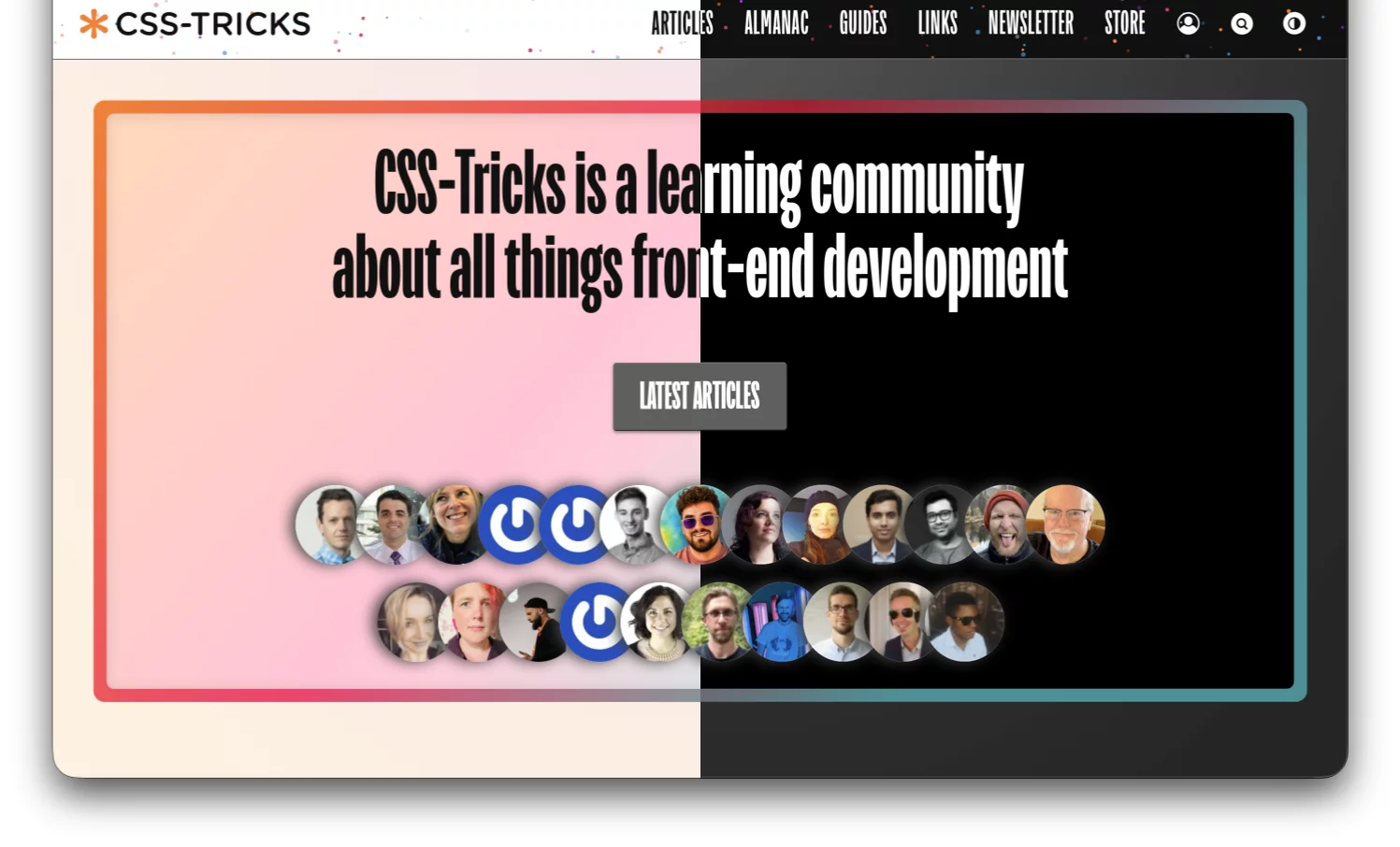
For the first time in its history, CSS-Tricks supports multiple color schemes. Rather than defaulting to a stark black-and-white inversion, the site blends light and dark elements carefully. Leveraging modern CSS techniques, a single toggle seamlessly orchestrates system, dark, and light preferences. Furthermore, the transition between themes is wired directly into the browser’s native View Transitions API, causing the new theme to smoothly slide over the previous state.
The "Jawbreaker" Texture and Advanced CSS Blobs
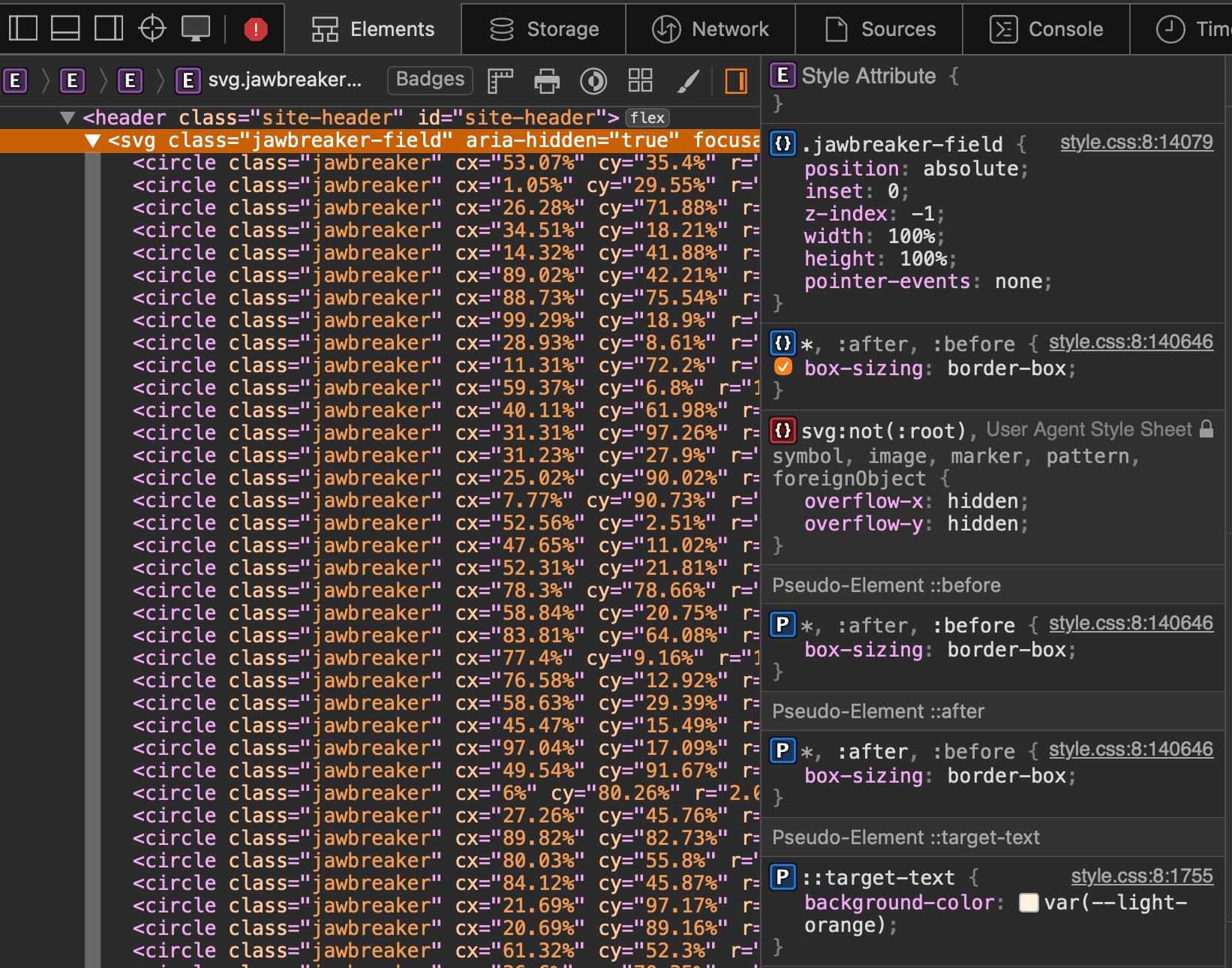
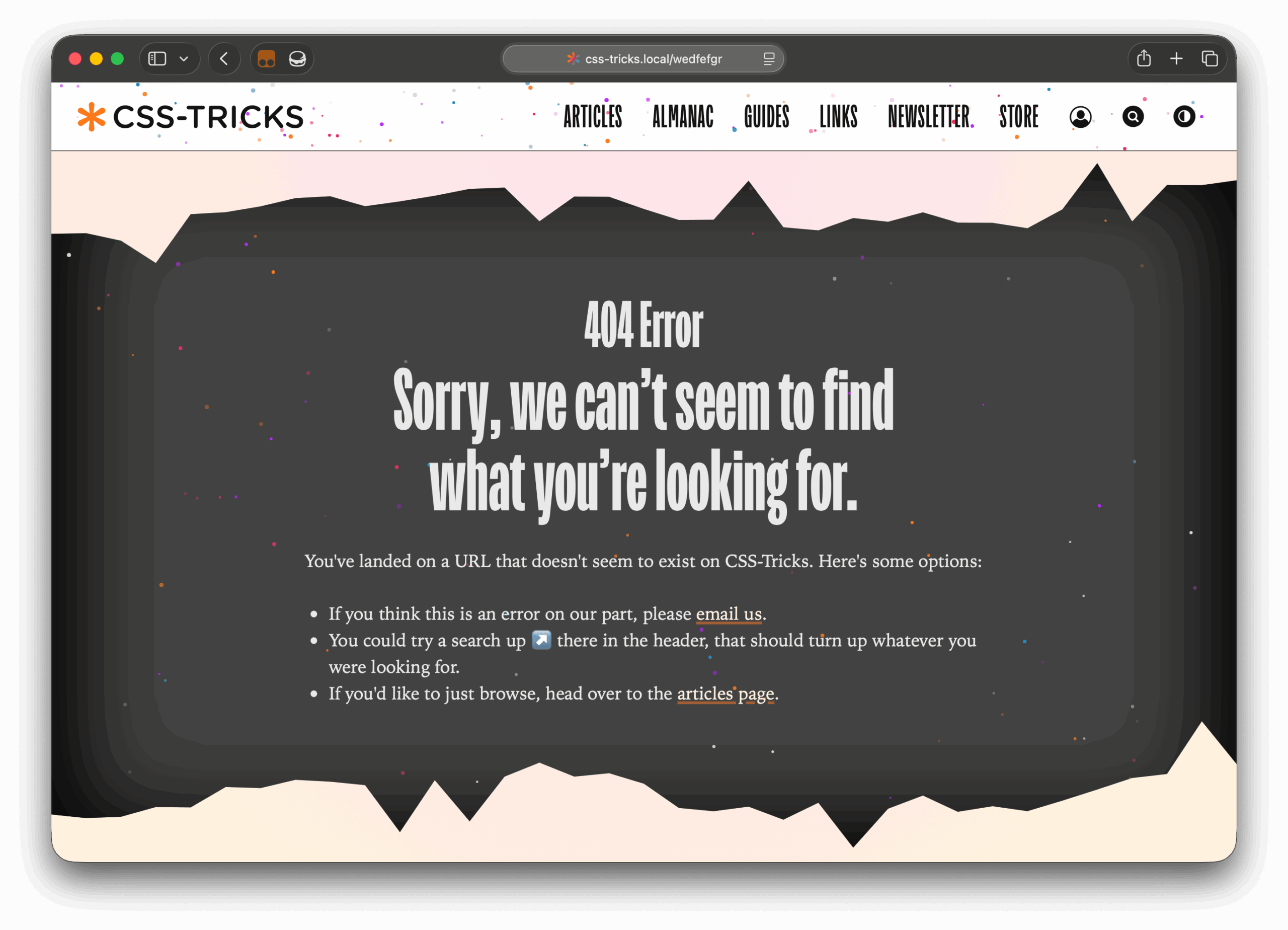
To inject personality into the site’s headers, footers, and 404 pages, developers introduced the "Jawbreaker" texture—a playful, candy-inspired SVG pattern featuring randomized, twinkling colored dots generated programmatically via PHP and styled with CSS custom properties.
On the homepage, bleeding-edge CSS features take center stage. Using advanced property functions such as border-shape and random(), interactive cards morph into organic, fluid "blobs" upon hover or focus. By mapping custom properties to the CSS shape() function and utilizing Temani Afif’s blob generator algorithms, the visual state of these elements dynamically recalculates on every page load, animating smoothly via modern cubic-bezier easing curves.
Overhauling the Almanac, Guides, and Author Indexes
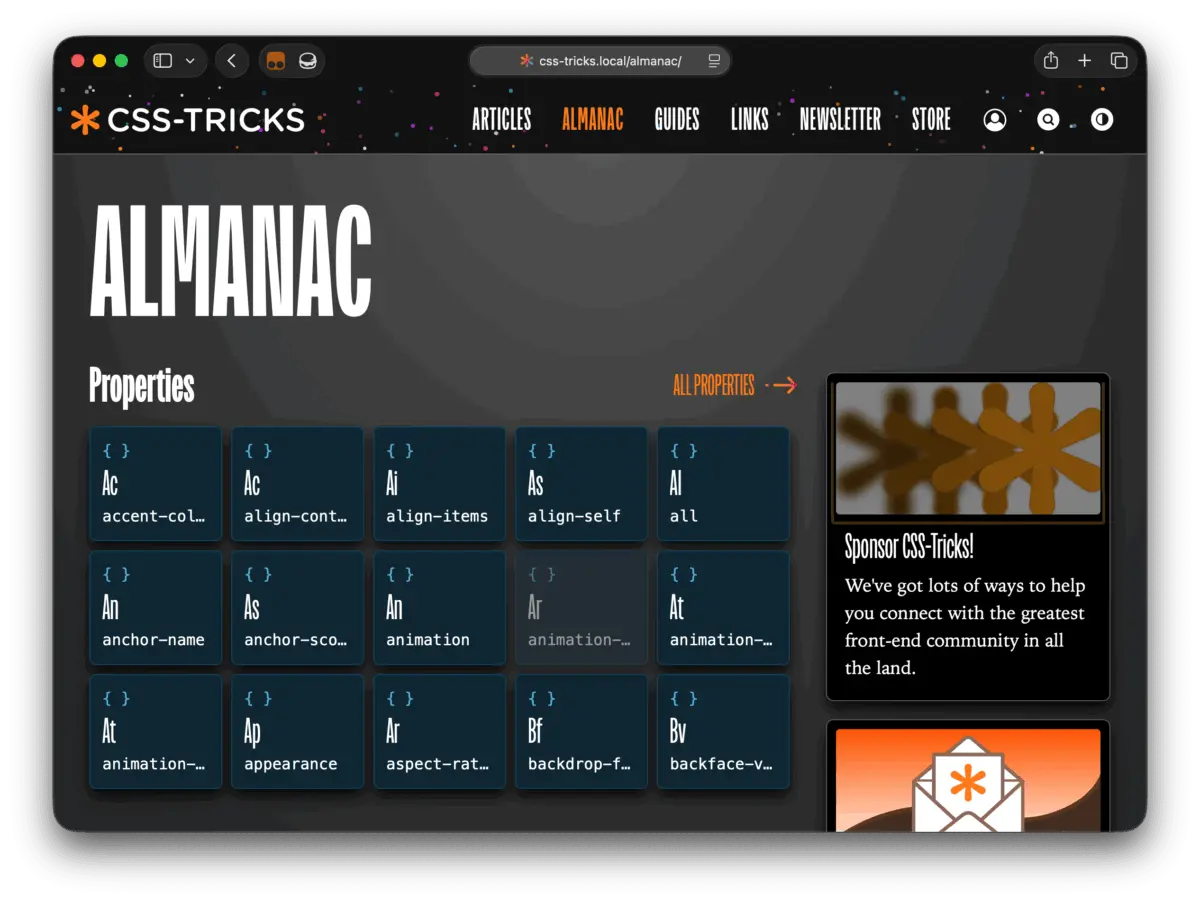
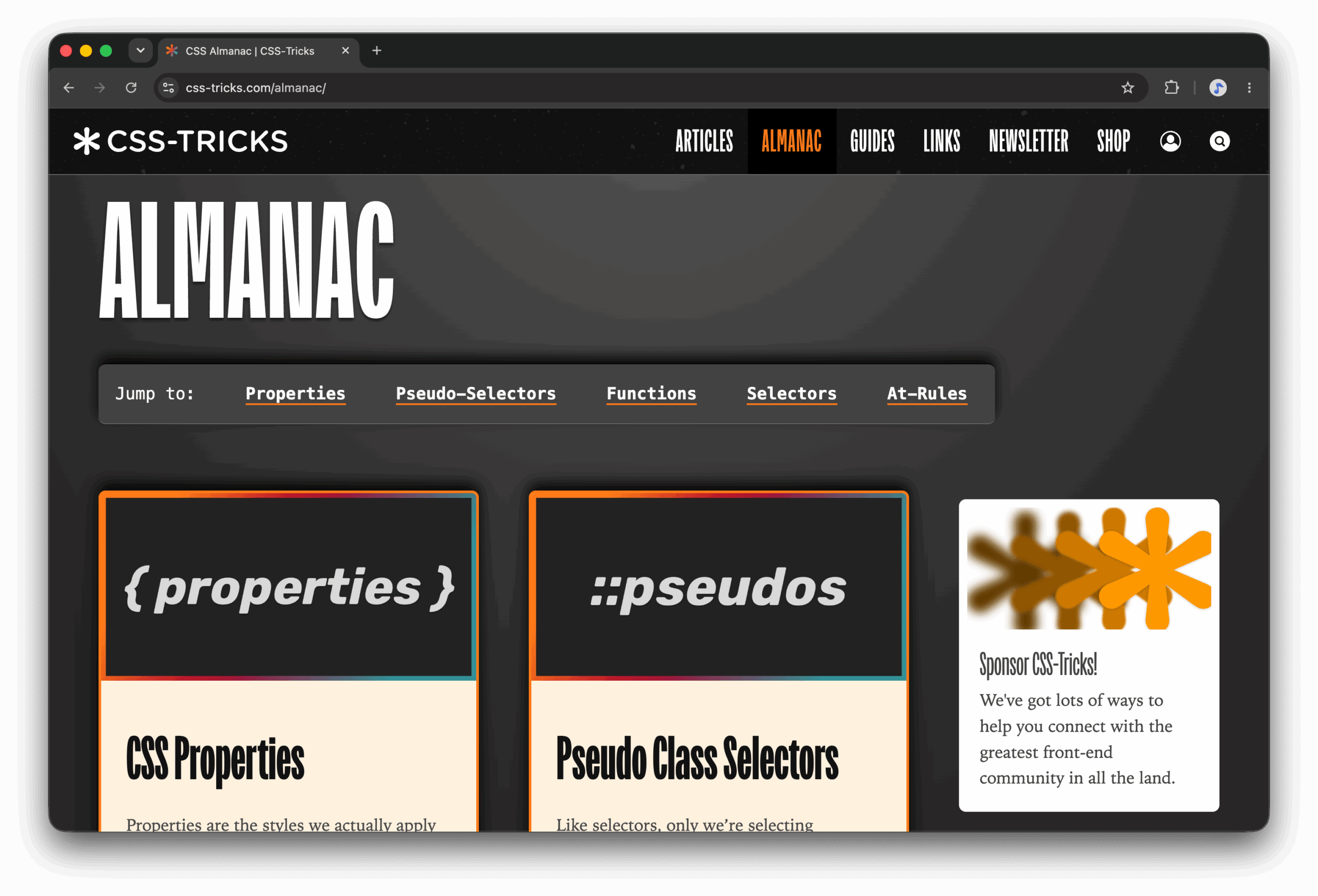
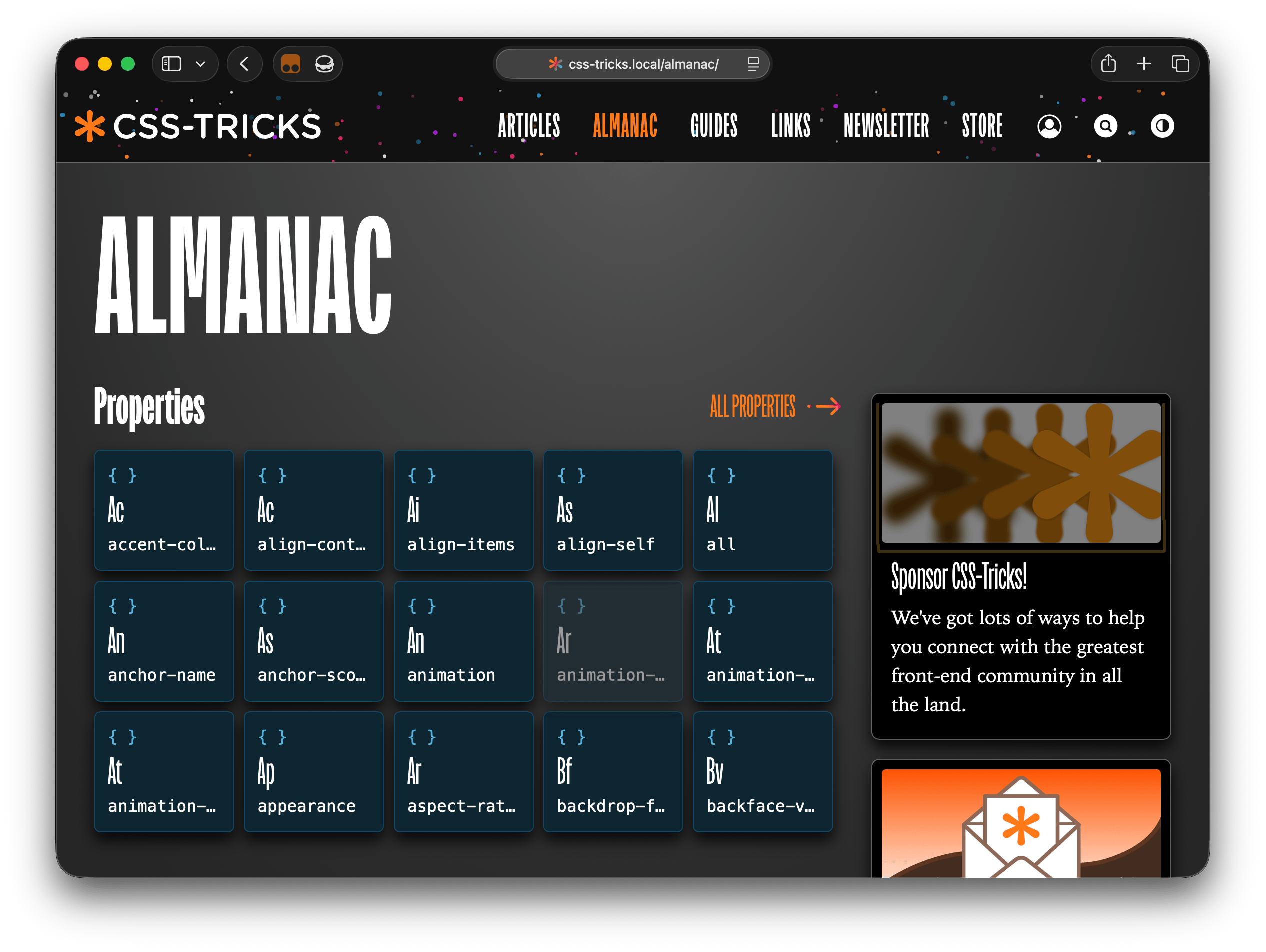
Core content hubs received a much-needed structural rethink. The iconic Almanac abandoned its static, uninspired layout in favor of an interactive index reminiscent of a periodic table of CSS features. Similarly, the Guides index transitioned from a monotonous vertical stack to a dynamic grid featuring a highlighted featured guide, a dedicated widget for recently updated content, and clearly categorized subsections. Author pages also received subtle layout adjustments, shifting sidebars to prioritize published articles immediately upon viewing.
Future Outlook
The launch of CSS-Tricks Version 20 marks a monumental milestone, but the platform’s custodians emphasize that the work is far from finished. Iterative web development is an ongoing continuum rather than a finite destination.
Future development pipelines have already slated several ambitious initiatives. Engineers plan to incorporate advanced Cascade Layers structures to further refine the Sass and CSS architecture. Additionally, refinements to the dark mode implementation—particularly concerning the main article container backgrounds—remain high on the priority list. Broader directory overhauls, such as a complete restructuring of the main Authors index, are queued for subsequent iterative updates.
By successfully balancing aggressive technical debt reduction with forward-thinking design experimentation, CSS-Tricks v20 ensures that the platform remains a premier destination for web developers for years to come. The lessons learned during this overhaul serve as a masterclass for engineering teams looking to modernize legacy web applications without losing their historical identity.