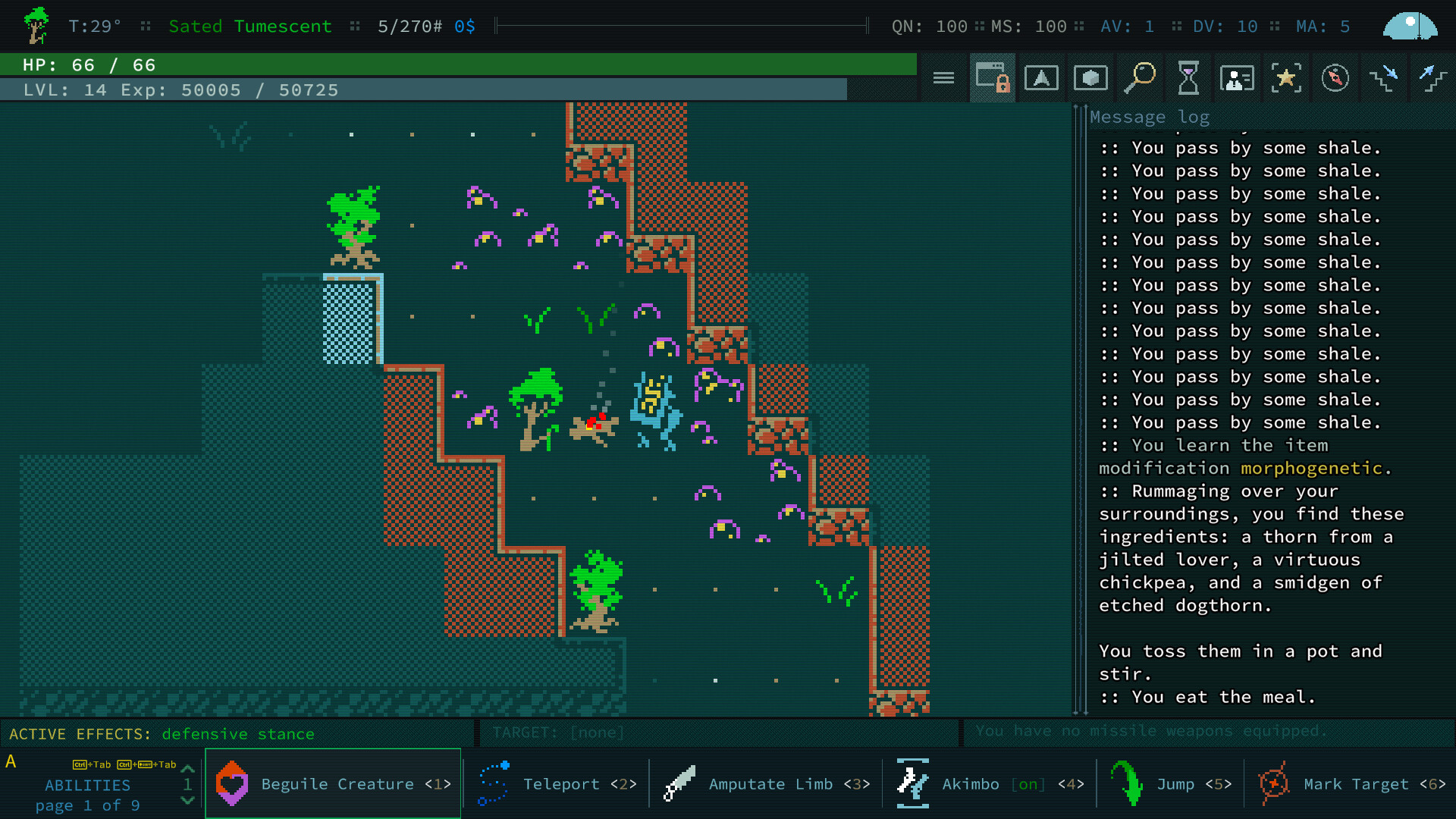
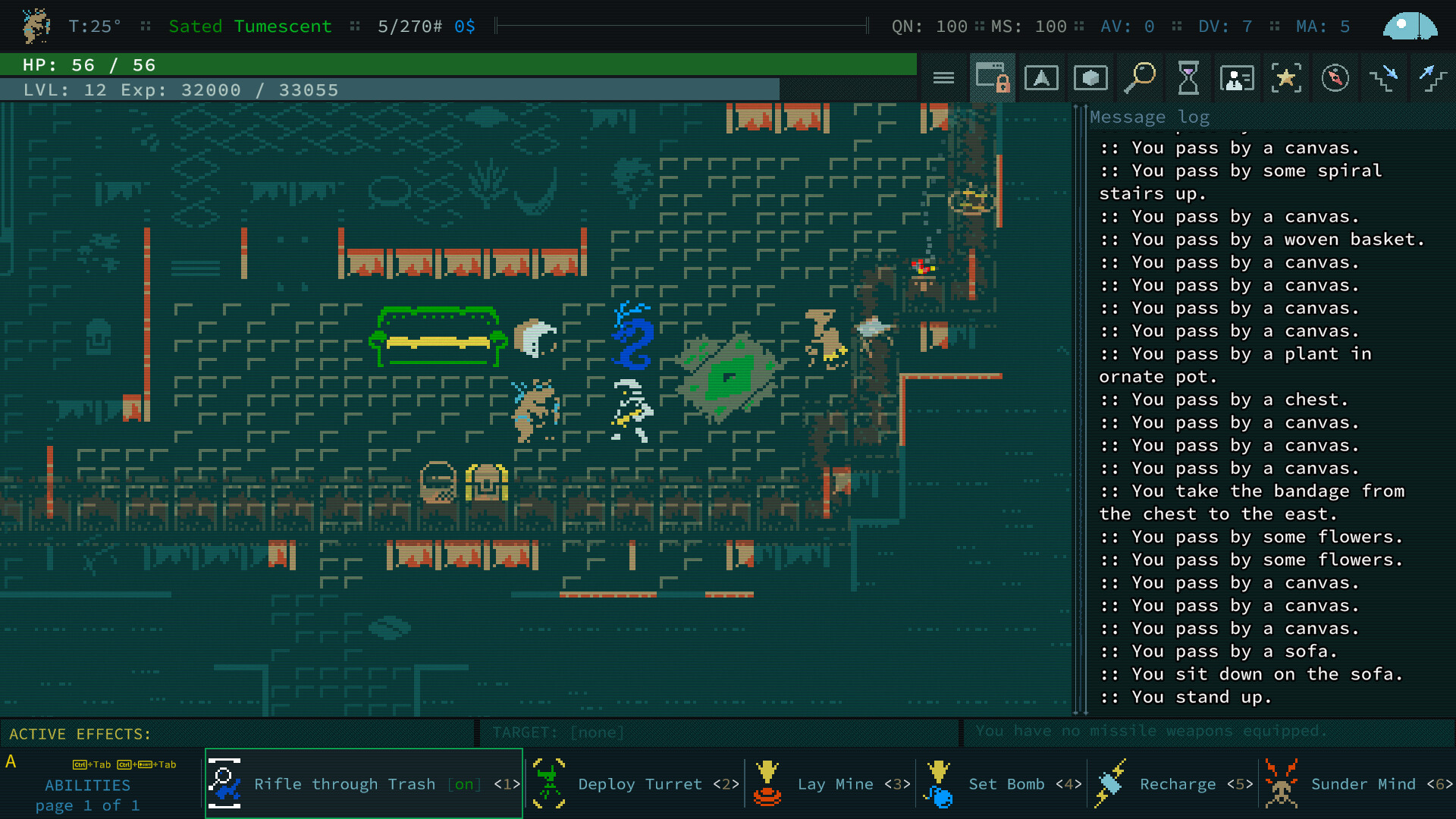
For nearly a decade, Freehold Games’ Caves of Qud has stood as a monumental pillar of the roguelike genre—a sprawling, brilliantly arcane science-fantasy epic that marries hyper-detailed simulation with unfettered generative storytelling. Its world, Qud, is a deeply textured, post-apocalyptic salt desert where players can graft countless limbs onto their torsos, psychically dominate native fauna, and unravel the ancient histories of forgotten sultanates. Yet, despite its already staggering breadth of physical transformation, the development team is preparing to push the boundaries of its simulation engine even further.
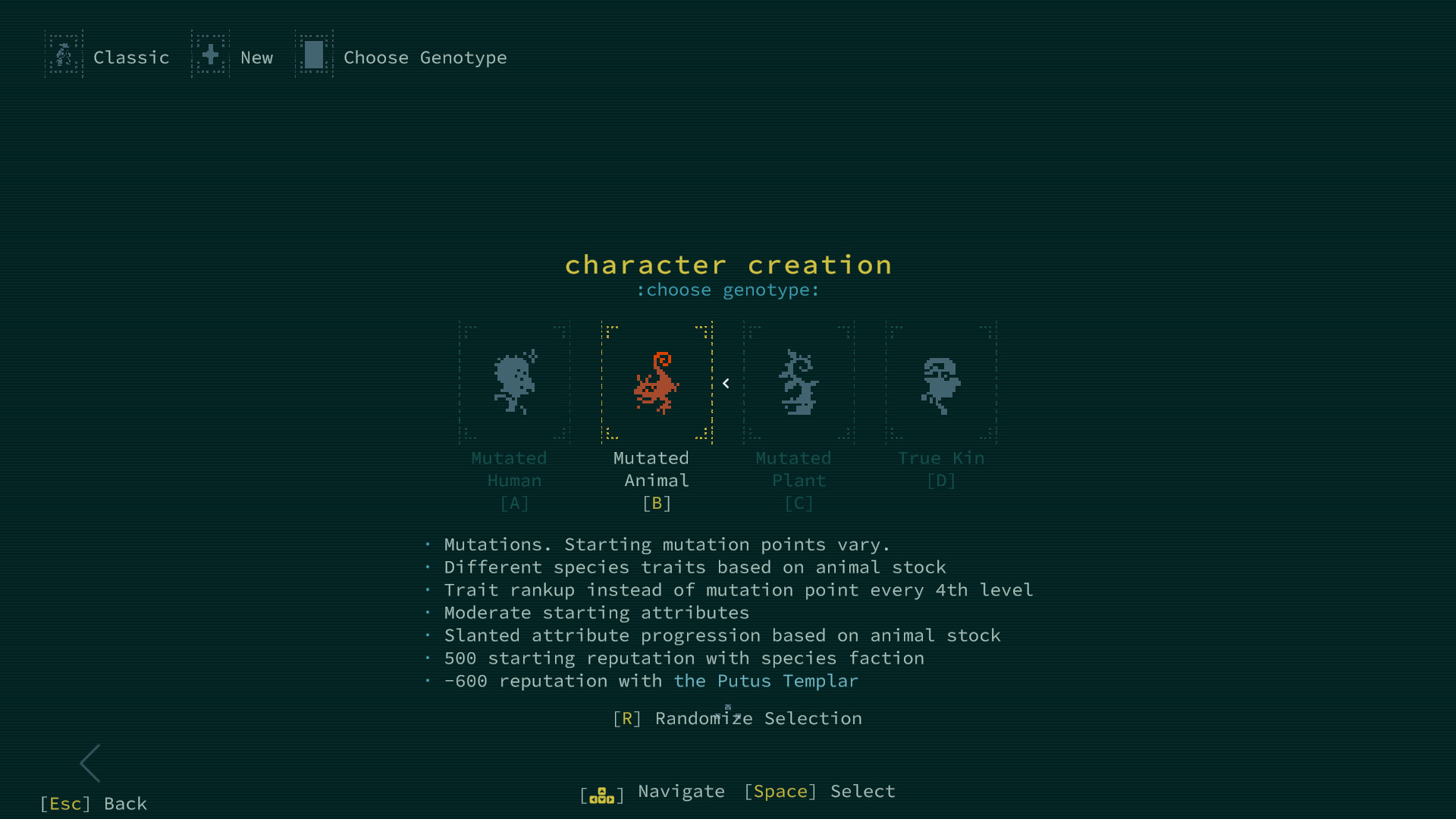
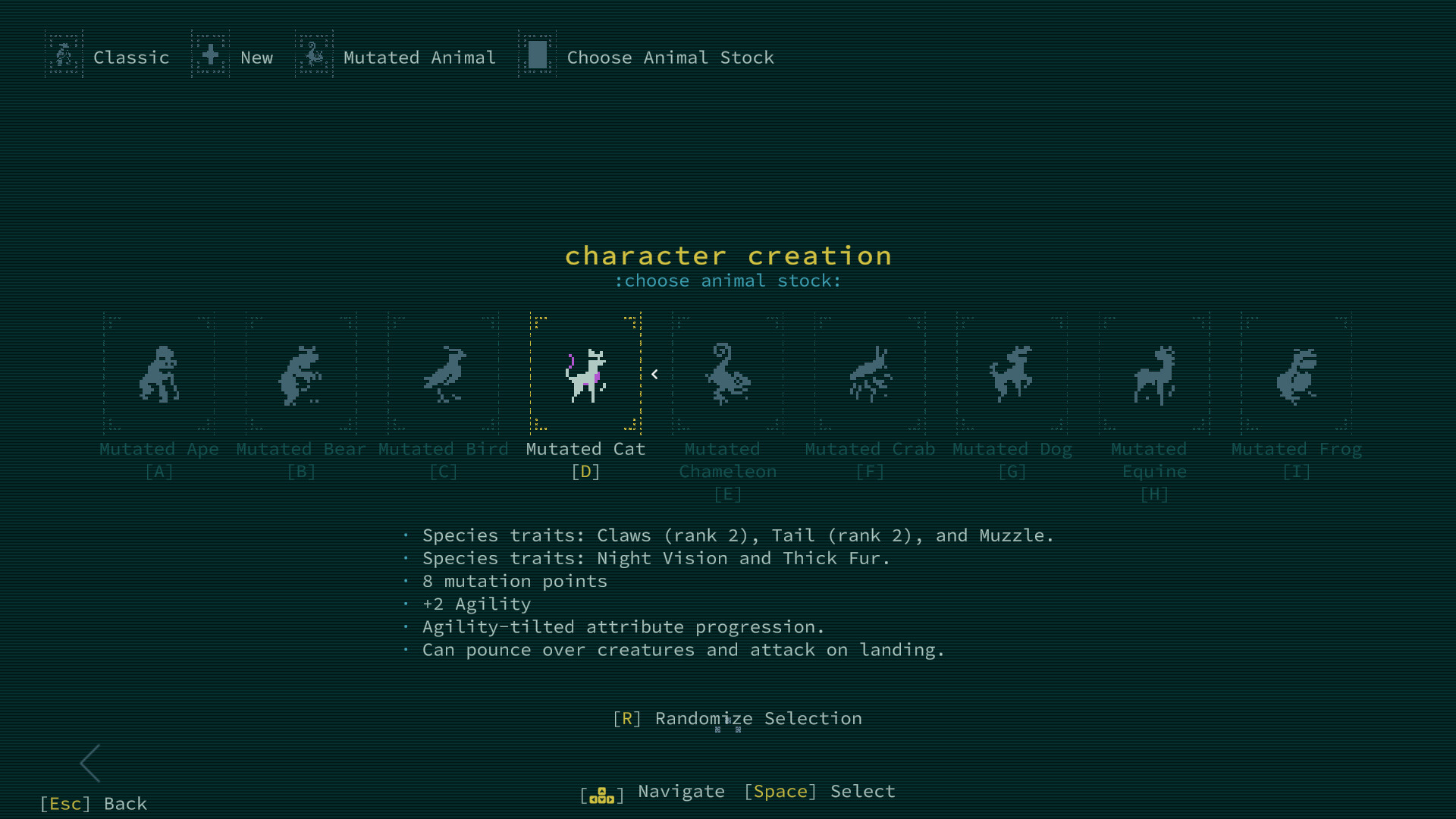
With the upcoming release of Diaspora, the game’s first major expansion launching in early access on Steam, Freehold Games is introducing an influx of riotous life that expands the title’s body plan-agnostic mutation system to include fully playable animal and plant characters.
In a wide-ranging interview, co-creators Brian Bucklew and Jason Grinblat peeled back the curtain on the existential, philosophical, and mechanical engineering hurdles required to turn players into sapient trees, multi-legged crustaceans, and quadrupedal mammals. What began as a routine query regarding the game’s complex anatomical mechanics quickly devolved into a delightful and intellectually stimulating interrogation of "tail ontology," the existential tragedy of bodily transmutation, and the unique nightmare of figuring out how a crab interacts with a tattoo parlor.
Detailed Chronology: From Limbless Spheres to Sapient Flora
To understand the trajectory of Caves of Qud: Diaspora, one must first examine the philosophical baseline established by Freehold Games during their previous public appearances. Speaking at the Game Developers Conference (GDC) earlier in the year, Bucklew and Grinblat were asked a seemingly straightforward question by the press: What is the ideal number of limbs for a being to aspire to within the simulation?
Their response was characteristically unhinged and brilliant: zero. According to the co-creators, "a perfect sphere is the ideal form," adding with theological irony that humanity "started in perfection and only moved farther from God."
This playful nihilism laid the groundwork for Diaspora, an expansion designed to shatter whatever lingering notions of standard anthropomorphic gameplay remained in Caves of Qud. By introducing playable animal and plant characters, Freehold Games is systematically rewriting the rules of how a player interacts with the world space. No longer is the player merely a mutant human or a pure-strain human (True Kin) tinkering with auxiliary arms; they are now stepping directly into the anatomy of non-human entities whose physical constraints fundamentally alter the survival loop of the game.
The development cycle leading up to the December 9 early access launch has been defined by what the creators describe as months of intense debate over limbs, appendages, and spatial logic. As the team worked to integrate animal and plant gene-stocks into core systems originally engineered for bipedal humanoids, they encountered cascading design problems. These challenges ranged from minor UI adjustments to fundamental questions about quest progression, resource consumption, and the very definition of identity in a world saturated with raw mutagenic power.
Supporting Context & Metrics: The Mechanics of Non-Human Playstyles
The core philosophy of Caves of Qud has always centered on buildcrafting freedom. Previously, mutation mechanics allowed characters to sprout wings, ape fur, or photosynthetic skin onto an essentially human chassis. Diaspora changes this dynamic by introducing species traits—stock-specific mutation bonuses that reflect the intrinsic anatomy of a given animal or plant.
For instance, while a standard human mutant can theoretically mutate wings through random acquisition, a character playing as a mutant bird starts with an inherent wing mutation that advances faster and grants access to exclusive, bird-specific flight advancements. Similarly, animal characters possessing a tail as a species trait can cultivate prehensile capabilities much quicker than standard mutants.
However, these specialized body plans come with profound structural limitations. During the design phase, the team had to establish hard boundaries regarding what different species can and cannot do:
The Weaponry Problem: When asked whether a newly created mutant dog could wield a gun without mutating opposable thumbs, Grinblat and Bucklew offered a definitive response: "No. You’re a dog."
Alternative Solutions: While dogs and quadrupeds lack traditional hands, players can utilize in-game artifacts like helping hands—wearable gear that grants extra arms—or cultivate a prehensile tail mutation to handle firearms.
Ecosystem-Driven Playstyles: Rather than forcing every character into a bipedal playstyle, the developers aim to encourage species-authentic survival strategies. A dog player, for example, might find success by running with a pack of wild canids rather than relying on traditional gunplay.
These mechanical divergences have forced Freehold Games to completely re-evaluate the game’s foundational assumptions. Because Caves of Qud calculates everything from clothing slots to status effects based on body layout, the introduction of crabs, bears, and trees has turned routine development meetings into philosophical seminars.
Official Statements: On Tail Ontology and Existential Horror
The intersection of game development and existential philosophy was a prominent theme during the discussion. When posed with a hypothetical moral question—whether it is a greater tragedy for a man to mutate into a tree, or a tree to mutate into a man—the developers offered a deeply literary and darkly comedic perspective.
Citing Aphorisms About Birds, an in-game text within Caves of Qud, Jason Grinblat highlighted the asymmetry of how society views transformation:
"Our fairy tales pay plenty of attention to the man who’s turned into a bird, but little to the cruelty fate’s inflicted on the bird who’s turned into a man… There’s one tree mayor in the game. He’s pretty happy. He’s been around for a while. If he were a guy just walking around out there, getting acid gas shot at him, I think he’d be pretty upset."
Brian Bucklew expanded on this existential discomfort, noting how closely fictional mutation mirrors contemporary anxieties:
"It hits too close to home, right? We’re having trouble in our world dealing with things transforming into the facsimile of man. It’s hard for me to think about turning into the facsimile of man without becoming sad about the way the world is and how real that question’s going to be in our lives for the next 20 years."
Conversely, the team joked about the quiet peace of arborial existence. "Becoming a tree sounds really nice," Grinblat remarked, leading Bucklew to ponder whether they could commercialize the concept through peptide marketing.
When the conversation shifted back to the tangible engineering hurdles of the expansion, the tone pivoted to the comedic nightmare of coding non-human anatomy:
"We’ve spent so much time figuring out the ontology of tails," Bucklew confessed. "Are tails arms? Can they wear bracelets? How different is a prehensile tail from a regular tail? Is a tail different from a head in terms of what it can wear? A necklace? A bracelet? A lot of hours in meetings about tail ontology."
The questline integration presented even steeper hurdles. Because critical path progression requires interacting with specific game world elements—such as consuming Eater’s Flesh or receiving ritual tattoos—non-human characters broke scripted scenarios.
"Like, oh, I can’t tattoo myself because I’m a crab, so I can’t tattoo the Mark of Death on me," Grinblat explained. "Or, oh, I can’t eat because I’m a plant. I can’t eat the Eater’s Flesh that lets me advance past that part of the quest. There’s all sorts of problems."
Even minor world interactions became comedic bottlenecks: "How does a crab get high?" Bucklew asked regarding a sequence integral to a main-quest chain. "Do we need a tattooing booth? If you don’t have hands, how are you going to tattoo yourself? We’re going to need a tattoo grenade or something." Ultimately, the team realized crabs could manage a tattoo gun with their claws, though the logistics of plant-based tattooing remain an ongoing design challenge.
Future Outlook: The Road to Early Access and Beyond
As Freehold Games puts the finishing touches on Caves of Qud: Diaspora, the anticipation within the roguelike community is palpable. Scheduled for an early access release on Steam on December 9, the expansion promises to inject an unprecedented level of chaotic variety into an already legendary sandbox.
The introduction of animal and plant gene-stocks is not merely a content update; it is a structural evolution of the game’s simulation philosophy. By forcing players to grapple with the limitations and emergent advantages of entirely alien body plans, Freehold Games is doubling down on what makes Caves of Qud unique: a refusal to compromise its systemic depth for the sake of conventional game design.
Whether players choose to roam the salt flats as a hyper-mutated crustacean, a pack-leading hound, or a deeply contemplative sapient tree, Diaspora ensures that the journey through Qud will remain delightfully unpredictable, philosophically rich, and endlessly fascinating. As the development team wraps up their grueling debate sessions on tail ontology and crab ergonomics, the rest of the gaming world prepares to discover just how far from the ideal limbless sphere they are willing to stray.