Executive Overview
In the consumer electronics marketplace, the quest for sonic perfection is often overshadowed by clever marketing. From gold-plated digital audio cables—which offer zero tangible benefit to the transmission of pristine data streams—to exorbitantly priced power accessories, audiophiles are frequently targeted by manufacturers selling snake oil. Yet, amid the clutter of high-end audio add-ons, the amplifier remains an indispensable, time-tested pillar of sound reproduction. Whether you are constructing a cinematic home theater or curating a dedicated listening room for high-fidelity music, understanding the role of the amplifier is critical.
However, the modern consumer faces a paradox: while amplifiers are foundational to sound systems, many buyers purchase them unnecessarily. Thanks to the ubiquity of active speakers and integrated receivers, you likely already own multiple amplifiers hiding in plain sight within your household.
This deep dive cuts through the audiophile mythology, dispels prevailing misconceptions—such as the romanticized superiority of vacuum tubes over solid-state engineering—and provides an authoritative roadmap. By examining technical specifications, real-world utility, and cost-effective alternatives, this report evaluates when you genuinely need a standalone amplifier and when your money is better spent elsewhere.
Detailed Chronology and Technological Evolution
To understand the modern amplifier, one must trace its lineage alongside the evolution of recorded sound. The journey from crude mechanical playback to complex multi-channel digital audio systems highlights how amplification transitioned from a luxury to an embedded utility.
The Acoustic Era and the Birth of Electrical Amplification
Before the advent of electrical amplification, audio playback was entirely mechanical. Phonographs relied on a stylus tracking the grooves of a record, transferring physical vibrations to a horn that acted as an acoustic amplifier. Volume was inherently limited by the physical energy captured in the groove.
The paradigm shifted dramatically in the 1920s with the invention of the thermionic valve, or vacuum tube. This breakthrough allowed weak electrical signals generated by microphones and early pickups to be magnified exponentially. Early tube amplifiers laid the groundwork for public address systems, radio broadcasting, and high-fidelity home audio.
The Solid-State Revolution
In the mid-20th century, the invention of the transistor initiated the solid-state era. Transistors replaced bulky, fragile, and hot-running vacuum tubes with compact, durable, and highly efficient semiconductor components. This technological leap democratized audio gear, enabling the mass production of affordable, reliable amplifiers and receivers that could fit comfortably on a living room shelf.
The Digital Shift and Active Integration
As audio formats transitioned from analog vinyl and tape to compact discs, and ultimately to lossless digital streaming, the nature of signal processing changed. Digital-to-analog converters (DACs) bridged the gap between binary data and analog sound waves.
Concurrently, manufacturing efficiencies allowed speaker companies to integrate amplifiers directly into speaker cabinets. This birth of the "active" or "powered" speaker reduced the need for external equipment, paving the way for the streamlined, minimalist audio setups common in modern households.
Supporting Context & Metrics: How Amplifiers Operate
At its core, an amplifier takes a weak electrical audio signal—typically generated by a source component like a turntable, streamer, or media player—and boosts it sufficiently to drive the voice coils of a speaker driver.
Anatomy of an Audio Setup: Amps vs. Preamps
To master your sound system, it is essential to distinguish between the two primary stages of amplification:
- Preamplifiers (Preamps): These take weak line-level signals from source components and prepare them for further processing. Preamps handle source selection, volume control, and basic tone shaping (EQ) without outputting the raw power required to move speaker cones.
- Power Amplifiers: These take the pre-amplified signal and multiply its voltage and current to drive passive speakers.
- Integrated Amplifiers and Receivers: These combine a preamp and a power amp into a single chassis. A standard home theater receiver represents the ultimate evolution of this concept, bundling multi-channel amplification, digital processing, and video switching into one unit.
Key Metrics: Watts, Impedance, and Distortion
When evaluating amplifiers or matching them to speakers, several technical metrics demand attention:
- Power Output (Watts): Measures the electrical power an amplifier can deliver to a speaker. Higher wattage does not automatically mean "better" sound; rather, it dictates headroom and the ability to drive low-sensitivity speakers cleanly at high volumes without clipping.
- Impedance (Ohms): Represents the electrical resistance a speaker presents to the amplifier. Most consumer speakers operate at 4, 8, or 6 ohms. An amplifier must be stable enough to handle the impedance load of the connected speakers to prevent overheating or hardware failure.
- Total Harmonic Distortion (THD): Expressed as a percentage, THD measures the amount of unwanted distortion introduced by the amplifier circuitry. High-quality solid-state amplifiers often boast THD figures well below 0.01%, ensuring transparent sound reproduction.
Solid-State vs. Tube Amplifiers: Separating Fact from Fiction
Audiophile culture frequently romanticizes vacuum tube (valve) amplifiers, praising their perceived "warmth" and rich harmonic distortion profiles. While tube amplifiers hold a legitimate place in niche markets—particularly among electric guitarists and dedicated purists who appreciate retro-futuristic aesthetics—they present significant practical drawbacks for modern home theater and multi-channel audio setups:
- Power Limitations: Most consumer tube amps deliver 50 watts or less per channel, making them poorly suited for demanding surround-sound configurations.
- Maintenance Overhead: Vacuum tubes degrade over time and require periodic replacement, adding to the long-term cost of ownership.
- Cost-to-Performance Ratio: Building a multi-channel home theater driven entirely by tube amplification is an astronomically expensive and functionally impractical endeavor. For the vast majority of listeners, modern solid-state amplifiers offer superior reliability, lower distortion, and vastly better power efficiency at a fraction of the cost.
Official Industry Insights and Expert Perspectives
Audio engineers and industry manufacturers generally agree that the necessity of a standalone amplifier depends strictly on system architecture.
Prominent acoustic engineers emphasize that the signal chain is only as strong as its weakest link. If a consumer utilizes active speakers—which feature built-in amplifiers matched precisely to the internal drivers—adding an external amplifier is not only redundant but physically impossible without bypassing internal crossovers, which can ruin the system.
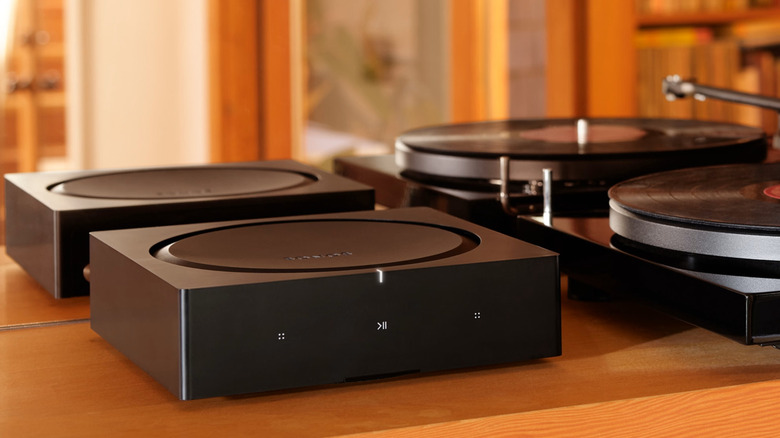
Conversely, high-end home theater installers note that external amplifiers become essential when pushing beyond the limits of standard consumer receivers. Systems running complex Dolby Atmos configurations (such as 7.2.4 layouts featuring multiple overhead channels) frequently exceed the onboard amplification channels of mid-tier receivers. In these scenarios, industry experts recommend deploying multi-channel external power amplifiers to offload the heavy lifting, ensuring pristine channel separation and dynamic headroom during high-impact cinematic sequences.
Future Outlook: Cost-Effective Sound Upgrades vs. Redundant Gear
Before investing hundreds—or even thousands—of dollars into a standalone amplifier that your system may not require, evaluate where your acoustic bottlenecks actually lie. In most consumer scenarios, money is deployed far more effectively elsewhere in the signal chain.
High-Impact, Low-Cost Upgrades
If your current audio setup feels lackluster, consider these targeted, cost-effective interventions:
- Speaker Upgrades: Moving from basic stereo soundbars or entry-level bookshelf speakers to a high-powered, all-in-one Dolby Atmos soundbar or dedicated discrete speaker pair yields an immediate, exponential leap in sound quality.
- Acoustic Treatment: Unwanted reverb, echo, and muddy bass are frequently room-acoustic issues rather than hardware failures. Installing acoustic panels, utilizing speaker stands to decouple vibrations, and repositioning subwoofers away from corners can transform a room’s sonic signature for minimal expense.
- Automatic Room Calibration: Modern smart speakers and advanced receivers feature built-in acoustic calibration software (such as Dirac Live, Audyssey, or proprietary smart tuning). Running these calibration routines after any significant room rearrangement optimizes speaker timing, phase, and equalization automatically.
The Verdict on External Amplifiers
Do amplifiers matter? Absolutely. Without amplification, audio reproduction is physically impossible. However, the modern consumer landscape has largely internalized this technology.
Unless you are operating an ultra-high-end, power-hungry passive speaker setup, constructing an elaborate multi-channel home theater system exceeding standard receiver capacities, or dedicating an entire listening room to reference-grade vinyl playback, your current hardware likely already contains all the amplification you need. Save your wallet, audit your existing gear, and invest your upgrade budget where it will truly make a measurable difference.