The smartphone industry has spent the better part of a decade trapped in a predictable, vertically stretched geometric paradigm. Ever since the industry-wide migration from legacy 16:9 aspect ratios to bezel-less, edge-to-edge glass, device footprints have grown aggressively tall. While consumers welcomed the expansion of media consumption space, this design evolution introduced a persistent ergonomic tax: the upper reaches of the display became a dead zone, completely cut off from natural thumb navigation.
For years, tech enthusiasts have yearned for the golden era of smaller handsets—devices that could be operated comfortably with one hand without resorting to software workarounds like Reachability. Yet, returning to legacy compact form factors has felt like a compromise, sacrificing precious screen estate in a media-rich digital ecosystem.
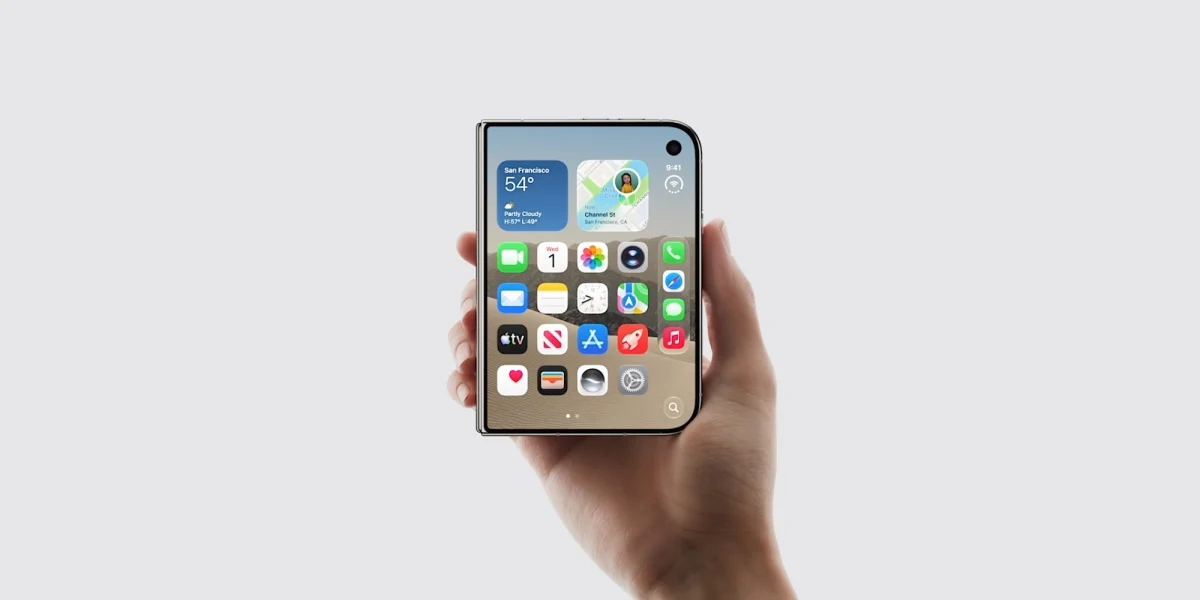
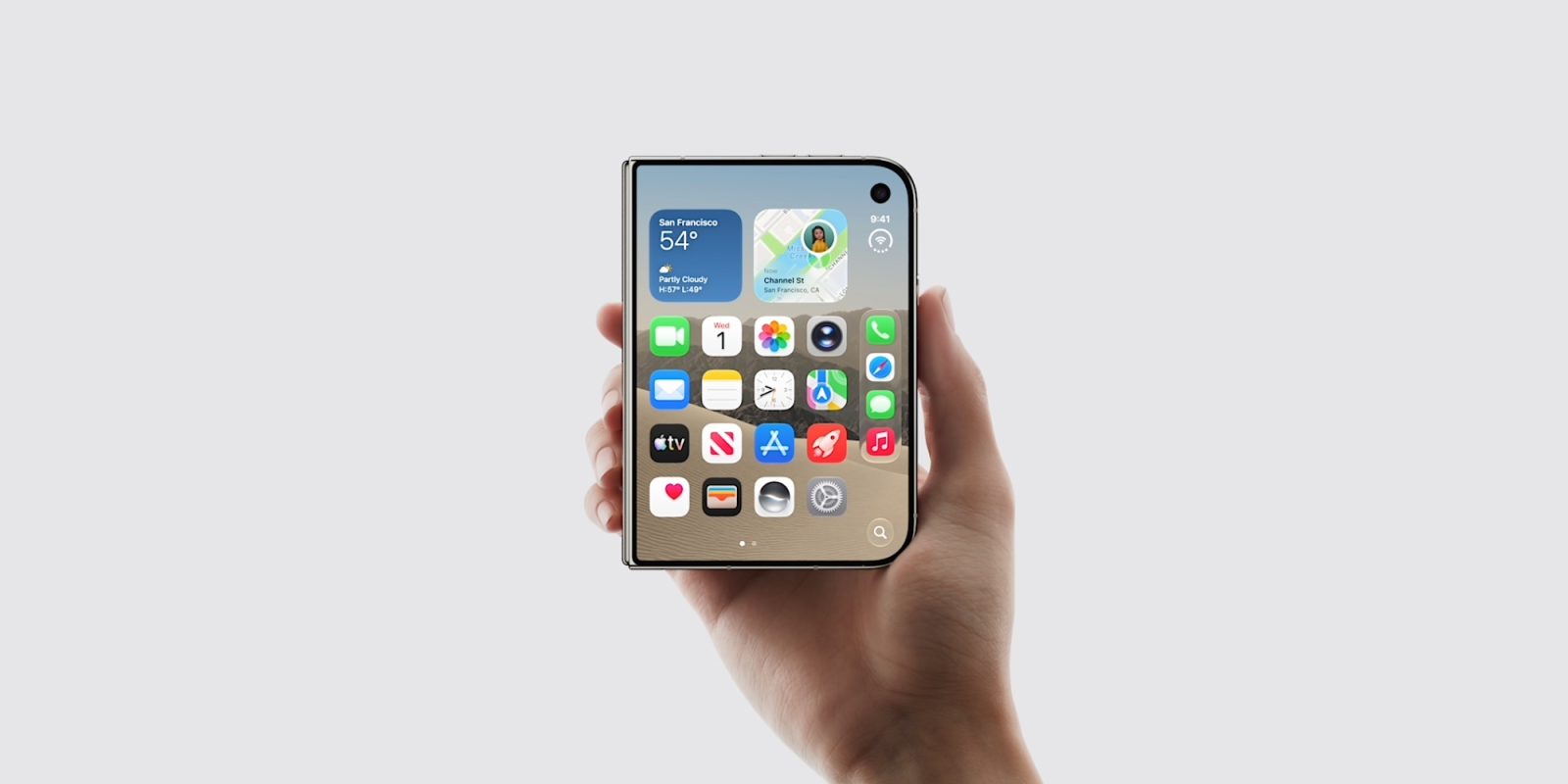
Apple’s recent, highly anticipated unveiling of the foldable iPhone Duo fundamentally challenges this compromise. By completely rethinking how the external screen handles primary navigation, Apple didn’t just slap a standard iOS interface onto a secondary panel; it engineered a radically ergonomic layout. The iPhone Duo pairs a dedicated, easily reachable interactive dock and navigation zone on the right side with a spacious, functional viewing area to the left.
This design breakthrough has triggered an immediate and passionate wave of speculation throughout the tech community. Enter the "iPhone Solo"—a conceptual, non-foldable smartphone that adopts the precise dimensions, aspect ratio, and UI architecture of the iPhone Duo’s revolutionary outer display. While critics might initially dismiss the concept as a niche daydream, a deeper analysis reveals that the current smartphone form factor is largely a historical accident born of bezel removal rather than intentional ergonomic design. If the iPhone Duo’s outer screen strikes a chord with consumers, the iPhone Solo might just be the blueprint for the future of single-screen mobile computing.
Detailed Chronology: The Evolution of Reachability and the Birth of the Duo
To understand why the iPhone Duo’s external display has captured the imagination of the mobile tech sphere, we must trace the evolutionary timeline of smartphone ergonomics over the last fifteen years.
The 16:9 Era and the Peak of One-Handed Use
In the early 2010s, smartphones hovered comfortably between 3.5 and 4.7 inches, governed by a strict 16:9 aspect ratio. During this era, physical dimensions were dictated by the physical reach of the human thumb. Applications typically placed key navigation elements—such as back buttons, tab bars, and search icons—at the bottom or top in predictable grids, but the overall physical span of the glass was modest enough that users could easily traverse the entire interface with a single hand.
The Bezel-Less Shift and the "Tall Phone" Phenomenon
As consumer demand shifted toward immersive media consumption, edge-to-edge displays became the industry standard. To preserve pocketability while dramatically increasing screen area, manufacturers began stretching devices vertically. Aspect ratios shifted from 16:9 to 19.5:9 and beyond.
While this solved the problem of displaying more content feeds, timelines, and high-definition video, it created an ergonomic crisis. The top 20% of the modern smartphone screen became a wasteland for one-handed users. Operating systems attempted to mitigate this with software hacks—most notably Apple’s "Reachability" feature, which dragged the top half of the screen downward via a downward swipe on the home indicator. While functional, Reachability is ultimately an admission of defeat: it acknowledges that the hardware’s physical dimensions outpace human physiology.
The Arrival of the iPhone Duo
When Apple pulled back the curtain on the iPhone Duo, the foldable device naturally commanded headlines for its dual-screen versatility. However, tech journalists, UI/UX designers, and power users quickly fixated on a more subtle achievement: the engineering of the outer display.
Instead of treating the exterior screen as a mere notification ticker or a cramped, scaled-down version of the primary iOS springboard, Apple redesigned the paradigm. The outer display of the iPhone Duo divides interaction into two distinct functional zones:
The Navigation & Dock Zone: Situated naturally within the sweeping arc of the user’s thumb, housing primary actions, app switchers, and dynamic controls.
The Viewing Landscape: A spacious, rectangular canvas positioned cleanly to the left, ensuring that text, media, and web content remain large and legible without forcing the user’s thumb to stretch upward.
This clever split eliminated the historical tension between screen real estate and ergonomic accessibility. It proved that a phone doesn’t need to be awkwardly tall to offer a great viewing experience.
Supporting Context & Metrics: The Ergonomic Ergonomics of Mobile Design
The excitement surrounding the iPhone Duo’s external interface—and the subsequent conceptualization of the iPhone Solo—is backed by solid ergonomic and behavioral data regarding how humans interact with pocket computers.
The Thumb Arc Paradox
Studies in mobile human-computer interaction (HCI) consistently map out the "natural thumb zone"—the comfortable, sweeping arc a thumb makes when gripping a device one-handed. On modern flagship smartphones exceeding 6.1 to 6.7 inches, the upper-left and upper-right corners fall squarely into the "pain zone," requiring users to either shuffle the device insecurely in their palm or employ a cumbersome two-handed grip.
As illustrated above, traditional tall phones force interactive elements to scatter across the entire vertical plane. Conversely, the Duo’s outer display topology concentrates interaction where the thumb naturally rests, transforming dead space into usable architectural layout.
Consumer Sentiment and the Small Phone Dilemma
Market research over the past five years has revealed a fascinating paradox among smartphone buyers. When polled, a vocal minority of consumers consistently express deep nostalgia for smaller form factors (such as the iPhone mini line). However, raw sales data historically showed that these compact devices underperformed compared to their Max and Plus counterparts.
Why? Because consumers do not actually want less screen space—they want better reachability. They want the expansive content feed of a modern smartphone packaged within a physical footprint that respects human biomechanics.
The iPhone Solo concept bridges this psychological and physical gap. By utilizing a wider, more balanced aspect ratio derived from the Duo’s outer shell, an iPhone Solo would deliver massive, immersive viewing real estate while fundamentally altering how vertical space is utilized.
Official Statements and Industry Perspective
While Apple has not officially announced or acknowledged plans for an "iPhone Solo," industry analysts, designers, and supply chain insiders have been quick to weigh in on the architectural viability of such a device.
Leading up to the Duo’s launch, Apple’s design philosophy has increasingly focused on contextual computing and reducing friction in user workflows. Speaking anonymously, supply chain sources noted that the custom outer display panels developed for the iPhone Duo represent some of the most expensive and advanced glass-bending and OLED substrate engineering in the company’s recent history.
"When you invest heavily in redefining the outer shell of a foldable device to feel like a completely independent, highly optimized primary computer, you aren’t just building a secondary screen," notes a prominent mobile UI researcher. "You are testing a brand-new form factor in the wild. If millions of users spend 70% of their time interacting with the Duo while it’s closed—simply because the outer display is more comfortable to navigate—Apple’s product team will have no choice but to evaluate the standalone viability of that geometry."
Furthermore, third-party developers have expressed enthusiasm for interface paradigms that move away from the top-heavy app designs mandated by tall displays. Adaptable layouts that prioritize bottom-heavy navigation bars, lateral multitasking panels, and thumb-anchored action triggers are already seeing increased adoption across iPadOS and experimental iOS applications, paving the way for a hardware shift should Apple decide to pursue a Solo line.
Future Outlook: Will Apple Build the iPhone Solo?
The trillion-dollar question facing the Cupertino tech giant is whether the lessons learned from the iPhone Duo’s outer display will remain exclusive to the foldable tier, or if they will trickle down into the mainstream candy-bar iPhone lineup.
1. The Foldable Stepping Stone
It is standard operating procedure for Apple to incubate radical hardware and interface experiments within high-end, category-defining new products before democratizing them. The original Notch debuted on the iPhone X before migrating across the entire portfolio and eventually evolving into the Dynamic Island. Similarly, titanium framing, ProMotion displays, and advanced sensor suites often start at the top of the price ladder.
The iPhone Duo’s outer display is serving as a live-fire beta test for a radical shift in smartphone proportions. If market data reveals that users heavily favor the closed, ergonomic configuration of the Duo over the unfolded tablet mode, the business case for a standalone, non-foldable counterpart becomes remarkably strong.
2. Market Positioning and Pricing Strategy
An iPhone Solo—occupying a footprint identical to the Duo’s outer display—could effectively replace the spiritual vacancy left by the discontinued "mini" line, but with a fundamentally superior ergonomic architecture. Unlike the mini phones of the past, which were simply shrink-rayed versions of tall phones, an iPhone Solo would be purpose-built from the ground up for thumb-driven efficiency.
Priced competitively below the flagship Pro and foldable Duo tiers, an iPhone Solo could appeal directly to minimalists, field workers, commuters, and consumers suffering from device fatigue who want a premium, highly ergonomic daily driver without the mechanical complexity or cost of a folding hinge.
3. The Verdict
The smartphone landscape has grown stagnant, resting comfortably on incremental camera upgrades and microscopic chip-speed gains while the core physical shape of the device has remained stubbornly unchanged for years. The iPhone Duo has proven that Apple is still willing to question foundational assumptions about mobile form factors.
Whether or not an official "iPhone Solo" ever makes its way out of the conceptual prototyping labs and onto store shelves depends almost entirely on how consumers embrace the revolutionary outer display of the iPhone Duo. One thing is certain: once you experience an interface designed entirely around the natural arc of your thumb, going back to awkwardly stretching for the top-left corner of an overly tall glass slab feels like a relic of the past.
What are your thoughts on the iPhone Solo concept? Would you trade your towering flagship for a wider, ergonomically optimized single-screen device? Let us know in the comments below.