Executive Overview
A decade after Apple boldly severed the physical headphone jack from the iPhone—a controversial industry-shifting move that inadvertently birthed the modern true-wireless earbud market—AirPods have cemented themselves as an indispensable part of the consumer technology landscape. What began as a polarizing pair of white plastic stems dangling from users’ ears has evolved into a sophisticated wearable ecosystem. Today, AirPods are celebrated not merely as audio playback devices, but as advanced acoustic instruments offering best-in-class active noise cancellation (ANC), spatial audio integration, and, more recently, FDA-cleared clinical-grade hearing aid capabilities.
Yet, despite continuous hardware and software refinements that arrive nearly every year, a frustrating, archaic user experience (UX) oversight continues to plague owners worldwide. It is a minor design quirk with major daily consequences: the dreaded "one dead AirPod" phenomenon.
While Apple already demonstrates software cleverness by notifying iPhone users to charge their AirPods when plugging in their handsets, the ecosystem still lacks a fundamental diagnostic alert. If debris, pocket lint, or misaligned contact pins prevent one earbud from charging inside its case, the user is left entirely in the dark. They only discover the failure when they sit down for a commute, workout, or flight, staring at one functional earbud and one completely dead companion.
This deep-dive investigation explores the mechanics of this persistent design flaw, analyzes current power-management protocols within the Apple ecosystem, proposes a seamless software solution that Cupertino could implement in a future iOS update, and evaluates the broader trajectory of the AirPods product line.
Detailed Chronology: The Evolution of True Wireless and the Persistent Charging Blind Spot
To understand how we arrived at the current state of AirPods technology, it is necessary to trace the chronology of Apple’s audio division and the persistent hardware-software disconnects that have accompanied its rapid growth.
2016–2019: The Genesis and the Mechanical Blind Spot
When Apple introduced the original AirPods alongside the iPhone 7 in September 2016, the company solved the Bluetooth pairing friction point with the revolutionary W1 chip. However, the physical architecture of charging true-wireless earbuds introduced an entirely new category of mechanical failure points. Unlike over-ear headphones that feature sturdy USB-C or Lightning ports, AirPods rely on tiny metallic ring contacts at the bottom of the stem mating with spring-loaded pogo pins inside a pocketable case.
From the very beginning, early adopters reported a nagging issue: placing AirPods into their charging case did not guarantee a successful power transfer. Microscopic debris, earwax, lint from pockets, and corrosion from sweat frequently accumulated at the bottom of the housing wells. This physical barrier insulated the charging pins, breaking the electrical circuit.
During these formative years, Apple treated the problem purely as a hardware maintenance issue, advising users to clean their contacts with microfiber cloths and isopropyl alcohol. No software mechanism existed to warn users that an earbud was failing to draw current.
2020–2023: Ecosystem Maturity and the iPhone Charging Nudge
As AirPods Pro, AirPods Max, and successive generations of standard AirPods entered the market, Apple began weaving tighter software integrations into iOS. Features like optimized battery charging, automatic device switching, and Find My integration dramatically elevated the user experience.
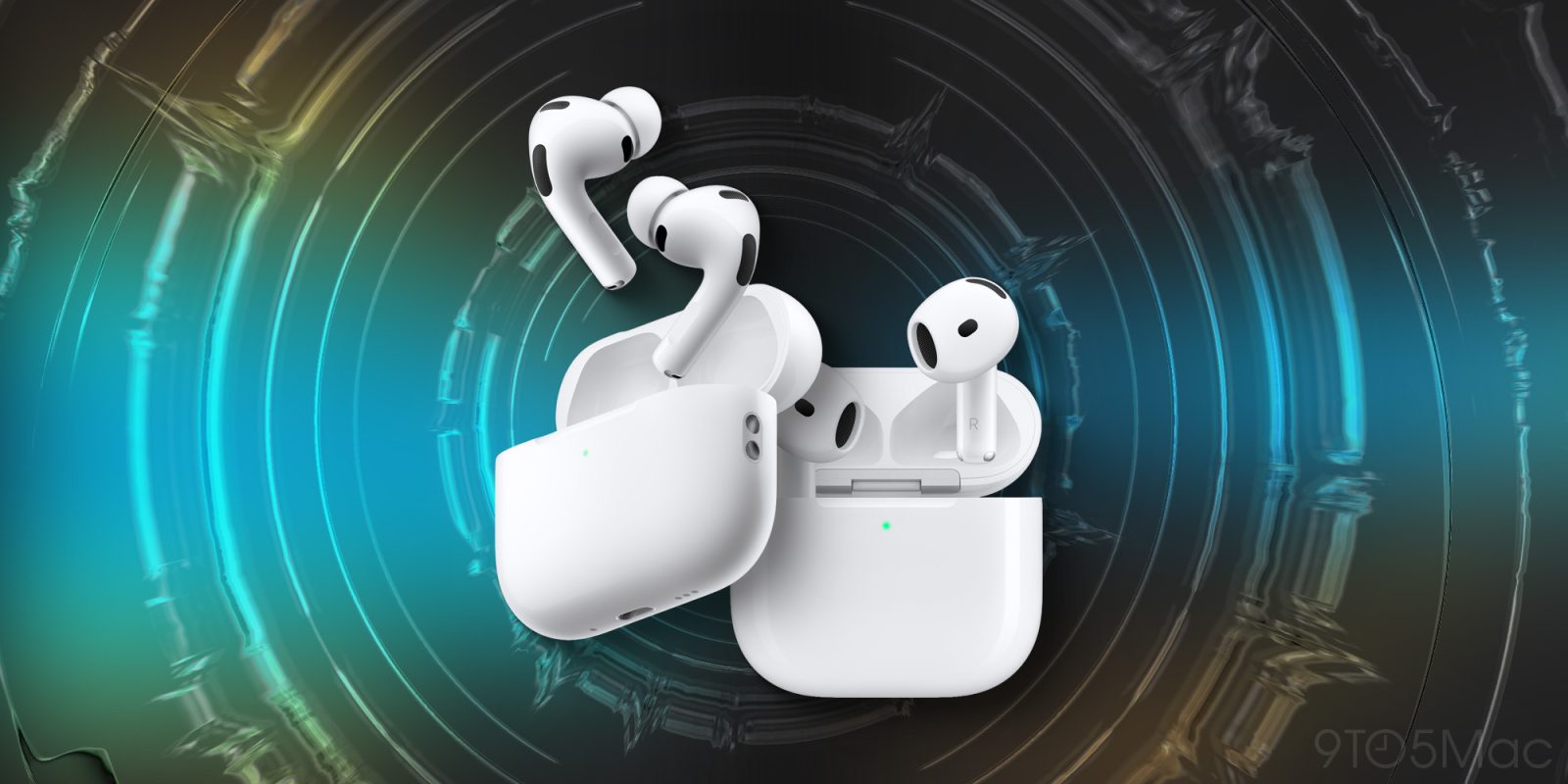
A particularly helpful addition was the low-battery reminder ecosystem. Recognizing that users frequently forget to juice up their accessories, Apple introduced smart notifications. If an iPhone is plugged in to charge—particularly late at night or when battery levels dip critically low—iOS cross-references connected accessories and sends a push notification reminding the user to also juice up their AirPods case if its battery is running low.
This feature undoubtedly saved millions of commutes by preemptively addressing dead batteries. Yet, it exposed a glaring logic gap: while the system could track the macroscopic battery percentage of the case, it remained entirely oblivious to the microscopic status of the individual earbuds resting inside it.
2024–Present: Advanced Health Features Met with Legacy Annoyances
In recent hardware cycles, Apple has pushed AirPods into the realm of preventive health. With software updates transforming AirPods Pro into clinical-grade hearing aids and offering automated hearing tests, the devices are no longer mere entertainment accessories—they are assistive medical devices for many consumers.
Despite this monumental leap in functionality, the baseline charging oversight remains unchanged. Users who rely on their AirPods for medical, professional, or accessibility needs are still susceptible to the sudden, unannounced failure of a single earbud due to a poor connection in the case. As the latest-generation AirPods (including models frequently discounted to around $179) reach broader demographics, this simple software blind spot affects an increasingly diverse user base.
Supporting Context & Metrics: The Anatomy of the Failure
To appreciate why a software fix is both feasible and necessary, we must examine the intersection of hardware engineering, sensor arrays, and operating system logic.
Why AirPods Fail to Charge in the Case
The failure mode is rarely catastrophic; instead, it is usually mundane. The primary culprits include:
- Particulate Accumulation: Pockets are breeding grounds for lint, fabric fibers, and dust. When AirPods are repeatedly removed and inserted, these particles are pushed to the bottom of the charging well, directly acting as an electrical insulator over the pogo pins.
- Moisture and Oxidation: Users frequently place sweaty or damp AirPods straight from a workout back into the sealed charging case. Over time, microscopic moisture promotes mild oxidation on the brass or gold-plated contact rings, increasing electrical resistance and halting the charging handshake.
- Magnetic Misalignment: While rare in genuine Apple hardware, weakened hinge magnets or foreign obstructions can prevent an AirPod from seating fully against the spring-loaded pins, leaving the circuit open.
The Cost of Inaction: Consumer Frustration and Productivity Loss
While exact telemetry data on failed charging events is proprietary, consumer advocacy boards and community forums (such as Reddit’s r/apple and the Apple Support Communities) register thousands of complaints monthly regarding asymmetric battery levels.
For the average commuter, discovering a dead left or right AirPod results in immediate friction:
- Canceling or postponing phone calls due to lack of a stereo microphone setup.
- Losing active noise cancellation in one ear, rendering public transit unbearable.
- Being forced to untangle legacy wired headphones as an emergency backup.
The Technical Feasibility of a Software Solution
Apple already possesses all the hardware telemetry required to solve this problem instantly via an over-the-air iOS update. Here is how the logic chain could work:

- State Detection: The charging case houses hardware sensors that communicate via the H1 or H2 chip when an AirPod is seated.
- Current Draw Monitoring: The case’s internal power management integrated circuit (PMIC) detects whether current is actively flowing into each individual earbud.
- Proximity/Wear State: Apple’s optical and skin-detect sensors instantly know whether an AirPod is currently inside a human ear or resting inside the charging case.
The Proposed Logic Algorithm:
If AirPod A is detected as resting inside the charging case, AND the charging case itself is connected to an external power source (or has sufficient battery reserves), AND AirPod A registers zero current draw over a designated grace period (e.g., 10 minutes), AND AirPod B is not currently detected in-ear… then iOS triggers a high-priority diagnostic notification: "Your Right AirPod may not be charging. Check for obstructions in the case."
This simple cross-referencing of charging status, power input, and spatial wear-state would completely eliminate the surprise factor of a dead earbud.
Official Perspectives and Industry Standing
Apple has historically maintained a disciplined silence regarding specific feature requests on unannounced software roadmaps, focusing public communications instead on overarching design philosophies centered on seamlessness and reliability.
Industry analysts point out that Apple’s reluctance to patch minor UI/UX oversights often stems from a hyper-focus on major architectural shifts—such as health sensor integration, USB-C standardization, and adaptive audio processing—rather than peripheral software polish. However, as the true-wireless market matures, consumer retention increasingly relies on reducing everyday friction points rather than purely introducing breakthrough hardware capabilities.
Competitors in the audio space, including Sony, Bose, and Samsung, face similar hardware challenges with contact pin corrosion and debris. Yet, none have successfully weaponized their companion mobile operating systems to provide active, localized diagnostic alerts for single-earbud charging failures. By implementing this feature first, Apple could once again establish the gold standard for integrated hardware-software ecosystem design.
Future Outlook: What Next for AirPods and iOS?
Looking ahead, the future of personal audio is bound to artificial intelligence, biometric tracking, and seamless cross-device orchestration. Rumors persist regarding future iterations of AirPods featuring infrared cameras for spatial computing integration (supporting Apple Vision Pro ecosystems), biometric heart-rate monitors, and even sleeker open-ear designs.
Yet, as the hardware becomes exponentially more complex, the software guiding it must become equally proactive. The immediate test of Apple’s commitment to everyday user experience will not be found in sci-fi features, but in whether it can resolve the mundane annoyances that trouble millions of users daily.
Summary of Recommendations for Apple’s Software Engineering Team:
- Introduce Individual Charging Telemetry: Update firmware to report individual earbud charging states directly to connected iPhones and iPads.
- Implement Proactive Obstruction Alerts: Deploy push notifications when an enclosed AirPod fails to draw current while the case is powered or charging.
- Refine Battery Widget UI: Enhance the iOS Battery Widget to explicitly highlight if an individual earbud is disconnected, dirty, or failing to charge, rather than simply displaying a static percentage.
Until Apple bridges this final gap between hardware maintenance and software notification, users will continue to rely on the tried-and-true method of pulling out a Q-tip, cleaning the charging wells, and crossing their fingers before every commute. But for a company built on the ethos of "it just works," closing this glaring loop should be an absolute priority for the next major iOS lifecycle.