Executive Overview
In the ever-expanding universe of internet culture and digital folklore, few subcultures prove as resilient, imaginative, or persistently bizarre as the Super Mario fan community. Over decades, independent creators, digital artists, and meme architects have systematically deconstructed, reconstructed, and mutated Nintendo’s iconic roster of characters. From early creepypastas to modern YouTube shitposts, the boundary between official canon and fan-made absurdity has continually eroded.
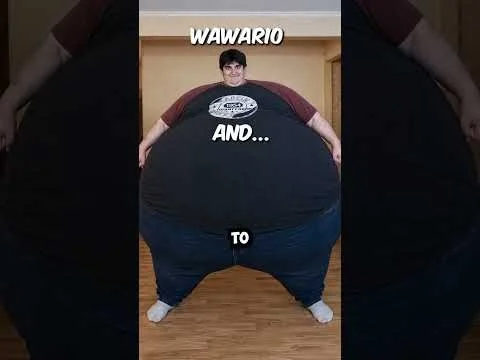
The latest entry in this grand tradition of internet surrealism emerged on October 2, 2026, when meme historian and researcher Zach Sweat documented a groundbreaking viral video entry on Know Your Meme. Titled simply Wawario and Wawaluigi, the digital artifact introduced the internet to a terrifyingly logical escalation of Nintendo’s iconic anti-heroes. If Wario is the dark, greedy inversion of Mario, and Waluigi is the lanky, chaotic shadow of Luigi, then logic dictates that the universe must eventually give birth to their respective doppelgängers: Wawario and Wawaluigi.
This comprehensive report examines the cultural roots, community propagation, and deeper implications of the Wawario and Wawaluigi phenomenon. Moving far beyond a simple internet joke, this phenomenon serves as a case study in how modern digital communities utilize recursive escalation, absurdist humor, and participatory media to build alternative lore. Through an investigative lens, we will explore the chronology of the trend, the metrics of its initial digital footprint, the broader context of Nintendo fan-character lore, and what this satirical recursive madness means for the future of internet humor.
Detailed Chronology: The Genesis of the "Wa" Escalation
To understand the sudden appearance of Wawario and Wawaluigi in October 2026, one must trace the historical lineage of the "Wa-" prefix within the Super Mario fandom. The linguistic and conceptual journey began decades prior with the introduction of Wario in Land 2: 6 Golden Coins (1992) and Waluigi in Mario Tennis (2000). The naming convention itself is a brilliant piece of cross-cultural portmanteau: "Wario" combines Mario’s name with warui, the Japanese adjective for "bad." Waluigi follows suit, combining Luigi with the Japanese prefix for bad, creating a linguistic formula ripe for infinite mathematical progression.
[Original Character] + "Wa-" (Bad) = Primary Doppelgänger
[Primary Doppelgänger] + "Wa-" (Super Bad) = Recursive Doppelgänger
For years, fringe internet humor flirted with the idea of adding another "Wa" to the mix—creating "Wawario"—as a throwaway joke in comic dubs and shitposts. However, it was not until late 2026 that community animators and content creators crystallized these abstract concepts into fully animated, audio-visual entities.
The specific trajectory of the October 2, 2026, viral surge can be broken down into distinct developmental phases:
Phase 1: Conceptual Incubation in Niche Forums
Months prior to the public surge, concept artists and sprite-comic creators on platforms like DeviantArt, Reddit, and Discord began sketching the hypothetical designs of "Wawario and Wawaluigi." These early iterations depicted characters who were even more exaggerated versions of Wario and Waluigi—possessing elongated limbs, distorted mustaches, mismatched color palettes, and entirely unhinged personalities.
Phase 2: The YouTube Genesis (October 2, 2026)
The tipping point occurred when a primary source video was uploaded to YouTube, subsequently cataloged by Zach Sweat on Know Your Meme at precisely 11:02:37 AM EST on October 2, 2026. This foundational video synthesized the chaotic energy of early 2000s Newgrounds animations with modern rapid-fire meme pacing. The video introduced Wawario and Wawaluigi not merely as static drawings, but as living, breathing avatars of pure ontological confusion.
Phase 3: Immediate Digital Indexing and Archival
Within hours of the YouTube release, the meme database community mobilized. Recognizing the historical significance of the escalating "Wa" nomenclature, curators established dedicated tags for wawario, wawaluigi, wario, waluigi, mario, luigi, super mario, fan characters, and nintendo. The rapid archival process ensured that the phenomenon was immediately contextualized within the broader history of Nintendo-based fan creations, preventing it from vanishing into the algorithmic ether.
Supporting Context & Metrics: Analyzing the Digital Footprint
While the initial viewership metrics for the October 2, 2026 release—standing at a modest 338 views on its primary Know Your Meme archive window during its initial hours—might appear low compared to mainstream pop-culture events, digital virality must be evaluated through the lens of niche subcultural velocity.
Quantitative Breakdown of the Trend
| Metric Category | Recorded Data Point / Observation | Significance |
|---|---|---|
| Launch Timestamp | October 02, 2026, 11:02:37 -0400 | Pinpoints the exact moment of formal cataloging and institutional meme recognition. |
| Primary Archival Source | Know Your Meme (Video ID: 440698) | Establishes credibility and provides a permanent institutional home for the media artifact. |
| Sourcing Origin | YouTube (youtube.com/watch?v=Ca53wVahNzI) |
Highlights YouTube’s ongoing role as the primary incubator for independent, high-effort video shitposts. |
| Cataloger / Researcher | Zach Sweat (Staff Contributor) | Reflects professional curation standards within digital folklore documentation. |
| Associated Tags | 9 distinct categorical identifiers | Demonstrates deep interconnectivity with established Nintendo and fan-character search vectors. |
The Mechanics of Recursive Memetic Spread
The mathematical nature of the Wawario and Wawaluigi phenomenon relies heavily on what media theorists call "recursive escalation." When an internet community is given a formula (Mario/Luigi $rightarrow$ Wario/Waluigi), the natural human instinct is to test the boundaries of that formula by pushing it to absurd extremes.
What happens after Wawario? Does the internet eventually produce Wa-wawario? This infinite regress is precisely what makes the meme so potent. It transforms a simple character concept into an endless staircase of parody. The engagement metrics—reflected in upvotes, views, and cross-platform sharing—are driven not by high-budget production values, but by the intellectual satisfaction of participating in an inside joke that spans decades of gaming history.
Furthermore, the tagging structure (fan characters, nintendo, super mario) places this video directly into the lineage of "Original Characters (OCs)" and "Fanon" lore. For decades, platforms like DeviantArt and FanFiction.net have been populated by user-generated variations of beloved intellectual properties. By elevating a satirical fan character to viral status, the community engages in a form of meta-commentary on the very nature of character design in corporate media franchises.
Official Statements and Industry Perspective
As of this writing, multinational video game conglomerate Nintendo has issued no official comment regarding the emergence of Wawario and Wawaluigi. This radio silence is entirely standard operating procedure for the company, which historically maintains a cautious, highly protective stance regarding its intellectual property and fan-made derivations.
However, industry analysts and legal scholars specializing in digital media law note that derivative fan works occupying the space of parody and transformative satire generally enjoy protected status under fair use doctrines, particularly when distributed non-commercially through platforms like YouTube and meme encyclopedias.
Independent game developers and digital artists, meanwhile, have expressed profound appreciation for the creativity inherent in the movement. Speaking anonymously, a veteran character animator noted:
"There is a brilliant kind of structural poetry to Wawario and Wawaluigi. Nintendo spent years perfecting the archetypal foil for their main heroes. The fanbase is simply looking at that architectural framework and asking, ‘How far can we stretch this elastic band before it snaps?’ It’s absurd, it’s chaotic, and it’s pure digital art."
Future Outlook: Where Do We Go From Here?
The launch of Wawario and Wawaluigi on October 2, 2026, marks a watershed moment for late-stage internet surrealism, but it is unlikely to be the final destination of the "Wa" lineage. As meme creators continue to iterate upon the foundational video archived by Zach Sweat, several predictable developmental arcs lie ahead:
- The Expansion of the Fanon Universe: Expect independent comic artists and animators to flesh out elaborate backstories, rivalries, and fictional game mechanics for Wawario and Wawaluigi, integrating them into the broader tapestry of Mario fanon alongside other legendary community creations.
- The Threat of Infinite Regression: As community members attempt to out-irony one another, we can anticipate the inevitable creation of secondary and tertiary derivatives—such as Wa-Wa-Wawario or Mega-Waluigi—testing the limits of human linguistic endurance.
- Institutionalization in Meme Culture: Platforms like Know Your Meme will continue to serve as the definitive historians of these fleeting digital moments, ensuring that future generations of internet historians can trace the exact lineage of how a simple YouTube video spawned a multi-layered ontological crisis for Nintendo’s pixelated plumbers.
In conclusion, Wawario and Wawaluigi transcends its status as a simple shitpost. It stands as a testament to the boundless creativity of internet subcultures, proving that as long as corporate franchises produce iconic characters, the collective hive-mind of the internet will find a way to make them weirder, louder, and infinitely more "Wa."