Executive Overview
The rapid democratization and explosive advancement of generative artificial intelligence have permanently altered the visual landscape of the modern internet. No longer confined to the realms of academic research or niche computational labs, hyper-realistic text-to-image models—such as Midjourney, OpenAI’s DALL-E 3, Stable Diffusion, and Google’s Imagen—are now accessible to anyone with a broadband connection and a web browser. With just a few descriptive keystrokes, everyday users can conjure up photographic masterpieces, historical events that never happened, and remarkably convincing portraits of public figures engaged in fictitious activities.
While this technological leap has unlocked unprecedented avenues for digital artistry, advertising, and creative expression, it has simultaneously introduced a profound epistemological crisis. As the fidelity of synthetic media climbs exponentially, society is hurtling toward a daunting precipice where seeing is no longer believing.
Industry experts, cybersecurity researchers, and media watchdogs warn that the proliferation of unvetted, AI-generated imagery poses an immediate and escalating threat to global information ecosystems. From the potential to violently swing public opinion during critical electoral cycles to the systematic erosion of faith in mainstream journalism, synthetic media is proving to be a potent vector for disinformation.
"It has become increasingly challenging for the average human eye to distinguish between AI-generated and real photos," says Andrey Doronichev, CEO and co-founder of Optic.xyz, a specialized platform designed to analyze digital images and flag synthetic artifacts. "This has the potential to manipulate public opinion, undermine the credibility of news sources, and ultimately threaten the democratic process by promoting disinformation."
In response to this looming digital panic, an entire sub-industry of forensic AI-detection tools has materialized. Yet, as platforms like Optic.xyz race to build robust defenses, they find themselves locked in an asymmetric game of technological catch-up against rapidly evolving generative models. Concurrently, major social media networks—once considered the primary bulwarks against viral falsehoods—are struggling to enforce their own manipulated media policies. Massive structural changes, staff reductions, and shifting verification paradigms across platforms like X (formerly Twitter) have left the gates wide open for malicious actors.
This comprehensive report explores the anatomy of the AI imagery crisis, detailing the technological arms race between generation and detection, the systemic failures of social media moderation, and the urgent measures required to safeguard our collective perception of reality.
Detailed Chronology: The Evolution of Synthetic Media and the Detection Arms Race
To fully grasp the gravity of the current information crisis, one must trace the rapid, almost dizzying trajectory of generative artificial intelligence over the past decade. What began as nightmarish, pixelated approximations of human faces has transformed, in the blink of an eye, into pristine, photorealistic documentation of events that exist solely in the latent space of neural networks.
Phase One: The Era of the Uncanny Valley (2014–2019)
The foundational breakthrough in modern generative imagery arrived with the introduction of Generative Adversarial Networks (GANs) in 2014 by Ian Goodfellow and his colleagues. GANs pit two neural networks against each other—a generator that creates fake data and a discriminator that evaluates it—in a zero-sum game that steadily improves the output quality.
For several years, GAN-based projects like "This Person Does Not Exist" fascinated the public. However, these early iterations were plagued by glaring anomalies. Users could easily spot synthetic portraits by searching for telltale signs: asymmetrical earrings, warped backgrounds, bleeding hairlines, and nonsensical digital artifacts. During this era, the "uncanny valley" acted as an instinctive biological defense mechanism for human viewers; something always felt subtly, unmistakably "off."
Phase Two: Diffusion Models and Hyper-Realism (2020–2022)
The paradigm shifted dramatically around 2020 with the rise of diffusion models. Instead of the adversarial push-and-pull of GANs, diffusion models work by taking an image, systematically destroying its data by adding Gaussian noise, and then learning how to reverse the process to generate entirely new images from pure noise guided by text prompts.
By the time models like OpenAI’s DALL-E 2, Midjourney v4, and Stability AI’s Stable Diffusion were released to the public between 2022 and early 2023, the technological threshold had fundamentally changed. Resolution skyrocketed, lighting and shadow interactions achieved physical plausibility, and the range of artistic styles expanded infinitely. The uncanny valley had effectively been bridged.
Phase Three: The Arms Race of Detection (Late 2022–Present)
As hyper-realistic images began flooding social media feeds, developers rushed to build forensic countermeasures. Platforms such as Optic.xyz emerged to provide consumers and compliance officers with automated scanning tools. These forensic tools look for imperceptible pixel-level patterns, frequency domain anomalies, and structural inconsistencies that betray a machine origin.
Concurrently, tech behemoths and media organizations began exploring cryptographic provenance standards, championed by groups like the Coalition for Content Provenance and Authenticity (C2PA). These standards embed tamper-evident digital watermarks and metadata into camera sensors at the point of capture, creating an unalterable chain of custody for digital media.
Yet, for every advancement in detection and provenance, generative models adapt. The current landscape is defined by a tense, high-stakes arms race where detection algorithms must constantly retrain on newer, cleaner generations of synthetic media just to maintain baseline accuracy.
Supporting Context & Metrics: The Scale of the Threat
The proliferation of AI-generated images is not merely a technical curiosity; it is a quantified sociological and psychological phenomenon. As synthetic assets become cheaper to produce and harder to identify, the economics of disinformation have shifted dramatically.
The Mechanics of Mass Manipulation
Historically, manufacturing convincing fake media required Hollywood-level budgets, skilled compositors, and significant time investments. Today, bad actors can generate hundreds of high-resolution, context-specific deceptive images in under a minute for fractions of a cent.
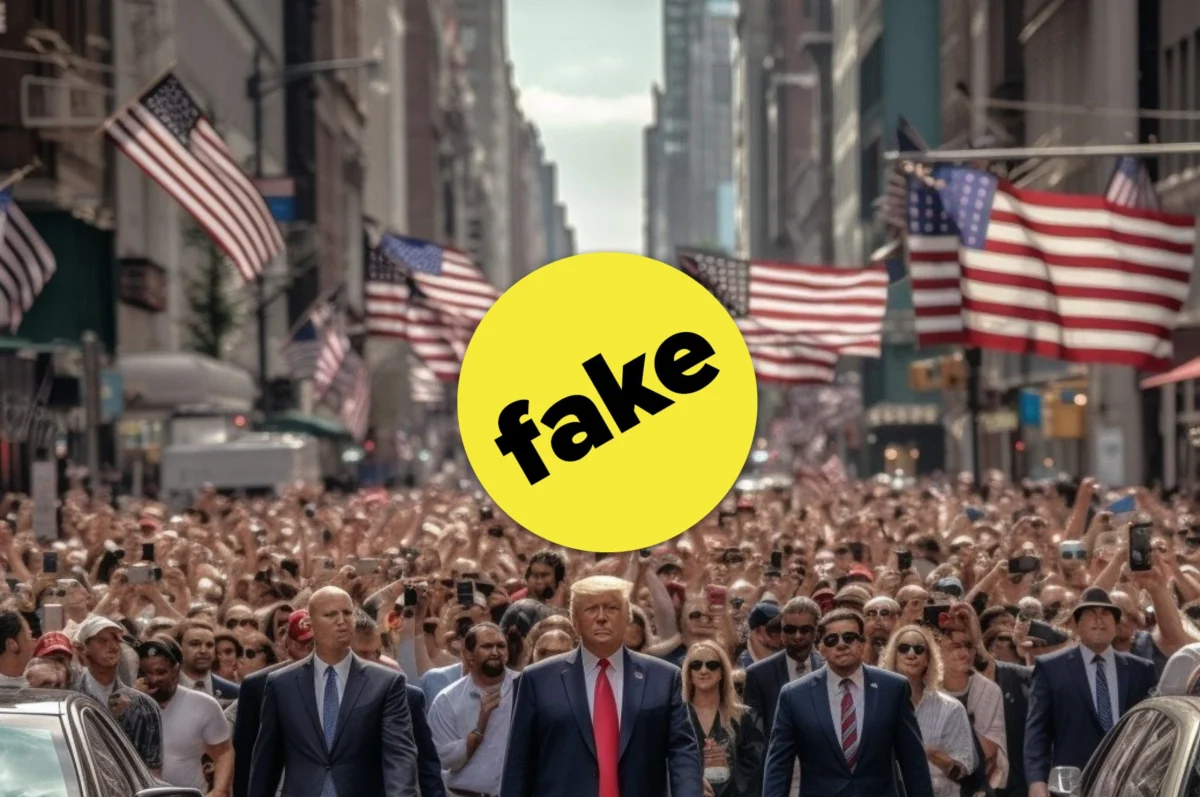
Consider the viral circulation of high-profile synthetic images—such as the fabricated photograph of Pope Francis wearing a luxury Balenciaga puffer jacket, or the entirely fictitious arrest photos of former U.S. President Donald Trump. These images achieved unprecedented reach not because they were technically flawless, but because they bypassed critical cognitive filtering. Human beings are hardwired to process visual information rapidly and emotionally; when confronted with an image that confirms their existing biases, the analytical brain often defers to the visual confirmation.
The Limits of Forensic Tools
Despite the ingenuity behind platforms like Optic.xyz, industry insiders are quick to concede a sobering truth: none of these tools are foolproof.
Detection algorithms rely on statistical probabilities rather than absolute certainties. As generative models incorporate adversarial training to explicitly evade detectors, the reliability of automated scanning tools degrades.
In the absence of infallible software, cybersecurity experts advise returning to foundational forensic heuristics. Human observers must remain vigilant for classic visual anomalies that current diffusion models still occasionally botch:
- Anatomical Inconsistencies: Look closely at hands, fingers, teeth, and ears. While models have improved dramatically, rendering complex anatomical structures like human hands or overlapping fingers remains a notorious stumbling block.
- Background Geometry: Examine straight lines in architecture, text on signs, reflections in mirrors, and asymmetric jewelry or clothing accessories. AI models frequently struggle to maintain consistent spatial logic across distant focal planes.
- The "Too Good to Be True" Rule: If an image perfectly encapsulates a partisan fantasy, features immaculate cinematic lighting in a mundane environment, or strains credulity given the context, skepticism should be the default setting.
Official Statements and Industry Perspectives
The collision between generative artificial intelligence and public discourse has triggered urgent alarms across policy institutes, watchdog organizations, and tech boardrooms.
Kayla Gogarty, deputy research director at Media Matters for America, emphasizes that the dangers of synthetic media are compounded by systemic failures within the digital platforms designed to host public discourse.
"As there has been a recent rise of AI-generated media, it has become clear that platforms are unprepared for this moment in which fake images and misinformation could lead to real-world harm," Gogarty stated in an interview with BuzzFeed News.
Gogarty specifically highlights the structural vulnerabilities of platform governance in the post-acquisition era of X (formerly Twitter).
"Particularly concerning is Twitter, as Elon Musk has abandoned much of the platform’s content moderation, and it has become difficult to determine account credibility under the new checkmark policy," Gogarty explained.
Under legacy social media frameworks, verified badges served as a crude yet effective signal of institutional authenticity, helping users distinguish between established journalistic entities and spoofed accounts. The dismantling of these traditional verification systems, coupled with massive layoffs among trust and safety teams industry-wide, has created a regulatory vacuum. When malicious actors can purchase verified status and instantly disseminate hyper-realistic fake images without fear of algorithmic throttling or swift removal, the velocity of disinformation outpaces the capacity of truth to correct it.
Meanwhile, technology executives are grappling with the ethical implications of the tools they have unleashed. Andrey Doronichev of Optic.xyz points out that the burden of verification is increasingly shifting onto the end user—a precarious strategy in an environment where media literacy varies wildly across demographics.
"This has the potential to manipulate public opinion, undermine the credibility of news sources, and ultimately threaten the democratic process," Doronichev reiterated, emphasizing that technological defenses alone will not suffice without systemic policy interventions and institutional reform.
Future Outlook: Navigating the Post-Truth Horizon
As we look toward the future, society stands at a historic crossroads. The trajectory of artificial intelligence suggests that generative tools will only become faster, cheaper, and more indistinguishable from reality. Within a few short years, real-time synthetic video and audio generation will likely match the photorealism currently achieved in static imagery, opening the door to hyper-personalized, interactive disinformation campaigns.
To avert a total collapse of shared objective reality, a multi-layered defense strategy must be deployed across government, industry, and civil society:
1. Regulatory Frameworks and Legal Accountability
Governments worldwide must move beyond passive observation and begin establishing clear legal frameworks regarding the unlabelled deployment of synthetic media, particularly during sensitive political windows such as elections. While free expression remains a paramount constitutional principle, intentional campaigns of deception designed to subvert democratic processes demand robust legal countermeasures.
2. Universal Adoption of Cryptographic Provenance
The tech industry must unite behind open standards like C2PA, embedding cryptographic seals of authenticity directly into consumer electronics, professional cameras, and editing software. If every legitimate photograph carries an unbroken chain of cryptographic metadata verifying when, where, and by whom it was captured, unverified media will carry an inherent presumption of fabrication.
3. Revitalizing Platform Governance
Social media corporations must reinvest in robust trust and safety infrastructure. Content moderation cannot be treated as an expendable overhead cost; it is core national security infrastructure in the digital age. Platforms must enforce manipulated media policies consistently, transparently, and swiftly, regardless of user status or political affiliation.
4. Cultivating Radical Media Literacy
Ultimately, technology cannot completely insulate society from deception. Educational institutions, news organizations, and community groups must prioritize digital media literacy as an essential life skill. Citizens must be trained to critically evaluate visual evidence, cross-reference breaking media with established, verified journalistic institutions, and pause before amplifying sensational imagery across social networks.
The rise of AI-generated imagery represents an existential stress test for human credulity. Whether this technology serves as a catalyst for creative renaissance or an instrument of societal destabilization depends entirely on our collective willingness to build the ethical, technical, and institutional guardrails necessary for the post-truth era.