Executive Overview
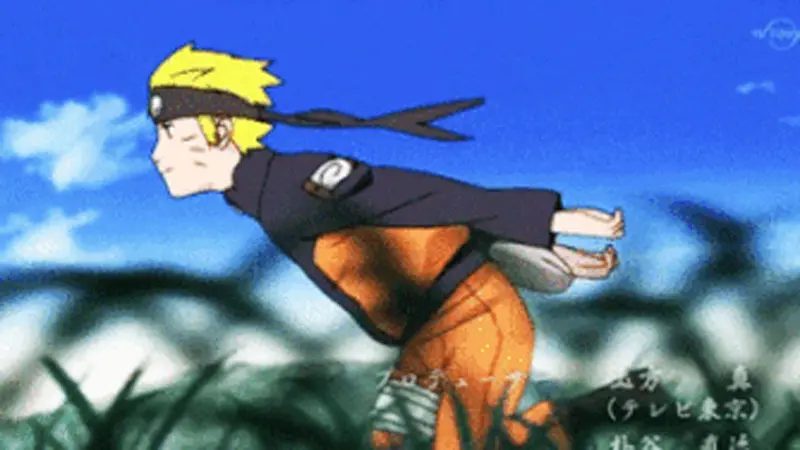
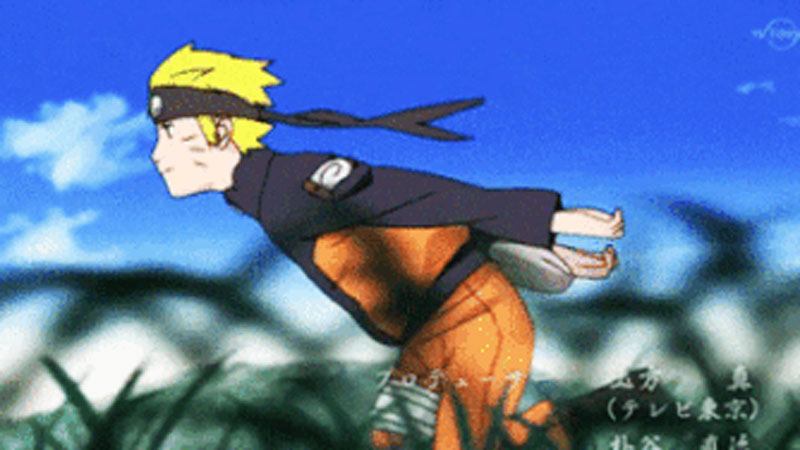
The "Naruto Run"—characterized by a runner leaning their torso forward while extending both arms straight back behind them—stands as one of the most enduring and recognizable physical tropes to emerge from contemporary Japanese animation. Originating with the titular protagonist of Masashi Kishimoto’s globally acclaimed manga and anime series Naruto, which debuted in October 2002, the motion was originally designed by animators as an efficient shortcut to convey high-speed velocity without the cumbersome task of drawing pumping arms.
Over the past two decades, however, this stylized animation quirk transcended the boundaries of the screen to become a fixture of internet meme culture, viral video challenges, real-world athletic gatherings, and even mainstream geopolitical discourse. What began as a fictional ninja sprint evolved into a transnational symbol of shared digital humor. This journey culminated in its adoption as the tactical movement of choice for the historic, albeit satirical, "Storm Area 51" movement of 2019—an event that even forced the United States Air Force to formally address the meme in security briefings.
This retrospective examines the origins, trajectory, cultural integration, and unexpected institutional impact of the Naruto Run, tracing its path from a mid-2000s YouTube curiosity to an established touchstone of internet history.
Detailed Chronology: From Studio Pierrot to Global Streets
1. The Genesis on Screen (2002)
When the Naruto anime series premiered on Japanese television on October 3, 2002, produced by Studio Pierrot, viewers were introduced to a hyperactive, ramen-loving ninja named Naruto Uzumaki. While the character’s signature orange jumpsuit and whisker markings quickly captured the public’s imagination, it was his idiosyncratic locomotive style that left a permanent imprint on pop culture.
Whenever Naruto accelerated across the screen, he did so with his upper body drastically pitched forward and his arms trailing horizontally behind him. While rooted in traditional ninja tropes found across various forms of Japanese fiction—where leaning forward minimizes wind resistance and keeps the center of gravity low—it was Naruto that popularized the aesthetic globally. Consequently, the specific posture became universally known as the "Naruto Run."
2. The Early Internet and YouTube Adaptation (2006–2010)
As broadband internet adoption accelerated globally in the mid-2000s, fans sought ways to translate their favorite anime elements into physical reality. On September 6, 2006, early YouTube creator mfbrice uploaded a short video titled "Anime Run," capturing himself replicating the posture outdoors. This foundational video proved that the animated movement could be translated into physical space, inspiring a wave of amateur copycats.
The meme soon entered digital self-help and instructional spaces. On March 10, 2008, a user-generated guide titled "How to Run Like Naruto" was published on wikiHow, offering step-by-step physical instructions for achieving the aerodynamic lean. This blend of earnest physical instruction and comedic self-awareness cemented the run’s status as an early viral staple.
3. Escalation into Real-World Events and Parkour (2014–2016)
By the early 2010s, the Naruto Run had escaped the confines of bedroom webcams and entered public spaces. On September 24, 2014, the media channel AppStoreVn released "Naruto in Real Life," featuring a professional stuntman executing complex parkour maneuvers—including wall-runs and backflips—while maintaining the classic arm-back posture. This video demonstrated that the run could be merged with functional athleticism, albeit with inherent physical risks.
Physical meetups dedicated to the run soon followed. On July 11, 2016, internet personality Joe Inoue documented a large-scale public Naruto Run event in Porto Alegre, Brazil, demonstrating that the meme possessed international offline organizing power. Similar public gatherings began appearing in parks and university campuses across North America and Europe, often organized via emerging social media networks.
4. The Peak: The Storm Area 51 Phenomenon (2019)
The cultural zenith of the Naruto Run occurred in the summer of 2019, catalyzed by one of the largest viral events in internet history: "Storm Area 51, They Can’t Stop All of Us." Created as a satirical Facebook event by Matty Roberts, the proposal called for millions of people to gather outside the highly classified United States Air Force facility in Nevada to uncover extraterrestrial secrets.
Crucially, the event description relied on the Naruto Run as a tactical imperative, claiming: "If we naruto run, we can move faster than bullets."
The joke captured the global imagination, generating tens of millions of interactions, spawning countless derivative memes, and prompting commercial brands to issue themed marketing campaigns. While the actual turnout on September 20, 2019, resulted in only a few thousand attendees and a handful of arrests, the phrase "Naruto Run" was permanently etched into mainstream news cycles worldwide.
Supporting Context & Metrics: Analyzing the Viral Spread
To understand the longevity of the Naruto Run, one must analyze the intersection of algorithmic platforms, community participation, and physical comedy.
Search Interest and Demographic Reach
Data gathered from search trends over the past two decades indicates that interest in the Naruto Run has experienced distinct, predictable spikes tied to viral moments rather than continuous linear growth. Minor peaks occurred during the mid-2010s as YouTube pranksters and fitness vloggers tested the viability of running like an anime character. However, search queries for "Naruto Run" experienced a historic, multi-hundred-percent surge in July and September 2019, directly coinciding with the peak of the Storm Area 51 viral cycle.
Geographically, search interest has remained concentrated in English-speaking nations—particularly the United States, Canada, the United Kingdom, and Australia—alongside robust subcultures in Brazil, Mexico, and Western Europe, mirroring the global distribution of anime fandom.
Psychological and Social Drivers
Sociologists and media theorists attribute the persistence of the Naruto Run to three core factors:
- In-Group Signaling: Adopting the run serves as an immediate, recognizable marker of belonging to digital native and anime-literate subcultures.
- Absurdist Humor: The inherent ridiculousness of performing a physically awkward, aerodynamics-defying sprint in public spaces appeals to contemporary generations raised on deep-irony meme formats.
- Low Barrier to Entry: Unlike complex cosplay or artistic creation, anyone with open space and working legs can perform a Naruto Run, making it an accessible vehicle for participatory culture.
Official Statements and Institutional Reactions
As the Naruto Run breached the barrier between internet subculture and physical reality, it occasionally drew responses from official bodies, public safety organizations, and military institutions.
The United States Air Force Response
The unprecedented scale of the Storm Area 51 event forced the United States military to take public notice of internet meme culture. In July 2019, Laura McAndrews, a spokeswoman for the U.S. Air Force, issued an official statement regarding the planned raid to the Washington Post, issuing a blunt warning to potential trespassers:
"[Area 51] is an open training range for the U.S. Air Force, and we would not encourage anyone to try to come into the area where we train American armed forces… The U.S. Air Force always stands ready to protect America and its assets."
While the statement did not explicitly mention the aerodynamic viability of the Naruto Run, internal military culture quickly integrated the meme. Shortly after the statement was released, leaked photographs from an official military briefing surfaced online, showing a service member educating personnel on the "Naruto Run" as part of the base’s security threat assessment context. The slide deck labeled the movement as an indicator of unorthodox civilian behavior, generating immense viral amusement across platforms like Reddit’s r/memes, where the post accumulated over 124,700 upvotes within 24 hours.
Academic and Athletic Commentary
Kinesiology and sports science experts have occasionally weighed in on the mechanics of the run when prompted by media outlets. Consensus among biomechanics specialists notes that while extending arms backward shifts the runner’s center of mass slightly forward—potentially aiding initial acceleration—it eliminates the natural arm swing required to maintain balance, counterbalance rotational forces of the torso, and optimize long-distance running efficiency. Consequently, sports scientists universally advise against attempting the run for practical athletics or long-distance sprinting.
Future Outlook: The Enduring Legacy of an Anime Sprint
Two decades after its debut in the pages of Weekly Shōnen Jump and subsequent broadcast on Japanese television, the Naruto Run has evolved far beyond its origins as an animation shortcut. It has transitioned into an archetype of digital folklore—a living meme that demonstrates how fiction can bleed into physical reality through the power of collective internet humor.
As successive generations of digital natives discover Naruto and its derivative media, the run remains a rite of passage for young fans participating in convention flash mobs, school track events, and online video challenges. While the geopolitical fervor of events like Storm Area 51 has subsided, the cultural footprint of the Naruto Run is secure. It stands as a testament to the unpredictable nature of modern media consumption, proving that even the most whimsical artistic choice can leave an indelible mark on global human behavior.