Executive Overview
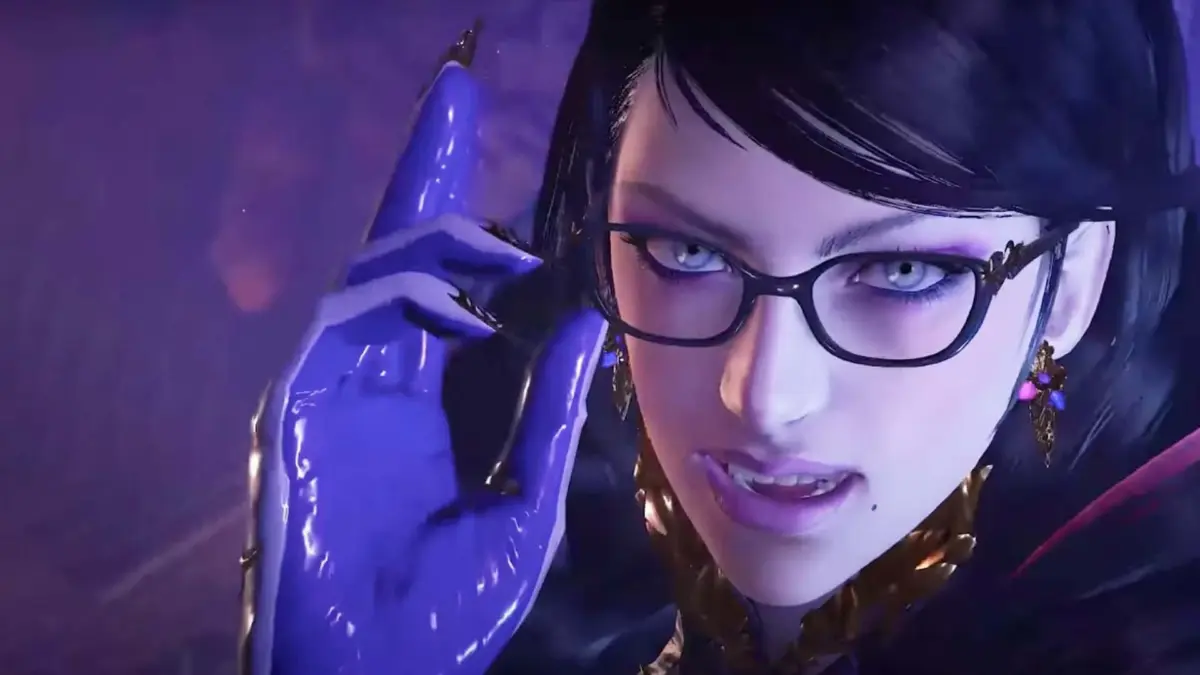
The landscape of modern character-action video games is inextricably linked to the trajectory of Osaka-based developer PlatinumGames. Known for crafting hyper-kinetic combat systems, stylish aesthetics, and iconic protagonists, the studio has long stood as a titan of the genre. At the heart of its creative identity is Bayonetta, the critically acclaimed series starring the eponymous Umbra Witch, whose high-heel gunplay and weaponized hair have captivated players for over a decade and a half.
However, the PlatinumGames of today operates in a radically different ecosystem than the one that birthed the original trilogy. The studio has recently weathered a significant brain drain, marked by the departure of several foundational creative masterminds—most notably original game director Hideki Kamiya, who has since founded a new studio, Clovers, to spearhead Okami 2. Additional high-profile exits, complicated intellectual property (IP) sharing agreements between Sega and Nintendo, and a shifting industry landscape have cast long shadows over the studio’s operational future.
Despite these seismic organizational shifts, PlatinumGames Chief Executive Officer Atsushi Inaba has firmly signaled that the studio’s flagship witch is far from ready to hang up her guns. Speaking candidly in a joint interview with Famitsu, Inaba addressed the future of the Bayonetta franchise for the first time since the company-wide talent exodus. While stopping short of confirming an immediate greenlight for a fourth mainline installment, Inaba articulated an unyielding corporate and creative ambition to continue expanding the universe of the Umbra Witches.
This commitment arrives at a critical juncture for PlatinumGames. Beyond the internal restructuring necessitated by the loss of its veteran leadership, the studio is currently navigating a precarious external landscape. From high-profile collaborations like Ninja Gaiden 4 and upcoming interactive adaptations such as Teenage Mutant Ninja Turtles: The Last Ronin, to the staggering macroeconomic tremors of the newly minted $110 billion Skydance media mega-merger between Warner Bros. and Paramount, PlatinumGames is walking a tightrope between creative reinvention and corporate survival.
Detailed Chronology: The Evolution and Exodus of Platinum’s Elite
To understand the weight of Inaba’s recent remarks regarding Bayonetta, one must first examine the cumulative erosion of the studio’s veteran infrastructure. The creative DNA of PlatinumGames was forged by industry veterans who cut their teeth at Capcom’s legendary Clover Studio, bringing with them a relentless pursuit of fast-paced, mechanically deep action gaming. Over the past several years, however, that foundational core has steadily dissolved.
The departure of Hideki Kamiya remains the most symbolic rupture. As the director of the original Bayonetta (2009), Kamiya served as the creative compass for much of the studio’s output. His exit in late 2023 sent shockwaves through the community, particularly as he established Clovers—a new independent venture explicitly focused on developing Okami 2.
Kamiya was far from the only pillar to walk away from Platinum’s Osaka headquarters. The studio has witnessed a cascading series of high-profile departures:
- Masaki Yamanaka: Renowned Resident Evil character designer whose artistic sensibilities helped define the unique visual flair of Platinum’s early titles.
- Kenji Saito: Director of Metal Gear Rising: Revengeance, a masterclass in frantic, blade-driven action mechanics.
- Takahisa Taura: Director of Astral Chain, the critically praised Nintendo Switch exclusive that married complex dual-character mechanics with sleek cyberpunk aesthetics.
- Yusuke Hashimoto: Director of Bayonetta 2, who departed PlatinumGames to join Capcom, where his keen eye for mechanical responsiveness recently helped the combat shine in Onimusha: Way of the Sword.
Compounding these human capital losses are the inherent structural complexities of the Bayonetta intellectual property itself. Unlike franchises wholly owned by a single publisher, the Bayonetta IP exists in a collaborative purgatory. It is co-owned by Sega—which funded and published the original 2009 title—and Nintendo, which rescued the franchise from development hell by financing the critically lauded Wii U exclusive Bayonetta 2 (2014) and subsequent Nintendo Switch ports. Nintendo later co-funded Bayonetta 3, which launched on the Switch in October 2022.
Because of this tripartite web of corporate stakeholders—PlatinumGames, Sega, and Nintendo—greenlighting a theoretical Bayonetta 4 requires an alignment of corporate interests that goes far beyond simple internal desire. For Inaba and his remaining team, securing the capital, platform exclusivity agreements, and creative alignment necessary to produce another sequel is an extraordinarily complex logistical hurdle.
Supporting Context & Metrics: Navigating Co-Ownership and Recent Releases
The operational reality for PlatinumGames over the last two years has been defined by a pivot toward external partnerships and work-for-hire collaborations. As the studio adjusted to its reduced internal leadership ranks, it leaned heavily into co-development models with industry giants.
On October 21, 2025, PlatinumGames released Ninja Gaiden 4, a major collaboration with Koei Tecmo’s Team Ninja that launched simultaneously on PlayStation 5, Xbox Series X/S, and PC. This project served as a proving ground for the studio’s post-exodus engineering and design teams, demonstrating that Platinum could still deliver high-octane hack-and-slash combat without its original cadre of directors at the helm.
Concurrently, the studio has utilized cross-media promotional events to keep its legacy brands in the public consciousness. In a collaborative push highlighted by Famitsu, Inaba appeared alongside Shift-Up CEO Hyung-tae Kim to promote a high-profile Bayonetta crossover event integrated into Shift-Up’s Stellar Blade, specifically tailored for the newly anticipated hardware ecosystem of the Nintendo Switch 2. This cross-pollination underscores the enduring commercial value of the Bayonetta brand, even during dormant development periods.
However, the studio’s immediate production pipeline is anchored by a far darker, more narrative-driven project: Teenage Mutant Ninja Turtles: The Last Ronin. First announced by Paramount and initially slated for development by Black Forest Games, the project faced internal turbulence before being handed off to PlatinumGames. The survivalist, cyberpunk-infused action-adventure title was officially showcased at Summer Game Fest in June 2026, positioning it as one of Platinum’s most ambitious narrative undertakings to date.

Yet, the project’s future is now tethered to macroeconomic forces far beyond Osaka.
Official Statements and Industry Insights
The most concrete indicator of the franchise’s heartbeat came during the aforementioned Famitsu interview, conducted in tandem with Shift-Up’s Hyung-tae Kim. When pressed on whether players would ever see a continuation of the Umbra Witch’s adventures, Inaba provided a measured, highly diplomatic assessment that nevertheless carried a definitive undertone of optimism.
"I can’t really answer that right now," Inaba admitted when asked directly about the franchise’s immediate roadmap.
However, he immediately tempered the ambiguity with a resolute affirmation of intent: "We have a strong desire to further develop the character of Bayonetta and expand her world. Please look forward to seeing what form that takes in the future."
Industry analysts have parsed these remarks as a careful balancing act. On one hand, Inaba cannot announce Bayonetta 4 because formal agreements with Sega and Nintendo—alongside securing budgetary and directional resources—have not been finalized. On the other hand, by publicly reiterating the studio’s "strong desire" to keep the IP alive, Inaba is signaling to shareholders, fans, and prospective partners that PlatinumGames does not intend to let its most iconic creation fade into obsolescence.
The departure of Kamiya and other key directors naturally sparked industry-wide speculation that PlatinumGames might pivot away from original IP entirely, devolving into a pure support studio for external publishers. Inaba’s statements directly counter this narrative, framing the studio not as a retreating force, but as an organization actively strategizing its next creative evolution.
Future Outlook: The $110 Billion Skydance Merger and Platinum’s Next Horizon
As PlatinumGames looks toward the horizon, its immediate destiny is inextricably bound to a corporate earthquake happening thousands of miles away in the corporate boardrooms of North America.
Warner Bros. and Paramount have officially finalized a staggering $110 billion mega-merger, creating a single media behemoth operating under the unified banner of Skydance. Scheduled to officially close imminently, this monumental consolidation places an unprecedented portfolio of intellectual property under one corporate roof. Skydance will now hold the global rights to Harry Potter, The Lord of the Rings, Game of Thrones, Batman, The Sopranos, Star Trek, and crucially, the Teenage Mutant Ninja Turtles franchise.
Historically, corporate mergers of this magnitude are rarely kind to external creative partners. Large-scale structural overhauls, cost-cutting initiatives, and shifting strategic priorities routinely result in project cancellations and portfolio rationalization. Paramount’s live-action, R-rated cinematic adaptation of Teenage Mutant Ninja Turtles: The Last Ronin had already been placed on ice prior to the finalization of the Skydance deal, raising immediate red flags regarding the stability of related media initiatives.
For PlatinumGames, the multi-billion-dollar marriage of Warner Bros. and Paramount introduces a volatile layer of uncertainty. Because Teenage Mutant Ninja Turtles: The Last Ronin is being developed under Paramount’s umbrella—now absorbed into Skydance—the game’s production milestone reviews, funding structures, and release schedules are subject to the whims of newly appointed corporate executives who may seek to audit, delay, or outright cancel projects inherited from legacy leadership structures.
Whether PlatinumGames’ gritty TMNT adaptation will weather this corporate storm remains one of the industry’s most pressing unanswered questions. If the project survives, it could cement Platinum’s reputation as a resilient developer capable of navigating massive corporate transitions. If it falter, it will underscore the immense risks independent studios face when hitching their fortunes to media conglomerates undergoing systemic restructuring.
In the face of these external perils and internal restructuring, Atsushi Inaba’s stance on Bayonetta offers a stabilizing anchor. It reminds the gaming community that while directors may come and go, and corporate overlords may shift their chess pieces across a billion-dollar board, the foundational creative drive of PlatinumGames—the pursuit of stylish, uncompromising, adrenaline-fueled action—remains intact. Whether that drive manifests as Bayonetta 4, a new narrative direction for the Umbra Witch, or an entirely unexpected collaborative venture, the studio has made it abundantly clear that the story of Cereza is far from finished.