Executive Overview
As major retail sales events like Amazon Prime Day continue to dominate the consumer landscape, attention is frequently hijacked by high-ticket electronics: flagship smartphones, next-generation gaming consoles, OLED televisions, and high-performance laptops. Yet, a quieter economic phenomenon underpins these massive commercial explosions: the high-volume, low-cost utility filler item.
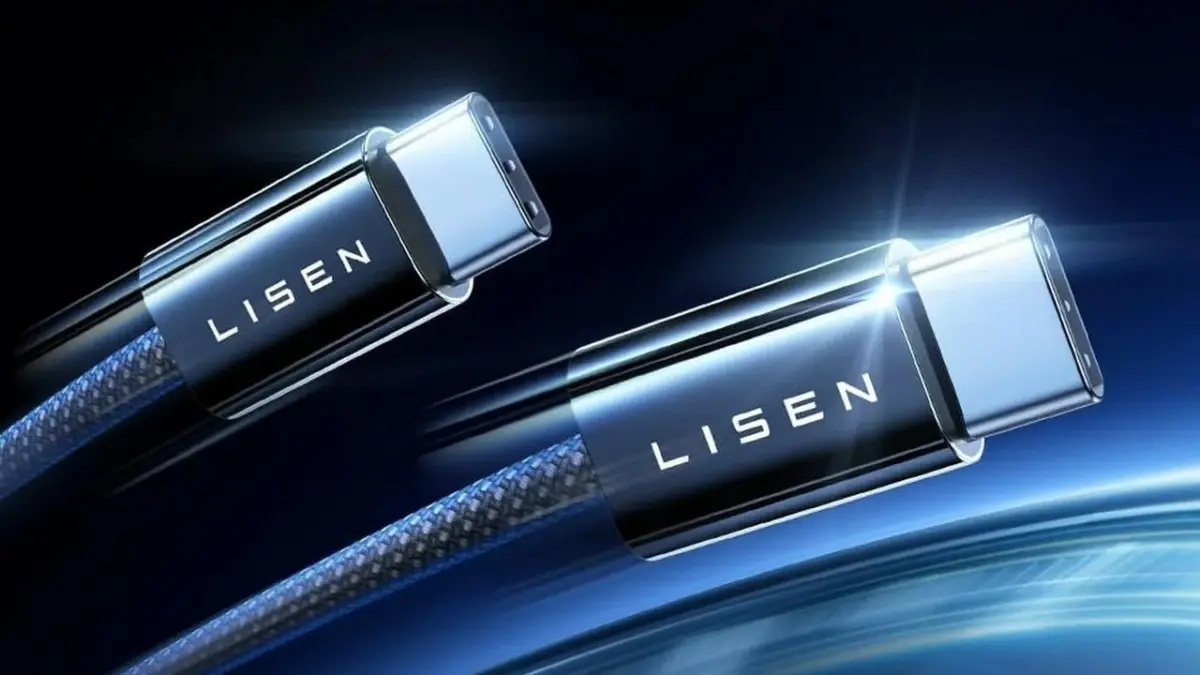
Among these everyday essentials, the humble USB-C cable has undergone a radical transformation. Once viewed as an easily replaceable, fragile commodity, the modern Type-C cable is now a complex piece of engineering capable of handling extreme data transfer speeds and massive electrical loads. A prime example of this market shift is a current promotional deal featuring a two-pack of Lisen 6.6-foot 240W USB Type-C cables, marked down to an astonishing $5.60 using the exclusive coupon code 8KPU7M61.
At roughly $2.80 per cable, this discount starkly contrasts with the $10-to-$20 price points traditionally commanded by equivalent products at brick-and-mortar big-box electronics retailers. More importantly, it highlights an important inflection point in consumer hardware: the democratization of high-wattage power delivery. With a 240W power rating, these cables are no longer restricted to low-powered accessories like wireless earbuds or legacy smartphones; they are engineered to support power-hungry devices, from modern iPhones and portable gaming systems to high-performance enterprise laptops.
This deep-dive report examines the technological specifications behind modern high-wattage charging, the shifting economics of mobile accessories, consumer durability standards, and what this pricing strategy signals for the future of tech retail.
Detailed Chronology of the Universal Cable Standard and the Rise of 240W Delivery
To understand why a 240W cable priced at under six dollars represents a major milestone, it is necessary to trace the evolution of the USB-C standard and the broader power delivery ecosystem.
The Fragmented Era Before USB-C
For decades, mobile and computing devices relied on a fragmented ecosystem of proprietary charging solutions. Laptops utilized barrel connectors of varying voltages and amperages, while smartphones toggled between mini-USB, micro-USB, Apple’s 30-pin connector, and later, Lightning. This lack of standardization created immense electronic waste, consumer frustration, and logistical challenges for travelers.
The Introduction of USB-C (2014–2016)
The USB Implementers Forum (USB-IF) introduced the USB Type-C specification in 2014, with commercial adoption accelerating rapidly between 2015 and 2016. Designed as a reversible, symmetrical connector capable of handling power, data, and video simultaneously, USB-C promised to be the "one connector to rule them all." However, early iterations were plagued by safety concerns, proprietary fast-charging protocols that failed to interoperate cleanly, and strict limitations on power delivery (typically capped at 15W or 60W in standard consumer applications).
The Power Delivery (PD) Revolution and the 240W Standard (2021–Present)
As laptops, tablets, and gaming hardware grew increasingly power-dense, the USB-IF introduced USB Power Delivery (USB PD) revisions. The breakthrough came with the USB PD 3.1 specification, which introduced the Extended Power Range (EPR).
Prior to EPR, the maximum power throughput for USB-C was 100W (20V at 5A), which was sufficient for mid-range laptops and tablets, but fell short of demanding mobile workstations and gaming rigs. The EPR specification pushed this boundary dramatically upward, enabling delivery of up to 240W (48V at 5A).
To safely handle 240W without risking thermal overload, cables required built-in E-Marker chips (electronic marker chips) to negotiate voltage parameters safely between the charger and the host device, alongside significantly thicker internal copper wiring and upgraded shielding. Initially, cables meeting these rigorous safety and performance thresholds commanded premium prices, often retailing between $20 and $40 individually. The current market availability of dual-pack 240W cables for under $6 signals a massive maturation in manufacturing efficiencies and global supply chain optimization.

Supporting Context, Metrics, and Engineering Specifications
The Lisen 6.6ft 240W USB-C cable package serves as an ideal case study for modern accessory engineering. Below is an exhaustive breakdown of the technical metrics, physical dimensions, and performance benchmarks that define this class of product.
1. Power Throughput: 240W (USB PD 3.1 EPR Support)
- What it means: The cable supports the maximum threshold permitted under the current USB-IF Power Delivery 3.1 standard.
- Real-world application: It can safely power and charge demanding hardware, including 16-inch MacBook Pros, high-end Windows gaming laptops, portable monitors, and modern gaming handhelds like the Nintendo Switch 2, without thermal throttling or voltage drop.
2. Physical Reach: 6.6 Feet (2 Meters)
- The "Goldilocks" Length: Shorter cables (3 feet or under) frequently frustrate users who need to use their devices while plugged into a wall outlet or distant power strip. Conversely, excessively long cables (10 feet or more) often suffer from internal resistance degradation (voltage drop) and create messy desk tangles. At 6.6 feet, the cable balances spatial freedom with electrical efficiency.
3. Durability and Structural Integrity
Modern consumers demand resilience from everyday carry items. Lisen’s manufacturing specifications highlight several rigorous stress-test metrics:
- Braided Nylon Sheath: Unlike cheap, rubber-coated PVC cables that crack, fray, and expose internal wiring after months of friction, a tightly woven nylon exterior resists tearing, pet chewing, and sharp bends.
- Strain Relief (SR) Joints: The junction where the cable meets the USB-C housing is historically the primary point of failure. Reinforced SR collars distribute bending stress evenly across the connector.
- Lab-Tested Benchmarks: The manufacturer reports internal testing tolerances exceeding 40,000+ bends and 175-pound tensile pull resistance. While lab conditions rarely mirror the chaotic reality of a backpack or bedside table, these figures represent structural resilience equivalent to roughly a decade of aggressive daily use.
4. Consumer Validation and Market Reception
With over 12,000 global ratings on Amazon maintaining an aggregate score of 4.5 out of 5 stars, the product benefits from substantial social proof. High-volume review datasets for basic tech accessories typically reveal vulnerabilities regarding inconsistent data syncing or slow charging speeds; however, consistently high ratings across a sample size exceeding ten thousand units suggest stable quality control and reliable adherence to advertised specifications.
Official Statements and Industry Perspective
The commercial strategies behind deep-discount tech accessories reflect broader shifts within the consumer electronics and e-commerce sectors. Industry analysts and supply chain observers point to several key drivers:
- Loss-Leader Economics During Retail Events: Major promotional windows like Amazon Prime Day rely heavily on "filler items." Retailers and third-party vendors frequently price highly practical utility items at or near cost. The goal is to capture consumer attention, lower friction at checkout, and encourage larger cart sizes containing higher-margin electronics.
- The Commodity Status of High-Speed Copper: According to manufacturing insiders, the actual cost of raw materials—copper wiring, silicone insulation, braided nylon, and stamped aluminum connector housings—has stabilized globally. As production lines in factories across Shenzhen and surrounding manufacturing hubs scale up to meet universal USB-C mandates (such as those enforced by the European Union), the cost of producing an over-spec cable has plummeted.
- The Shift from Proprietary to Universal: "We are living in an era where consumers refuse to tolerate fragmented charging ecosystems," notes Eric Song, IGN Commerce Manager. "When a single cable can seamlessly power your smartphone, your portable gaming console, and your professional workstation laptop, it stops being a disposable accessory and becomes foundational infrastructure. Getting that level of future-proof utility for less than the cost of a fast-food meal alters how consumers view accessory value."
Future Outlook: The Next Decade of Mobile Power and Connectivity
As we look toward the horizon of consumer technology over the next five to ten years, the role of cables and power delivery systems will continue to evolve in tandem with emerging hardware trends.
1. The Death of the Lower-Tier Legacy Cable
Just as USB-A and micro-USB have been systematically phased out of modern consumer consciousness, sub-standard USB-C cables that lack E-Marker chips or support only baseline USB 2.0 speeds will face obsolescence. As power requirements for augmented reality (AR) headsets, AI-powered edge computing devices, and ultra-thin laptops increase, 100W and 240W cables will become the absolute baseline floor for consumer expectations.
2. Data Transfer Convergence (USB4 and Beyond)
While the Lisen 6.6ft cables focus primarily on high-wattage power delivery and reliable everyday syncing, the broader industry is racing toward unified cables that combine 240W power delivery with multi-gigabit data transfers (such as USB4 Version 2.0, supporting up to 80Gbps or 120Gbps). In the near future, consumers will expect every cable in their toolkit to simultaneously charge a laptop at maximum speed, output 8K video to an external display, and transfer massive local datasets in seconds.
3. Sustainability and Regulatory Mandates
Global regulatory pressure—led by the European Union’s common charger directive—has permanently altered product design cycles. Manufacturers can no longer bundle proprietary, single-use chargers and cables with every individual device sold. This unbundling trend places the purchasing power directly into the hands of the consumer, who must independently curate their own cable and charger ecosystems. Consequently, high-value, multi-pack configurations offering premium specifications (like 240W EPR support and braided nylon durability) at aggressive price points will dictate market dominance.
Conclusion
The availability of a two-pack of high-performance 240W USB-C cables for $5.60 is more than just a fleeting retail promotion; it is a clear indicator of how far mobile accessory engineering and manufacturing efficiency have advanced. By removing financial friction from high-wattage power delivery, deals of this nature accelerate the adoption of universal standards, ensuring that consumers can safely, efficiently, and affordably power the diverse array of digital tools that define modern life.