Executive Overview
Europe’s artificial intelligence sector is experiencing a historic financial windfall. According to a joint report released by Crunchbase and the HumanX conference, European AI-focused startups pulled in an astounding $23 billion in venture funding during the first half of 2026 alone. This represents a staggering 130% year-over-year surge, cementing AI as the dominant force in the region’s venture ecosystem by capturing 55% of all venture capital dollars deployed across the continent.
Yet, beneath the champagne toasts of record-breaking funding rounds lies a sobering reality. Capital injection alone cannot guarantee regional autonomy, economic resilience, or technological leadership. As industry leaders made clear at the HumanX conference in Amsterdam, Europe faces a critical missing link that threatens to hollow out its sovereign AI ambitions: a profound hesitation among governments and large legacy enterprises to actually purchase and deploy homegrown technologies.
While venture capital provides the oxygen for early-stage innovation, it is commercial adoption that fuels the growth flywheel. Without robust enterprise procurement and decisive government mandates, Europe risks remaining a brilliant incubator of talent that feeds foreign technology giants rather than building a wealthy, self-sustaining digital economy. Navigating this paradox requires a fundamental reevaluation of what "sovereign AI" actually means—shifting the focus away from an impossible quest to own every layer of the technology stack, and toward targeted excellence in specialized hardware, decentralized computing, and high-value applications.
Detailed Chronology: The Evolution of the Sovereign AI Debate
The conversation surrounding sovereign AI—the idea that nations and regions must maintain control over their data, infrastructure, and economic destiny in the age of automation—has evolved rapidly over the past three years.
2024–2025: The Infrastructure Grab and the Rise of Frontier Labs
In the immediate aftermath of the generative AI boom ignited by large language models, the global race for artificial intelligence was defined by brute force. Governments and mega-corporations scrambled to secure compute capacity, pouring billions into massive centralized data centers and high-end GPUs. During this period, "sovereignty" was frequently equated with vertical integration: building domestic frontier models from scratch, hoarding energy resources, and acquiring massive clusters of chips to rival U.S. and Chinese tech titans.
However, this approach quickly proved financially unsustainable for most European nations. The staggering cost of training foundational models, combined with Europe’s status as a net importer of energy, meant that trying to out-compute Silicon Valley at the model layer was a losing battle.
Early 2026: The Inflection Point at HumanX Amsterdam
By the time industry pioneers gathered in Amsterdam for the HumanX conference, the conversation had matured. Stakeholders realized that owning every tier of Nvidia’s famed "five-layer cake" (energy, chips, infrastructure, models, and applications) was neither practical nor necessary. Instead, the discourse shifted toward economic pragmatism.

The release of the Crunchbase-HumanX report in the first half of 2026 highlighted the immense bifurcation in the market: while capital was pouring into European startups at unprecedented levels ($23 billion in six months), the gap between well-funded startups and enterprise customers remained uncomfortably wide. Industry leaders began sounding the alarm that funding rounds were masking a structural deficiency in commercial uptake.
Supporting Context & Metrics: The Anatomy of Global AI Disparities
To understand Europe’s current strategic dilemma, one must examine the stark macroeconomic and infrastructural differences separating the continent from other major AI hubs, such as the United Arab Emirates and the United States.
The Capital Flood vs. The Enterprise Drought
- The Funding Surge: European AI startups accounted for 55% of all regional venture capital funding in H1 2026, touching $23 billion—a 130% year-over-year increase.
- The Talent Base: Europe commands world-class pools of research talent and a unified consumer and enterprise market of roughly 440 million people.
- The Procurement Gap: Unlike the United States, where enterprise procurement of early-stage software is deeply embedded in corporate culture, European legacy businesses historically exhibit a high degree of risk aversion when buying from startups.
Contrasting Models: Europe vs. The United Arab Emirates
The divergence in regional strategies becomes glaringly obvious when comparing Europe to agile, highly centralized actors like the UAE. Headquartered in Abu Dhabi, organizations like AI71 are operating in an environment completely distinct from the European theater.
The UAE currently boasts the highest compute capacity per capita in the world, underpinned by abundant and inexpensive energy resources. Crucially, the UAE government enacted aggressive public-sector mandates requiring every government agency to implement agentic AI processes for its citizenry within strict three-month windows. The explicit national goal is for half of all citizen-government interactions to be mediated by AI agents within a two-year timeframe.
In stark contrast, Europe is burdened by fragmented regulatory frameworks, high energy import costs, and an absence of unified public-sector procurement power. While European startups possess brilliant intellectual property, they often find themselves starved of the rapid feedback loops and massive initial contracts that accelerate scaling in more centralized markets.
Official Statements & Industry Perspectives
Onstage at HumanX Amsterdam, top executives dissected these structural imbalances, offering a roadmap for how regions can secure their digital futures without falling into the trap of over-ambitious vertical integration.
Fabrizio Del Maffeo on Semiconductor Specialization and Value Creation
Fabrizio Del Maffeo, founder and CEO of Axelera AI—a firm specializing in chips for inference—argued that Europe must abandon the obsession with controlling the entire technological stack.

"Artificial intelligence will expand from cloud computing, from centralized data centers, to devices closer to us in the physical world," Del Maffeo noted during his panel discussion. "To enable this, you need specific chips which can run efficiently, at a lower cost, to connect these networks that today are running in the cloud. We are here to solve this problem."
With five years of operations under its belt, Axelera AI has successfully fielded two generations of specialized chips to roughly 600 customers, with plans to expand into decentralized cloud computing architectures. Del Maffeo emphasized that sovereignty is about economic wealth generation, not isolationism:
"We should not be obsessed with controlling the entire stack. In Europe, we have to create value instead of just paying for a service. Creating value means creating a wealthy economy."
He warned, however, that Europe’s cultural lag in enterprise procurement poses a severe threat to its long-term viability:
"What worries me is that we are a little bit lagging behind, and therefore we are missing this value creation, and this will weaken the economies of Europe."
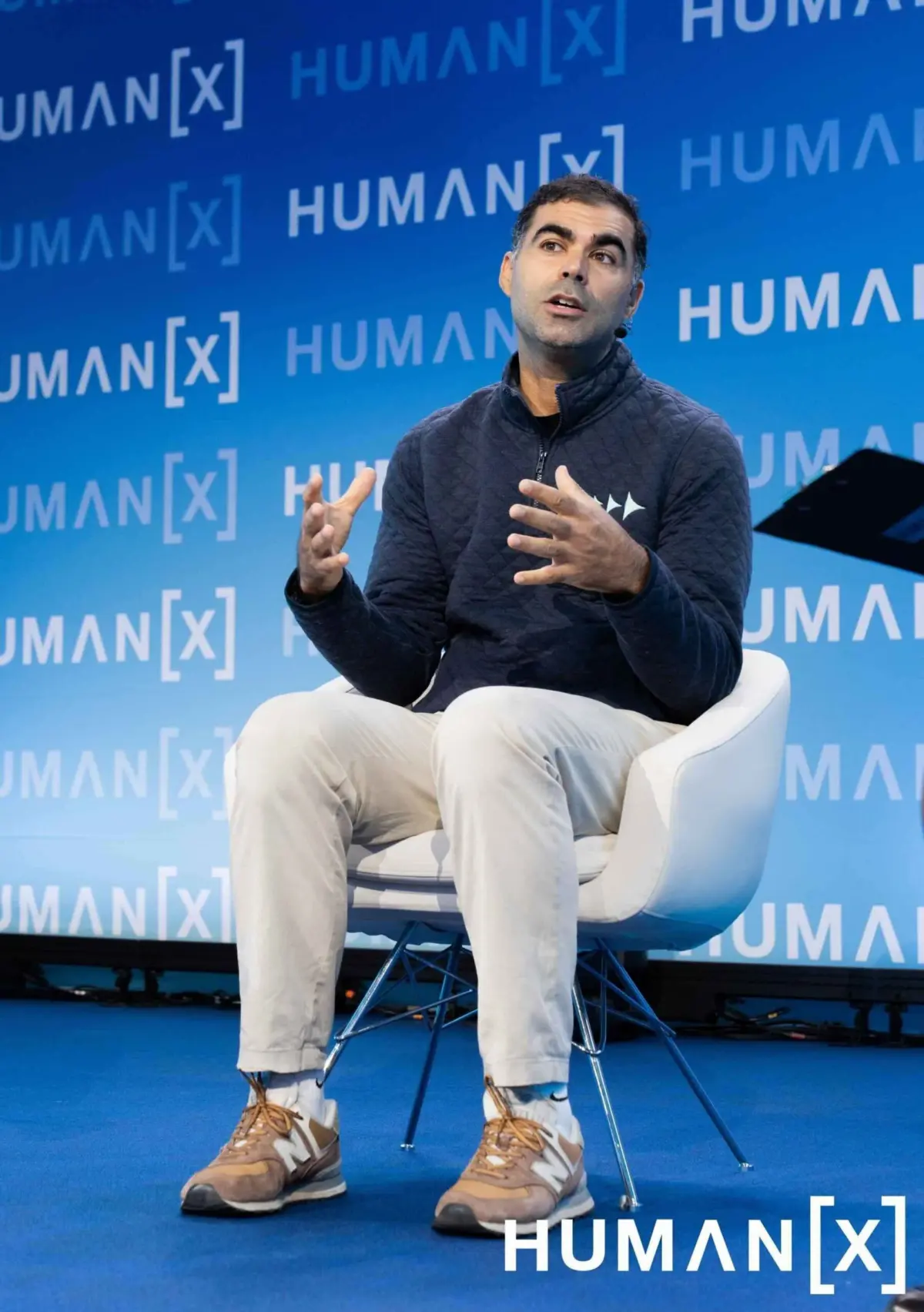
Mehdi Ghissassi on the Folly of Model-Layer Obsession
Mehdi Ghissassi, Chief Product and Technology Officer at AI71 and former product leader at Google DeepMind, argued that attempting to compete at the foundational model layer is an economic dead-end for most regions and enterprises. Given the astronomical capital requirements and the rapid commoditization of large language models, Ghissassi believes only two to three global players can sustainably afford to race at that tier.
Instead, Ghissassi directs attention to the application and data layers as the true bulwarks of sovereignty:

"The application layer is the one that is really important, for sovereignty where you want to own your data. You want to make sure that it stays with you, be it that you’re a government or an enterprise. If you’re giving away your trade secrets and know-how, nobody stops whoever is being a provider to you today, from replacing you."
Highlighting the unique advantages of operating in the Middle East, Ghissassi pointed to state-backed velocity:
"What helps is the mandate, the pace at which things happen, the availability of compute, both in terms of sovereign clouds, or on-prem, or global clouds, and then the amount of capital that is being invested to help transform these companies to benefit from these technologies."
Future Outlook: Charting the Next Phase of Sovereign AI
As the artificial intelligence landscape matures past the initial speculative frenzy of the mid-2020s, the path forward for Europe and other aspiring AI regions demands pragmatic structural reforms. Capital influxes like the $23 billion raised in early 2026 are vital, but they represent only the starting line.
To transform venture momentum into enduring economic sovereignty, three critical shifts must occur:
- Cultural Transformation in Enterprise Procurement: European corporations must overhaul their vendor-onboarding processes to embrace agile startups. Without domestic enterprise buyers, homegrown innovators will continue to look across the Atlantic for commercial validation.
- Aggressive Public-Sector Mandates: European governments must move beyond regulatory oversight and adopt proactive procurement strategies. By mandating the use of local AI solutions for public administration—much like the UAE’s government-agent initiatives—states can provide the foundational anchor contracts startups need to scale.
- Strategic Layer Focus: Stakeholders must abandon the myth that every nation must build its own foundational models. By concentrating capital and expertise where Europe already holds structural advantages—such as specialized edge-computing semiconductors, industrial applications, and strict data privacy architectures—the region can secure a profitable and defensible niche in the global AI economy.
Ultimately, sovereign AI cannot be legislated into existence, nor can it be bought solely with venture capital. It requires a symbiotic relationship between those who fund innovation, those who build it, and—most importantly—those who have the courage to buy it.