By Investigative Gaming Desk
Updated: October 6, 2026
Executive Overview
The video game industry has long grappled with the delicate boundaries of inspiration, homage, and outright intellectual property theft. In the digital age, where assets can be rapidly consumed, repurposed, and deployed across live-service platforms, oversight mechanisms occasionally fail—sometimes with glaring consequences.
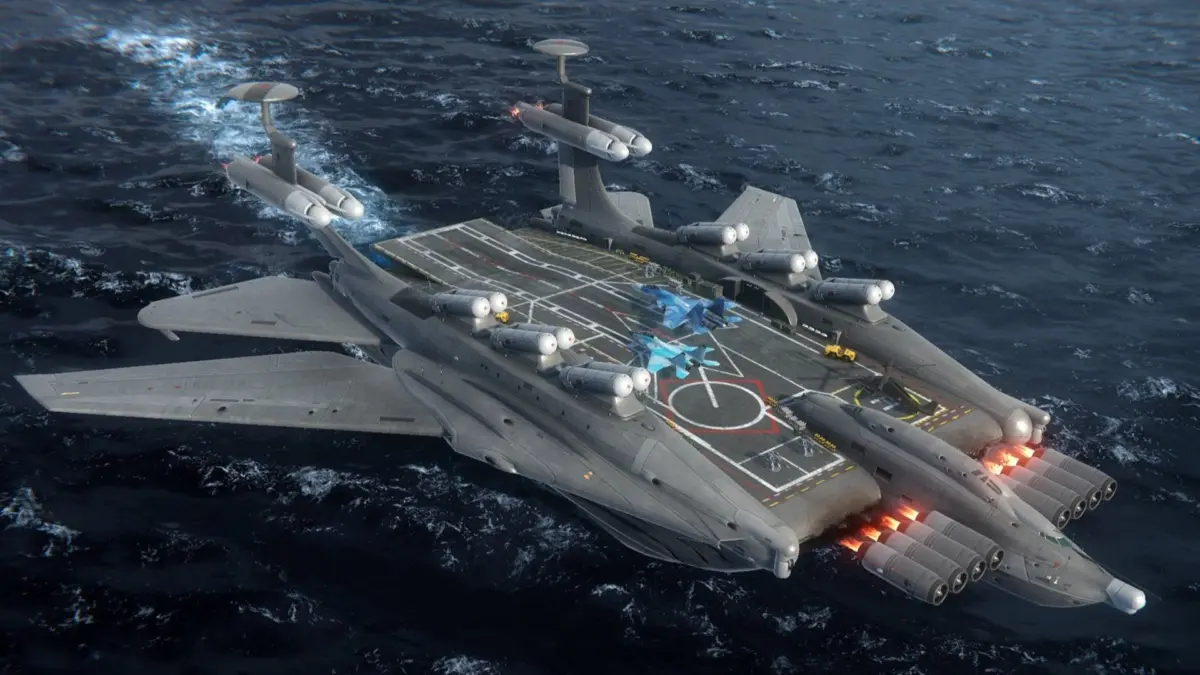
Artstorm, the developer behind the popular PvP naval warfare title Modern Warships, has formally admitted to utilizing an independent artist’s concept design as the foundation for an in-game ship model without authorization or compensation. The controversy came to light when concept artist Alex Jay Brady published a side-by-side comparison on social media, exposing stark, unmistakable similarities between their original artwork—an atomic ekranoplan carrier vessel—and the game’s newly introduced RF Bartini A-2000-7.
While the immediate dispute appears to be moving toward an amicable resolution—with Artstorm issuing a public apology and entering direct compensation talks with Brady—the incident has thrust broader industry issues into the spotlight. Beyond the core question of asset appropriation, the controversy has reignited intense community scrutiny surrounding Modern Warships’ controversial free-to-play monetization models, gacha mechanics, and the steep real-world valuations attached to virtual items. As players pour hundreds of dollars into unlocking contested virtual inventory, developers face mounting pressure to ensure that the intellectual labor underwriting their live-service ecosystems is ethically sourced and legally acquired.
Detailed Chronology: How the Plagiarism Was Exposed
The controversy erupted on October 5, 2026, when concept artist Alex Jay Brady took to social media platform X (formerly Twitter) to highlight a striking resemblance between their personal body of work and a premium vehicle in Modern Warships.
Brady posted a comparative breakdown showcasing their original concept art—an imaginative, speculative design for an atomic-powered ekranoplan (a ground-effect vehicle) carrier—alongside screenshots of the in-game model designated as the RF Bartini A-2000-7. Even to an untrained observer, the parallels were undeniable. Every structural contour, geometric angle, and stylistic nuance matched the independent artist’s conceptual blueprints.
Rather than opening with immediate hostility, Brady adopted a measured yet firm tone on social media, posting:
"I did not give @ModernWarships permission to use my ekrano design, but I have to say she’s looking great. Much more detailed than my sketches. Honestly if they’d just asked and sent me some $$$$ Id have had zero issue with them using it. It’s not too late to do the right thing guys."
Following the initial viral traction of the post, IGN reached out to Brady to secure an in-depth technical breakdown of the similarities. According to the artist, the duplication went far beyond broad stylistic inspiration, extending deep into structural quirks and logical design errors unique to their original creation.
"For me the design is the same, with a few minor differences," Brady explained during the interview. "The location of the AWACs dish (and there being two, which I assume has something to do with the technical requirements of the game necessitating symmetry?), the number of engines, etc."
Brady further emphasized the sheer improbability of independent convergence, noting that real-world military engineering has never yielded a swing-wing ekranoplan carrier—and for good reason.
"As there never was a swing wing ekranoplan carrier (for good reason) and every detail aside from that is carried over from my design, it seems cut and dried. I have all the project files including, for example, the lines on the deck. The design makes little sense from a realism POV; the engines wash across the deck, the planes take off backward, not into the wind, I just didn’t know anything about the subject when building it and they cloned all those mistakes wholesale."
Supporting Context & Metrics: Monetization and the Real-World Cost of Virtual Ships
While the intellectual property dispute highlights vulnerabilities in Artstorm’s internal art pipeline, the surrounding economic context of Modern Warships has added fuel to the community fire. The introduction of the RF Bartini A-2000-7 was not merely an aesthetic addition; it represents a high-value commodity within the game’s aggressive live-service economy.
To unlock the disputed carrier within Modern Warships, players face significant financial hurdles. Acquisition methods generally fall into two categories:

- Gacha Mechanics: Players can gamble on randomized loot crates, requiring an estimated spend of between $50 and $100 in direct microtransactions to secure the vessel.
- Direct Currency Purchase: Alternatively, players can acquire the ship using the game’s premium currency, ArtCoins (AC). The RF Bartini A-2000-7 typically commands a market price ranging from 7,000 AC to upwards of 15,000+ AC.
To contextualize these figures within real-world economics, the purchasing power of ArtCoins fluctuates based on bundles, but generally averages out to roughly $100 for a pool of 1,300 to 2,000 AC. At this conversion rate, a top-tier vessel priced at 10,000 AC translates to a staggering real-world equivalent of $500 to $700+, subject to in-game market fluctuations and player trading dynamics.
This monetization structure has long been a source of contention within the community. A cursory glance at user reviews on platforms like Steam reveals a persistent chorus of dissatisfaction regarding the pricing models of competitive vessels. One prominent user review bluntly summarized the community sentiment:
"This game is absolutely terrible. The developers and moderators seem to be far more interested in making money from players than in making a balanced and enjoyable game. They are thieves."
Though the user’s choice of the word "thieves" was originally leveled at perceived pay-to-win mechanics and pricing inflation, the irony of the phrase has been sharply magnified by Artstorm’s literal appropriation of independent artwork to drive high-priced in-game content.
Official Statements and Industry Response
As the social media thread gained traction across gaming communities, executive and development teams moved quickly to manage the public relations crisis.
Publisher Gaijin Entertainment acknowledged the inquiry from industry media, confirming that the Modern Warships development team had responded directly to Brady on X, though the publisher declined to offer additional commentary or elaborate on internal compliance audits.
In their public reply to Brady, Artstorm admitted culpability without reservation:
"Fair call, and apologies from us. Your design was used as a reference without proper clearance. We’ll contact you directly to make this right."
Subsequent communications between the developer and the artist have progressed constructively. Brady noted that if a satisfactory financial agreement is reached, they will consider the matter officially closed. Furthermore, the artist indicated that they would view the inclusion of their concept in a commercial game—once properly compensated—as a "roundabout piece of contract work," allowing them to add the commercial iteration to their professional portfolio.
Despite the cooperative trajectory of the negotiations, industry analysts note that the incident exposes recurring blind spots in digital asset sourcing. As mobile and live-service developers increasingly rely on external concept art, mood boards, and community spaces for rapid inspiration, the absence of robust provenance-tracking and clearance protocols continues to expose studios to severe legal and reputational risks.
Future Outlook: Accountability in the Era of Digital Asset Creation
The swift resolution between Artstorm and Alex Jay Brady provides a blueprint for how independent creators and game studios can resolve accidental—or negligent—infringement without immediately resorting to protracted legal battles. However, the episode leaves several systemic questions unanswered.
For Artstorm and parent entities like Gaijin, the incident serves as an urgent reminder to audit internal concept pipelines. Ensuring that conceptual artists, 3D modelers, and technical directors verify the origin of reference materials is essential for preventing future slip-ups that undermine studio credibility.
For the broader gaming community, the controversy reinforces ongoing anxieties about the ethics of live-service monetization. When players are asked to drop hundreds of dollars on gacha spins and premium currencies to secure virtual military hardware, there is an implicit understanding that the value proposition is backed by authentic, legally secured creative labor. When that foundation is compromised by uncredited borrowing, it fractures the fragile trust between developers and their player bases.
As Brady awaits the final terms of Artstorm’s compensation offer, the case stands as a cautionary tale for the digital art landscape—illustrating both the power of public accountability on social media and the pressing need for rigorous intellectual property standards in modern game development.