Executive Overview
The video game modding landscape is undergoing a profound paradigm shift. For decades, the modification of digital titles—colloquially known as "modding"—has been the domain of dedicated hobbyists, programmers, and artists who spent hundreds of hours manually unpacking assets, writing compatibility layers, and working within the rigid architecture of proprietary engines. However, a viral movement that emerged in late September 2026 has fundamentally disrupted this traditional framework.
Known as AI Video Game Merging or AI Video Game Mashup Mods, this burgeoning trend leverages advanced large-scale artificial intelligence models—most notably Opus 5.5 and code-generation tools like Codex—to reverse-engineer, rewrite, and merge disparate video game titles. Rather than relying on traditional scripting hooks or manual asset injection, creators are prompting AI to translate older or entirely separate games into modern programming languages (such as Rust), effectively bridging codebases that were never designed to interact.
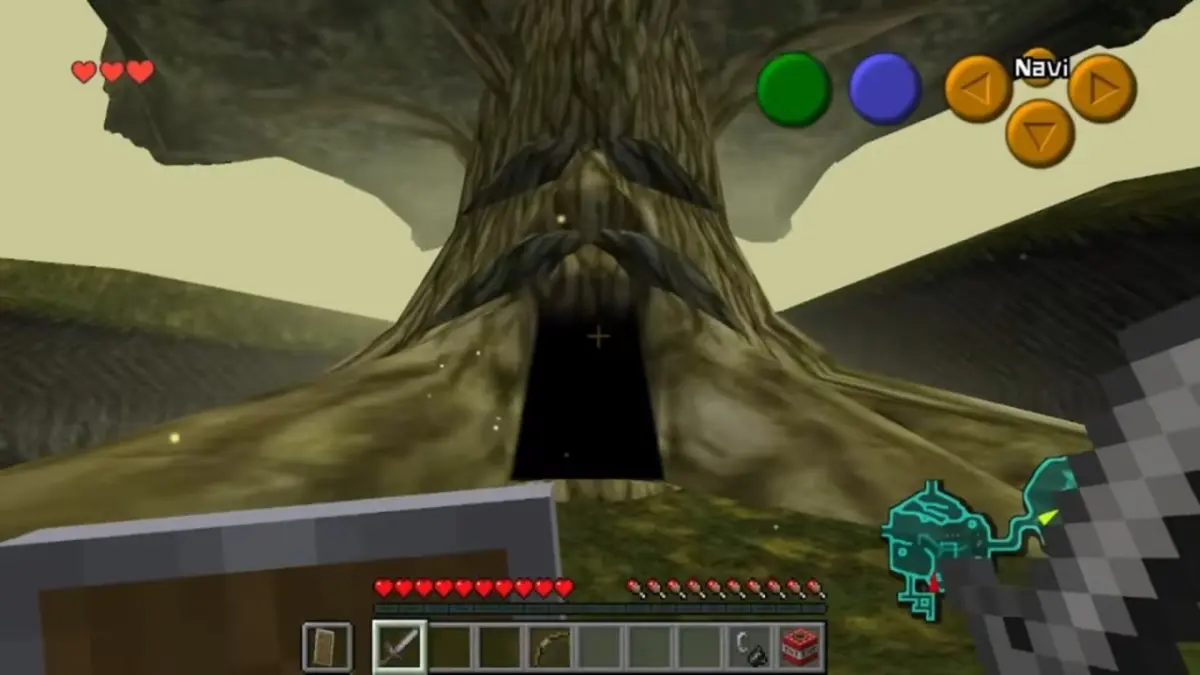
What began as a rogue experiment by a social media user named Chasm in mid-September 2026 rapidly snowballed into a cross-platform phenomenon across X (formerly Twitter), Reddit, TikTok, and YouTube. By early October 2026, the internet was saturated with surreal, highly functional video demonstrations: Skate 3 mechanics operating natively within Call of Duty: Modern Warfare 2, Minecraft running seamlessly inside Elden Ring, and tactical extraction elements grafted onto the fantasy realm of The Elder Scrolls V: Skyrim.
This article provides an exhaustive examination of the AI video game merging trend. We will explore its technical origins, trace its explosive viral trajectory across digital platforms, analyze the community and media reaction, and evaluate what this disruptive technology means for the future of game preservation, software development, and the multi-billion-dollar interactive entertainment industry.
Detailed Chronology: From Rogue Experiments to Viral Insanity
The genesis of the AI game-merging trend can be tracked to a specific inflection point in mid-September 2026, driven by a wave of experimentation with advanced code-translation AI models. The movement quickly accelerated from niche technical proofs-of-concept to mainstream viral entertainment over a brief, highly active two-week window.
The Spark: Rewriting Skate 3 in Rust (September 19, 2026)
On September 19th, 2026, X user @chasmmmmmmmmmmm (widely known within the community as Chasm) published a post that would alter the trajectory of modern game hacking and preservation. Chasm shared a video showcasing a project wherein they had entirely rewritten Electronic Arts’ iconic skateboarding title, Skate 3, in the programming language Rust.
According to Chasm, the project targeted 1:1 behavioral accuracy through an iterative human-and-AI development loop. By utilizing advanced code assistants like Codex, the AI successfully reverse-engineered how the original game functioned under the hood, systematically mapping and connecting its underlying assets, action graphs, and motion graphs within an entirely separate engine architecture.
Accompanying the initial proof-of-concept was a bold declaration that resonated deeply within tech circles: "Every game is open source now." Within a month, the post accumulated over 6,000 likes, signaling to programmers and enthusiasts alike that traditional technical barriers protecting proprietary game engines were beginning to crumble under generative AI.
Escalation: Injecting Skateboarding into Modern Warfare 2 (September 27, 2026)
Building upon the momentum of the Skate 3 Rust translation, Chasm escalated the absurdity and technical ambition of the experiments. On September 27th, 2026, Chasm posted footage depicting fluid, physics-based skateboarding mechanics injected directly into the gritty, militaristic environment of Call of Duty: Modern Warfare 2 (2009).
The post, captioned with the tongue-in-cheek panic, "AI HACKERS HAVE PUT SKATEBOARDING IN CALL OF DUTY MODERN WARFARE 2! THIS HAS GONE TOO FAR," struck a chord with internet culture. Tagging prominent tech figures and commentators, the video went viral, capturing over 29,000 likes in just over 48 hours. It demonstrated that AI-driven code merging was not limited to recreation projects; it could cross-pollinate completely contradictory game genres—combining twitch-shooter infrastructure with complex, momentum-based board physics.
The Floodgates Open: Minecraft, Elden Ring, and Beyond (September 28 – 30, 2026)
The viral loop accelerated exponentially as other creators and programmers adopted the methodology.
- September 28, 2026: Chasm uploaded a comprehensive video to YouTube detailing a Call of Duty and Minecraft crossover. The video captured the public imagination, surging to over 619,000 views within its first week online.
- September 29, 2026: X user @TobynJacobs pushed the technical envelope further by integrating the entire structural framework of Minecraft into FromSoftware’s sprawling dark fantasy masterpiece, Elden Ring. Running surprisingly smoothly on macOS, the demonstration garnered over 308,000 likes on X and quickly spread to Reddit’s prominent r/singularity community, where it pulled in upwards of 3,000 upvotes.
- September 30, 2026: The ecosystem diversified rapidly. X user @cydonix unveiled "Escape from Skyrim," a mashup that seamlessly embedded the hardcore, high-stakes tactical extraction and gunplay mechanics of Escape from Tarkov into the open-world fantasy setting of The Elder Scrolls V: Skyrim. The post accumulated over 14,000 likes.
- September 30, 2026: Capitalizing on the movement he helped popularize, Chasm released a dedicated YouTube documentary-style video titled "Modding has Changed FOREVER…" The video struck a nerve across the global gaming community, amassing a staggering 2.4 million views in a single week. Concurrently, content creators like LudocowTV published analytical breakdowns examining the macroeconomic and technical implications of AI game-merging for the broader gaming industry, securing another 150,000 views.
By October 1st, specialized technology and gaming outlets, including Video Cardz, began publishing roundups documenting the phenomenon, cementing AI video game merging as the definitive digital culture trend of the autumn season.
Supporting Context, Mechanics, and Metrics
To truly understand why AI video game merging represents a seismic shift, one must examine the mechanics behind traditional modding versus generative AI-assisted code translation.
The Technical Leap: How AI Merges Games
Historically, game modding relied heavily on developer-provided tools (such as creation kits or SDKs) or grueling reverse-engineering via disassemblers like IDA Pro and Ghidra. Modders had to manually write compatibility patches, hooks, and injection scripts to make two distinct programs communicate. If a game’s source code was closed or obfuscated, adding foreign mechanics—like bringing Skate 3 physics into Call of Duty—required an intimate understanding of memory addresses, assembly language, and engine-specific physics pipelines.
AI video game merging short-circuits this arduous pipeline. Modern large language models and code-generation tools trained on vast repositories of software documentation can read decompiled or raw codebases, infer structural logic, and translate proprietary code into intermediate, highly malleable languages like Rust or C++. By feeding an AI the behavioral parameters of Game A and instructing it to rebuild those parameters within the engine framework or data structures of Game B, users can bypass manual scripting. The AI essentially acts as an automated translator, bridging disparate logic loops, asset registries, and collision detection systems.
Quantitative Reach and Engagement Metrics
The viral velocity of the trend can be measured through the staggering engagement numbers recorded across social media ecosystems during its peak weeks in late September and early October 2026:
- Chasm’s Initial Rust Reveal (X): 6,000+ likes.
- MW2 Skateboarding Integration (X): 29,000+ likes.
- CoD x Minecraft YouTube Showcase: 619,000+ views.
- Minecraft inside Elden Ring (X/Reddit): 308,000+ likes, 3,000+ upvotes on r/singularity.
- Escape from Skyrim (X): 14,000+ likes.
- "Modding has Changed FOREVER…" YouTube Documentary: 2.4 million+ views.
- Cross-Platform Reposts (TikTok/Shorts): Millions of cumulative views across viral aggregator accounts, highlighting the aesthetic appeal of surreal gameplay combinations (such as GTA: Vice City assets bleeding into modern physics engines).
Community Reaction and Industry Implications
The emergence of AI video game merging has elicited a polarized spectrum of reactions, ranging from unbridled technological optimism to severe legal and ethical anxiety.
The Optimist Perspective: Democratization and Game Preservation
Proponents of the trend view AI game merging as the holy grail of digital preservation. For decades, classic video games have faced structural decay; as hardware becomes obsolete and original source codes are lost to corporate restructuring or physical degradation, countless titles risk disappearing forever.
By utilizing generative AI to reverse-engineer and port classic titles into modern, readable languages like Rust, enthusiasts argue that every game is effectively being open-sourced. Prominent community members have championed this development as a democratization of software development. As creator P.E. Cooper noted on X while sharing an unlikely NHL and World at War crossover, childhood ideas that were once dismissed by major game studios as "the dumbest things ever heard" can now be realized independently through prompt engineering.
The Skeptic Perspective: Copyright, Quality, and Industry Disruption
Conversely, traditional software developers, copyright holders, and industry analysts have expressed profound concern over the trajectory of AI game merging.
- Intellectual Property and Copyright Infringement: The core mechanics of commercial video games are protected by robust copyright laws and trade secrets. Tools like Codex and Opus 5.5 ingesting, translating, and recombining proprietary game assets and codebases without authorization blur legal boundaries. Studios may soon face rampant asset theft and unauthorized derivative works that bypass traditional licensing structures.
- Quality Control and Asset Soup: While the viral clips are undeniably entertaining, critics point out that AI-generated code mashups are frequently unstable, plagued by memory leaks, broken physics collisions, and erratic state management. Turning a neat parlor trick into a stable, commercially viable product remains a steep hill to climb.
- The Threat to Professional Developers: As AI code translation becomes more sophisticated, independent creators and AAA studios alike must reckon with a future where the barrier to entry for duplicating, altering, or synthesizing complex software collapses entirely. This raises existential questions about employment, monetization, and the value of human-authored code in the gaming sector.
Future Outlook
As the dust settles on the initial viral wave of late 2026, the long-term implications of AI video game merging are beginning to take shape. The trend is no longer confined to isolated joke mods on X; it has established a proof-of-concept that will permanently alter how developers, modders, and consumers interact with digital media.
In the near term, we can expect copyright holders and major publishers to closely monitor AI development platforms. Legal challenges regarding the ingestion of proprietary game code into generative models are almost certainly on the horizon. Software corporations may begin implementing aggressive anti-tampering measures, obfuscation techniques, or runtime integrity checks designed to stymie AI-assisted reverse-engineering.
Simultaneously, the open-source and modding communities will continue to push the boundaries of what is technically possible. As foundational AI models grow more intelligent, context-aware, and efficient, the time required to merge two distinct game engines will shrink from days of iterative prompting to mere minutes.
Ultimately, AI video game merging has shattered the illusion that game engines are impenetrable monoliths. Whether viewed as a dystopian threat to intellectual property or a utopian renaissance for game preservation and creativity, generative AI has irreversibly rewritten the rules of the digital playground.