Executive Overview
High-octane arcade racing meets tactical progression in Galactic Racer, a title developed by Secret Mode that continues to captivate and frustrate speed enthusiasts alike. At the heart of the game’s competitive loop is its distinct multiplayer tour mode—a meticulously balanced crucible that tasks players with upgrading and fine-tuning their speeder bikes across a grueling six-race tournament. While fighting for pole position against aggressive opponents who are more than willing to trade paint and shunt rivals into immovable walls, players must simultaneously manage long-term vehicular development.
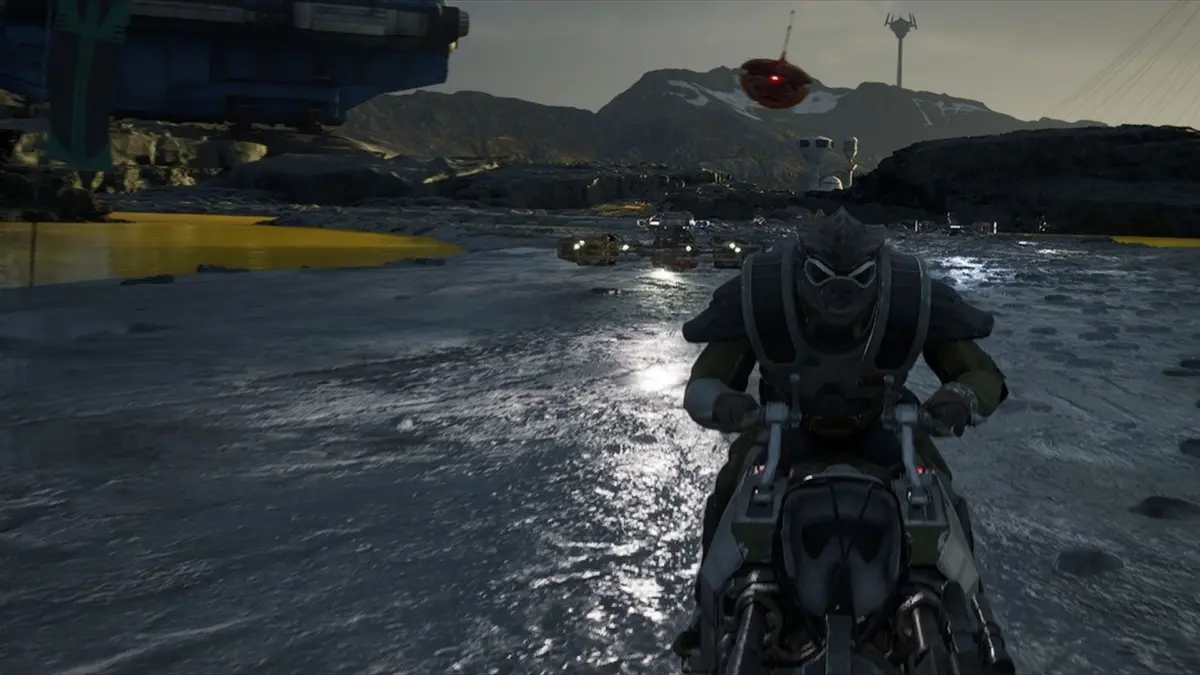
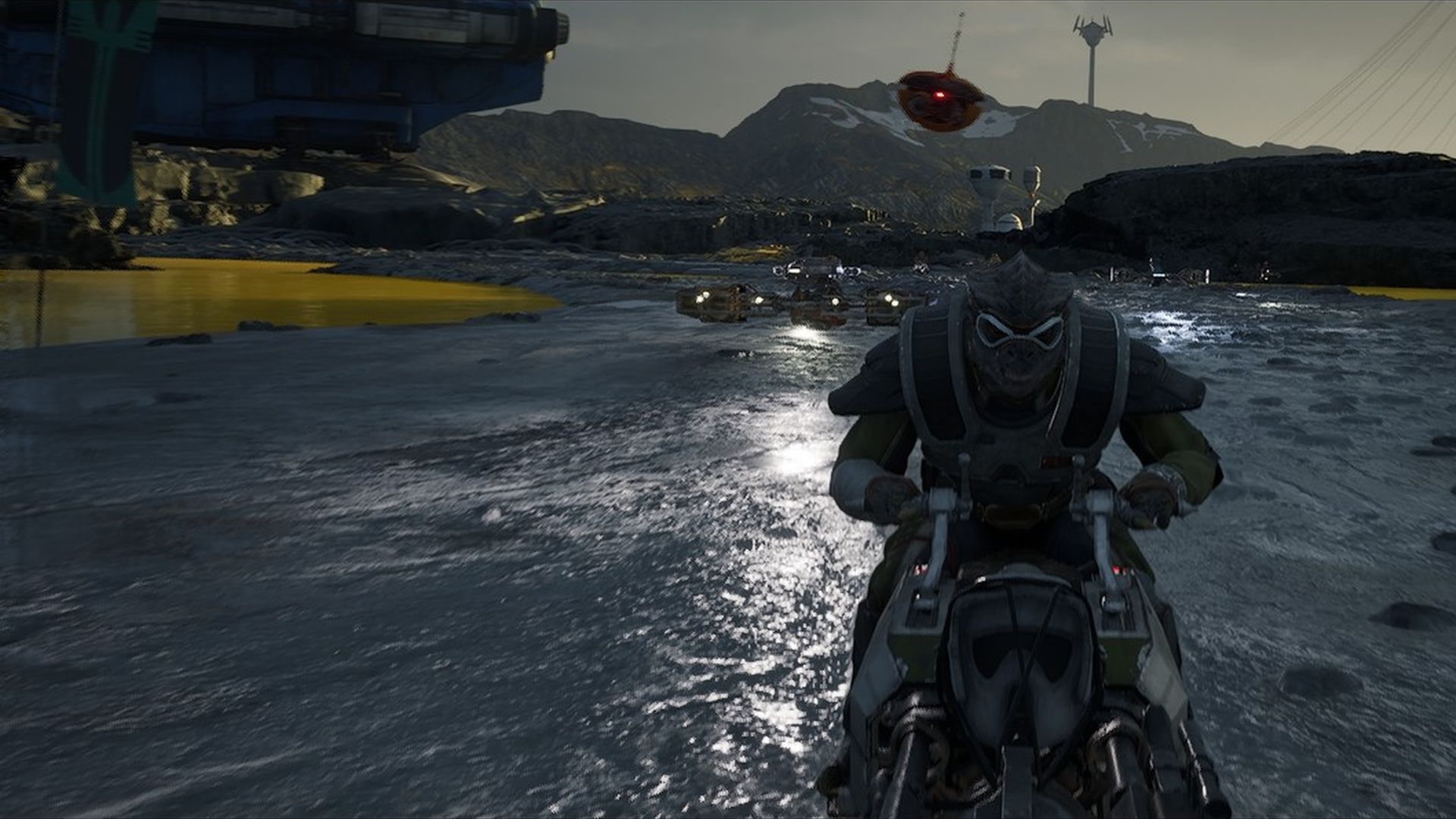
However, mastering the art of high-speed survival requires more than just raw reflex and aggressive cornering. As racers transition from world to world, they quickly realize that environmental hazards pose a threat just as lethal as rival pilots. Among these, the infamous planet Sentinel I stands out as a baptism by fire. Affectionately and coarsely dubbed the galaxy’s "planet of burning piss" by the community due to its sickly, luminescent yellow waterways, Sentinel I has become the ultimate filter separating casual racers from elite champions.
This report examines the intricate mechanics of Galactic Racer’s multiplayer and single-player tour modes, detailing the critical architectural and environmental threats posed by worlds like Sentinel I and Derven Acos. By analyzing the optimal distribution of upgrade points, structural hazards, and resource scarcity, this guide provides a definitive roadmap for optimizing your speeder, mitigating catastrophic speed loss, and dominating the leaderboards.
Detailed Chronology: The Anatomy of a Six-Race Tour
To understand why specialized builds are necessary in Galactic Racer, one must first examine the structural arc of a standard multiplayer tour. Unlike traditional arcade racers where each track exists in a vacuum, the tour format introduces a persistent logistical challenge: you only get one chance to race on each planet before moving forward.
Phase 1: Establishing the Baseline (Races 1 and 2)
The opening stages of a tour are deceptively forgiving. Set against traditional, single-environment backdrops familiar to sci-fi veterans—reminiscent of classic tropes featuring isolated desert worlds or dense jungle planets—these initial circuits are designed to build early momentum. During these introductory legs, racers are flush with initial upgrade points. The natural temptation is to dump every single resource into maximum velocity metrics, specifically boosting afterburners and ramjets to secure early leads.
Phase 2: The Sentinel I Interruption (Race 3)
As the tour progresses to its midpoint, the difficulty curve spikes precipitously with the introduction of Sentinel I. This gloomy, industrialized world introduces a radical shift in track design. Unlike the stable terrain of the opening races, Sentinel I features sprawling, interconnected networks of boiling yellow acid rivers that run parallel to and sometimes directly intersect the racing line.
A minor miscalculation, a slight drift, or an aggressive shove from a trailing opponent can send a speeder careening off-track. Skimming the surface of this acidic fluid initiates an immediate, catastrophic drain on your ramjet boost reserves. For players who neglected their defensive statistics in favor of pure speed, hitting the acid is essentially a death sentence. The vehicle’s propulsion systems sputter, momentum is entirely erased, and the pack effortlessly surges past.
Phase 3: The Climax on Derven Acos (Race 6)
The tour culminates on Derven Acos, a legendary crucible that serves as a masterclass in track remixing. Derven Acos does not feature its own unique environmental hazards; instead, it synthesizes every single danger encountered throughout the preceding five races.
Pilots navigating this final stretch must contend with a chaotic gauntlet of hazards:
- Ando Prime’s Freezing Ice: Reducing traction and sending loose speeders spinning uncontrollably out of control.
- Lantaana’s Molten Lava: Radiating intense heat that damages chassis integrity and forces evasive driving lines.
- Sentinel I’s Corrosive Acid: Lurking in low-lying corners, ready to dissolve unshielded propulsion systems.
Without proper preparation across the preceding stages, a pilot arriving at Derven Acos with a glass-cannon build will find themselves entirely unequipped to handle the compound environmental punishment.
Supporting Context & Metrics: The Mathematics of Speeder Survival
In the high-stakes environment of Galactic Racer, resource management is just as critical as throttle control. Upgrade points are finite currencies earned through placement, clean driving, and daring maneuvers, meaning every allocation decision carries significant weight.
The Allure of the Glass Cannon
When analyzing player telemetry from early test cohorts, developers and analysts noted a distinct behavioral trend: over 75% of players invest their first three upgrade tiers exclusively into offensive and velocity-based attributes.
- Ramjet & Afterburner: Increases top-end speed and acceleration regeneration. Highly favored for early dominance.
- Battery Capacity: Essential for pilots running high-drain active abilities, allowing for more frequent tactical interventions.
However, this hyper-offensive focus creates a fatal vulnerability. The game’s physics engine calculates environmental friction and fluid drag in real-time. When a vehicle with zero resilience metrics touches a corrosive surface like Sentinel I’s acid rivers, the deceleration coefficient multiplies by a factor of four compared to a fortified chassis.
The Resilient Meta
To consistently place in the top three across a six-race tour, top-tier competitors advocate for a balanced distribution strategy. Allocating even a modest amount of upgrade points into Resilience before touching down on Sentinel I fundamentally alters the vehicle’s damage threshold and fluid resistance.
[Standard Build Priority vs. Optimized Tour Priority]

Standard (High Risk):
[Velocity: 50%] -> [Afterburner: 30%] -> [Battery: 20%] -> [Resilience: 0%]
*Result: Dominates early races; completely stalls out upon hitting Sentinel I acid.*

Optimized (Balanced):
[Velocity: 30%] -> [Afterburner: 20%] -> [Resilience: 30%] -> [Battery: 20%]
*Result: Maintains competitive speed while absorbing environmental penalties on Sentinel I and Derven Acos.*
By prioritizing resilience early, players ensure that accidental drift contacts with acidic runoff or lava edges do not result in total propulsion failure. The minimal loss in top-end speed is more than compensated for by consistent lap times and uninterrupted momentum through hazardous sectors.
Official Insights and Design Philosophy
Secret Mode’s development team has continually emphasized that Galactic Racer was built to challenge traditional arcade racing paradigms. Speaking on the integration of rogue-lite progression mechanics into a multiplayer tournament structure, lead designers noted that the goal was to eliminate predictable racing lines and force dynamic decision-making.
"We didn’t want players to simply memorize a single track and execute the same throttle pattern for twenty hours," noted a lead systems designer during a recent community post-mortem. "By blending run-based progression with unpredictable multiplayer chaos, every tour becomes a strategic puzzle. You aren’t just racing the other pilots; you are racing the ecosystem of the galaxy itself."
The design of worlds like Sentinel I was specifically intended to punish tunnel vision. In traditional racers, visual clutter is often ignored as background dressing. In Galactic Racer, the environment is an active participant in the race. The sickly yellow rivers of Sentinel I were deliberately colored to create high-contrast visual tension against the gloomy, metallic architecture of the world, warning players of the chemical peril awaiting anyone who strays from the designated magnetic track.
Furthermore, the developers highlighted the contrast between single-player and multiplayer pacing. While single-player campaigns allow pilots to accumulate a massive reserve of tuning points carried over from prior victorious runs—cushioning the blow of harsh environmental hazards—multiplayer tours strip away that safety net. In multiplayer, every upgrade point is intensely contested, making pre-planning and hazard anticipation absolute necessities.
Future Outlook: The Evolution of Galactic Racer’s Competitive Scene
As Galactic Racer continues to expand its community and refine its balance patches, the meta surrounding tour modes is undergoing rapid evolution. With Secret Mode teasing future content updates, new planets, and potentially deadlier environmental biomes, the lessons learned on Sentinel I and Derven Acos will serve as foundational knowledge for veteran racers.
Future competitive seasons are expected to introduce dynamic weather systems and shifting track layouts, which will only increase the value of defensive attributes like resilience and structural integrity. The days of unthinking speed-stacking are officially numbered. As the community grows more sophisticated, champions will be defined not by who can hit top speed on a straightaway, but by who can weather the toxic tides of the galaxy’s most hostile worlds and emerge victorious at the finish line.