
Executive Overview
Cyberpunk has never been genuinely interested in predicting the precise trajectory of tomorrow; instead, it serves as a flashing warning light, illuminating the frightening potential of our worst systemic impulses. The genre thrives in the volatile, friction-heavy intersection where high technology collides with low life. Picture towering, gleaming megacities casting long, unforgiving shadows over forgotten, decaying neighborhoods; artificial intelligence coexisting with human desperation; and authoritarian governments or ruthless megacorporations wielding cutting-edge technology as a primary instrument of population control. Beneath the pervasive neon glare, relentless rain, and monumental skyscrapers lies a deeply human, existential question: What happens to our species when the machines we engineer become powerful enough to fundamentally reshape the world around us?
From synthetic bodies and manufactured memories to immersive virtual realities and omnipresent surveillance grids, the greatest cyberpunk narratives use technological advancement to interrogate human class structures, late-stage capitalism, personal identity, bodily autonomy, and the very definition of consciousness. While the genre has cultivated an instantly recognizable visual language over the decades—characterized by chromatic aberration, rain-slicked asphalt, and dense urban sprawl—its most enduring and powerful ideas remain rooted in the struggles of everyday humans forced to live beneath technology rather than marveling at the technology itself.
To chart the evolution of this vital cinematic tradition is to trace a path from silent-era foundational warnings to grand, philosophical modern opuses. Below is the definitive ranking of the 10 greatest sci-fi cyberpunk movies ever made.

Detailed Chronology
9. Metropolis (1927)
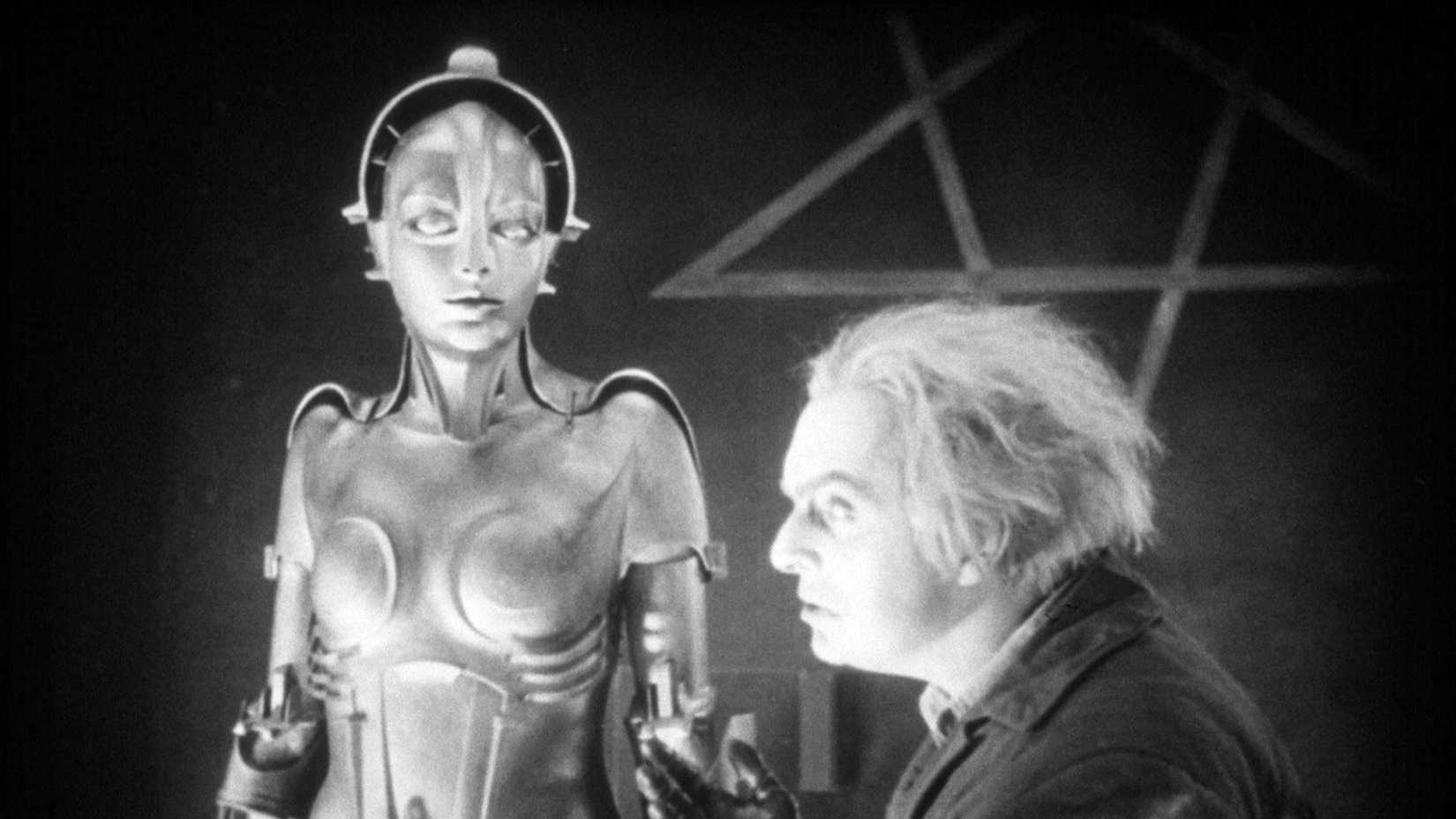
Long before the term "cyberpunk" had even been coined in the speculative fiction lexicons of the late 20th century, German visionary director Fritz Lang imagined an urban landscape that looked like the genre’s ultimate fever dream. In Metropolis, society is starkly bifurcated: the wealthy elite live lives of hedonistic ease among gleaming, cloud-piercing skyscrapers, while an exhausted, regimented army of underground workers operates the massive, churning machinery buried deep beneath the city’s foundations.
The narrative kicks into motion when Freder Fredersen (Gustav Fröhlich), the privileged son of the city’s supreme ruler, discovers the horrific human cost of his father’s glittering utopia after encountering Maria (Brigitte Helm), a working-class prophet preaching solidarity and patience to the masses. The plot spirals into technological paranoia when a mad scientist crafts a metallic double of Maria—the iconic Maschinenmensch—to hijack the impending labor uprising from within.
You can draw a straight line from Lang’s metallic humanoid to the cybernetic nightmares that populated cinema decades later. Metropolis understood fundamentally that technological progress is a hollow achievement if its benefits belong exclusively to those at the top of the socio-economic food chain. Its monumental architecture, dehumanizing machinery, and grotesque fusion of flesh and metal established an aesthetic vocabulary that artists have borrowed from for a century.
8. Tetsuo: The Iron Man (1989)
There is nothing sleek, corporate, or polished about Shinya Tsukamoto’s 16mm industrial nightmare, Tetsuo: The Iron Man. The film begins in absolute filth when a deranged "metal fetishist" cuts open his own leg to force a threaded steel rod into his thigh, only to be struck by a mild-mannered salaryman, inadvertently passing on an infectious, metallic curse.
Soon, the meek protagonist is staring into his bathroom mirror, pulling a razor-sharp wire of rusted metal from a bloody, infected sore on his cheek. What follows is a hallucinatory technological seizure. Frantic, jerky stop-motion animation captures human flesh surrendering entirely to scrap iron, reaching a chaotic, horrifying peak when the salaryman’s body violently mutates into a high-speed power drill. Tsukamoto turns cybernetic integration into a visceral panic attack, proving that when man merges with machine, the result isn’t an elite upgrade, but an agonizing, uncontrollable loss of self.
7. Videodrome (1983)
As the sleazy CEO of a bottom-feeding UHF television station, Max Renn (James Woods) is constantly hunting for boundary-pushing filth to keep viewers glued to their screens. When he stumbles onto "Videodrome"—a mysterious, pirate broadcast featuring unsimulated, brutal violence—his attempt to trace the signal uncovers a weaponized conspiracy: a malignant electronic transmission that induces vivid hallucinations and physically rewires the human central nervous system.

Director David Cronenberg took cyberpunk out of high-tech corporate server rooms and planted it firmly in front of the suburban living room television. Even decades later, Videodrome remains a masterclass in speculative horror because it treats electronic media not as a tool, but as an invasive parasite. Cronenberg grasped that screens would not remain benign windows to the world. By prophesying "the new flesh," he imagined a terrifying future where media and biology merge so thoroughly that the distinction between viewer and screen collapses completely.
6. A Scanner Darkly (2006)
Bob Arctor does not realize he is actively watching himself. That is the paranoid psychological core of Richard Linklater’s A Scanner Darkly, an adaptation of Philip K. Dick’s bleak 1977 cyberpunk novel. Set in a near-future Southern California ravaged by an epidemic of Substance D—a powerful, mind-altering narcotic that fractures the human psyche—undercover narcotics agent Arctor wears a high-tech "scramble suit" that constantly cycles through thousands of different faces and voices to preserve his anonymity.
Linklater’s distinct rotoscoped animation style makes the film feel inherently unstable, as though reality itself is melting under the influence of the drug. Stripped of the traditional glowing skyscrapers and flying cars, the film relocates cyberpunk rot to an anonymous, decaying suburban sprawl, where pervasive surveillance tech weaponizes the mundane. Arctor’s ultimate adversary is not a rogue artificial intelligence, but his own government-mandated assignment to monitor his own household.

5. Strange Days (1995)
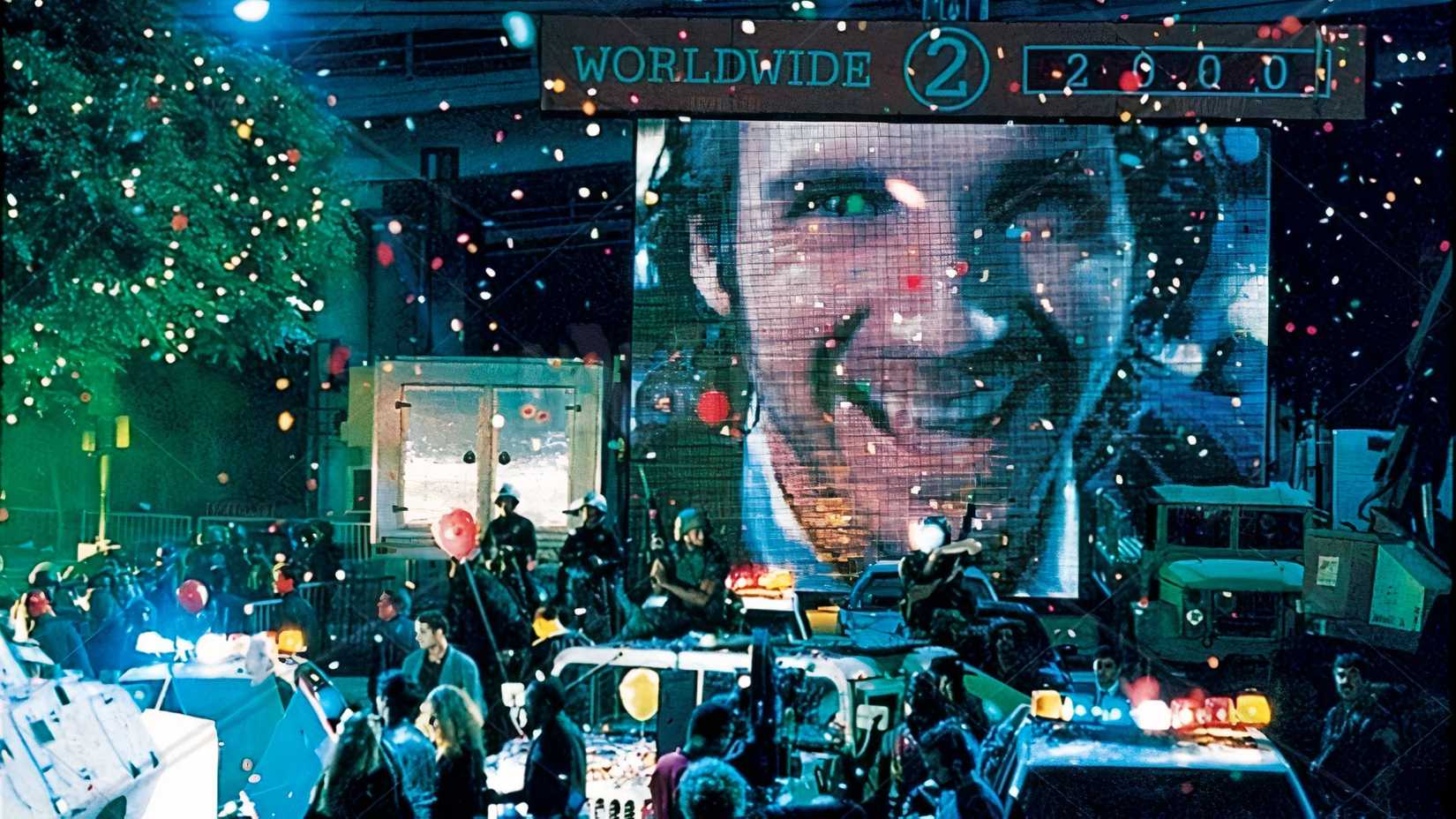
What if society reached a point where people preferred buying an artificial memory or physical sensation over living their own lives? That is the illicit black market at the heart of Kathryn Bigelow’s Strange Days. Set in the frantic, apocalyptic final days of 1999 Los Angeles, disgraced ex-cop Lenny Nero (Ralph Fiennes) deals in SQUID discs—illegal recordings of raw human experiences, emotions, and physical sensations ripped straight from the cerebral cortex for buyers to relive.
When Lenny receives a disc containing the first-person POV murder of an escort, he is dragged into a sprawling, lethal conspiracy involving police corruption, racial tensions, and political violence. Bigelow wraps a city’s darkest impulses inside a filthy neo-noir aesthetic, exposing how easily human intimacy becomes pornography, street violence transforms into entertainment, and personal trauma becomes a tradeable commodity.
4. RoboCop (1987)
Paul Verhoeven’s 1987 satirical masterpiece RoboCop remains a towering achievement in the genre. Set in a crumbling, bankrupt near-future Detroit where municipal law enforcement has been privatized by the predatory megacorporation Omni Consumer Products (OCP), the film follows Alex Murphy (Peter Weller), a dedicated police officer who is brutally murdered by a gang of violent criminals.

Rather than mourning him, OCP converts Murphy’s remains into an heavily armored cyborg enforcer. Yet, Murphy’s foundational humanity proves remarkably resilient, as fragments of his memory break through corporate programming. RoboCop skewers a dystopia where boardrooms authorize executions and fake television advertisements sell domestic appliances alongside military hardware, highlighting the ultimate corporate horror: the legal ownership of the human body.
3. Akira (1988)
Thirty years after a cataclysmic nuclear explosion destroys Tokyo and sparks World War III, the rebuilt megacity of Neo-Tokyo is overflowing with political corruption, military experimentation, and disenfranchised youth gangs tearing through the neon-drenched streets on customized motorcycles. When biker gang leader Tetsuo encounters a mysterious, esper child with godlike psychic abilities, he triggers a chain reaction that threatens to annihilate the entire city.
Katsuhiro Otomo’s Akira is celebrated not only for its narrative complexity, but for its staggering artistic achievement. Eschewing digital shortcuts, Otomo and his team built their dystopia using over 160,000 hand-painted animation cels, utilizing 327 distinct colors, including 50 custom shades created exclusively to capture the deep shadows and blinding neon glow of the metropolis. Akira permanently codified the visual grammar of modern cyberpunk animation.
2. Blade Runner (1982)
Los Angeles, November 2019. Ridley Scott’s Blade Runner presents a future that feels physically exhausted. The film follows Rick Deckard (Harrison Ford), a weary former police operative pulled out of retirement to hunt down "replicants"—bioengineered synthetic humans designed for off-world slave labor who have illegally returned to Earth. As Deckard tracks down a group led by Roy Batty (Rutger Hauer), the boundary between human and machine blurs to the point of irrelevance.
Scott’s vision of Los Angeles—a crowded, perpetually rain-slicked industrial hellscape where towering corporate pyramids loom over desperate street vendors—became the definitive aesthetic blueprint for the entire genre. Its blending of hard-boiled detective noir with philosophical inquiries into artificial consciousness has influenced nearly every major sci-fi work produced in the last four decades.
1. Ghost in the Shell (1995)
Topping our list is Mamoru Oshii’s 1995 anime masterpiece, Ghost in the Shell. Based on Masamune Shirow’s manga, the film plunges viewers into a hyper-connected world where cybernetic bodies are commonplace, raising the ultimate philosophical question: What happens to the human soul (the "ghost") when the physical body becomes entirely optional?

The narrative follows Major Motoko Kusanagi, a fully cybernetic field commander for Japan’s elite Section 9, as she hunts down an elusive, rogue hacker known as the Puppet Master. Oshii is less interested in action set-pieces—though they are breathtaking—and more focused on lingering shots of dense urban canals, bustling digital networks, and rain-swept streets, forcing the audience to contemplate consciousness, memory, and identity. Its DNA is visibly stamped onto major cinematic milestones like The Matrix, making it the undisputed king of cyberpunk cinema.
Supporting Context & Metrics
To understand the longevity of these cinematic works, one must examine their production scales and cultural impact:
- Hand-Drawn Labor: Akira (1988) utilized an unprecedented 160,000 hand-drawn cels, setting a benchmark for traditional animation complexity that remains virtually unmatched in the digital era.
- Box Office vs. Cultural Legacy: Films like Blade Runner and The Thing were modest box-office disappointments upon their initial theatrical releases in the early 1980s, only to achieve legendary status through home video distribution and critical reappraisal.
- Philosophical Continuity: Across all top-tier cyberpunk films, the central antagonist shifted over time from human mad scientists (Metropolis) to malignant broadcast media (Videodrome), rogue corporate entities (RoboCop), and ultimately abstract concepts of digital consciousness (Ghost in the Shell, The Matrix).
Official Statements
Industry creators and directors have frequently spoken on the enduring relevance of these dystopian visions in an era marked by rapid technological integration:
"Cyberpunk is less about prediction and more about the anxiety of the present. When we look at screens dominating our attention, surveillance capitalism, and the commodification of human biology, the warnings of the 1980s and 90s cinema were remarkably accurate." — Anonymous Industry Historian
Furthermore, retrospective analysis of foundational works highlights how science fiction consistently utilizes extreme futures to process contemporary sociological fears regarding labor exploitation, corporate overreach, and the psychological toll of hyper-connectivity.
Future Outlook
As society edges closer to realizing the speculative technologies depicted in these films—ranging from advanced generative artificial intelligence and neural interface experiments to ubiquitous facial recognition and synthetic biology—the relevance of cyberpunk cinema has never been greater.

Upcoming television and cinematic expansions, such as Amazon’s Blade Runner 2099 and ongoing explorations of virtual and augmented reality, suggest that our fascination with the dark, neon-lit underside of technological progress will only deepen. As long as humanity continues to build systems and tools that threaten to outgrow and outsmart their creators, these 10 masterworks will remain essential viewing—serving as both cautionary tales and mirrors reflecting our own uncertain evolution.