Executive Overview
The video game modding landscape is undergoing a paradigm shift that many developers and industry veterans once considered science fiction. Known widely as AI Video Game Merging or AI Video Game Mashup Mods, a viral technological wave has captured the attention of millions across X (formerly Twitter), Reddit, YouTube, and TikTok. Emerging rapidly in late September 2026 and accelerating through early October, this trend leverages advanced artificial intelligence models—most notably code-generation tools like Opus 5.5 and Codex—to reverse-engineer, rewrite, and amalgamate the codebases of entirely distinct video games.
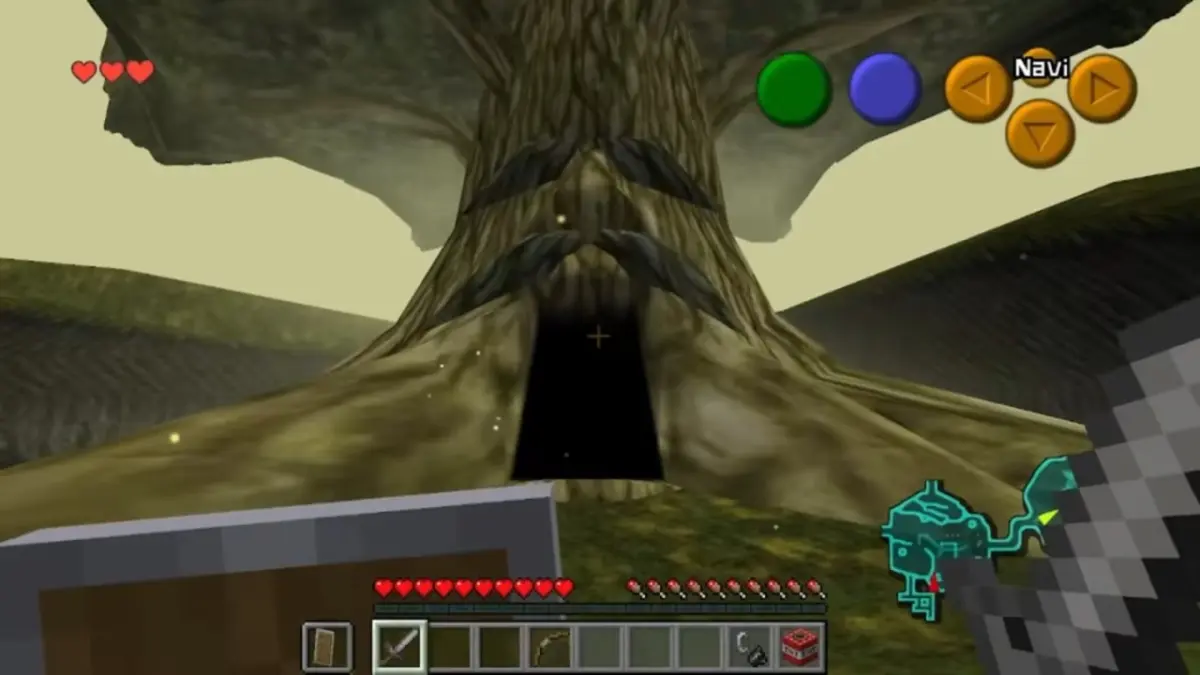
What began as a rogue experiment by a solo developer has rapidly exploded into an online movement, proving that AI-assisted development loops can achieve what used to require large teams of software engineers months of meticulous work: seamlessly bridging disparate game engines, assets, action graphs, and motion mechanics. From Skate 3 meticulously rewritten in Rust to Minecraft running natively within Elden Ring, and Escape from Tarkov weapon systems grafted onto The Elder Scrolls V: Skyrim, the boundaries of digital recreation are being redrawn.
This article provides an exhaustive look into the genesis of AI video game merging, the technical methodologies fueling the trend, the notable projects that captured the internet’s imagination, the broader discourse surrounding game preservation, and what this radical evolution means for the future of the interactive entertainment industry.
Detailed Chronology: From Solo Experiment to Global Phenomenon
The trajectory of the AI game-merging trend moved at lightning speed, characterized by a rapid succession of viral proofs-of-concept that escalated from structural code translation to full-blown cross-franchise chaos.
The Spark: Rewriting Skate 3 in Rust (September 19, 2026)
The movement traces its origins back to September 19, 2026, when social media user and developer @chasmmmmmmmmmmm—known simply online as "Chasm"—published a short video clip on X. The post showcased a project where Chasm had effectively rewritten Skate 3 in the Rust programming language, aiming for 1:1 behavioral accuracy through a hybrid human-and-AI development loop.
Utilizing AI systems like Codex to reverse-engineer how the underlying game functions, Chasm demonstrated how artificial intelligence could successfully connect disparate game assets, action graphs, and complex motion physics graphs inside a completely separate engine framework. Accompanying the video was a bold statement that would soon become a rallying cry for the movement: "This is the real future of game preservation… Every game is open source now." Within a month, the post accumulated over 6,000 likes, signaling to tech-savvy gamers and programmers that a new era of software manipulation had arrived.
Escalation: Skates, Shooters, and Sandboxes (Late September 2026)
Buoyed by the initial reception of the Rust-based port, Chasm pushed the envelope further on September 27, 2026. Posting another clip to X, they revealed a project where skateboarding mechanics had been violently and flawlessly merged into Call of Duty: Modern Warfare 2. Satirizing the absurdity of the integration, Chasm wrote, "AI HACKERS HAVE PUT SKATEBOARDING IN CALL OF DUTY MODERN WARFARE 2! THIS HAS GONE TOO FAR." The post struck a chord with internet culture, pulling in over 29,000 likes in just over a week and triggering a wave of astonishment regarding how quickly AI could translate incompatible control schemes and physics engines.
Not stopping there, Chasm uploaded a comprehensive video to YouTube on September 28, 2026, showcasing Call of Duty seamlessly merged with the voxel sandbox mechanics of Minecraft. The video quickly caught fire within the algorithm, crossing 619,000 views within its first week and solidifying AI mashups as the web’s newest obsession.
The Trend Goes Mainstream (Late September – Early October 2026)
As the week progressed, other creators began experimenting with the underlying methodology, expanding the scope of the trend into increasingly complex technical showcases.
- September 29, 2026: X user @TobynJacobs posted a jaw-dropping video demonstrating the entire game of Minecraft running as a fully functional mod inside Elden Ring, noting that the creation successfully operated on Mac architecture. Simultaneously shared to Reddit’s prominent
/r/singularitycommunity, the post garnered over 3,000 upvotes and accumulated more than 308,000 likes on X within a week. - September 30, 2026: Content creators and tech journalists took notice. YouTuber LudocowTV published an analysis discussing the trend and its long-term implications for the gaming industry, pulling in over 150,000 views in seven days.
- September 30, 2026: X user @cydonix introduced Escape from Skyrim—a terrifying yet mesmerizing mashup merging the tactical survival gunplay and inventory management of Escape from Tarkov into the fantasy expanse of Skyrim. The clip secured over 14,000 likes.
- September 30, 2026: Capitalizing on the momentum, Chasm released a retrospective YouTube documentary-style video titled "Modding has Changed FOREVER…" which exploded across the platform to reach over 2.4 million views in a single week.
- October 1, 2026: Major tech and gaming outlets, including Video Cardz, began publishing roundups documenting the explosion of AI game mods circulating across social media platforms.
- Early October 2026: The trend decentralized completely. Users across TikTok and X began generating absurd combinations, such as Grand Theft Auto: Vice City crossed with Skate 3, Modern Warfare 2 configured for complex "trickline" physics, and even historical oddities like a Call of Duty: World at War and NHL hockey crossover.
Technical Mechanics: How AI Re-engineers Digital Worlds
To understand the weight of this trend, one must understand why video game merging was historically considered nearly impossible. Historically, video games are built using proprietary, highly customized engines written across decades of legacy codebases (such as id Tech, Unreal Engine, or custom in-house software like Rockstar’s RAGE). Merging two games typically required access to original source code, reverse-engineering via assembly language, or writing deep, manual script hooks through APIs like DLL injection—a process that took teams of skilled modders years to achieve on a single title.
The advent of advanced generative AI models (such as Opus 5.5 and specialized coding assistants like Codex) has bypassed traditional human bottlenecks through several key mechanisms:
- Automated Reverse Engineering: AI models ingest disassemblies, binary files, or asset documentation to deduce the mathematical logic driving a game’s physics, rendering pipelines, and input mapping.
- Cross-Language Code Translation: Tools can translate legacy C++ or assembly code into modern, memory-safe languages like Rust, effectively building compatibility layers on the fly.
- Asset and State Graph Bridging: By interpreting action graphs and motion hierarchies, the AI maps the player input loops of one game (e.g., the complex trick systems of Skate 3) onto the skeletal meshes and collision detection boxes of entirely foreign environments (e.g., the military maps of Modern Warfare 2).
- Human-in-the-Loop Refinement: As demonstrated by early pioneers, the process is rarely a single prompt; rather, it relies on a tight iterative loop where human developers guide the AI to troubleshoot compilation errors, memory leaks, and physics glitches.
Supporting Context & Metrics
The velocity of the AI video game merging trend is best illustrated through its quantitative reach across major digital platforms:
- Viral Engagement Peaks: Individual viral posts on X routinely surpassed 300,000 likes within days (e.g., @TobynJacobs’ Minecraft in Elden Ring).
- YouTube Viewership: Core explanatory and showcase videos generated multi-million view counts, led by Chasm’s primary documentary upload crossing 2.4 million views in its first week.
- Community Interest Hubs: Subreddits focused on technological singularity and game modification saw unprecedented spikes in technical discussion threads regarding automated software translation.
- Cross-Platform Diffusion: The trend successfully bridged technical communities on GitHub and X with mainstream entertainment feeds on TikTok, where short-form reaction clips showcased the absurdity of games like GTA Vice City operating under skateboard physics models.
Industry Implications & Future Outlook
While internet users have largely embraced AI video game merging as a source of high-entertainment novelty and digital comedy, the underlying technological implications carry profound weight for the professional software and gaming sectors.
The Debate Over Game Preservation
For decades, the preservation of classic video games has been stymied by legal red tape, lost source code, and hardware obsolescence. Proponents of AI-assisted code translation argue that tools capable of reverse-engineering and porting titles into modern languages (such as rewriting older titles in Rust) could revolutionize preservation efforts, allowing historical software to run natively on modern hardware without relying on resource-heavy emulation.
Intellectual Property and Legal Grey Areas
Conversely, copyright holders and game publishers are facing an unprecedented legal frontier. Because AI mashups frequently blend commercial assets, proprietary code, and copyrighted character models across corporate boundaries (such as Activision assets interacting with Bethesda environments), questions surrounding digital rights management, fair use, and derivative works are reaching a boiling point. Legal experts note that while personal experimentation falls into a gray area, monetizing or distributing these automated ports could trigger significant litigation from major studios.
The Evolution of Professional Game Development
Within professional studios, developers are watching closely. While the current wave of mashups is driven by hobbyists and prompt engineers, the underlying capability—using AI to bridge disparate codebases and accelerate asset integration—hints at a future where rapid prototyping, internal engine transitions, and modular game development could be fundamentally streamlined.
As artificial intelligence continues to refine its ability to read, translate, and execute complex programming logic, the walls separating isolated game universes have officially fallen. Whether this marks the dawn of a decentralized golden age of community-driven game preservation or an unpredictable copyright nightmare, one thing is certain: the rules of video game modding have changed forever.