Executive Overview
In a significant upgrade to its live sports broadcasting ecosystem, Apple has announced a major partnership with Dolby Laboratories to introduce spatial audio to its Formula 1 coverage. Beginning with the high-octane U.S. Grand Prix weekend at the Circuit of the Americas in Austin, Texas, on October 23, Apple TV subscribers in the United States will be able to experience live races in Dolby Atmos.
This enhancement pairs spatial sound with Apple’s existing Dolby Vision support, crafting an unprecedented sensory experience designed to replicate the raw, visceral intensity of motorsport at the highest tier. By weaving cutting-edge audio engineering into its multi-year broadcasting rights deal, Apple is setting a new benchmark for how live sports are consumed in the digital age.
This technological leap is part of a broader, aggressive strategy by Apple to capture the hearts and minds of racing fans. Since securing the exclusive U.S. streaming rights to Formula 1 in a landmark five-year agreement starting with the 2026 season, the tech giant has continually sought ways to redefine the viewing paradigm. From cross-platform collaborations with Netflix to cinematic triumphs like the Academy Award-winning F1: The Movie, Apple is positioning its ecosystem as the ultimate destination for global motorsport entertainment.
Detailed Chronology: How Apple Built Its F1 Empire
To fully understand the gravity of the Dolby Atmos rollout, it is essential to examine the precise trajectory of Apple’s integration into the world of Formula 1. What began as a Hollywood cinematic venture has rapidly evolved into a comprehensive sports broadcasting and media takeover.
The Genesis: Cinematic Success and Rights Acquisition
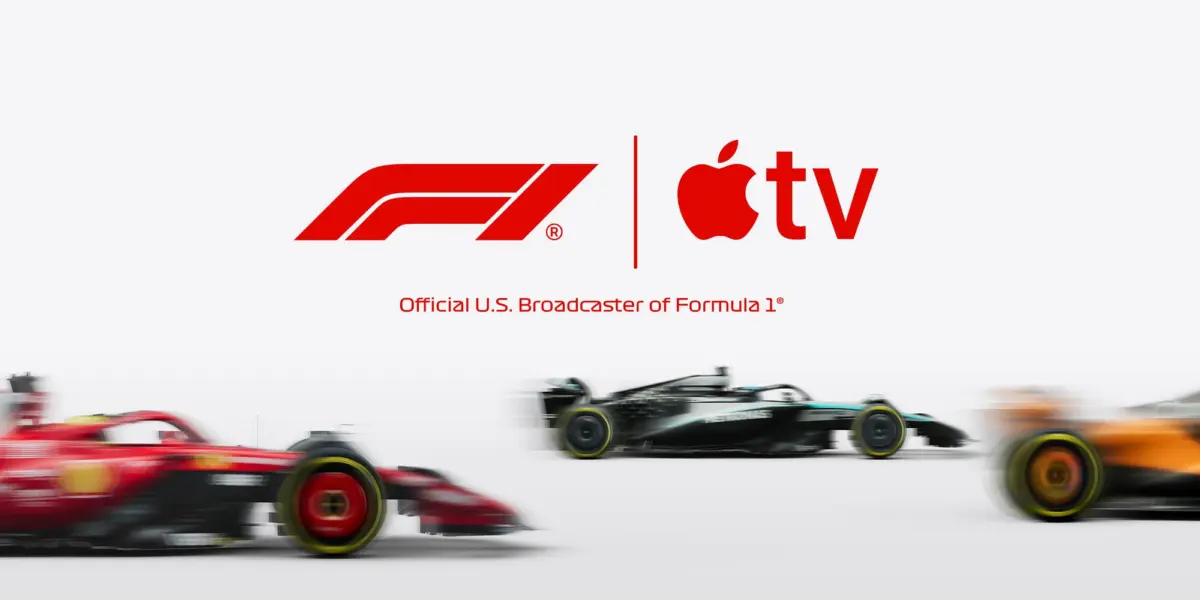
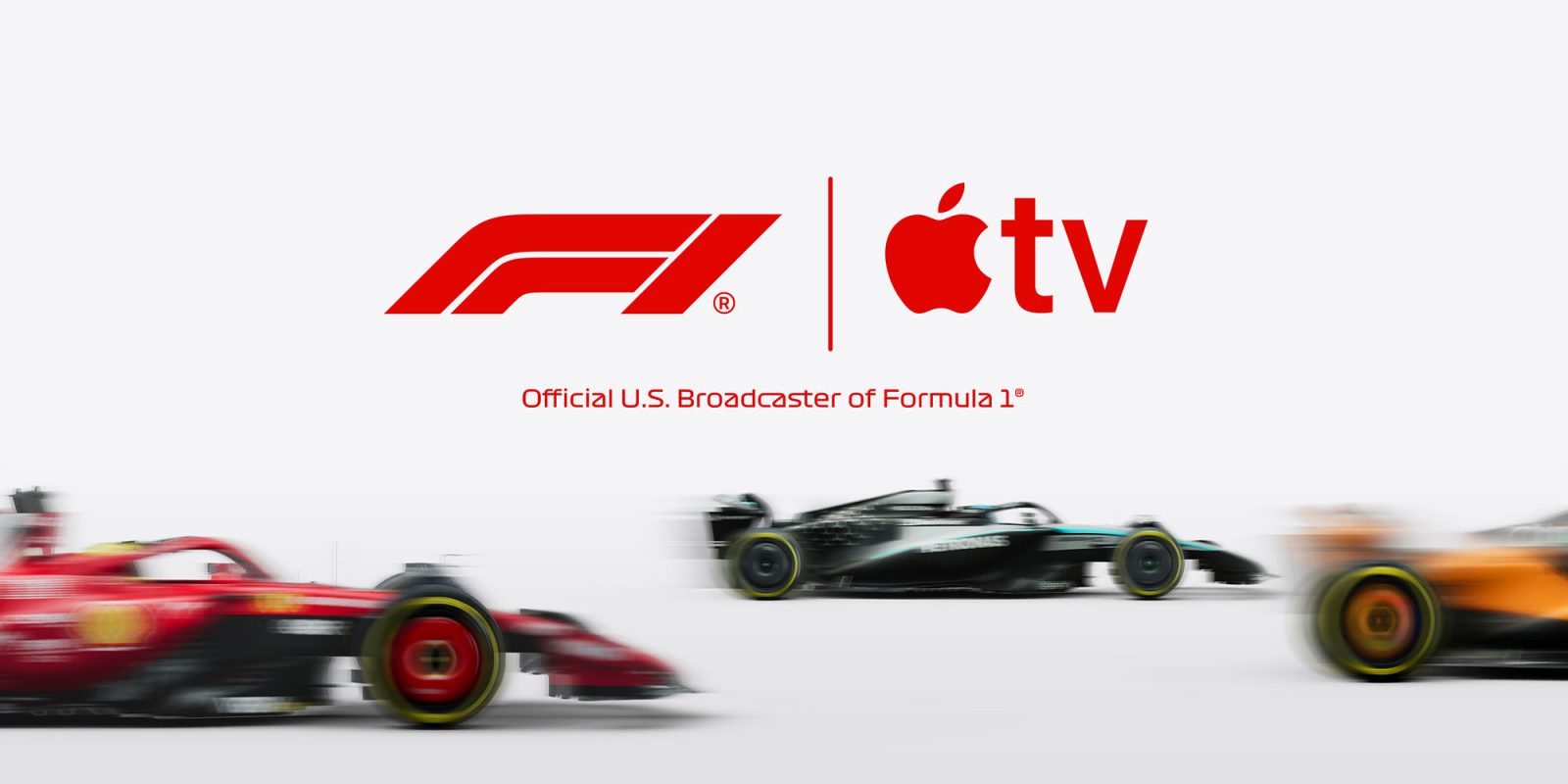
- October 2025: Signaling its serious intent regarding the motorsport vertical, Apple announced that Formula 1 race weekends would stream exclusively on Apple TV in the United States, launching officially with the 2026 season.
- Early 2026: Apple’s cultural footprint in the sport expanded dramatically with the release of F1: The Movie. The cinematic blockbuster resonated profoundly with both critics and audiences, culminating in March 2026 when it secured the Academy Award for Best Sound. This marked Apple’s first Oscar win in three years and instantly underscored the company’s technical mastery over acoustic fidelity.
- February 2026: In an unexpected and consumer-friendly cross-pollination of media, Apple partnered with Netflix to bring Formula 1: Drive to Survive Season 8 directly to Apple TV in the U.S., uniting docuseries fandom with live-action streaming.
The 2026 Season: Expanding Access and Technical Milestones
- Spring 2026: Apple began experimenting with accessibility and reach. During the Bahrain Grand Prix, Apple TV made the live stream available completely free of charge to U.S. viewers, lowering the barrier to entry and driving a massive surge in platform adoption.
- May 2026: The collaborative spirit between streaming rivals continued during the Canadian Grand Prix, which was broadcast simultaneously and live on both Apple TV and Netflix in the U.S. market. However, international ambitions hit a minor roadblock around the same time when European broadcasting giant Sky extended its exclusive rights in the U.K. and Italy, keeping Apple’s global F1 expansion ambitions momentarily constrained to domestic frontiers.
- October 2026: The ongoing evolution of the platform culminates with the upcoming U.S. Grand Prix weekend in Austin. By integrating Dolby Atmos alongside Dolby Vision, Apple is addressing the aesthetic and sensory demands of purists who argue that standard television broadcasts fail to capture the thunderous acoustic footprint of a modern F1 power unit.
Supporting Context & Metrics: The Mechanics of the Deal
The partnership between Apple and Dolby Laboratories is not merely a marketing exercise; it represents a major technical feat in live broadcasting infrastructure. Delivering uncompressed, low-latency spatial audio to millions of concurrent streams requires sophisticated pipeline management, robust content delivery networks (CDNs), and high-end decoding on consumer end-points.
The Technical Footprint: Dolby Vision Meets Dolby Atmos
For decades, television broadcasts of motorsport relied on standard stereo or basic 5.1 surround sound mixes that struggled to isolate the dynamic range of an F1 car. Modern Formula 1 hybrid power units produce an intricate symphony of high-revving internal combustion noise, turbocharger whines, energy recovery system (ERS) high-frequency hums, and aggressive tire screeching against asphalt.
By introducing Dolby Atmos, Apple TV can now treat these acoustic elements as independent audio objects. This means:
- Dynamic Positioning: The roar of an engine overtaking a rival on the main straight can be spatially tracked across the viewer’s soundstage, moving seamlessly from left to right as the cars tear past the virtual camera placement.
- Acoustic Clarity: Team radio communications—often a critical element of race strategy and dramatic tension—can be elevated cleanly above background ambient noise without sacrificing immersion.
- Environmental Immersion: The dense atmosphere of the pit lane during a chaotic 2-second tire change can envelop the listener, capturing the shouting mechanics, pneumatic gun rattles, and engine revs with surgical precision.
Financial and Subscription Structure
Despite the heavy investments in production quality, rights acquisitions, and spatial audio mastering, Apple has maintained a streamlined pricing strategy for its sports vertical:
- Cost: Apple TV remains priced at $14.99 per month, with live Formula 1 coverage included at no additional surcharge.
- Bundle Integration: Subscribers can also access the service via the Apple One multi-service subscription bundle.
- Ecosystem Synergy: Beyond live racing, the Apple TV app acts as a media hub housing celebrated prestige television and cinema, including Ted Lasso, Severance, The Studio, The Morning Show, Shrinking, Silo, and the Oscar-winning F1: The Movie.
Official Statements and Industry Perspective
The integration of spatial audio into live sports marks a philosophical shift in how media conglomerates view consumer engagement. Executives from both Apple and Dolby have emphasized that technology must serve the emotional core of the sport.
Announcing the partnership, Oliver Schusser, Vice President of Apple Music and International Content at Apple, highlighted the intrinsic emotional connection fans have with the sounds of motorsport:

"We’re always looking for new ways to make Formula 1 on Apple TV even better for fans. The sound of Formula 1 is such an important part of what makes the sport so exciting, and with Dolby Atmos joining Dolby Vision, fans can experience the energy and intensity of every Grand Prix in a whole new way. It’s another example of how we’re continuing to innovate across the viewing experience to bring fans closer to the action."
Dolby Laboratories echoed this sentiment, noting that the marriage of ultra-high-definition video and spatial audio closes the gap between sitting on a living room sofa and sitting directly in the grandstands at Austin’s Turn 1.
Industry analysts point out that this move cements Apple’s long-term strategy for Apple TV+. Rather than competing strictly on the volume of content produced—a strategy favored by traditional streaming giants—Apple continues to lean into premium technical differentiation. By offering the sharpest picture quality (Dolby Vision) and the most sophisticated acoustic environment (Dolby Atmos), Apple TV is carving out an unassailable niche as the luxury tier of digital entertainment.
Future Outlook: What Next for Apple and Formula 1?
As the current five-year broadcasting agreement progresses, industry watchers are looking toward the horizon to see how Apple plans to scale its investment in motorsport. Several key areas remain open for speculation and strategic development:
1. International Rights Expansion
While Apple’s current streaming rights are strictly confined to the United States, executives in Cupertino have made no secret of their global ambitions. However, breaking into legacy European markets where terrestrial broadcasters and entrenched pay-TV networks (such as Sky Sports) hold long-term contracts will be an uphill battle. Future negotiations will likely focus on regional co-streaming agreements or bidding aggressively as international contracts expire later in the decade.

2. The Spatial Computing Frontier: Vision Pro Integration
Given Apple’s aggressive push into spatial computing with the Vision Pro headset, industry speculators are closely monitoring how live sports broadcasting will adapt to virtual and augmented reality. The combination of Dolby Atmos spatial audio and immersive multi-view video feeds points toward a future where fans might experience a virtual pit wall or trackside seat from their own living rooms. While not explicitly confirmed for the immediate October Grand Prix weekend, rumors persist that immersive, headset-optimized F1 environments remain a major long-term objective for Apple’s hardware and software engineering teams.
3. Deepening Fan Integration and Interactive Statistics
With control over the digital broadcast stream, Apple is uniquely positioned to integrate real-time telemetry, driver radio feeds, and interactive data overlays directly into the Apple TV interface. Future updates may allow viewers to toggle specific audio channels, prioritizing team radio communications of a favored driver while maintaining full Dolby Atmos stadium immersion.
Conclusion
Apple’s rollout of Dolby Atmos for Formula 1 coverage is more than just a software update; it is a clear statement of intent. By fusing Hollywood-grade cinematic production values with state-of-the-art live sports broadcasting, Apple is redefining what fans can expect from a Sunday afternoon race. As the engines fire up in Austin this October, viewers won’t just be watching the U.S. Grand Prix—they will be living it.