Executive Overview
In the current landscape of generative artificial intelligence, a fundamental trade-off has long been accepted as inevitable: to access state-of-the-art cognitive capabilities, users must surrender their most intimate data to massive, centralized cloud data centers. Whether routing queries through proprietary servers or allowing models to train on private documents, the modern AI ecosystem is built on a foundation of systemic surveillance.
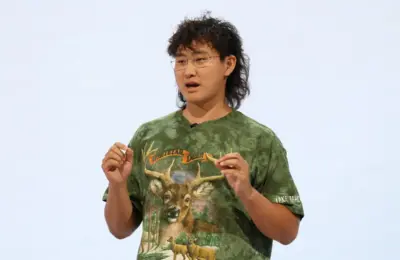
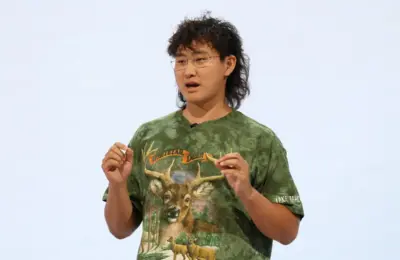
Now, Conway Research—a stealth-state startup founded by Thiel Fellow Sigil Wen—aims to dismantle this paradigm.
On Monday, Wen announced the invite-only beta launch of Underdog, an ultra-private, local-first AI assistant designed to run entirely on user-owned hardware. Backed by a formidable coalition of venture capital giants and elite angel investors—including Andreessen Horowitz, Khosla Ventures, and Stripe co-founder Patrick Collison—Underdog represents a major philosophical and technological shift. By executing a highly optimized 27-billion parameter reasoning model directly on consumer computers, Underdog matches the performance of leading cloud models from just six months ago while guaranteeing absolute data sovereignty.
Furthermore, Conway Research is pioneering a novel, fintech-inspired monetization strategy. Eschewing both subscription fees and ad-based data mining, Underdog will remain free for general use, generating revenue instead by taking a micro-percentage of financial transactions processed through the assistant via Stripe’s secure rails. This structural alignment of incentives positions Underdog not as a data-harvesting utility, but as a secure, private agent acting solely in the user’s interest.
Detailed Chronology
The genesis of Underdog is deeply intertwined with the recent history of the generative AI boom. To understand the architecture of Conway Research, one must trace the journey of its founder through the crucible of Silicon Valley’s elite hacker culture.
[Age 17: Moves to Silicon Valley] ──> [Co-habits AI Hacker House with Andrej Karpathy] ──> [Hacks on Early Claude, Midjourney, & GPT-3] ──> [Hired by Naval Ravikant for Airchat] ──> [Secures Thiel Fellowship & Founds Conway Research] ──> [Launches Underdog Beta]The Hacker House Era
At just 17 years old, Sigil Wen, a self-taught programmer, relocated to Silicon Valley. He gained entry into an intellectual epicenter: a legendary AI hacker house where he lived alongside Andrej Karpathy, the famed former Director of AI at Tesla and co-founder of OpenAI.
Within this high-density environment of talent and compute, Wen operated at the absolute vanguard of the generative revolution. He coded and collaborated alongside peers who would quickly ascend to the peak of the industry, including:
- Aravind Srinivas, founder of the conversational search engine Perplexity.
- Noam Brown, the premier game theory and multi-agent AI researcher at OpenAI.
- Ben Mann, co-founder of Anthropic.
During this period, Wen served as an early tester and contributor to foundational technologies before they entered the public consciousness. He experimented with early iterations of Anthropic’s Claude (then shared informally by Ben Mann), David Holz’s nascent image generation engine that would become Midjourney, OpenAI’s GPT-3, and the early codebase of Stable Diffusion.
For recreation, Wen demonstrated a fascination with edge-computing constraints, successfully compiling and running GPT-2 locally on an Apple Watch—an early indicator of his obsession with local model execution.
The Professional Transition
Recognizing his technical talent, prominent investor and entrepreneur Naval Ravikant recruited Wen to build for Airchat, a voice-first social network designed as a high-fidelity competitor to Clubhouse.
Shortly thereafter, Wen was awarded the prestigious Thiel Fellowship, the two-year program established by billionaire investor Peter Thiel that provides $100,000 in non-dilutive funding to young visionaries to drop out of university and build independent enterprises. With this backing, Wen incorporated Conway Research, setting out to solve the structural privacy vulnerabilities inherent in the cloud-AI paradigm.
Supporting Context & Technical Metrics
The fundamental challenge of local AI has always been the trade-off between computational capability and hardware constraints. Conway Research addresses this through a proprietary software stack designed to maximize the efficiency of consumer-grade silicon.
The Husky Inference Engine
Underdog is powered by Husky, a custom-built inference engine engineered by Wen to bypass the traditional bottlenecks of on-device LLM execution.
In consumer hardware, the primary obstacle to running large models is not raw compute power, but memory bandwidth—specifically, the latency incurred when moving model weights between a computer’s main system memory (RAM) and its graphics processing unit (GPU). Husky minimizes this overhead by optimizing memory transfer paths, allowing Underdog to achieve highly responsive token-generation speeds on standard consumer setups without thermal throttling or excessive battery drain.
| Metric / Feature | Underdog (On-Device) | Traditional Cloud AI Assistants |
|---|---|---|
| Model Architecture | 27B Parameter Reasoning Model | Closed-source, multi-hundred-billion parameter |
| Inference Location | User’s local CPU / GPU | Centralized AWS/GCP/Azure Data Centers |
| Data Transmission | 0% (Data never leaves the machine) | 100% of queries, context, and metadata uploaded |
| Inference Cost | $0.00 (Marginal cost of local electricity) | Variable API costs or high monthly subscriptions |
| Encryption Standard | Local end-to-end encryption for API keys | Server-side storage, vulnerable to cloud breaches |
Model Performance & Benchmarks
Underdog utilizes a highly optimized 27-billion parameter reasoning model, fine-tuned from Qwen3.8-27B.
While significantly smaller than the gargantuan models hosted in industrial data centers, Wen’s specialized fine-tuning allows the model to punch far above its weight class. Internal testing and external benchmarks demonstrate that Underdog’s local model compares favorably with Claude Opus 4.6 in specialized reasoning tasks, effectively matching the state-of-the-art cloud performance of just six months prior.
For daily productivity tasks—such as processing complex financial spreadsheets, summarizing localized communication, executing mathematics homework, or conducting deep shopping research—the 27B model provides identical utility to its cloud-hosted counterparts, with zero latency spikes from network congestion.
Model Reasoning Benchmark Comparison (Relative Performance Index)
──────────────────────────────────────────────────────────
Underdog (Local 27B)    ████████████████████ 88%
Claude Opus 4.6 (Cloud) █████████████████████ 92%
Legacy Local Models     ███████████ 52%
──────────────────────────────────────────────────────────
The Fintech Monetization Model
Perhaps the most disruptive aspect of Conway Research’s strategy is its rejection of both SaaS (Software-as-a-Service) subscription models and ad-based monetization.
Because Underdog runs locally, Conway Research does not bear the massive operational overhead of cloud server maintenance, GPU depreciation, or API token costs. This allows the startup to offer the software completely free of charge without compromising user data.
To generate revenue, Conway Research has partnered with payment infrastructure giant Stripe. When a user instructs Underdog to perform a real-world transaction—such as booking a flight, purchasing a retail item, or paying a bill—the assistant executes the payment using Stripe’s secure payment rails. Conway Research then collects a minor percentage of the transaction, akin to a traditional bank interchange fee.
This model aligns the incentives of the developer and the consumer: Conway Research only profits when the AI successfully performs a secure, high-utility transaction for the user, completely eliminating the incentive to sell user telemetry to advertisers.
Official Statements & Philosophy
The driving ethos behind Conway Research is a rejection of the surveillance-capitalism model that has come to dominate the Web2 and early Web3 eras. In his recently published AI Manifesto, Sigil Wen poses a fundamental question to the technology sector:
"Why should using AI require surrendering your private information?"
For Wen, the current state of the market is not just a security risk, but an ethical failure. Speaking to TechCrunch, he expanded on his personal motivations for developing Underdog:
"You don’t need to sacrifice your privacy for the capability because [on-device models] are just as capable. I honestly want to build Underdog for myself. I’m building a product that I would be proud for my future children to use."
This philosophy has resonated deeply with some of the most respected figures in technology and venture capital. Conway Research has secured a highly competitive cap table, led by:
- Andreessen Horowitz (a16z), represented by general partner Chris Dixon.
- Khosla Ventures, early backers of OpenAI.
- The Anthology Fund, a joint venture between Menlo Ventures and Anthropic.
- Hummingbird Ventures and SV Angel.
In addition to institutional capital, the company has attracted a list of prominent angel investors, including Stripe co-founder Patrick Collison, Vercel founder Guillermo Rauch, OpenAI researcher Noam Brown, and prominent technologist Deedy Das.
Future Outlook
As Underdog enters its invite-only beta phase, Conway Research is executing a aggressive platform expansion strategy. While the current build is limited to macOS and Windows PCs, the development team is actively preparing native clients for Linux, iOS, and Android.
The transition to mobile operating systems will be the ultimate test for the Husky inference engine. Running a 27-billion parameter model on a smartphone requires navigating intense thermal limits and battery preservation protocols. However, if Conway Research successfully deploys Underdog to mobile devices, it will mark the arrival of the first truly private, ubiquitous cognitive assistant—one that operates entirely within the user’s pocket, completely decoupled from the cloud.
As the generative AI industry faces mounting scrutiny over data privacy, copyright infringement, and security breaches, Conway Research’s local-first architecture stands as a compelling alternative. By proving that local hardware can deliver world-class intelligence, Sigil Wen is not just launching an application; he is charting a course toward a decentralized, sovereign, and secure digital future.