Executive Overview
Meta’s aggressive push into autonomous, task-oriented artificial intelligence has officially reached a major milestone. Muse, Meta’s breakout AI agent application, has maintained a stronghold at the #1 spot on the U.S. App Store’s free iPhone chart for several consecutive weeks. Capitalizing on this unprecedented momentum, Meta has rolled out a major software update that officially brings the application to Apple’s iPad lineup.
Designed as a proactive, largely free agentic AI assistant, Muse represents Meta’s direct challenge to rival conversational and task-executing tools like OpenAI’s ChatGPT (featuring its Dots interface), xAI’s Grok Bot, and Anthropic-adjacent ecosystem tools like OpenClaw. By transitioning from a smartphone-exclusive experience to a natively optimized tablet app—while simultaneously introducing a suite of new cross-platform connectors—Meta is signaling that it views agentic AI not merely as a novelty chatbot, but as an indispensable, multi-device operating layer for everyday workflows.
This comprehensive report examines the rapid ascension of Muse, the strategic importance of its iPad rollout, the technical ecosystem it competes within, and what this explosive growth means for the future of personal artificial intelligence.
Detailed Chronology of the Muse Rollout
The meteoric rise of Muse is a textbook study in aggressive product deployment and rapid ecosystem expansion.
The September Launch Window
Meta initially introduced the world to Muse in mid-September, launching it first as a standalone mobile application tailored specifically for the iPhone. The release immediately generated shockwaves across the tech industry. For years, the productivity and utility AI space had been dominated by incumbent leaders like OpenAI and Google. However, Meta’s framing of Muse as a "proactive personal agent"—rather than a reactive text-generation box—struck a chord with mainstream consumers.
Within 24 hours of its initial appearance on the U.S. App Store, download metrics began skyrocketing. By September 18, industry trackers confirmed that Muse had successfully overtaken ChatGPT to claim the coveted #1 spot as the top free iPhone app in the United States—a position it has stubbornly refused to relinquish over the past several weeks.
Sensing an opportunity to capture desktop workflows alongside mobile engagement, Meta executed a rapid-fire expansion strategy. Just days after the iPhone debut, the company dropped a dedicated macOS version, allowing users to invoke Muse seamlessly across Apple’s desktop and laptop environments.
The iPad Integration
The latest chapter in this rollout unfolded with today’s software update. By bringing Muse to the iPad, Meta is bridging the gap between mobile touch interfaces and desktop-class productivity. The iPad version leverages iPadOS’s unique UI paradigms, offering split-view support, enhanced multitasking capabilities, and seamless synchronization with Apple Pencil workflows. Alongside the iPad launch, the update packs a series of new backend connectors designed to tie the AI agent more deeply into third-party cloud services, productivity suites, and web applications.
Supporting Context & Metrics: The Agentic AI Landscape
To understand why Muse has captured the public imagination—and dominated App Store charts—it is necessary to examine the broader shift from conversational AI to agentic AI.
From Chatbots to Proactive Agents
Traditional generative AI models operate on a fundamentally reactive model: the user opens an app, types a prompt, reads the output, and closes the app. Agentic AI, by contrast, is designed to be autonomous, contextual, and proactive.
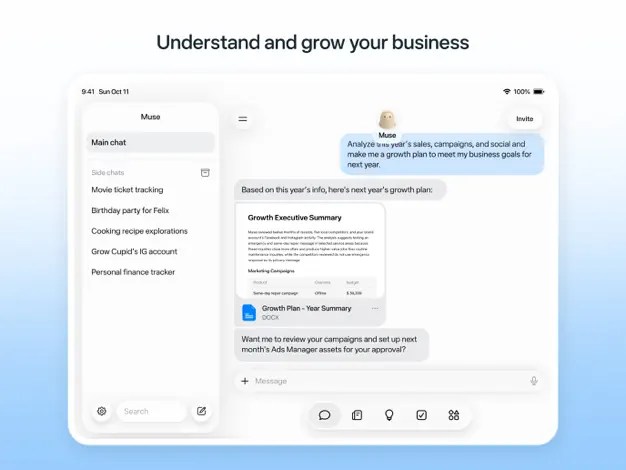
Meta built Muse to anticipate needs, manage multi-step tasks independently, and interact with external systems on behalf of the user. Whether it is sorting through cluttered digital communications, orchestrating schedules, or synthesizing research across multiple web domains, Muse acts more like a digital chief of staff than a search engine substitute.
Competitive Positioning
Muse does not exist in a vacuum. The race for agentic supremacy on consumer devices has ignited fierce competition among tech giants:
- OpenAI (ChatGPT Dots): Continues to iterate on voice, vision, and multimodal workflows, maintaining massive brand equity.
- xAI (Grok Bot): Leverages real-time data integration via social media channels, appealing to users looking for unfiltered, current-events-driven assistance.
- OpenClaw: Serves as a formidable, developer-centric agentic framework capturing power users.
Despite this fierce competition, Meta’s aggressive pricing strategy—offering the core tiers of Muse largely for free—has dismantled traditional barrier-to-entry hurdles, fueling its viral adoption curve.
Official Statements & Product Capabilities
While Meta has kept precise technical specifications under wraps regarding the underlying large language models powering Muse, official release notes and platform disclosures highlight the agent’s expanding functional envelope.
Key Features of the Latest Update
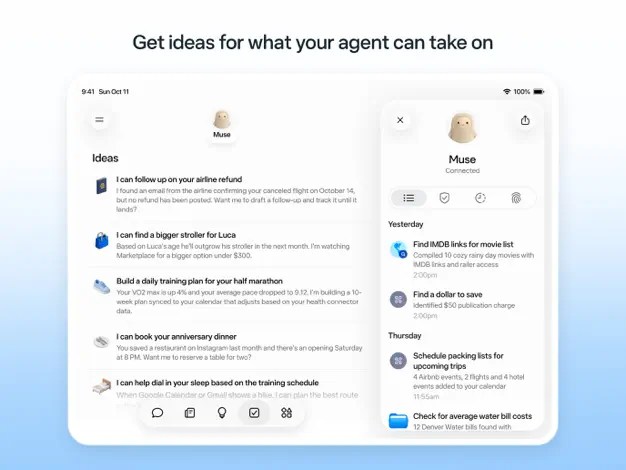
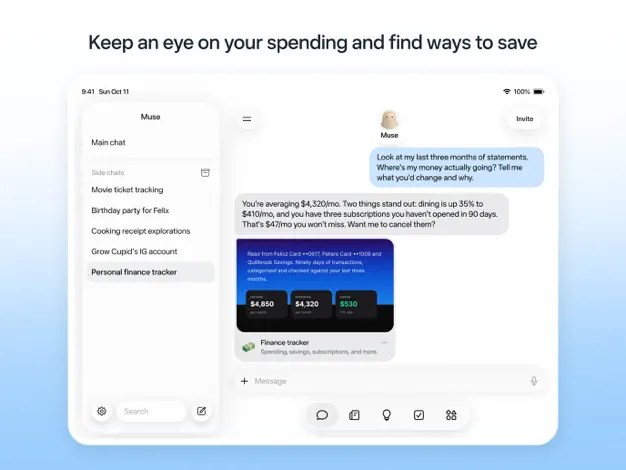
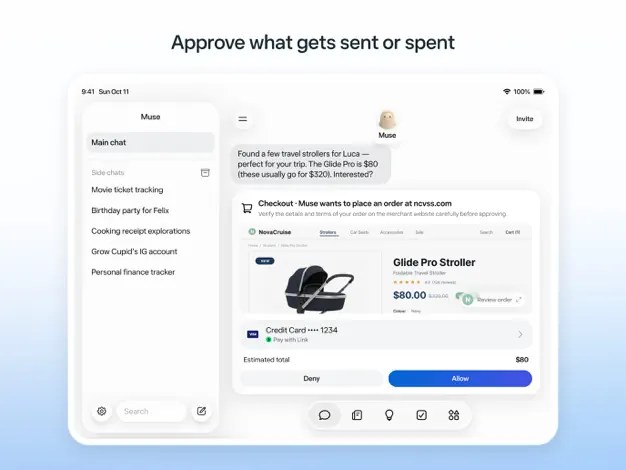
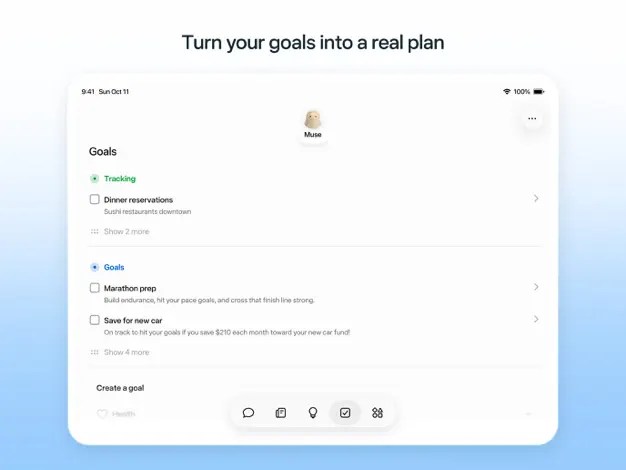
- Native iPadOS Optimization: The app is no longer a simple blown-up iPhone interface. It features a redesigned, multi-pane layout that takes full advantage of larger tablet displays, enabling users to view conversational threads side-by-side with active agentic workspaces and data visualizers.
- Expanded Connectors: Muse now supports a wider array of third-party API integrations. Users can link the agent to popular cloud storage providers, calendar apps, and communication channels, allowing the AI to execute cross-platform commands safely and efficiently.
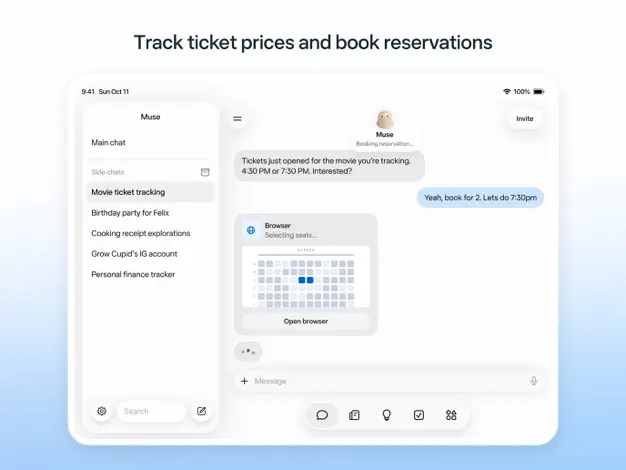
- Enhanced Proactive Triggers: The updated agent architecture allows Muse to send contextual notifications based on user habits, deadlines, and real-time data monitoring, shifting the burden of prompting entirely off the human user.
App Store screenshots for the iPad release showcase a clean, minimalist interface heavily reminiscent of Meta’s modern design language—prioritizing fluid typography, dark-mode elegance, and intuitive card-based widgets that display the agent’s real-time "thought process" as it tackles complex, multi-stage user requests.
Future Outlook: What’s Next for Meta’s AI Ecosystem?
The success of Muse on iOS and iPadOS raises critical questions about Meta’s hardware and software roadmap moving forward.

The Multi-Device Playbook
Meta is positioning its AI agents to be ubiquitous. Having conquered the iPhone and iPad—and established a foothold on macOS—industry analysts are speculating wildly about when a dedicated Android and Windows counterpart will receive the same high-tier optimization. Furthermore, given Meta’s heavy investments in spatial computing and smart eyewear (such as their Ray-Ban collaboration and upcoming mixed-reality headsets), agentic AI like Muse is expected to serve as the cognitive engine driving future hardware form factors.
Monetization vs. User Acquisition
For now, the strategy is clear: land grab. By keeping Muse free and heavily subsidized, Meta is collecting invaluable training data on human-agent interaction workflows at scale. However, industry watchers note that maintaining massive server clusters capable of running proactive, multi-step agentic workflows will eventually demand robust monetization strategies, potentially through enterprise-tier add-ons, professional connectors, or advanced compute packages.

Conclusion
Meta’s Muse has redefined consumer expectations for what a mobile AI application can achieve. By shifting the paradigm from static conversation to dynamic, proactive agency—and by rapidly expanding its footprint from the iPhone to the iPad—Meta has proven that it can out-maneuver legacy competitors in the consumer software arena. As the app continues to dominate App Store rankings, the broader tech industry is put on notice: the era of the active AI agent has arrived, and it lives right on your tablet.
Muse for iPhone and iPad is currently available as a free download on the U.S. App Store.