Executive Overview
The debate surrounding the morality, constitutionality, and mechanics of the death penalty in the United States has reached a critical juncture. For decades, states have sought to distance capital punishment from the perceived barbarism of the gallows, the electric chair, and the firing squad. The adoption of lethal injection was heralded as a sanitized, medicalized, and humane alternative—a procedure designed to cloak state-sponsored killing in the sterile aesthetics of modern healthcare.
However, recent events have laid bare the profound contradictions and hidden horrors of this approach. The botched execution of death row inmate Christa Pike in Tennessee on September 30 has reignited an uncomfortable, macabre national conversation. Pike survived two doses of the sedative pentobarbital after the drugs reportedly entered her arm tissue rather than her bloodstream, leaving her trapped in a harrowing medical purgatory before she was resuscitated, intubated, and eventually returned to consciousness shackled to a hospital bed.
Pike’s survival and suffering are not isolated anomalies; rather, they reflect a systemic failure in the administration of lethal injections. As medical professionals, legal experts, and spiritual advisors bear witness to the realities of modern execution methods—including lethal injection, nitrogen hypoxia, and the controversial resurgence of the firing squad—a stark question emerges: When state-sanctioned execution is stripped of its medicalized illusion, what methods remain, and what do those choices reveal about the inherent cruelty of the death penalty itself?
Detailed Chronology: The Botched Execution of Christa Pike
The sequence of events leading up to and following Christa Pike’s scheduled execution exposes the fragility and danger of executing individuals with complex physiological profiles.
The Warnings Ignored
Weeks prior to September 30, legal counsel for Christa Pike anticipated severe complications. Recognizing that Pike possessed small veins and a pre-existing blood condition, her legal team retained Dr. Joel Zivot, an intensive care physician and outspoken critic of capital punishment methods. Zivot issued explicit warnings that attempting to secure intravenous lines for a lethal injection under these conditions created a high probability of severe pain, procedural failure, and cruel and unusual physical trauma. These warnings, submitted as part of legal challenges, were ultimately overridden by the state’s determination to proceed.
The Execution Chamber
On the night of September 30, execution technicians at the Tennessee facility attempted to administer the state’s protocol, centered around the sedative pentobarbital. Due to Pike’s compromised vascular system, the intravenous lines failed to properly access her bloodstream. Instead, the lethal substance leaked into the surrounding arm tissue.
Rather than rendering a swift and peaceful unconsciousness, the administration resulted in agonizing complications. The procedure stalled as officials struggled to manage the failing IV sites. Recognizing that the execution was failing to progress normally and that Pike was neither dead nor reliably sedated, prison officials took the extraordinary step of halting the procedure.
Hospitalization and Legal Limbo
Pike was immediately transferred from the execution chamber to an outside hospital. There, medical professionals intubated her, placed her on a mechanical ventilator, and treated her for the systemic trauma of the failed chemical introduction.
By Tuesday, following days of intensive medical intervention, Pike regained consciousness. She currently resides in a precarious and Kafkaesque legal status: kept alive by modern medicine only to be shackled to a hospital bed, awaiting whatever legal and administrative maneuvers the state of Tennessee decides to pursue next. The incident has intensified scrutiny on the state’s execution protocols, transforming a routine scheduled killing into a national symbol of administrative incompetence and physical cruelty.
Supporting Context & Metrics: The Anatomy of Modern Execution
To understand why a botched execution like Christa Pike’s occurs with alarming frequency, experts argue that one must examine the physical realities behind various execution methods. The illusion of a peaceful death relies heavily on the public’s distance from the actual mechanics of dying.
The Truth About Lethal Injection
For decades, lethal injection has been viewed by the public as the most humane method available. Dr. Joel Zivot, drawing from extensive autopsy analyses of executed individuals, challenges this perception directly. According to Zivot’s research, lethal injections frequently do not result in a quiet cessation of life. Instead, substances such as potassium chloride and paralytics can induce pulmonary edema, effectively causing the condemned prisoner to drown in their own blood while conscious or semi-conscious.
Furthermore, the involvement of individuals with healthcare training or the simulation of a clinical environment imparts a "sheen of modernity, technological advancement, or sophistication." This medical theater masks the underlying violence, shielding witnesses from the visceral horror of asphyxiation and organ failure.
The Rise of Alternative Methods: Nitrogen Hypoxia
As pharmaceutical companies have increasingly refused to supply drugs for lethal injections—fearing reputational damage and ethical backlash—states have scrambled to find alternative execution modalities. Among these is nitrogen hypoxia, a method involving a gas chamber and an airtight mask.
Witnesses to nitrogen executions, such as the Rev. Jeff Hood—a Catholic priest and founder of the Execution Intervention Project who has witnessed numerous executions—describe a deeply traumatic process. The mask, extending from the hairline to underneath the chin, is flooded with nitrogen gas to induce oxygen deprivation. As the inmate suffocates, involuntary biological responses occur: fluids, saliva, mucus, and tears accumulate inside the mask, creating a visceral waterfall effect that is profoundly disturbing to witness. Hood notes that compared to the chaotic violence of nitrogen gas, even standard lethal injections can superficially resemble "going to recess."
The Firing Squad Paradox
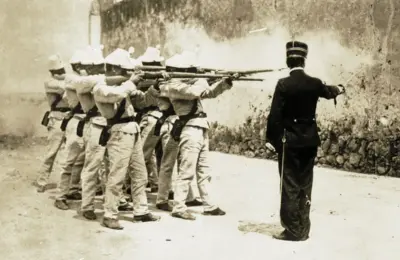
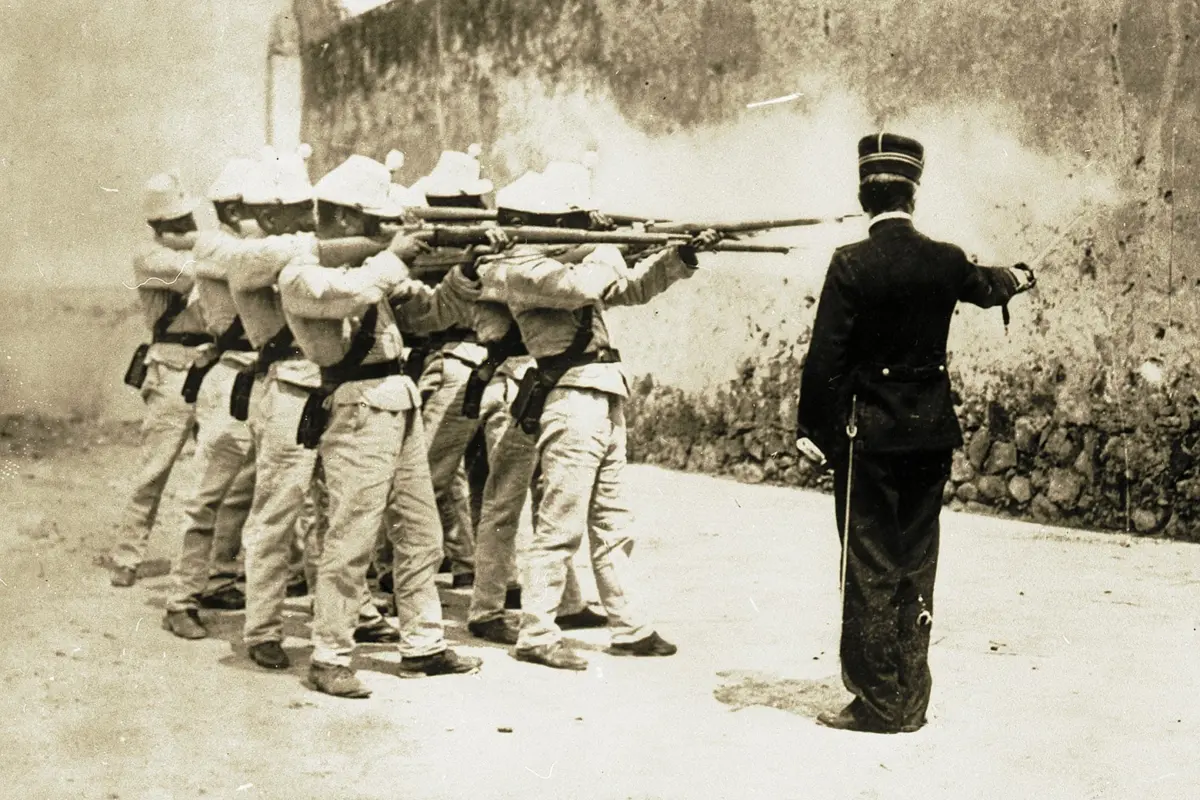
Faced with the logistical failures of lethal injection and the gruesome optics of nitrogen hypoxia, some legal scholars and death row advocates have revisited an older, more direct method: the firing squad. Authorized in only a handful of states, the firing squad is often viewed by inmates themselves—according to spiritual advisors working closely with death row populations—as a preferable alternative due to its relative speed and certainty.
Yet, the preference for a firing squad highlights a dark irony: in a civilized society, a method involving multiple riflemen inflicting ballistic trauma is sometimes considered more humane only because it strips away the deceptive medical theater of lethal injection. A firing squad forces the state, the witnesses, and the public to confront the absolute brutality of execution without euphemism.
Official Statements and Expert Perspectives
The debate over execution methods has drawn sharp commentary from medical professionals, spiritual leaders, and legal scholars who bear witness to the realities of capital punishment.
Medical and Legal Warnings
Dr. Joel Zivot has consistently argued that the medical profession’s ethical framework—summed up by the Hippocratic Oath ("First, do no harm")—is fundamentally subverted when physicians or medically trained personnel participate in executions. Zivot’s autopsies and expert testimonies emphasize that the human body often fights back against chemical agents in violent, unpredictable ways. The case of Christa Pike underscores the danger of ignoring physiological realities, such as damaged veins or circulatory disorders, in pursuit of a state-mandated timeline.
Perspectives from the Death Chamber
The Rev. Jeff Hood, reflecting on his firsthand observations of nine lethal injections and two nitrogen executions, offers a blunt assessment of the state of capital punishment. When asked by media outlets what a "good execution" might look like, Hood notes that none of them are good, but some operate with fewer mechanical failures than others.
Comparing the methods, Hood remarked on the comparative speed and finality of ballistic trauma versus chemical or gaseous suffocation. However, he emphasizes that the discomfort associated with discussing or witnessing methods like the firing squad serves an important purpose: it strips away the sanitized veneer of the death penalty.
"What it says is that executions are horrible no matter how they’re carried out," Hood observed. "It forces everyone to see, to hear, to feel the execution in a way that other methods don’t."
Hood’s insights point to a fundamental moral dilemma for state legislatures: How far are governments willing to go, and how "dirty" are they willing to let their hands get, in order to sustain capital punishment? If a state requires volunteer shooters and specialized environments to execute prisoners by firing squad, it forces a level of explicit accountability that many modern jurisdictions have tried to avoid through automated or clinical methods.
Future Outlook: The Legal and Moral Horizon
The botched execution of Christa Pike and the ongoing legal battles over execution protocols signal a turbulent future for the death penalty in the United States.
- Increased Litigation Over Methods: Defense attorneys are increasingly utilizing medical experts like Dr. Zivot to challenge state execution protocols prior to scheduled dates. Proving that an inmate’s specific physiological profile (such as compromised veins or respiratory issues) creates an undue risk of a painful, botched execution has become a central legal strategy for securing stays or commutations.
- The Pharmaceutical Squeeze: As drug manufacturers continue to restrict access to lethal injection compounds, states will face mounting pressure to either abandon capital punishment or adopt alternative, highly controversial methods such as nitrogen hypoxia or expanded firing squad authorizations. Each new method, however, invites fresh constitutional challenges under the Eighth Amendment’s prohibition against cruel and unusual punishment.
- The Transparency Dilemma: The push toward greater transparency—whether through the forced visualization of firing squads or the unvarnished autopsy results of lethal injections—threatens to erode public support for the death penalty. As the medicalized illusion fades and the raw violence of state killing is exposed, policymakers and courts will face intensified scrutiny regarding the fundamental ethics, efficacy, and human cost of capital punishment in the 21st century.