By the Medical Examiner Desk
Executive Overview
Last week, the sudden and mysterious death of a 28-year-old laboratory worker in a remote Siberian city ignited a firestorm of international media coverage, public anxiety, and conflicting diplomatic reports. The victim, who was employed at a specialized anti-plague research facility, reportedly fell ill under ambiguous circumstances—with early, unconfirmed accounts pointing to a breached test tube. Regional officials swiftly introduced the specter of the plague, triggering localized quarantines impacting nearly 200 people.
While the word plague instantly evokes images of apocalyptic devastation, historical mass mortality, and cinematic terror, public health experts emphasize that the true core of this unfolding story has very little to do with the pathogen itself. From a strictly epidemiological standpoint, Yersinia pestis is well-understood, treatable, and poorly equipped to spark a modern global pandemic on the scale of COVID-19.
Instead, the genuine source of alarm for biosecurity and geopolitical analysts lies elsewhere: the opaque operational practices of Russian biological research facilities, the unsettling legacy of state-sponsored bioweapons programs, and the chronic lack of transparent communication between Moscow and international health authorities. While experts caution that the risk to the general public outside of Russia remains essentially nil, the incident serves as a stark reminder of the persistent vulnerabilities inherent in high-containment biological laboratories.
Detailed Chronology of Events
The unfolding crisis began in a remote Siberian urban center, centering on a young laboratory technician whose professional life intertwined with one of history’s most feared biological agents.
The Incident and Initial Reports
The 28-year-old researcher, whose identity has been widely verified in international reporting, worked inside an anti-plague institute tasked with monitoring and studying dangerous pathogens. According to initial leaks and local reporting, the worker fell acutely ill following an alleged laboratory accident involving a compromised or broken test tube.
As her condition rapidly deteriorated into severe respiratory distress, local medical teams struggled to diagnose and manage her symptoms. A government official in a neighboring administrative region initially issued a public statement confirming that the worker had succumbed to the plague. This statement was later walked back, with authorities inserting the qualifier "possibly" as the political and institutional ramifications of the outbreak became clear.
The Quarantine and Containment
In response to the sudden death and the potential exposure risks, independent regional news outlets reported that nearly 200 individuals—including close contacts, family members, and medical personnel who interacted with the victim—were placed under strict quarantine and medical observation.
Concurrently, the official narrative from Moscow shifted. Russian authorities forcefully denied that the plague was the cause of death, instead attributing the fatality to "pneumonia of unknown etiology." This stark contradiction between local emergency measures, independent journalistic accounts, and federal denials created an information vacuum, fueling intense speculation across global intelligence and public health communities.
International Assessment
The World Health Organization (WHO) and international epidemiologists quickly stepped in to monitor the situation. Initial WHO statements indicated no immediate signs of further infections spreading beyond the immediate circle of contacts. Nevertheless, the combination of a laboratory-linked fatality, conflicting official statements, and sweeping quarantines ensured that the event would be scrutinized at the highest levels of global biosecurity.
Supporting Context & Metrics: Understanding Yersinia pestis
To evaluate the actual threat posed by the Siberian incident, it is essential to separate the clinical realities of the plague from its formidable cultural branding.
What Is the Plague?
The plague is not a relic of the Middle Ages; it is a real, naturally occurring bacterial infection caused by Yersinia pestis. The bacterium primarily circulates among wild rodent populations and is transmitted via flea vectors. Depending on the pathway of infection, the disease manifests in three primary clinical forms:
- Bubonic Plague: The most common form, characterized by the painful infection and swelling of the lymph nodes (buboes).
- Septicemic Plague: Occurs when the bacteria multiply in the blood, leading to tissue damage, organ failure, and severe systemic illness.
- Pneumonic Plague: The most virulent and dangerous form, affecting the lungs. This type can be transmitted directly from person to person via respiratory droplets, potentially accounting for the victim’s presentation of "pneumonia of unknown etiology."
Modern Metrics and Treatment
Unlike historical populations that faced certain death, modern medicine possesses powerful tools to combat Yersinia pestis. Common, inexpensive antibiotics—such as streptomycin, gentamicin, tetracyclines, and fluoroquinolones—are exceptionally effective at curing the plague, provided they are administered early in the course of the infection. Furthermore, these same antibiotics can be used prophylactically (preventatively) for individuals who have been in close contact with a confirmed case.
Statistically, the plague is rare today. The World Health Organization records roughly 1,000 to 2,000 annual cases worldwide, predominantly clustered in endemic rural regions across Africa, Asia, and the Americas. In the United States, a handful of cases occur each year; notably, a young man tragically died of pneumonic plague in Arizona just last year.
To put these numbers in perspective, the seasonal influenza virus claims tens of thousands of lives in the United States alone each year, making the plague a negligible public health threat in daily life compared to common endemic respiratory viruses.
The Etymology of Fear: Why "The Plague" Haunts Us
Even public health professionals admit to feeling a visceral shiver when "the plague" makes headlines. This psychological reaction is deeply embedded in human history, literature, and linguistics.
The Black Death
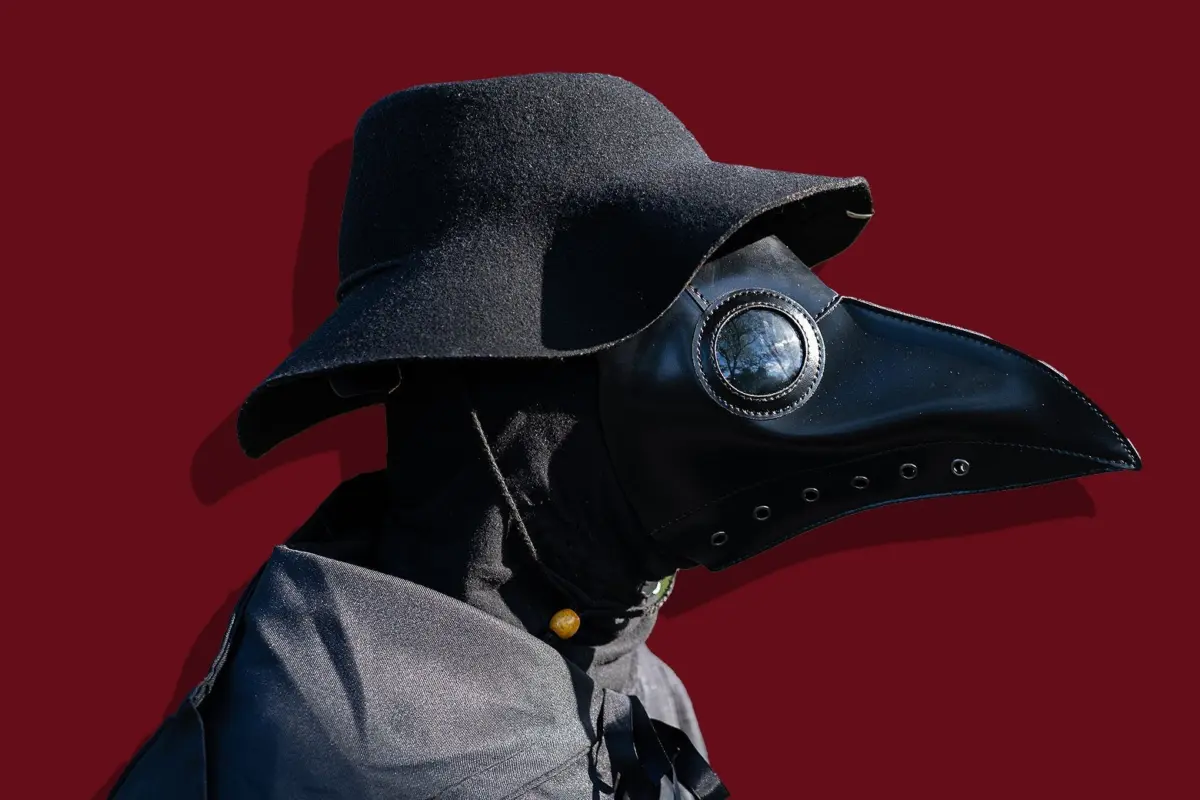
Much of the word’s modern terror stems from historical education regarding the "Black Death" of the 14th century. During the 1340s, the bubonic plague swept across Europe, decimating an estimated one-third of the continent’s population—roughly 25 million people. The cultural memory of mass graves, societal collapse, and the iconic, terrifying beaked masks worn by 17th-century plague doctors (stuffed with aromatic herbs to ward off "bad air") forged an indelible link between the word and absolute catastrophe.
Biblical and Supernatural Roots
Long before the science of microbiology identified bacteria, plague was shorthand for divine retribution. The biblical account of the 10 plagues of Egypt—ranging from rivers turned to blood to plagues of locusts and the death of the firstborn—associated the term with inescapable, supernatural wrath.
During the medieval era, observing healthy individuals struck down rapidly by an invisible, untreatable force reinforced the perception of a demonic affliction. Over centuries, the term transcended its specific biological definition to become a linguistic catch-all for any rapidly spreading, highly lethal infectious disease. Phrases like "avoid him like the plague" or "I caught the plague last weekend" demonstrate how deeply the concept is wired into our cultural vocabulary as a synonym for horror.
The COVID-19 Shadow
The psychological weight of the Siberian incident is also amplified by our recent collective trauma. While COVID-19 was caused by a novel coronavirus rather than a bacterium, it functioned as a modern plague. Claiming more than 7 million lives globally, the pandemic forced societies into lockdowns, filled hospital corridors beyond capacity, and revived haunting practices like masking, isolation, and dying alone. Colloquially and emotionally, the world has just lived through a plague, making any news regarding mysterious lethal outbreaks instantly resonant.
Official Statements and Epidemiological Analysis
From an epidemiological perspective, health experts have urged calm, explaining why an outbreak of Yersinia pestis in Siberia is highly unlikely to cascade into a global catastrophe.
Why Epidemiologists Aren’t Panicking
- Effective Countermeasures: We possess rapid diagnostic tests and highly effective antibiotic treatments that render the disease curable if caught early.
- Limited Contagiousness: Unlike airborne viruses such as measles—where a single infected person can leave a room and infectious particles can linger in the air for hours—the plague requires sustained, close contact for transmission, even in its pneumonic form. Casual proximity is generally insufficient for infection.
- Rapid Symptom Onset: The plague progresses quickly, often producing severe symptoms within 24 hours of exposure. This rapid onset limits the window of opportunity for an asymptomatic carrier to travel undetected, contrasting sharply with pathogens like hantavirus, which can feature an incubation period of up to 42 days.
The Biosecurity Dilemma: What Is Russia Up To?
If the public health risk is virtually zero, why are experts sounding alarms? The answer lies in the institutional context. The presence of actionable Yersinia pestis strains inside a research facility in Siberia revives long-standing anxieties regarding state-sponsored biological weapons programs.
Pneumonic plague has historically been studied by military and defense agencies worldwide—including by the former Soviet Union’s extensive offensive bioweapons program—for its potential utility as an aerosolized bioweapon. If a laboratory strain were accidentally released, or worse, genetically manipulated to exhibit resistance to standard first-line antibiotics, the implications for biosafety would be severe.
However, biosecurity analysts emphasize a crucial distinction: It is the job of intelligence agencies and biosecurity experts to worry about worst-case scenarios, but that anxiety should not automatically transfer to the general public.
As epidemiologists noted in recent expert analyses, the probability of this localized laboratory incident posing any threat to populations outside Russia—including the United States—is "essentially nil." The pressing questions surrounding the event are geopolitical rather than medical: Will Moscow permit independent international oversight? What protocols failed inside the Siberian facility? And what research parameters were being actively pursued behind closed doors?
Future Outlook
As the investigation into the Siberian laboratory incident continues, the global health community remains watchful—not out of fear of an imminent global pandemic, but out of a demand for institutional transparency.
The convergence of high-containment biological research, geopolitical opacity, and historical panic creates an environment where misinformation thrives. Moving forward, international bodies like the WHO will continue pressing Russian authorities for transparent data regarding the exact strain involved, the nature of the laboratory protocols in place at the time of the incident, and confirmation of containment efficacy.
Ultimately, the real takeaway from the Russia plague case is not a warning about an ancient bacterium breaking loose to conquer the modern world. Instead, it is a sobering reminder that as biotechnology advances, the greatest risks to global health may stem not from nature itself, but from the secure containment, oversight, and integrity of the human laboratories designed to study it.