Executive Overview
In an era dominated by curated digital lives, hyper-individualism, and fleeting virtual connections, a striking counter-narrative is playing out on the sunbaked asphalt and glittering coastline of Marseille, France. Here, far from the algorithmic echo chambers of social media, a tight-knit collective of young men is living out a masterclass in organic community building. Comprising Ismael—widely known as Bako—alongside Fares, Mohamed, and Sheri, this diverse group represents a cross-section of modern European society. Hailing from vastly different social, economic, and cultural backgrounds, they have forged an unbreakable bond that defies traditional definitions of family.
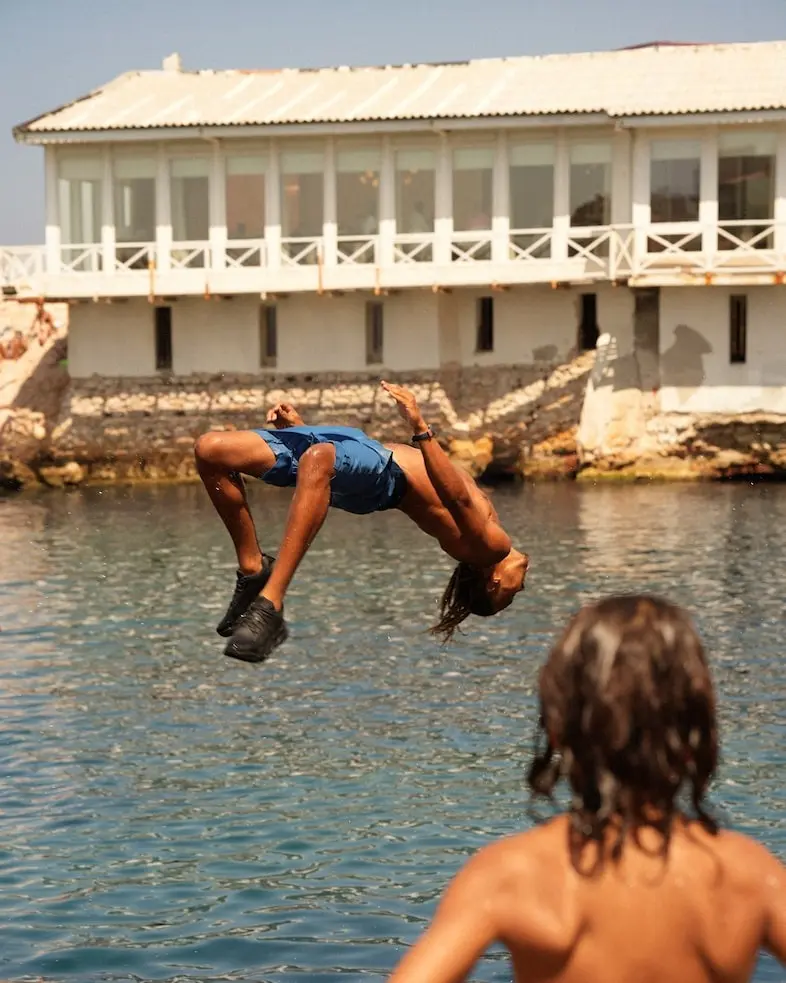
What began as random, fleeting encounters at local skate parks, neighborhood corners, and Mediterranean beaches has evolved into an unshakeable kinship. Their daily existence reads like a cinematic reel: a green dirt bike revs down a sun-drenched boulevard; a caravan of friends skateboards toward the ocean breeze; a figure launches into a joyful backflip, plunging into the glittering waves. Yet, unlike the mediated spectacles designed to trigger envy on Instagram stories, this is simply Tuesday for Bako and his peers.
This feature-length investigation explores the anatomy of their brotherhood, examining how the city of Marseille acts as a cultural crucible, how the group weathered severe health crises together, and how their strict communal ethos—encapsulated by Bako’s five golden rules of community—offers a blueprint for combating contemporary alienation. Part of Under Armour’s Rest Less initiative, which spotlights real-world collectives channeling restless energy into tangible human connection, this story asks a fundamental question: What does it truly mean to live a shared life in the 21st century?
Detailed Chronology: From Strangers to Kinfolk
The formation of the Marseille collective was neither planned nor orchestrated by institutional programs or social media algorithms. Instead, it was born out of the spontaneous friction and fluid dynamics of urban life in France’s oldest and most vibrant port city.
Phase 1: The Incidental Crossings
The early chapters of the group’s history are defined by proximity and coincidence. Long before they shared meals, secrets, or hardships, Bako, Fares, Mohamed, and Sheri orbited the same geographic coordinates. Marseille—a city characterized by its steep hills, labyrinthine alleyways, and sprawling coastline—naturally funnels its youth into specific cultural hubs. Skate parks perched above the Mediterranean, neighborhood basketball courts, and sun-drenched sea walls served as the initial intersections where these strangers first crossed paths.
"The start of a friendship can be spontaneous; you never know when a chance encounter with a stranger could turn into something much more," reflects Bako. In these early days, interactions were casual nods, shared sessions on a half-pipe, or fleeting conversations while waiting out the afternoon heat. None of them could have anticipated that these casual acquaintanceships would slowly, imperceptibly cement into a lifelong bond.
Phase 2: The Crucible of Shared Space
As weeks turned into months, the frequency of these encounters bred familiarity, and familiarity bred trust. The group began to formalize their hangouts, transitioning from accidental meetings to deliberate gatherings. They discovered that despite their diverging socioeconomic backgrounds and cultural upbringings, they shared a common rhythm.
Marseille itself acted as an active participant in this evolution. As a historic melting pot of Mediterranean cultures, the city functions as a demographic crossroads where diverse walks of life inevitably collide.
"Marseille has influenced our relationship as a group because the city allowed all of us to meet even though our lives are all very different," Bako explains. "It’s like a checkpoint that brings people together, no matter where they come from."
Within this urban checkpoint, the group began shedding the superficial markers of identity that often divide modern youth. They weren’t defined by their zip codes, their family incomes, or their educational tracks. Instead, they were defined by the shared asphalt beneath their skateboards and the salt water on their skin.
Phase 3: Testing the Bond—Health, Hardship, and Loyalty
True kinship is rarely tested in times of leisure; it is forged in the fires of adversity. For Bako and his friends, the ultimate test of their collective resilience arrived not on a skate ramp or a motorcycle ride, but in the sterile, high-stakes environment of a hospital ward.
When Bako faced a series of severe, life-interrupting health complications, the abstract concept of brotherhood was put under a magnifying glass. In moments of profound vulnerability, when institutional support systems often falter, the collective rallied around him with absolute constancy. Fares, Mohamed, and Sheri didn’t just offer distant well-wishes; they integrated themselves into his recovery, showing up consistently when the cameras were off and the daily grind turned heavy.
"They never stopped being there for me throughout that difficult time," Bako recalls, emotion evident in his voice. "Today I’m happy to be surrounded by them." This harrowing chapter transformed their friendship from an organic social circle into an unassailable sanctuary. They learned firsthand that their community was built to withstand the worst of life, not just celebrate the best of it.

Supporting Context & Metrics: The Architecture of Urban Collectivism
To understand the resonance of the Marseille group, one must examine the socio-cultural landscape of contemporary urban youth. Sociological studies across Western Europe increasingly point to a disturbing paradox: while young people are more digitally connected than any generation in history, rates of chronic loneliness and social alienation have skyrocketed.
The Loneliness Epidemic vs. The Organic Collective
According to European youth mental health barometers, over 40% of urban residents aged 18–25 report frequent feelings of isolation. The shift toward remote work, algorithmic entertainment, and digital-first socializing has hollowed out the traditional "third places"—the parks, community centers, and neighborhood hangouts that once fostered spontaneous human interaction.
Against this bleak statistical backdrop, collectives like Bako’s act as radical anomalies. Operating on what cultural theorists term an "abundance mindset," these informal groups reject the zero-sum competition fostered by modern social media platforms. Where digital culture encourages personal branding, self-optimization, and curated envy, the Marseille crew practices radical sharing.
The Economics of "The 5-5 Mentality"
At the core of the group’s philosophy is a principle they call the "5-5 mentality." Far more than a casual slang term, it represents an economic and emotional framework for communal survival in a precarious world.
In practical terms, the 5-5 mentality dictates absolute resource pooling:
- Asymmetry of Possessions: If one member possesses a resource (whether financial, material, or emotional) and another does not, that resource belongs to the collective.
- Collective Deficit: If neither member possesses what is needed, they strategize and problem-solve as a unified front.
- The Nourishment Rule: "When one person eats, everyone eats." This maxim applies universally to food, shelter, opportunities, and psychological support.
This mindset directly counters the hyper-capitalist ethos that permeates modern youth culture. By prioritizing collective welfare over individual accumulation, Bako and his friends have constructed a micro-economy of care that shields them from the precarity of modern urban life.
Bako’s Rules for Sticking Together as a Community
During their collaboration with Under Armour’s Rest Less campaign, the group articulated the foundational tenets that keep their community anchored. These five rules serve as an informal constitution for their brotherhood, offering profound insights into how modern collectives can maintain longevity and trust.
+-----------------------------------------------------------------+
|               BAKO’S FIVE RULES OF COMMUNITY                    |
+-----------------------------------------------------------------+
| 1. NEVER LIE        -> Trust is the structural load-bearing wall|
| 2. STICK TOGETHER   -> No jumping out of the moving car         |
| 3. LAUGHTER         -> Organic joy as a baseline requirement    |
| 4. MOVE FORWARD     -> Mutual elevation over individual ego     |
| 5. SHARING          -> The 5-5 Mentality: "When one eats, all"  |
+-----------------------------------------------------------------+
1. Never Lie
"We’re a family, and we trust each other. As we say: ‘A lie takes the elevator, and the truth takes the stairs.’"
In a world saturated with misinformation, filtered identities, and digital facades, absolute transparency is treated by the group as a structural load-bearing wall. Deception, no matter how minor, introduces friction into a collective operating at high velocity. By committing to radical honesty, the group eliminates the paranoia and second-guessing that plague conventional social circles.
2. Always Stick Together
"Despite the ups and downs, we stay in the same car, and nobody jumps out while we’re on the road."
Modern friendships are notoriously disposable; the friction of disagreement often leads to swift ghosting or social excommunication. Bako’s second rule rejects this throwaway culture. The members pledge structural permanence. Disagreements, financial strains, and personal flaws are navigated through internal conflict resolution rather than abandonment.
3. Laughter
"Honestly, when we’re together, we do not even have to try."
While the group takes their mutual survival and emotional support seriously, they recognize that joy is the glue of endurance. Laughter is not treated as a byproduct of their friendship, but as a deliberate practice. In the sun-bleached streets of Marseille, humor acts as an antidote to systemic stress, economic anxiety, and the general weight of coming of age in the 2020s.

4. Move Forward Together
"For us, we like to lift each other up so that we can move forward together and see each other grow."
Traditional ambition is inherently competitive—one person climbs the ladder by stepping over another. The Marseille collective subverts this by practicing collaborative mobility. If one member secures a new opportunity, develops a skill, or achieves a personal milestone, it is framed as a victory for the entire unit. Individual success is weaponized to pull the rest of the crew upward.
5. Sharing (The 5-5 Mentality)
"This is the most important one. The 5-5 mentality. It means that if I have something and you don’t, we have it. If you have something and I don’t, we have it. And if neither of us has it, we figure it out. In our family, when one person eats, everyone eats."
Culminating in their ultimate philosophy of radical resource redistribution, this rule ensures structural equity within the group. By abolishing the concept of private hoarded wealth among friends, they create a safety net far more reliable than any institutional welfare program.
Official Statements and Cultural Impact
The resonance of the Marseille collective extends far beyond local skate parks. By partnering with global brands like Under Armour for the Rest Less campaign, Bako, Fares, Mohamed, and Sheri have inadvertently become spokespeople for a broader cultural pivot: a generation-wide yearning to escape the screen and re-engage with the physical world.
In an official statement accompanying the campaign rollout, creative directors noted that the group was chosen not for their marketability, but for their authenticity:
"These young men are not performing a lifestyle for a camera lens; they are living out a philosophy of mutual care that society has largely forgotten. Their restless energy is channeled outward toward community building, rather than inward toward digital validation. They represent the antidote to modern isolation."
Cultural critics have echoed these sentiments, pointing out that movements like the Marseille collective signal a grass-roots rebellion against the atomization of urban populations. As housing costs rise, economic security dwindles, and institutional trust plummets, young people across Europe are increasingly turning to tribal models of mutual aid. The brotherhood shared by Bako and his peers demonstrates that survival in the modern city is not an individual sport, but a collaborative art form.
Future Outlook: Sustaining the Momentum
As Bako, Fares, Mohamed, and Sheri look toward the horizon, the question facing their collective is one of scalability and longevity. How do informal brotherhoods maintain their purity and intimacy as members grow older, pursue careers, start families, and navigate the inevitable centrifugal forces of adulthood?
The members remain remarkably clear-eyed about these challenges. They harbor no illusions that life will remain a perpetual loop of motorcycle rides, skateboarding sessions, and ocean swims. Jobs will demand relocation; financial pressures will shift; personal responsibilities will multiply. Yet, they maintain that the underlying infrastructure of their bond—grounded in the five rules and the 5-5 mentality—is designed to adapt rather than break.
"We aren’t holding onto a moment in time; we’re building a foundation for life," Bako asserts as the afternoon sun begins to dip below the Marseille skyline, casting long shadows across the concrete.
In a cultural landscape obsessed with fleeting trends and algorithmic virality, the story of these four Marseille friends offers a timeless, defiant reminder: real life cannot be downloaded, curated, or automated. It must be built by hand, shared in real-time, and guarded fiercely by those willing to take the stairs instead of the elevator. If you know, you know—and if you don’t, the blueprint is waiting in the streets of Marseille.