Executive Overview
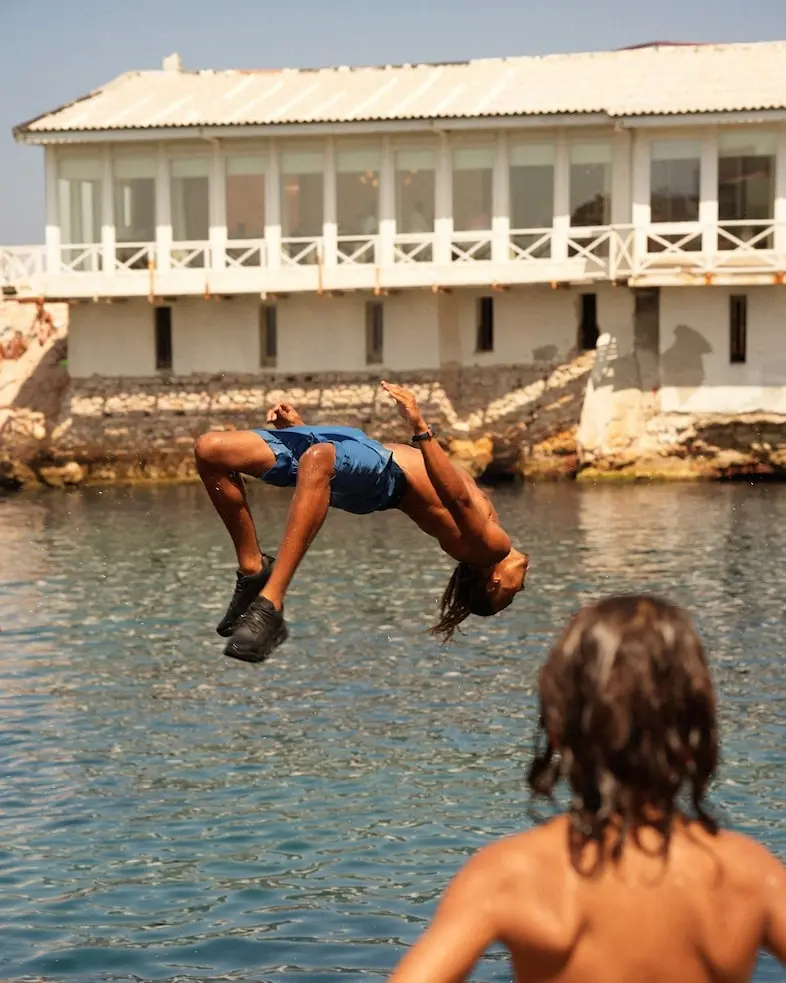
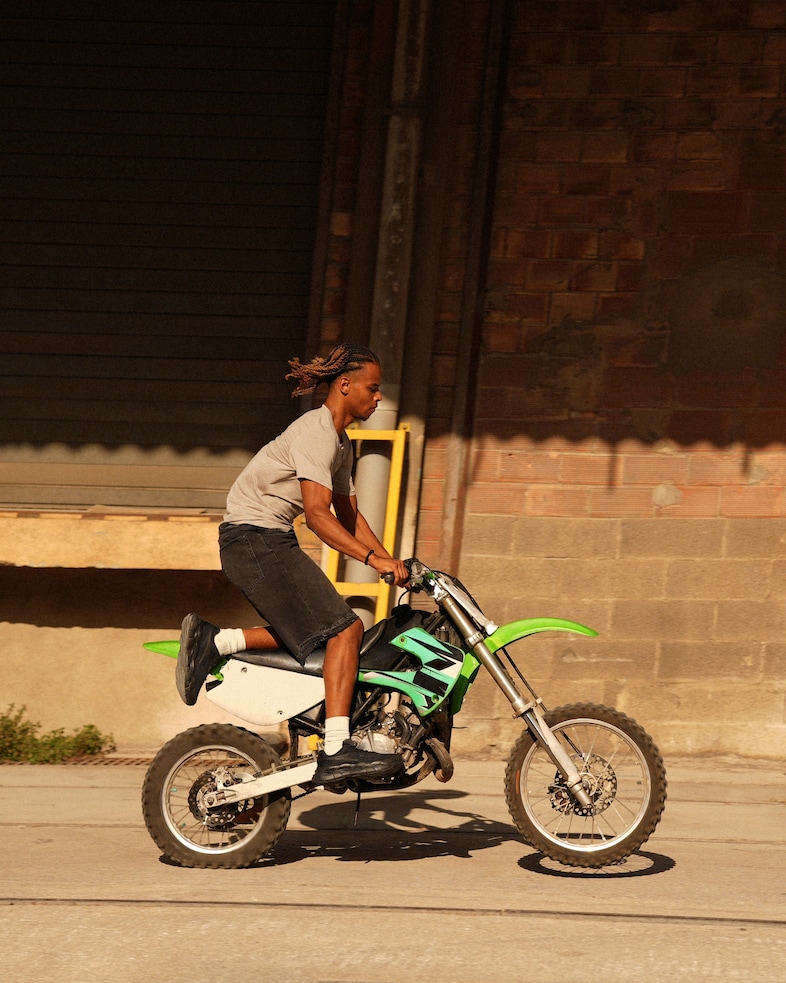
In an era defined by hyper-curated digital personas, algorithmic validation, and fleeting online interactions, a group of young men in the sun-drenched coastal city of Marseille is proving that authentic human connection cannot be replicated through a screen. For Ismael (widely known as Bako), Fares, Mohamed, and Sheri, the idyllic vignettes flashing across Instagram stories—a green dirt bike revving down a sunbaked avenue, skateboards clattering against concrete as friends race toward the Mediterranean, a joyful backflip executed into glittering, azure waves—are not carefully staged content creations. They are simply Tuesday.
Hailing from a diverse tapestry of socio-economic and cultural backgrounds, this tightly knit collective has forged a bond that transcends the traditional boundaries of friendship, evolving into something closely resembling kinship. In a sociological landscape often fractured by division, economic disparity, and the isolating pressures of modern urban life, Bako and his peers have cultivated an ecosystem rooted in radical transparency, mutual accountability, and an unshakeable community-first ethos.
This feature explores the anatomy of their brotherhood, examining how the unique topography and cultural crossroads of Marseille catalyzed their union, how they weathered profound personal crises together, and the operational code of conduct—or "rules of the road"—that allows them to thrive in a world increasingly hostile to collective solidarity. Brought to light as part of Under Armour’s Rest Less initiative, which spotlights real-world collectives channeling restless energy into tangible community building, their story offers a masterclass in living life to its absolute fullest.
Detailed Chronology: The Evolution of a Modern Brotherhood
The Convergence: Strangers in the Urban Landscape
The genesis of any profound relationship is inherently unpredictable, a delicate collision of timing, geography, and sheer serendipity. For Bako and his companions, the journey from absolute strangers to foundational pillars in each other’s lives did not happen in a boardroom, a classroom, or through a dating application. It occurred organically across the urban sprawl of Marseille—at the local skate park, along the pebbled shores of the Mediterranean, and on the sun-bleached street corners of their respective neighborhoods.
Initially, their paths crossed in passing. One might be waxing a skateboard deck while another watched from a nearby bench; a nod of acknowledgment would eventually blossom into casual conversation, which later deepened into shared afternoons and evening excursions. Over time, the boundaries between individual social circles dissolved. What began as intermittent hangouts solidified into a daily routine.
Crucially, this convergence happened across starkly differing social and cultural strata. In many major metropolitan areas, demographic divides act as invisible walls, segregating youth into rigid echo chambers. Marseille, however, functioned differently. Its complex social fabric acted as an equalizer, throwing individuals from varied walks of life into the same geographic and cultural melting pot. Without conscious design, these chance encounters laid the foundation for an urban family—one forged not by shared ancestry or identical bank accounts, but by a mutual hunger for authenticity, freedom, and mutual support.
Testing the Bonds: Crisis and Resilience
A brotherhood built exclusively on fair-weather revelry—on sun-soaked motorcycle rides and carefree ocean dips—is structurally fragile. True kinship is invariably measured by its load-bearing capacity when the weather turns foul. For Bako’s collective, this ultimate stress test arrived not as a theoretical exercise, but as a severe medical crisis.
When Bako faced a series of alarming and serious health complications, the vulnerability of his situation could easily have fractured a casual friendship group. Instead, the collective mobilized with immediate, instinctual solidarity. The everyday rhythms of skating and cruising were temporarily deprioritized, replaced by hospital visits, logistical support, and a constant, reassuring presence at Bako’s side.
"They never stopped being there for me throughout that difficult time," Bako reflects, looking back on the period with profound gratitude. In moments of acute physical and psychological distress, the psychological weight of isolation is often heavier than the illness itself. By refusing to let him navigate the crisis alone, Bako’s friends cemented a bond that extended far beyond the carefree optics of youth culture. It was proof positive that their commitment to one another was absolute, unconditional, and anchored in deep-seated loyalty.
Supporting Context & Metrics: The Sociological Landscape of Marseille
To fully appreciate the weight of the collective’s achievements, one must examine the unique socio-cultural ecosystem of Marseille itself. As France’s second-largest city and its oldest port, Marseille has historically functioned as a historic gateway between Europe, North Africa, and the wider Mediterranean basin.

The Urban Melting Pot as a Catalyst
Sociologically, Marseille presents a complex paradox. It is celebrated for its vibrant multiculturalism, breathtaking coastline, and gritty, bohemian charm. Simultaneously, like many major European port cities, it grapples with socio-economic disparities, spatial segregation, and structural challenges that disproportionately impact urban youth.
Yet, it is precisely this friction that makes Marseille such a fertile ground for alternative community building. Urban geographers and cultural anthropologists have long noted that cities with intense socio-economic contrasts often foster hyper-resilient subcultures. The public spaces of Marseille—its concrete Plazas, public beaches, and winding stairwells—function as democratic arenas.
| Metric / Factor | Marseille Urban Context | Impact on Youth Collectives |
|---|---|---|
| Demographic Diversity | High concentration of diverse immigrant and local lineages | Fosters cross-cultural pollination and shared subcultural identifiers (skate, music, moto culture) |
| Public Infrastructure | Abundant open coastline, skate parks, and urban plazas | Acts as physical "checkpoints" facilitating chance encounters across social divides |
| Socio-Economic Pressure | Notable economic disparities and employment hurdles | Strengthens reliance on peer-to-peer solidarity, resource sharing, and informal support networks |
As Bako aptly describes it, Marseille acts as "a checkpoint that brings people together, no matter where they come from." The city’s physical architecture—its open plazas, coastal walkways, and accessible recreational zones—forces intersections between lives that might otherwise run on entirely parallel, non-intersecting tracks.
The Psychology of the "Abundance Mindset"
In an era dominated by hyper-individualism and late-capitalist competition, youth culture is frequently co-opted by narratives of personal branding, hustle culture, and zero-sum games. Every individual is quietly encouraged to view their peers as competitors for scarce attention, likes, and resources.
Bako and his friends actively reject this premise, operating instead from what psychologists and sociologists term an abundance mindset. Rather than hoarding social capital, emotional availability, or material resources, they treat community health as a collective asset. When one member succeeds, the elevation is felt by all; when one falters, the collective absorbs the impact. This worldview transforms leisure activities—such as riding dirt bikes or swimming—from mere acts of consumption into rituals of communal bonding and shared liberation.
Official Statements & Core Principles: Bako’s Rules for Sticking Together
The philosophical backbone of the Marseille collective is not left to chance. It is codified in a series of unwritten, highly internalized operational rules that govern how they interact with one another, resolve conflict, and sustain their community over the long haul. Below is the framework articulated by Bako and embraced by the group.
1. Never Lie
"We’re a family, and we trust each other. As we say: ‘A lie takes the elevator, and the truth takes the stairs.’"
Trust is the non-negotiable currency of any sustainable collective. In a world saturated with digital filters and deceptive self-presentation, the group maintains a zero-tolerance policy for deception among themselves. Acknowledging that truth can often be arduous—symbolized by taking the stairs rather than the frictionless elevator of falsehood—they prioritize radical honesty as the bedrock of psychological safety.
2. Always Stick Together
"Despite the ups and downs, we stay in the same car, and nobody jumps out while we’re on the road."
Life is inherently volatile, marked by unexpected economic squeezes, emotional turbulence, and personal crises. The collective operates under a strict pact of permanence. Abandoning a comrade when external circumstances become inconvenient or challenging is treated as a fundamental breach of the social contract. You stay in the vehicle, regardless of the terrain.
3. Laughter as an Antidote
"Honestly, when we’re together, we do not even have to try."
While the group takes its mutual responsibilities seriously, joy is treated as an essential nutrient rather than a frivolous byproduct. Spontaneous humor, shared laughter, and lightness of spirit serve as vital psychological shock absorbers, buffering them against the daily anxieties of urban existence.
4. Move Forward Together
"For us, we like to lift each other up so that we can move forward together and see each other grow."
Individual ambition is reframed through a collective lens. Personal milestones—whether securing employment, mastering a new skill, or overcoming a personal demons—are viewed as communal victories. Growth is neither hoarded nor competitive; it is collaborative.
5. Sharing: The 5-5 Mentality
"This is the most important one. The 5-5 mentality. It means that if I have something and you don’t, we have it. If you have something and I don’t, we have it. And if neither of us has it, we figure it out. In our family, when one person eats, everyone eats. And it applies to everything. We make sure that nobody is missing anything."
Perhaps the most radical tenet of the collective’s philosophy is the 5-5 mentality. This economic and emotional communism ensures absolute parity within the group. Resource scarcity is managed collectively. If one member secures a financial windfall or a surplus of food, it is immediately redistributed across the network. Conversely, if mutual destitution strikes, the group pooling their collective ingenuity to "figure it out." It is an uncompromising practical application of the ancient adage: when one person eats, everyone eats.
Future Outlook: Reclaiming the Real World
As cultural narratives increasingly lean toward virtual isolation, digital escapism, and the commodification of friendship, the story of Bako, Fares, Mohamed, and Sheri serves as a timely, grounding counter-narrative. Their integration into Under Armour’s Rest Less campaign underscores a growing cultural appetite for authenticity—a hunger to witness real human beings manifesting physical energy, loyalty, and passion in the physical world.
Looking ahead, the challenges facing urban youth in Europe and beyond remain formidable. Economic precarity, housing pressures, and systemic hurdles are not vanishing anytime soon. Yet, armed with the 5-5 mentality, an abundance mindset, and an unshakeable commitment to radical honesty and mutual care, the Marseille collective demonstrates that alternative models of living are entirely possible.
They are not waiting for institutional permission, governmental reform, or algorithmic approval to build the world they want to inhabit. Instead, they are carving it out of the asphalt of Marseille—one shared motorcycle ride, one honest conversation, and one sunlit wave at a time. For those fortunate enough to witness it, the message is clear: escape the algorithm, seek out your people, and remember that true wealth is measured entirely by who is standing beside you when the road gets steep.