Executive Overview
On a Monday afternoon in April 2023, the media landscape shifted on its axis. Fox News made the bombshell announcement that its premier primetime anchor and right-wing populist figurehead, Tucker Carlson, was out at the network. While media executives scrambled and political commentators across the spectrum parsed the fallout, Katherine Abughazaleh—known to hundreds of thousands of online followers simply as "Kat Abu"—was glowing.
Speaking over a video chat just hours after the news broke, the 24-year-old senior video producer for the progressive media watchdog group Media Matters for America made no attempt to conceal her jubilation. “I’ve been very joyful today,” she remarked, capturing the collective mood of her digital community. “I feel like everyone’s just having a fun day.”
For Abughazaleh, Carlson’s departure represented more than just a corporate shakeup; it was a monumental milestone in a career defined by cataloging, analyzing, and dismantling right-wing media narratives. By day, she anchors herself to a laptop in a sprawling, semi-vacant Washington, D.C. office, meticulously clipping and logging the most incendiary moments of Fox News’s evening programming. By night, she transforms those transcripts and video feeds into viral, bite-sized social media content that bridges the gap between media accountability and internet culture.
In doing so, Abughazaleh has carved out a unique space in modern political discourse. She is part investigator, part digital satirist, and part lightning rod. Her rise highlights a shifting generational dynamic: while traditional cable news continues to age its audience through grievance politics and culture-war rhetoric, younger progressive commentators are leveraging platforms like TikTok and Twitter to reclaim the narrative, neutralizing the influence of primetime broadcasters one viral teardown at a time.
Detailed Chronology: The Anatomy of a Digital Counter-Offensive
The Daily Grind: Inside the Media Watchdog Operation
Two weeks prior to Carlson’s sudden ouster, a visit to the Media Matters for America headquarters in the Navy Yard district of Washington, D.C., revealed the meticulous architecture behind Abughazaleh’s work. Overlooking the Anacostia River, the expansive office space reflects the post-pandemic reality of modern media organizations—equipped with open-seating layouts and large conference rooms, yet largely quiet as remote work remains the norm for most of the staff.
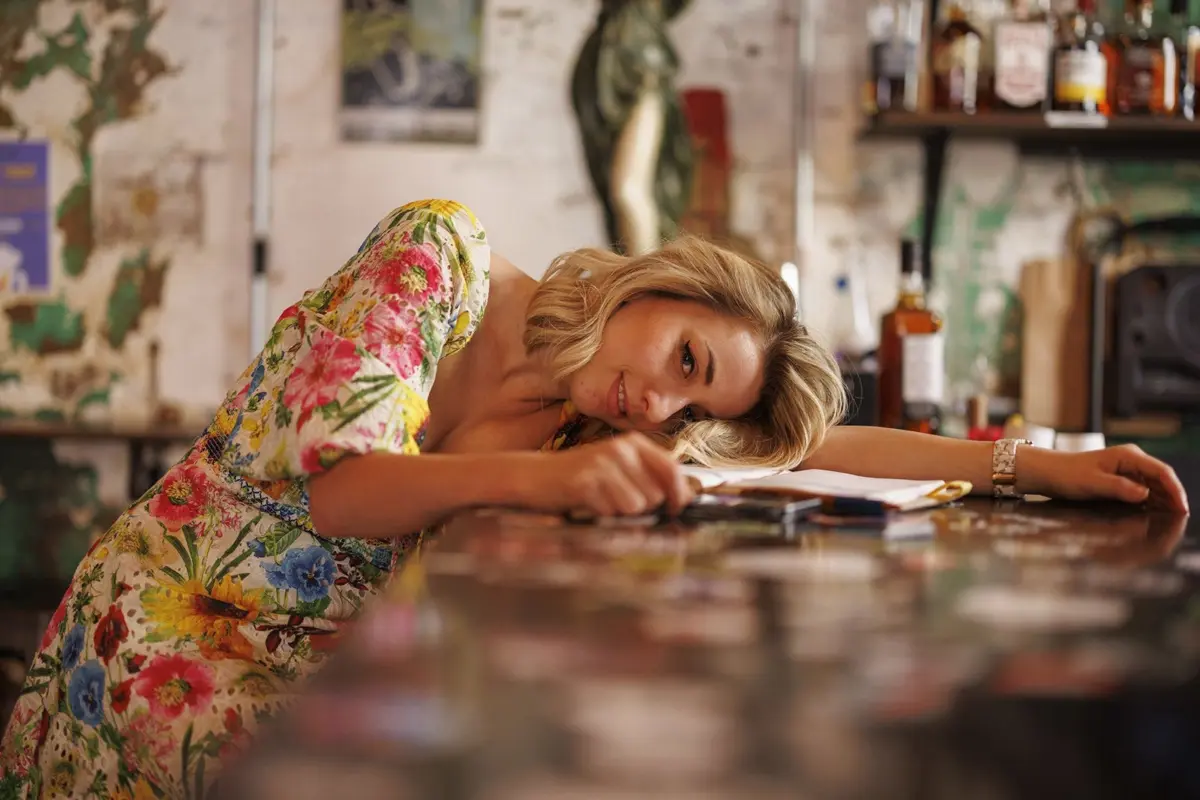
Abughazaleh, petite with blonde hair and blue eyes, presents a striking visual irony. Sitting behind a single laptop rather than the multi-monitor command centers favored by some of her colleagues, she moves with lightning speed between browser tabs, drafting internal memos, firing off emails, and tracking the cascading fallout of conservative programming.
On the evening observed at the office, her primary target was Carlson’s opening monologue—specifically a segment targeting Tennessee state politician Justin Pearson. Exporting the clip with practiced ease, she offered a deadpan assessment of the broadcast: “Strong stuff—he’s having a normal one today.”
For critics who argue that watchdogs like Media Matters inadvertently amplify harmful rhetoric by redistributing it, Abughazaleh offers a pragmatic defense. “Fox is the most-watched cable news channel in the country,” she points out. “They already had the platform. And just letting them get by scot-free does more damage than it helps.”
The Side Hustle That Became a Movement
While Abughazaleh’s professional life is dedicated to tracking conservative media, her social media stardom is entirely a labor of independent creation. Operating outside the scope of her official employment, she writes, shoots, and edits her viral TikToks and YouTube deep-dives entirely on her own time.
Her editing skills trace back to her childhood as a self-described "lifelong anime fan" who taught herself video production to make anime music videos. Today, those skills are weaponized against political pundits. Since launching her TikTok presence in January, she has amassed nearly 130,000 followers, with multiple videos breaching the 1 million view threshold.
Her content catalogue reads as a masterclass in media deconstruction:
- The Debut: Her very first TikTok tackled Carlson’s on-air attacks against then-aspiring House Speaker Kevin McCarthy.
- The Compilation: A viral breakdown titled "10 Ridiculous Things That Made Tucker Carlson Throw a Tantrum."
- The Trump Interview: A critical skewering of Carlson’s April 12 exclusive interview with Donald Trump—their first televised encounter since leaked texts from the Dominion Voting Systems defamation lawsuit revealed Carlson calling the former president a "demonic force" and a "destroyer." In the video, Abughazaleh quipped: "Trump saw an opportunity to put Tucker back in his place, and boy did he take it… Trump rambling about something for five minutes and then pausing so Tucker can respond like a trained animal."
Her reach has since expanded to YouTube, where she has produced long-form investigations into right-wing commercial ventures, such as Mike Huckabee’s Christian nationalist homeschooling program and "Mammoth Nation," an online marketplace marketed as the "right-wing Amazon."
Supporting Context & Metrics: Navigating the Backlash
The Cost of Visibility: Misogyny, Harassment, and Trolls
As Abughazaleh’s digital footprint has expanded—surpassing 182,000 followers on Twitter—she has increasingly become a lightning rod for targeted harassment. The vitriol she receives goes far beyond standard political disagreement, frequently crossing into explicit misogyny, doxxing attempts, and violent threats.
Conservative commentators and online trolls have routinely attempted to weaponize her public persona. In January, right-wing musician and commentator Phil Labonte posted a screenshot of Abughazaleh’s Tinder profile to his followers, captioning it: "I haven’t even gotten the key to my apartment yet and tinder is already tryin to hook me up with the Media Matters Tucker Carlson explainer girl."
The resulting pile-on exposed Abughazaleh to an avalanche of abusive messages. Rather than retreat, she publicly shared a randomized selection of the explicit and threatening replies she received to illustrate the reality of internet harassment faced by women in public-facing roles. "These people are pathetic and though it’s gross, it’s also pretty funny/sad," she tweeted at the time.
The harassment also manifests in more bizarre ways. Internet trolls frequently engage in "snitch-tagging"—pulling benign photos from her personal accounts, such as an Instagram picture of her smoking, and tagging Media Matters’ corporate account in an effort to get her fired. "I love it," she remarks of these attempts. "Thanks for showing them what a great job I’m doing!"
More concerning are the graphic, sexually explicit threats and gender-based vitriol directed her way. Trolls frequently target her ethnicity and personal background—she is a seventh-generation Texan on her mother’s side and the granddaughter of a Palestinian immigrant—demanding she conform to traditionalist domestic roles.
To counter this, Abughazaleh deliberately leans into her femininity in her videos, applying bold makeup and styling her hair before recording. "It makes them even more mad," she notes. "They don’t like a woman telling them that everything they believe is bullshit."
The "Conservative Sleeper Agent" Background
Abughazaleh’s ability to decode right-wing rhetoric is rooted in her upbringing. Raised in an affluent area of Dallas within a conservative household, she was surrounded by traditional political machinery. Her maternal grandmother was a longtime member of the Texas Federation of Republican Women who worked on multiple GOP campaigns (an affiliation commemorated by the mink coat Abughazaleh inherited, which her grandmother wore to Richard Nixon’s inauguration).
Her political worldview shifted during her teenage years when her family moved to Tucson, Arizona. Encountering a high school student body where a large portion of students were low-income or undocumented immigrants, she witnessed firsthand the flaws in the political narratives she had grown up with. "The bootstrap myth just shattered before my eyes," she reflects.
After studying international security and journalism at George Washington University during the Trump administration, she graduated in 2020 seeking work aligned with her values. Media Matters proved to be the ideal fit.
Official Statements and Institutional Impact
While Media Matters maintains a strict organizational mission to monitor and correct conservative misinformation, Abughazaleh’s viral success remains an independent cultural phenomenon. The organization is acutely aware of the security risks associated with her online profile; publicist Laura Keiter notably intervened during interviews to ensure specific details regarding Abughazaleh’s residential location were omitted to protect her safety.
Despite the personal toll, the institutional impact of her work is measurable. Abughazaleh frequently receives messages from social media users thanking her for helping them de-escalate tensions with older family members radicalized by cable news.
"I see comments from people on TikTok saying, ‘I sent these to my mom, and now she’s decided to only watch Special Report With Bret Baier instead of Tucker Carlson Tonight.’ And that’s really great," she shares.
Future Outlook: Life After Tucker
The firing of Tucker Carlson marked the end of an era for cable news, but Abughazaleh views the event through a structural lens. In her assessment, the immense influence of the 8:00 PM primetime hour lies in the slot itself, not the individual anchor sitting in the chair.
Drawing a parallel to Bill O’Reilly—the powerhouse Fox News host forced out in 2017 whose cultural footprint rapidly diminished post-departure—Abughazaleh predicts a similar trajectory for Carlson. As Fox News experiments with a rotation of temporary hosts to fill the vacancy, she remains focused on the broader ecosystem of media manipulation.
Even if the misinformation industry were somehow dismantled and her role rendered obsolete, Abughazaleh would welcome the outcome. Until that day arrives, however, she will continue the work—monitoring the broadcasts by day, and translating them for a younger, digital-native generation by night.
As she frequently signs off her viral breakdowns: "I watch conservatives for work, but make fun of them for pleasure."