In an era dominated by hyper-individualism, digital isolation, and curated digital facades, a quiet sociological counter-revolution is playing out against the sunbaked backdrop of Marseille, France. Here, far from the algorithmic echo chambers of social media, a tight-knit collective of young men is living out a masterclass in modern community-building. Comprising Ismael (affectionately known as Bako), Fares, Mohamed, and Sheri, this diverse circle of friends navigates life with a rare, radical intimacy.
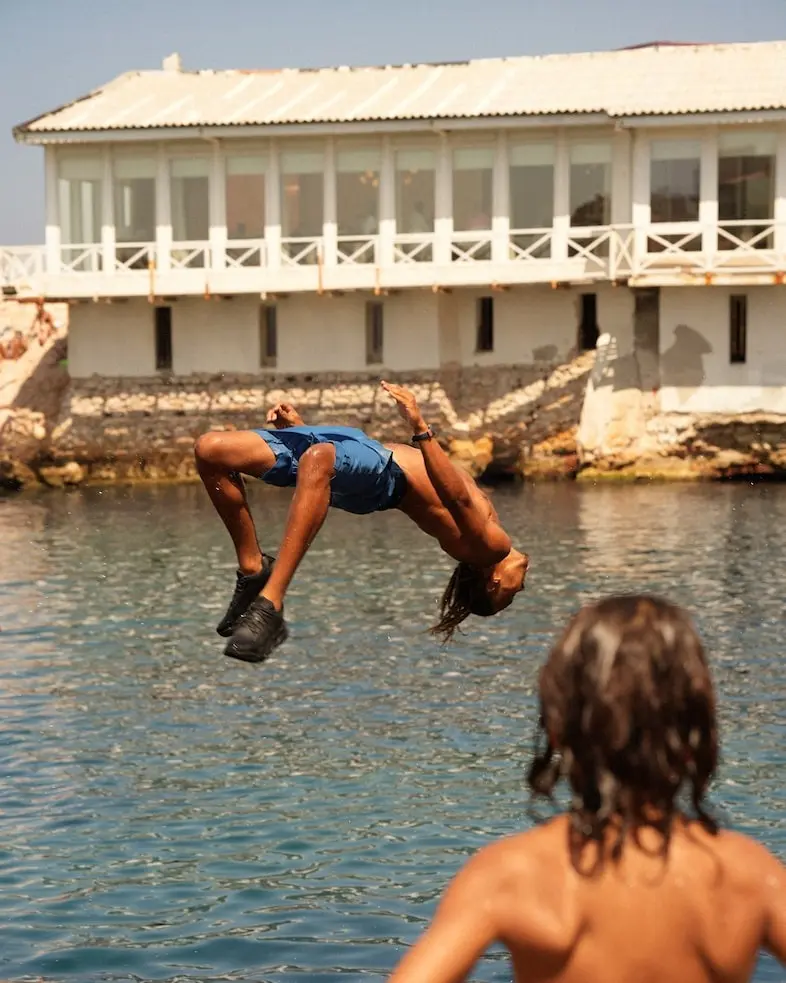
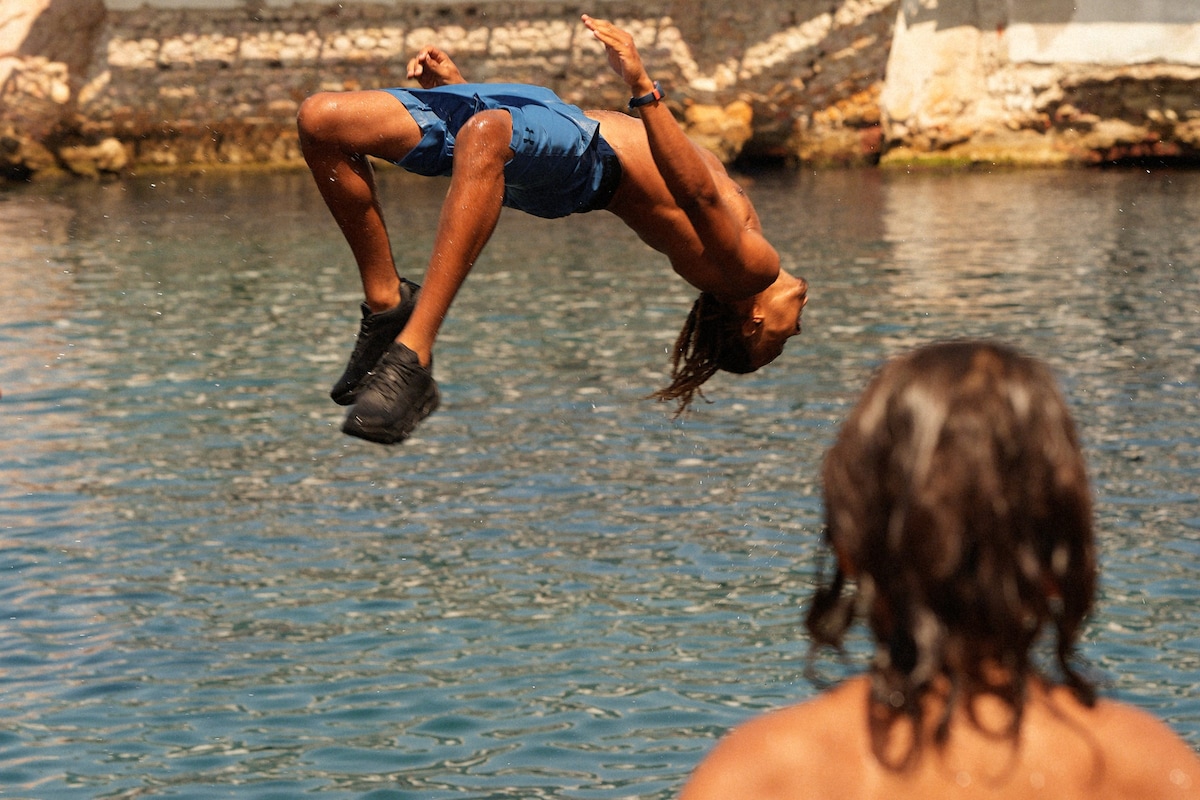
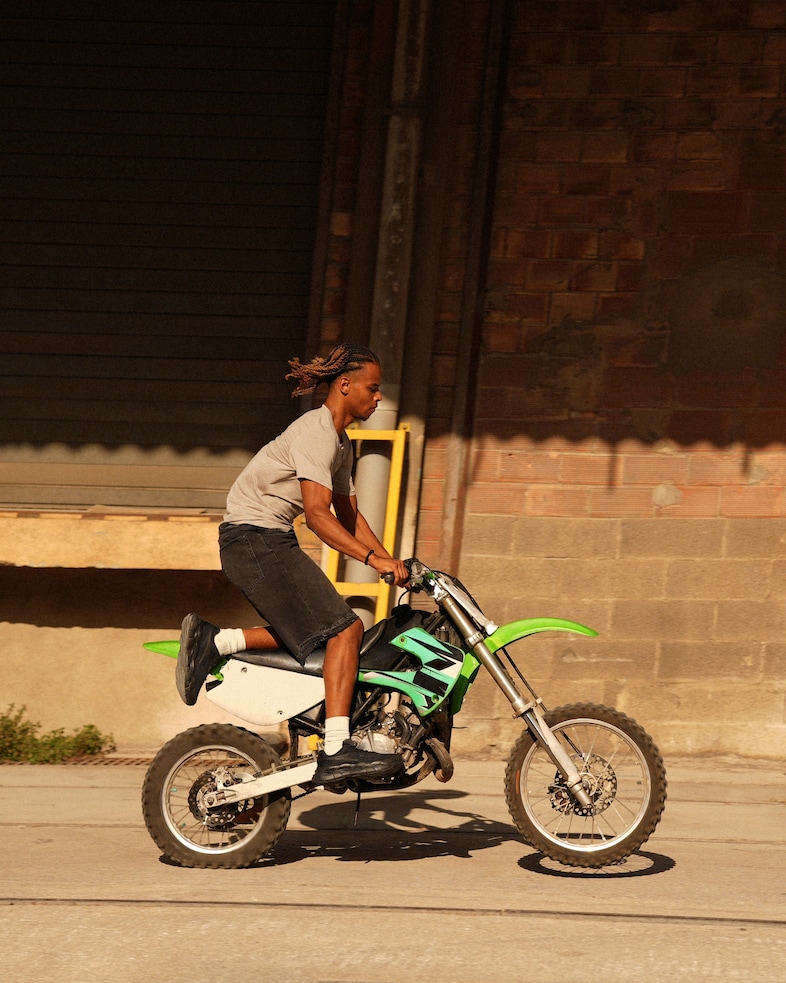
Their days are a montage of cinematic urban poetry: a green dirt bike revving down a coastal thoroughfare, skateboards clacking rhythmically against sun-bleached pavement, and bodies launching into backflips before breaking the surface of the glittering Mediterranean Sea. While such vignettes are typically engineered for double-taps and Instagram stories, for Bako and his peers, this is simply Tuesday.
However, beneath the picturesque surface lies a profound human narrative. Hailing from wildly divergent socio-economic and cultural backgrounds, these young men did not find each other through elite networks or institutional pipelines. They converged organically through the friction and flow of urban life—meeting at local skate parks, sandy stretches of Mediterranean beach, and neighborhood alleyways. Over time, their casual acquaintanceship crystallized into something far sturdier than mere friendship: a chosen family.
This feature-length investigation explores the anatomy of their bond, examining how Marseille serves as a unique crucible for cross-cultural unity, how the group weathered severe health crises, and what the rest of the world can learn from their foundational philosophy of collective survival and joy. As part of Under Armour’s Rest Less initiative—a series spotlighting collectives channeling restless energy into tangible, real-world community—this story serves as an authoritative blueprint for modern belonging.
Detailed Chronology: From Stranger to Kinship
The Accidental Convergence
The genesis of any profound relationship is often rooted in pure serendipity, but the formation of Bako’s circle feels almost novelistic in its cross-section of Marseille’s diverse demographics. In a port city renowned for its historical role as a Mediterranean gateway, populations constantly churn, collide, and mix. Yet, institutional divides often segregate youth by class, ethnicity, and geography.
Bako, Fares, Mohamed, and Sheri managed to breach these invisible urban boundaries. Their initial encounters were entirely unscripted. Bako recalls crossing paths with his future brothers at neighborhood skate parks—spaces that have historically functioned as egalitarian town squares for urban youth. Others joined the fold through chance encounters by the coastline or mutual acquaintances in local districts.
Rather than allowing their differing backgrounds to act as social deterrents, the group treated their diverse life experiences as complementary puzzle pieces. "Marseille has influenced our relationship as a group because the city allowed all of us to meet even though our lives are all very different," Bako reflects, characterizing the city as a grand crossroads. "It’s like a checkpoint that brings people together, no matter where they come from."
Testing the Metal: Crisis and Resilience
True community is rarely forged in moments of leisure; it is tempered in the fires of adversity. For Bako’s collective, the ultimate test of their solidarity arrived not during a sunny afternoon of skating or motorcycle riding, but during a period of acute personal vulnerability.
When Bako faced a series of severe, life-altering health problems, the fragility of modern friendships often defaults to emotional withdrawal or digital distance. Instead, Fares, Mohamed, and Sheri closed ranks around him. They transformed abstract notions of "brotherhood" into tangible, day-to-day care.
"They never stopped being there for me throughout that difficult time," Bako states, his voice carrying the weight of hard-earned gratitude. "Today I’m happy to be surrounded by them." This crisis served as a watershed moment for the collective, cementing the reality that their bond extended far beyond the romanticized aesthetics of youth culture and deep into the unglamorous trenches of human need.
Supporting Context & Metrics: The Sociology of Urban Collectives
To understand the resonance of Marseille’s youth culture, one must examine the socio-economic and architectural landscape of France’s second-largest city. Marseille is a city of sharp contrasts—pairing stunning natural geography with pockets of systemic economic disenfranchisement and high youth unemployment rates.
Sociological studies on European urban centers consistently highlight that marginalized youth populations frequently utilize public space—plazas, skate parks, and coastline boardwalks—as vital infrastructures for social support. Lacking institutional resources, these demographics construct informal mutual-aid networks.
The Economics of Belonging: According to recent urban sociology metrics across Mediterranean port cities, informal peer networks significantly buffer against the psychological toll of economic precarity.
The "Third Place" Phenomenon: Urban theorist Ray Oldenburg’s concept of "third places"—environments where people spend time between home and work—finds vibrant expression in Marseille’s open-air culture. For Bako and his friends, the skate park and the beach function as essential third places that democratize interaction across class lines.
The Antidote to Digital Isolation: Modern psychological data links heavy social media consumption to rising rates of loneliness. Conversely, collectives that prioritize "Real Life" (IRL) physical engagement, shared physical exertion (skating, swimming), and mutual vulnerability report exponentially higher markers of subjective well-being.
Official Statements & Core Philosophy: Bako’s Five Rules for Community
What separates a transient group of acquaintances from an enduring brotherhood? According to Bako, it is a strict, unwritten code of ethics centered on radical honesty, shared destiny, and absolute equity. Below is the foundational framework that governs the collective—a manifesto for anyone seeking to build authentic community in a fragmented world.
1. Never Lie
"We’re a family, and we trust each other. As we say: ‘A lie takes the elevator, and the truth takes the stairs.’"
Trust is the non-negotiable currency of the Marseille collective. In an environment where external pressures can be intense, internal transparency acts as a vital protective shield. By choosing the arduous climb of truth over the swift descent of deceit, the group eliminates the paranoia and friction that typically corrodes peer relationships.
2. Always Stick Together
"Despite the ups and downs, we stay in the same car, and nobody jumps out while we’re on the road."
Loyalty in the collective is treated as a binding contract. Life in Marseille—with its economic uncertainties and personal trials—inevitably brings turbulence. The group operates under a unified pact: when the ride gets rough, nobody abandons ship. Shared persistence is valued far above individual convenience.
3. Laughter as a Baseline
"Honestly, when we’re together, we do not even have to try."
While the group handles high-stakes emotional and physical challenges, their daily existence is anchored in levity. Joy is not viewed as a luxury to be earned after grueling labor, but as a fundamental fuel source. Their shared humor requires no performance; it is the natural byproduct of profound comfort and mutual understanding.
4. Move Forward Together
"For us, we like to lift each other up so that we can move forward together and see each other grow."
Hyper-competitive capitalist structures teach individuals to view peers as rivals in a zero-sum game. Bako’s crew operates on precisely the opposite frequency. Their ambition is collective. One person’s achievement or healing is experienced as a victory for the entire unit.
5. Sharing (The 5-5 Mentality)
"This is the most important one. The 5-5 mentality. It means that if I have something and you don’t, we have it. If you have something and I don’t, we have it. And if neither of us has it, we figure it out. In our family, when one person eats, everyone eats. And it applies to everything. We make sure that nobody is missing anything."
Perhaps the most radical tenet of the collective is their economic and emotional communism on a micro-scale. The "5-5 mentality" eradicates scarcity mindsets. Resources, food, shelter, and emotional bandwidth are pooled fluidly. It is an unapologetic rejection of modern individualism—a living, breathing proof-of-concept that collective care can supersede self-interest.
Future Outlook: Manifesting Restless Energy IRL
As part of Under Armour’s Rest Less campaign, the narrative of Bako, Fares, Mohamed, and Sheri transcends local geography, offering a timely cultural critique and a hopeful vision for the future.
In a cultural climate increasingly saturated by virtual avatars, remote work, and algorithmically mediated social lives, youth culture is experiencing a profound hunger for tangible authenticity. The future of grassroots community-building will likely look less like digital networking platforms and more like Marseille’s boardwalks—rooted in physical presence, shared spaces, and uncompromising mutual accountability.
For these four men, the path forward is clear. They are not chasing individual glory or seeking to monetize their bond for digital clout. They are simply living out an abundance mindset—making room for each other’s self-expression, feeding each other’s momentum, and proving that even in a complex and often hostile world, humanity’s most enduring instinct is to look out for one another.
As the sun sets over Marseille, casting a golden amber glow across the Mediterranean waves where they swim, dive, and laugh, Bako and his brothers stand as a testament to an eternal truth: if you know, you know. And for those who don’t, the blueprint has finally been laid bare.