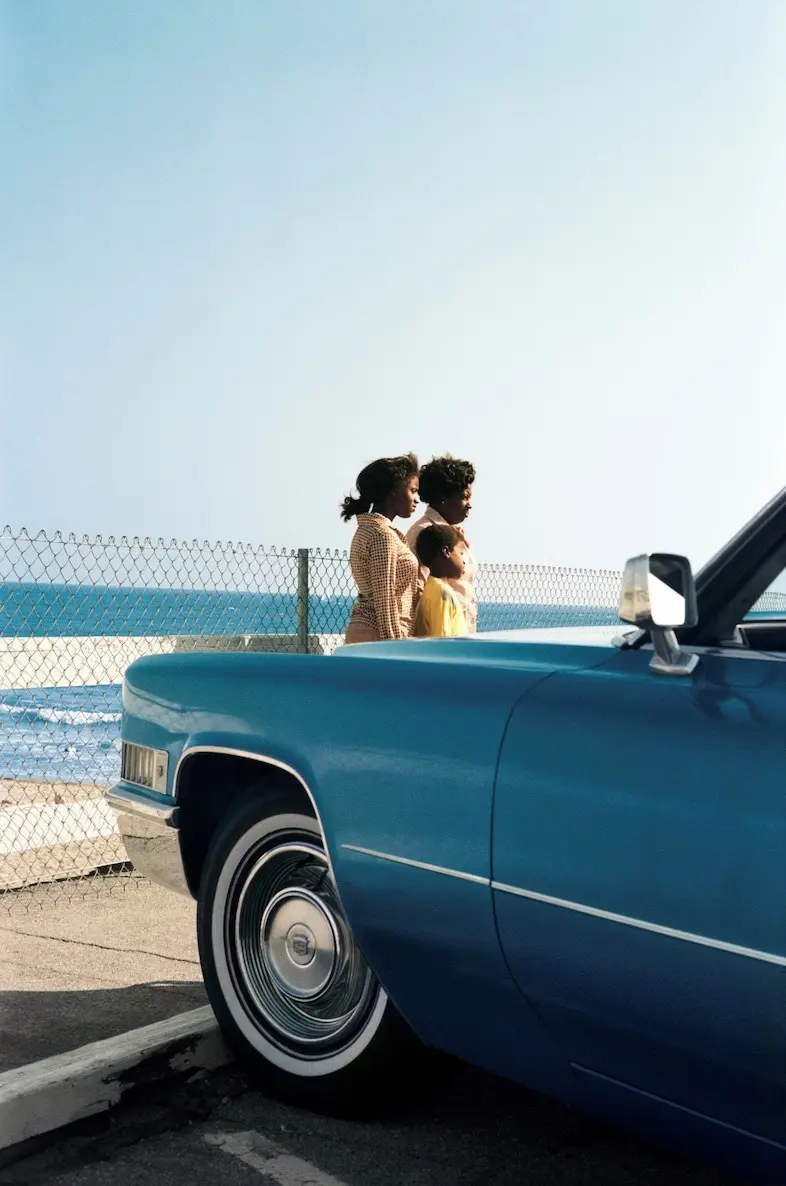
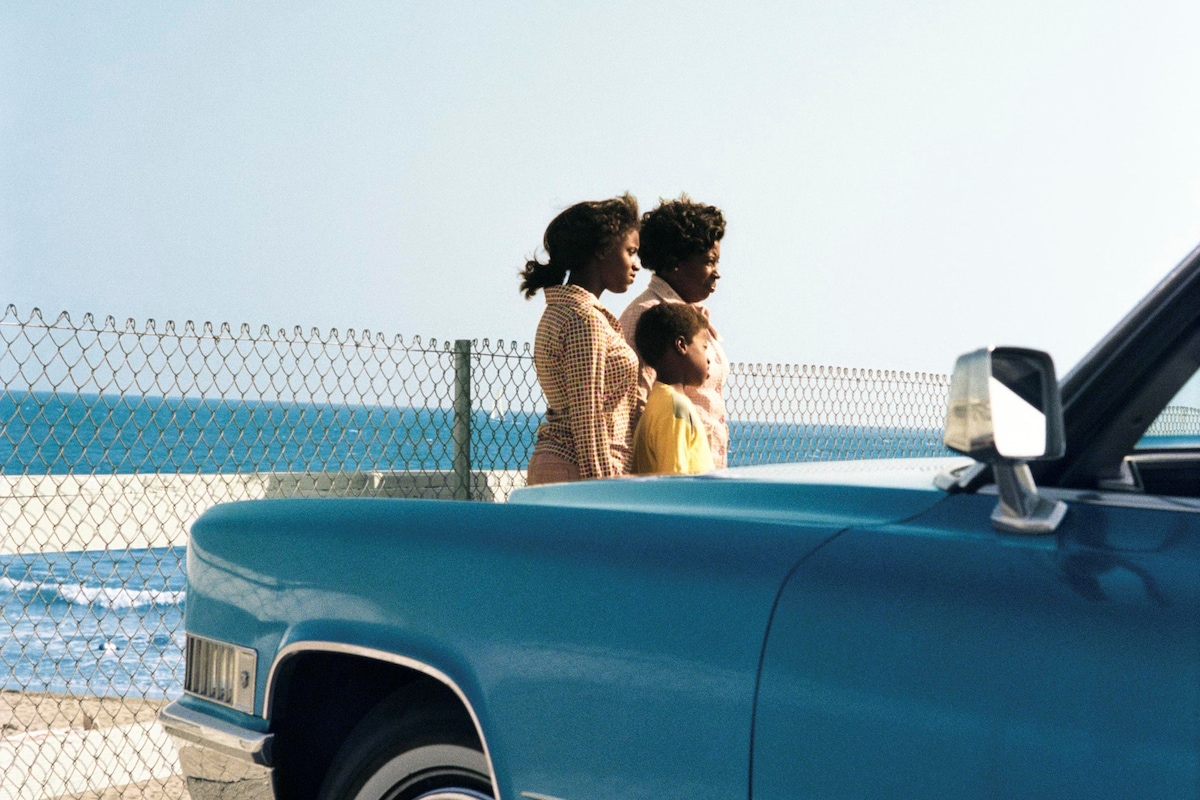
Few visionaries have recalibrated the trajectory of image-making as profoundly as William Eggleston. Operating at the intersection of high art, vernacular culture, and existential observation, the Tennessee-born photographer transformed the prosaic details of post-war America—rusting petrol stations, neon-lit diners, suburban lawns, and children’s tricycles—into a cinematic lexicon. Eggleston did not merely capture the world around him; through his idiosyncratic palette and radically egalitarian approach to composition, he recast it.
His aesthetic fingerprints are indelible across modern creative disciplines. The blue-hour melancholy of Sofia Coppola’s The Virgin Suicides, the uncanny, phantasmagoric interiors of David Lynch’s Twin Peaks, the unsparing intimacy of Nan Goldin’s photography, and the sun-drenched, roadside alienation captured by Gus Van Sant and Lana Del Rey all exist within a cultural lineage forged by Eggleston. Yet, this undisputed godfather of colour photography was not always met with critical acclaim. When the Museum of Modern Art (MoMA) in New York mounted Photographs by William Eggleston in 1976—its first-ever solo exhibition dedicated to colour photography—The New York Times scathingly dismissed it as the "most hated show of the year."
Half a century later, as The Photographers’ Gallery in London prepares to mount the major retrospective William Eggleston: All That Goes Unnoticed (running from October 14, 2026, to February 21, 2027), the cultural landscape looks entirely different. Bringing together both iconic and rarely seen dye-transfer prints, the exhibition offers an overdue re-examination of an artist who made a career out of waging war with the obvious. At 87 years old, Eggleston remains an elusive, chameleon-like figure—equally comfortable road-tripping through the Mississippi Delta with Juergen Teller and Harmony Korine or posing cigarette-in-hand for Marc Jacobs. This comprehensive profile unpacks his enduring mythology, charting his journey from institutional pariah to the apex of contemporary art.
Detailed Chronology: A Life in Frames
To understand William Eggleston is to trace a path through the shifting geographies of the American South, the avant-garde circles of 1970s New York, and the quiet, accidental moments that populate his oeuvre.
Roots in the Mississippi Delta and Early Influences
Born into a wealthy cotton-growing dynasty in Memphis, Tennessee, in 1939 and raised primarily in Sumner, Mississippi, Eggleston’s early life was marked by a privileged yet isolated upbringing. Eschewing the conventional hunting and sporting rites of Southern boyhood, he spent his youth sketching, listening to music, and clipping magazine pages. Stints at a military academy, Vanderbilt University, and the University of Mississippi yielded no formal degrees, but they cultivated a distinct interiority.
Encouraged by a friend early on to photograph the "ugly stuff," Eggleston turned his lens away from picturesque landscapes and toward the overlooked underbelly of his surroundings. In the mid-1960s, he transitioned from black-and-white photography to color, inspired initially by commercial advertisements and catalogues. This technological shift coincided with his discovery of dye-transfer printing—a complex, vibrant process developed by Kodak fifty years prior that produced prints with unrivaled chromatic depth and stability.
The 1976 MoMA Watershed and Critical Backlash
The defining institutional turning point of Eggleston’s career occurred in 1976 when curator John Szarkowski organized Photographs by William Eggleston at MoMA. At the time, the fine art establishment viewed color photography as the exclusive domain of advertising and family snapshots; serious art was strictly black-and-white.
The exhibition caused an uproar. Reviewers were baffled by images of bicycles, freezers, and anonymous street corners rendered in hyper-saturated hues. Hilton Kramer of The New York Times notoriously derided the exhibition as "perfectly banal" and "the most hated show of the year." Eggleston, however, remained unfazed. Unbothered by institutional rejection, he continued to refine his "democratic" vision—treating every subject, from his wife Rosa to an unplugged vacuum cleaner, with identical visual weight.
Collaborations, Film, and Global Recognition
Throughout the late 1970s, 1980s, and beyond, Eggleston’s output expanded across mediums. In 1977, he published Election Eve, documenting a quiet, eerie pilgrimage to Plains, Georgia—the hometown of Jimmy Carter—on the eve of the presidential election. In 1983, the Presley estate invited him to photograph Graceland after hours, resulting in a haunting, motionless study of rock ’n’ roll royalty.
His restless experimentation extended into moving images and music. In the early 1970s, he shot Stranded in Canton, a 30-hour black-and-white video diary following Southern misfits and bohemians through the nocturnal underbelly of the Delta. Decades later, collaborations with contemporary artists like Juergen Teller and Harmony Korine resulted in projects such as the 2010 road-trip book William Eggleston 414. Meanwhile, his 2017 debut album, Musik, synthesized decades of improvisations on a Korg synthesizer and his Bosendorfer piano into an auditory extension of his kaleidoscopic visual worldview.
Supporting Context & Metrics: The Anatomy of an Eggleston Image
Eggleston’s practice is defined by a rigorous set of philosophical and technical parameters that distinguish his work from traditional street photography.
The "Democratic Forest" and the Rejection of Hierarchy
Eggleston famously summarized his artistic philosophy as a "democratic way of looking around—that nothing was more or less important." This ethos culminated in The Democratic Forest, a monumental survey drawn from a pool of over 12,000 photographs, initially published in 1989 and expanded into a ten-volume set in 2015. By stripping away traditional compositional hierarchies, Eggleston allowed viewers to find tension, beauty, and alienation in places others walked past.
Color as an Existential Medium
Unlike his contemporaries who used color documentary-style, Eggleston treated hue as an emotional and psychological vehicle. His adoption of Kodak’s dye-transfer process allowed him to push saturation to surreal extremes. Curator John Szarkowski noted that for Eggleston’s generation, color was "existential and descriptive," capable of producing "photographs of experience" rather than mere documentation.
The Last Dyes and Archival Preservation
By the early 1990s, Kodak discontinued the chemical materials necessary for dye-transfer printing. Recognizing the irreplaceable nature of the medium, Eggleston stockpiled the remaining supplies, while master printers Guy Stricherz and Irene Malli agreed to work exclusively for him. This culminated in landmark exhibitions like The Last Dyes, showcasing the final major body of work produced using this legendary chemical process—a fittingly elegiac footnote to a revolutionary technique.
Key Milestone / Series
Year
Significance
Photographs by William Eggleston (MoMA)
1976
First solo colour photography exhibition at MoMA; met with fierce critical backlash.
Election Eve
1977
A poignant, elegiac photographic journey through Jimmy Carter’s hometown prior to the election.
William Eggleston’s Graceland
1983
Exclusive, after-hours documentation of Elvis Presley’s estate, capturing frozen domesticity.
The Democratic Forest
1989/2015
A massive, multi-volume survey embodying his "democratic" approach to the American vernacular.
Hasselblad Award
1998
International recognition cementing his status as a pioneer who legitimized colour photography.
Musik
2017
Debut album featuring synthesized and piano improvisations showcasing his lifelong passion for music.
William Eggleston: All That Goes Unnoticed
2026–2027
Major retrospective at The Photographers’ Gallery in London featuring iconic and rare prints.
Official Statements and Critical Perspectives
Eggleston’s public persona is defined by laconic wit and a deep resistance to analytical reductionism. Known for brief, enigmatic answers in interviews, he has consistently maintained that words and pictures occupy entirely different realms.
"People ask what I’m photographing; it’s a hard question to answer. And the best I’ve come up is ‘life, today’."
— William Eggleston (from Imagine: The Colourful Mr Eggleston, BBC, 2008)
Reflecting on the nature of his spontaneous shooting style—where he famously claimed to take "only ever take one picture of one thing"—Eggleston’s collaborators have frequently remarked upon his singular intuition. Filmmaker David Lynch, whose cinematic universes share Eggleston’s knack for exposing the uncanny beneath suburban veneers, noted:
"It’s an amazing art form. I especially love William Eggleston."
Similarly, when asked by Frieze magazine about his artistic inspirations, Eggleston pointed not to photographers, but to abstract painter Wassily Kandinsky, explaining how his own skewed angles and drastic framing transform ordinary street corners into rigorous studies of geometry and hue.
Future Outlook: The Enduring Legacy of All That Goes Unnoticed
As the art world prepares for William Eggleston: All That Goes Unnoticed at The Photographers’ Gallery in London, the exhibition serves as both a celebration and a reassessment. Fifty years after his watershed MoMA debut, Eggleston’s work no longer challenges institutional norms—it defines them.
Yet, the true power of an Eggleston photograph lies in its resistance to aging. The faded motel signs, the eerie crimson glow of Greenwood, Mississippi (The Red Ceiling), and the unblinking gaze cast upon transient youth retain their unsettling vitality. In an era saturated by algorithmic image-making, digital filters, and hyper-curated virtual identities, Eggleston’s radical mandate—to simply look, without prejudice or preconception, at the world unfolding right in front of us—feels more urgent than ever.
William Eggleston: All That Goes Unnoticed runs at The Photographers’ Gallery from October 14, 2026, to February 21, 2027.