Executive Overview
In an era dominated by relentless hustle culture and the glorification of extreme athletic output, the modern endurance narrative is undergoing a radical paradigm shift. Traditional coaching methods have long preached a doctrine of suffering—advocating for pre-dawn wake-up calls, uncompromising rigor, and the absolute elimination of comfort in pursuit of personal bests. However, a growing subculture within the global running community is proving that sustainable athletic achievement does not require sacrificing joy, spontaneity, or personal well-being.
Enter Hong, a Berlin-based designer, international flight attendant, and veteran endurance athlete currently preparing for her seventh marathon. Hong’s journey from a self-described "non-runner" to a seasoned marathoner challenges the deeply ingrained societal dogma that high-level athletic performance must be synonymous with misery. By dismantling the barrier between rigorous training and personal comfort, Hong has cultivated a blueprint for modern fitness that prioritizes holistic health, mental well-being, community engagement, and psychological safety over sheer willpower.
This comprehensive feature explores Hong’s weekly training architecture, examining how she successfully balances an unpredictable professional schedule—oscillating between graphic design desks and transcontinental aviation—with the demanding physical requirements of elite-level distance running. Furthermore, this article investigates the psychological mechanisms of habit formation, the integration of cross-training and recovery protocols, the critical role of supportive running communities, and the physiological evolution of a runner who discovered that at age 30, she is fundamentally healthier and more robust than she ever was in her twenties.
Detailed Chronology: A Week in the Life of a Modern Marathoner
To understand Hong’s success, one must examine the micro-level execution of her training philosophy. Her weekly schedule is not a sterile spreadsheet of monolithic mileage; rather, it is a dynamic, living mosaic of cardiovascular strain, strength conditioning, social connection, and intentional rest. Below is the day-by-day breakdown of how an international flight attendant prepares to conquer 42.195 kilometers.
Monday: Combating Fatigue with Rhythm and Companionship
Mondays in the life of a dual-career professional can easily breed apathy. As a designer and flight attendant, Hong faces unpredictable circadian rhythms and cognitive fatigue at the start of the workweek.
- The Psychology of the Playlist: Recognizing that motivation is a finite resource, Hong relies on external catalysts to bridge the gap between lethargy and action. Her secret weapon is her curated running playlist—a pulsating auditory landscape featuring disco, house, and techno beats designed to recalibrate her neurological state and drive cadence.
- The "Singing" Strategy: When cumulative fatigue sets in mid-run and cardiovascular strain threatens to derail her pacing, Hong employs a unique self-regulation technique: she sings. By forcing herself to vocalize lyrics, she instantly identifies when her aerobic system is compromised. If she cannot sing comfortably, she drops her pace, bringing her breathing back under physiological control. This transforms a grueling struggle into a joyful, lighthearted experience that frequently elicits smiles from surprised passersby.
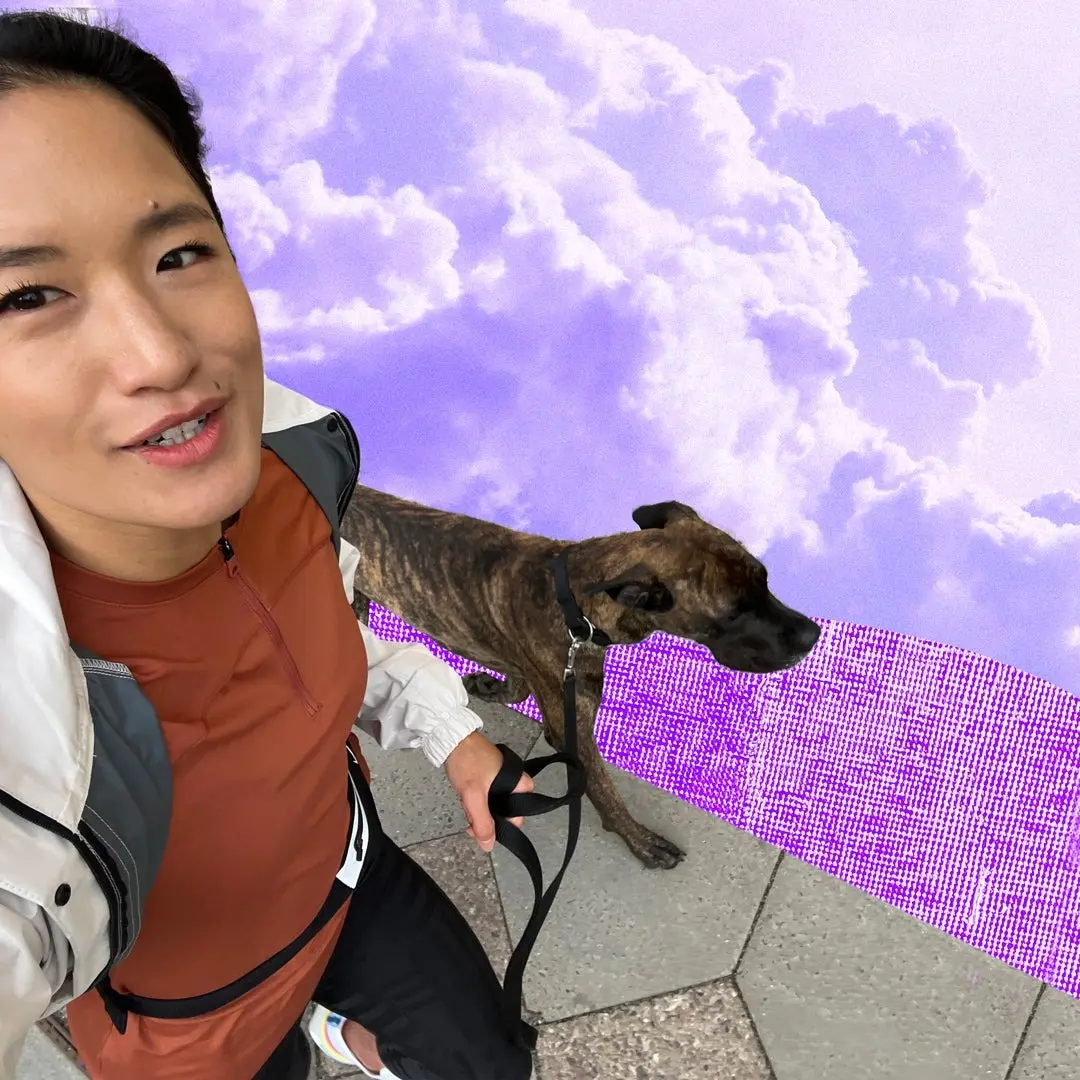
- Canine Pacing Partners: To inject novelty and social connection into her Monday session, Hong frequently borrows a friend’s energetic dog, Mia. The dynamic between human and canine offers a fascinating lesson in endurance pacing: Mia provides explosive, high-velocity propulsion in the early kilometers, pulling Hong forward, while Hong’s steady, rhythmic endurance takes over in the latter half. "She pulls me at the start; I pull her at the end," Hong notes, capturing the essence of symbiotic pacing.
Tuesday: The Holistic Foundation – Yoga, Strength, and Injury Prevention
Running is fundamentally a high-impact, repetitive sport that subjects the musculoskeletal system to forces multiple times a person’s body weight with every stride. True longevity in the sport requires looking beyond the pavement.
- Preventative Biomechanics: Tuesdays are designated for non-running modalities, primarily focused on strength training and structured physiotherapy. By fortifying posterior chain muscles, core stability complexes, and joint stabilizers, Hong inoculates her body against the chronic overuse injuries that sideline countless amateur runners.
- The Role of Yoga: Complementing her strength work, yoga provides dynamic flexibility, eccentric muscle control, and active recovery. This holistic cross-training ecosystem ensures that when Hong does step outside to push her aerobic thresholds, her structural foundation remains resilient. Crucially, this multidisciplinary approach prevents the severe post-run depletion that plagues single-discipline athletes, allowing her to bounce back rapidly for subsequent workouts.
Wednesday: Navigating the Intersection of Social Life and Professional Recovery
Recovery is not merely the absence of training; it is an active component of athletic progression. As a globetrotting flight attendant, Hong’s time in Berlin is precious, making interpersonal connection an indispensable pillar of her mental health.
- Cultural Integration: Rather than spending her downtime obsessing over splits and heart-rate zones, Hong dedicates Wednesdays to cultural exploration—visiting local art exhibitions, meeting friends, and maintaining a vibrant social life.
- The Mind-Body Equilibrium: Sports scientists increasingly recognize that psychological stress directly impacts physiological recovery. By anchoring her week with low-intensity cultural outings, Hong lowers cortisol levels, ensuring her nervous system remains primed for the high-intensity intervals scheduled later in the week.
Thursday: Pushing Boundaries and Track Precision
With her physical and mental batteries fully recharged, Thursday represents the crucible of Hong’s weekly training block: the high-intensity track workout.
- Embracing the Edge: Training for a marathon requires more than stacking long, slow distance runs; it demands VO2 max development, lactate threshold expansion, and mechanical efficiency under duress. Hong embraces these intense track sessions with enthusiasm, rigorously testing her velocity limits and pacing discipline.
- Gear as a Catalyst for Confidence: To safely execute high-stress track workouts, equipment choice is paramount. Hong relies on performance footwear such as the Nike Invincible 3. Featuring a highly responsive, "bouncy" foam architecture and a wide platform base, these shoes provide tactile security across varying track surfaces, absorbing impact forces while returning energy with every stride. This fusion of technical performance and underfoot comfort enables her to lean into hard efforts without fear of localized discomfort.
Friday: Active Recovery and Berlin Exploration
Following Thursday’s anaerobic threshold session, the body requires systemic down-regulation.
- Gentle Mobility: Friday features light mobility work or restorative yoga, serving as a transitional bridge back to baseline homeostasis.
- Urban Reconnection: Leveraging her status as an itinerant professional, Hong spends her Friday afternoons reconnecting with the urban fabric of Berlin—visiting additional galleries and absorbing the creative energy of the city. This deliberate pacing ensures that training serves her life, rather than her life serving exclusively as an appendage to training.
Saturday: The Meditative Long-ish Run Along the Landwehrkanal
The weekend heralds the iconic long-run preparation, a cornerstone of endurance conditioning.
- Sensory Variety: Hong’s standard route traces the scenic Landwehrkanal, a path that offers shifting terrain—transitioning seamlessly from rigid urban asphalt to yielding grass and damp soil. This changing underfoot environment naturally engages intrinsic foot muscles and stabilizer joints.
- Mindful Auditory Choices: Depending on her psychological state, Saturday runs serve as a form of active meditation. Sometimes she absorbs an engaging long-form podcast to stimulate intellectual curiosity; other times, she discards headphones entirely, letting the ambient soundscape of Berlin wash over her.
- The Cultural Culinary Reward: No long run is complete without a culturally rich reward. Hong concludes her Saturday mileage at a local market stand in Kreuzberg, treating herself to specialty coffee and artisanal snacks—a tactile ritual that cements positive psychological reinforcement around the act of running.
Sunday: Community Synergy and the Long-Haul Tiergarten Session
The culmination of the weekly training cycle occurs on Sunday, emphasizing group dynamics and shared endurance.
- The Joy Run Collective: Hong runs as part of the Joy Run Collective, a running community that redefines the solitary nature of distance training. Sunday’s session typically involves an extended long run through the sprawling expanse of the Tiergarten.
- Overcoming Environmental Adversity: Facing lower temperatures and extended time-on-feet, preparation is key. Layering appropriately and relying on collective morale allows the group to conquer double-digit kilometer counts with mutual encouragement.
- The Post-Run Ritual: The definitive highlight of Sunday—and indeed, the psychological anchor of Hong’s entire week—is the post-run community brunch. This ritual transcends mere caloric replenishment; it is a celebration of shared suffering and collective triumph. On this particular Sunday, the host prepared handmade dumplings—a culinary reward Hong anticipated throughout her grueling intervals earlier in the week.
Supporting Context and Metrics: The Science of Sustainable Endurance
Hong’s trajectory offers profound insights that align with modern sports science, exercise psychology, and public health metrics regarding adult fitness evolution.
The Physiology of Adult Athletic Peak
Popular culture frequently propagates the myth that human physical capacity peaks in the early-to-mid twenties and experiences a precipitous decline thereafter. Sports gerontology and endurance physiology paint a vastly different picture. While maximal heart rate declines marginally with age, endurance athletes frequently reach their physiological and psychological zenith well into their thirties and forties.
Hong began her running journey four years ago at age 26; today, at 30, she possesses superior cardiovascular capacity, neuromuscular coordination, and structural durability compared to her twenties. This phenomenon is driven by cumulative aerobic remodeling—the progressive capillarization of skeletal muscle tissue, mitochondrial biogenesis, and left ventricular myocardial adaptation that takes decades to fully manifest.
The Psychology of Habit Formation: Comfort vs. Suffering
For decades, athletic messaging was dominated by the hyper-masculine, militaristic mantra: "Pain is weakness leaving the body." While designed to instill mental toughness, this paradigm often triggers exercise avoidance, psychological burnout, and high attrition rates among recreational athletes.
Modern behavioral psychology—rooted in habit loop theory popularized by researchers like Wendy Wood and Charles Duhigg—demonstrates that sustainable habit adoption relies heavily on immediate positive reinforcement and emotional safety. By anchoring runs to sensory pleasures (such as high-energy disco playlists, dog companionship, scenic canal routes, and post-run culinary traditions), Hong systematically rewires her brain’s reward circuitry. Consistency does not require self-flagellation; rather, when comfort and high-level performance coexist, consistency becomes an organic byproduct of joy.
Future Outlook: The Horizon of Modern Running Culture
As the global running boom accelerates into the mid-2020s, the demographic profile of the endurance athlete is undergoing a fundamental democratization. No longer the exclusive domain of hyper-focused elite specialists or ascetic ultra-runners, disciplines like the marathon are being reclaimed by multi-passionate individuals who refuse to compartmentalize their lives strictly into "athlete" and "non-athlete" categories.
The Rise of Inclusive Running Collectives
Grassroots running communities—such as the Joy Run Collective in Berlin, similar initiatives in London, New York, and Tokyo, and digital-first crews—are revolutionizing how athletes consume the sport. These collectives prioritize inclusivity, mental health advocacy, intersectional diversity, and social connectivity over rigid time-trials and exclusionary gatekeeping. They prove that athletic excellence and deep human connection are mutually reinforcing.
Hong’s Next Horizon: The Seventh Marathon and Beyond
Looking forward, Hong’s immediate sights are firmly set on completing her seventh marathon. Yet, her ultimate victory extends far beyond crossing another finish line. She has fundamentally redefined her relationship with her own identity, shedding the limiting belief of being a "non-runner" and replacing it with unshakeable self-efficacy.
Her journey stands as an authoritative testament to a new era of endurance sports: one where boundaries are continually tested, personal records are shattered, and comfort and consistency walk hand in hand.
Hong’s 3 Pillars for Sustainable Running Joy
For athletes seeking to replicate Hong’s balanced approach to high-volume endurance training, she distills her philosophy into three foundational directives:
- Prioritize Underfoot Comfort and Technical Support: Invest in footwear that provides adequate impact absorption and energetic response (such as the Nike Invincible 3), ensuring your joints remain protected and your stride remains buoyant across unpredictable terrain.
- Curate an Auditory Safety Net: Harness the neurological power of music—spanning disco, house, and techno—to rescue your mindset during low-motivation troughs, or use vocal self-regulation (like singing) to maintain aerobic control.
- Blend Environment with Culinary Reward: Design running routes that engage the senses—transitioning from urban pavement to natural parks—and anchor your efforts with intentional social rituals and nourishing post-run meals shared within a supportive community.