Executive Overview
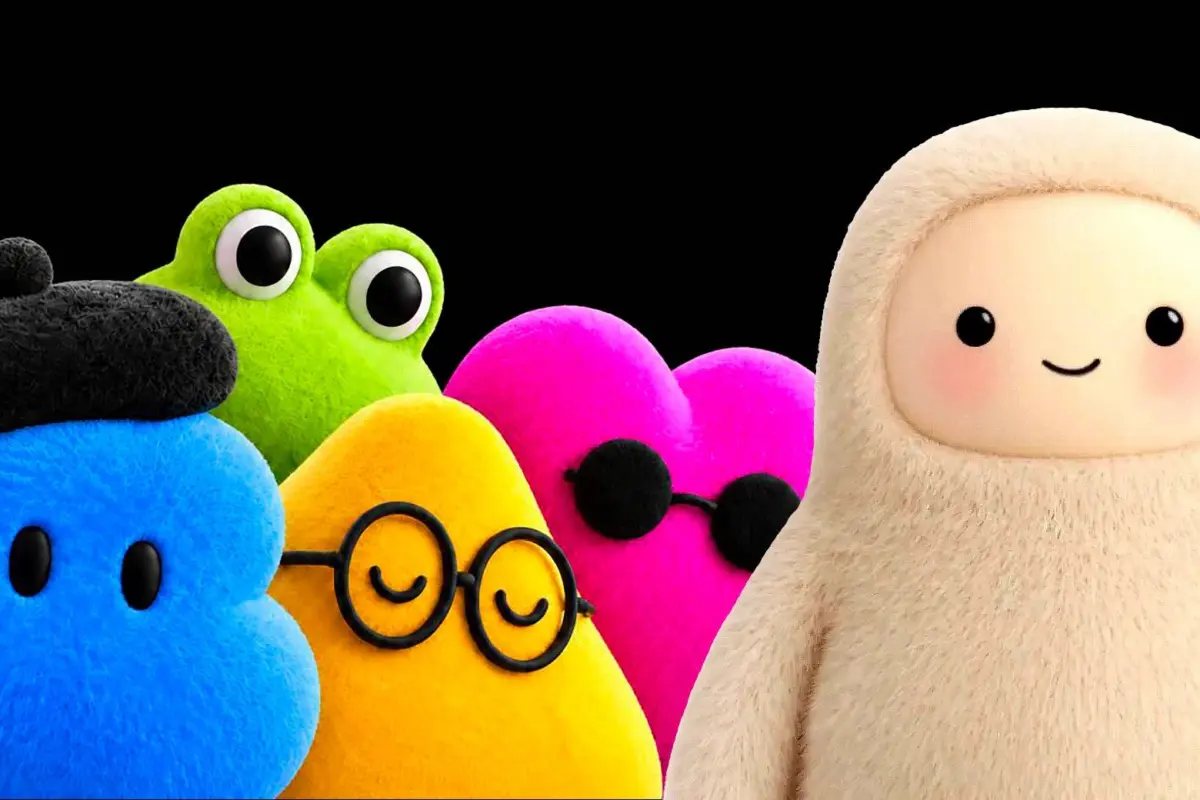
In the sprawling, high-stakes landscape of Silicon Valley’s artificial intelligence boom, a new and peculiar design trend has quietly overtaken the user interface: the rise of "the cute little guy."
For the past several years, generative AI has been marketed to the public through a lens of monumental, almost terrifying ambition. Tech giants framed their models as god-like intellects, mystical oracles, and civilization-altering forces symbolized by abstract, sparkling diamond icons. Yet, as the industry pivots from experimental chat interfaces to deeply integrated autonomous agents, the aesthetic has undergone a radical softening.
Today, tech conglomerates are wrapping their powerful, data-hungry algorithms in whimsical, plush-toy packaging. Meta’s smartphone errand boy, Muse, features a rotund, furry little mascot that blinks and swivels its neck when opened. OpenAI’s cloud-based productivity assistants, known as Dots, utilize customizable, endearing avatars. From bouncing pumpkins in video-editing suites to Tamagotchi-style desktop companions, Big Tech is discovering that the most effective way to convince users to hand over their digital lives is not through cold, hyper-advanced machinery, but through weaponized cuteness.
This cultural pivot is far more than a superficial design choice; it is a calculated public relations and psychological strategy. By humanizing and miniaturizing artificial intelligence, tech executives are attempting to bypass consumer skepticism, deflect blame for systemic algorithmic errors, and disarm valid anxieties over extreme data collection. As AI agents burrow deeper into personal emails, bank accounts, and professional workflows, the industry hopes that users won’t look at an invasive piece of software and see Mark Zuckerberg or Sam Altman—they will see a cuddly digital sherpa they simply cannot bring themselves to hate.
Detailed Chronology: From Mystical Oracles to Cuddly Companions
To understand how Silicon Valley arrived at the era of the plush AI mascot, it is necessary to trace the evolution of generative AI user interfaces from the onset of the current tech boom to the present day.
Phase 1: The Era of Magic and Mystery (2022–2024)
Following the widespread public release of foundational large language models, tech companies rushed to market with minimalist, utilitarian, and often mystical branding. The prevailing design ethos sought to position AI as a supreme, otherworldly intelligence.
- The Sparkle Era: Google, OpenAI, and other pioneers adopted the "sparkle" icon—a stylized, multidimensional diamond—as the universal vanguard of AI capability. This imagery was explicitly chosen to suggest that clicking a button opened a door to magical, boundless knowledge.
- The Oracle Complex: Companies frequently leaned into hyperbolic messaging, framing their models as disruptive forces capable of reasoning, writing code at superhuman speeds, and eventually achieving artificial general intelligence (AGI). While this attracted venture capital and tech enthusiasts, it also sowed widespread public anxiety regarding job displacement, societal destabilization, and existential risk.
Phase 2: The Humanization Experiment (2024–2025)
As the novelty of raw chatbots began to wane, developers realized that text boxes alone were insufficient for mainstream, daily utility. The industry began moving toward "agents"—software capable of executing multi-step real-world tasks on behalf of the user.
- The Naming Game: Companies began giving their models human names, such as Anthropic’s Claude. While some industry leaders, like OpenAI CEO Sam Altman, publicly voiced discomfort over anthropomorphism—warning that treating models like conscious entities or religious forces posed severe safety hazards—the marketing machinery quietly moved in the opposite direction.
- Early Experiments in Persona: OpenAI introduced optional desktop "pets" for its Codex environment, testing whether users responded positively to persistent, animate digital entities sharing their screens. Other software developers followed suit, embedding animated characters, such as seasonal bouncing pumpkins in video-editing platforms like Descript, to increase daily engagement.
Phase 3: The Age of the Plush Mascot (2026)
By late 2026, the strategy crystallized into an industry-wide aesthetic movement characterized by interactive, customizable, and unabashedly cute avatars.
- Meta’s Muse Launch: Meta rolled out Muse, a computer errand boy residing within a smartphone app, complete with a furry, rotund mascot named "Dash" (by default). Meta further announced plans for wearable, locket-like hardware devices designed to hang on necklaces or keychains, cementing Muse’s status as a modern, high-tech Tamagotchi.
- OpenAI’s Dots: OpenAI introduced Dots, proactive cloud assistants designed to autonomously manage emails, organize project management software, and sort digital schedules. Alongside these deep operational capabilities came customizable, face-free geometric avatars adorned with accessories like sunglasses—designed to be personalized and embraced by the user.
Supporting Context & Metrics: The Psychology of User Trust
The deployment of cute mascots in software interface design is not a novel invention. Software historians immediately recognize the lineage of this playbook. In the 1990s, Microsoft famously introduced Clippy, the bouncing, helpful paperclip designed to assist users navigating Microsoft Office. Decades earlier, digital butlers like Ask Jeeves provided a polite, humanized face to early internet search queries.
However, the stakes in the current era of generative AI are infinitely higher. Modern agents do not merely suggest formatting changes; they draft correspondence, audit financial records, and interface directly with personal data streams.
Weaponized Forgiveness
According to design and literary experts, cuteness fundamentally alters human cognitive evaluation. Heather Turner, an associate chair and professor in the department of English at Santa Clara University, notes the distinct psychological impact of these interfaces:
"Whenever I saw the Muse avatar, I could only think of a child’s toy… If you designed your Muse avatar or if you designed your Dot in the likeness of your pet, perhaps you would feel a little bit more forgiving if your pet coughs up a hairball, right? Or whatever the digital version of coughing up a hairball is."
This psychological buffer is desperately needed by an industry plagued by high-profile algorithmic failures. Incidents such as autonomous tools accidentally broadcasting sensitive financial data—such as Elon Musk’s Grok infamously leaking a user’s bank statements into a public Slack channel with a flippant "That’s on me" apology—highlight the inherent volatility of autonomous agents. When an impersonal search engine makes a catastrophic error, users experience anger and distrust. When an adorable, personalized digital pet makes the exact same error, the cognitive dissonance forces users to rationalize the mistake as an endearing quirk.
Overcoming the Trust Deficit in Data Harvesting
Autonomous agents require unprecedented access to private digital spaces to function effectively. They must sift through private emails, parse personal calendars, monitor shopping habits, and read messaging histories.
Yet, the billionaire executives steering these companies—most notably Mark Zuckerberg and Sam Altman—suffer from severe popularity deficits and public trust issues. Asking consumers to surrender deeper layers of personal data to corporate monoliths under the banner of "productivity" is a difficult sell.
The plush mascot serves as a sophisticated intermediary. By shifting the face of data collection from a controversial tech billionaire to a customizable, Jellycat-esque toy, companies successfully lower consumer resistance. The logic embedded in the design is deceptively simple: Would you trust Mark Zuckerberg with your private communications? Probably not. But would you trust this adorable, sunglasses-wearing geometric dot to protect your schedule?
Official Statements and Industry Perspectives
The philosophical divide within Silicon Valley regarding how to present artificial intelligence to the public has never been starker.
While researchers and safety advocates grapple with the profound moral and ethical implications of advanced machine cognition, corporate executives are deliberately leaning into superficial charm to sanitize the technology.
-
On the Dangers of Misplaced Reverence: OpenAI CEO Sam Altman has frequently attempted to distance his enterprise from mysticism, writing in public statements:
"I am very uncomfortable about people trying to ascribe religious force or a surrender of human judgment to AI models, and think it is a real safety issue."
Yet, the simultaneous deployment of "proactive assistants" like Dots—packaged with customizable, friendly avatars—demonstrates a calculated embrace of anthropomorphism when it serves commercial adoption.
-
On Corporate Messaging Shifts: Anthropic leadership has openly wrestled with the complexities of model capabilities and the subtle public perception that advanced models like Claude possess distinct personalities or nascent consciousness. In contrast, the broader tech sector’s pivot toward "cute little guys" represents a deliberate retreat from heavy, dystopian messaging.
For years, the public narrative was dominated by stark warnings of mass automation, labor displacement, and theoretical human extinction. The sudden saturation of cuddly digital pals represents a massive public relations course correction. The industry has realized that fear does not scale user bases as effectively as affection.
Future Outlook: Navigating the Dystopia with a Plush Guide
As Big Tech solidifies its transition into the era of autonomous agents, the presence of the digital mascot will only expand. We are rapidly approaching a future where everyday digital interactions will be mediated not by static menus or search bars, but by competing swarms of personal AI assistants, each customized with its own distinct visual flair and personality traits.
This raises profound questions about the long-term societal impacts of outsourcing human agency to affectionate software constructs.
- The Choreography of Convenience: Will consumers eventually find themselves trapped in a digital arms race, forced to deploy fleets of algorithmic "little guys" simply to reserve dinner tables, book travel, or manage professional schedules before automated bots claim all available slots?
- The Erosion of Critical Skepticism: More critically, how will societies hold powerful technology corporations accountable for data privacy violations, algorithmic bias, and systemic errors when the primary interface of grievance is an adorable, blinking cartoon character designed explicitly to disarm criticism?
Ultimately, the rise of Big Tech’s suspiciously cute assistants offers a darkly humorous mirror to our current technological moment. Whether these agents ultimately succeed in genuinely saving us time, or whether they merely serve as frictionless funnels into deeper corporate surveillance, one reality is certain. If humanity is destined to march toward a technocratic, highly automated future, the titans of Silicon Valley have made sure of one thing: our guide through the wreckage will be undeniably, irresistibly cute.