Executive Overview
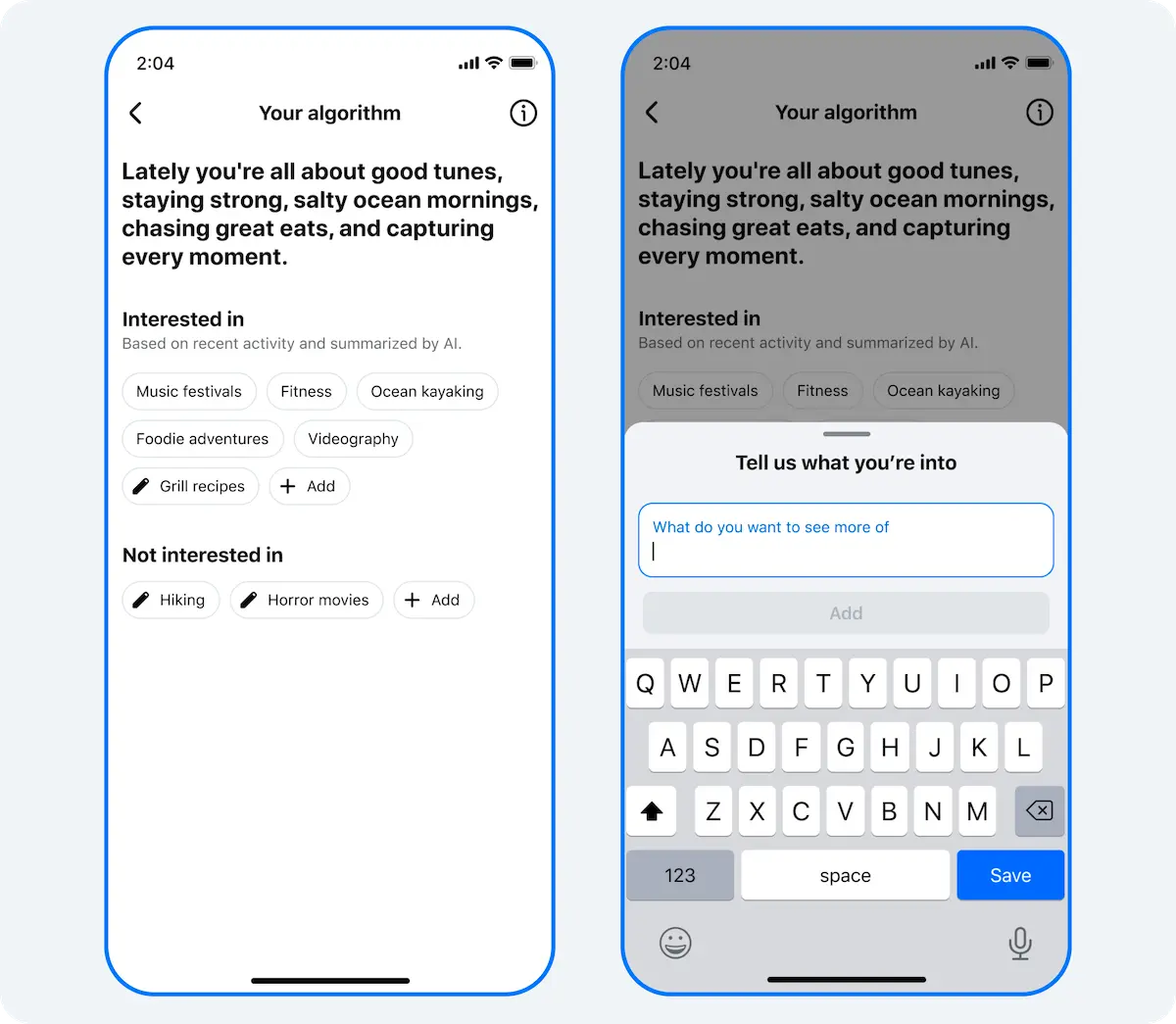
In a milestone shift for social media design, Meta Platforms Inc. officially rolled out "Your Algorithm" to Facebook on October 13, 2026. The AI-powered personalization engine allows users to direct and shape their content recommendations across both the primary Facebook Feed and Reels using natural language prompts. Rather than leaving content distribution entirely to implicit behavioral signals—such as watch time, hover duration, and click-through rates—Facebook users can now explicitly instruct the platform on what topics, formats, and creators they wish to see more or less of in real time.
This rollout marks the latest phase in a broader, multi-platform overhaul of Meta’s content delivery systems. Following preliminary deployments across Instagram and Threads earlier in the year, the arrival of "Your Algorithm" on Facebook signals an industry-wide pivot away from traditional, opaque recommendation engines. As social platforms face rising user fatigue over automated rage-baiting, algorithmic toxicity, and irrelevant content loops, Meta is attempting to re-architect user engagement through interactive, conversational AI control.
By integrating natural language parsing directly into the core ranking systems of Facebook, Meta aims to transition social media consumption from passive exposure to intentional curation. The update fundamentally alters how the platform collects user preferences, pairing traditional binary feedback mechanisms—like "Interested" or "Not interested"—with conversational follow-up prompts that continuously adjust the user’s content distribution parameters.
Detailed Chronology: Meta’s Multi-Platform Push Toward User-Driven Feeds
The deployment of "Your Algorithm" on Facebook is the culmination of a ten-month strategic rollout across Meta’s social ecosystem. Below is the operational timeline tracing how Meta iteratively tested and refined user-controlled algorithmic tools across its product portfolio:
[Dec 2025] ──► Instagram Reels Pilot
               └─ Initial test of prompt-based tuning for short-form video.

[Feb 2026] ──► Threads Launches "Dear Algo"
               └─ Text-first feed customization rolled out to microblogging network.

[Jun 2026] ──► Instagram Full Expansion
               └─ "Your Algorithm" expands across Feed and Explore tab.

[Oct 2026] ──► Facebook Network Integration
               └─ Full implementation in Facebook Feed & Reels with three-dot UI update.
December 2025: The Instagram Reels Pilot
Meta began quietly testing conversational algorithm controls in late 2025, deploying an early iteration of "Your Algorithm" restricted to Instagram Reels. Recognizing that short-form video algorithms are particularly prone to getting stuck in repetitive recommendation loops (often referred to as "algorithmic rabbit holes"), Meta allowed a limited subset of global users to reset or steer their Reels recommendations using plain text commands. Early internal data indicated that explicit feedback loops significantly reduced immediate app drop-off rates.
February 2026: Threads Introduces "Dear Algo"
Building on the initial learnings from Instagram, Meta brought AI-driven feed steering to its text-focused platform, Threads, under the feature title "Dear Algo." Operating within a conversational microblogging layout, "Dear Algo" enabled users to type natural language commands directly into a system dialog—such as "Show me more indie game development updates and fewer political commentary threads"—to instantly re-index their personalized feeds. The feature provided Meta with critical data on how natural language processing (NLP) models could translate ambiguous user intent into actionable content ranking weights.
June 2026: Instagram Expands to Feed and Explore
Following positive engagement metrics on Threads and Reels, Meta officially expanded "Your Algorithm" across Instagram’s core Feed and Explore tab on June 27, 2026. The platform integrated conversational prompt boxes and detailed preference sliders into the app’s main settings and media menus. This expansion established a baseline design framework for conversational content moderation, proving that users across demographics were willing to actively manage their algorithmic profiles when provided with straightforward natural language tools.
October 13, 2026: Facebook Integration and UI Overhaul
On October 13, 2026, Meta announced the integration of "Your Algorithm" into Facebook, bringing the feature to its largest global audience. Implemented simultaneously across Feed and Reels, the update introduces a overhauled interface accessible via the standard three-dot menu on every post. The integration includes conversational follow-up capabilities, where Facebook’s underlying AI prompts users to clarify why they chose to view more or less of specific content, feeding real-time preferences back into the core ranking engine.
Supporting Context & Metrics: The Shift from Passive Curation to Explicit Intent
The Failure of Pure Implicit Signal Tracking
For over a decade, social media discovery engines relied heavily on implicit signals. Recommendation algorithms analyzed micro-behaviors: how many seconds a user paused over a video, whether they expanded a comment section, or if they reshared a link. While highly effective at maximizing short-term screen time, this paradigm created well-documented side effects, including algorithmic drift, outrage-driven consumption, and eventual platform fatigue.
Meta’s internal research and broader academic literature demonstrated that passive engagement does not consistently correlate with user satisfaction. A user might watch a controversial news clip to completion out of shock or frustration, prompting traditional algorithms to serve dozens of similar videos, despite the user actively disliking the content.
| Personalization Approach | Primary Data Inputs | Core Strengths | Operational Risks |
|---|---|---|---|
| Legacy Implicit Curation | Hover time, view duration, clicks, shares, comments | Maximizes immediate attention & ad impressions | Algorithmic drift, outrage loops, user burnout |
| Explicit Rule Curation | Blocked keywords, account mutes, category toggles | High precision for specific topics | Static, high friction, requires manual upkeep |
| Conversational AI Curation ("Your Algorithm") | Natural language prompts, real-time conversational feedback | Context-aware, dynamic, adapts to nuanced intent | Model misinterpretation, prompt fatigue |
Technical Mechanics of Natural Language Feed Steering
"Your Algorithm" introduces a hybrid curation layer that blends deep learning recommendation models with large language model (LLM) natural language understanding. When a user inputs a natural language prompt—such as "I’m planning a home renovation, show me DIY woodworking tips and reduce general viral comedy reels"—the system converts this input into semantic embeddings.
These embeddings interact with the candidate-generation and ranking pipeline in real time:
- Semantic Vector Mapping: The input text is translated into a vector space representation that maps directly against topic-level and creator-level embeddings in Facebook’s massive content catalog.
- Re-Weighting Ranking Coefficients: The candidate ranking model temporarily adjusts its scoring weights, suppressing content tags associated with negative intent ("viral comedy") while boosting the probability scores of target topics ("DIY woodworking").
- Conversational Disambiguation: If an input is overly broad (e.g., "Show me less news"), the platform triggers targeted follow-up queries via the three-dot post menu, asking whether the user wants to filter out hard political reporting, local news, or international affairs.
[User Natural Language Prompt]
             │
             ▼
[LLM Intent & Vector Parsing]
             │
             ▼
[Real-Time Re-Weighting Engine] ──► Adjusts Topic/Creator Embeddings
             │
             ▼
[Updated Feed & Reels Ranking] ──► Instant Real-Time Recalibration
Regulatory Pressures and Platform Accountability
The rollout of user-controlled algorithms across Meta’s platforms also aligns with evolving global tech regulations. The European Union’s Digital Services Act (DSA) and emerging regulatory frameworks in North America and the Asia-Pacific region increasingly mandate algorithmic transparency and user autonomy. Regulators have consistently criticized "black-box" recommendation engines that push addictive or harmful content without clear opt-out mechanisms.

By providing explicit, plain-language controls over content distribution, Meta strengthens its defense against regulatory enforcement. Giving users direct agency over their content pipelines helps mitigate claims of predatory algorithmic manipulation, providing a compliant framework for content discovery in highly regulated markets.
Official Statements and Structural Interface Changes
Meta’s Vision for Intentional Discovery
In its official release detailing the Facebook rollout, Meta framed the feature as a structural evolution in how humans interact with machine learning systems.
"The introduction of ‘Your Algorithm’ reflects our ongoing commitment to giving people genuine influence over their social media experiences as AI increasingly shapes content discovery," Meta stated in its announcement. "This move signals a shift away from traditional, automated recommendation systems, bringing our platforms closer to interactive discovery services where individuals actively define their preferences."
Meta emphasized that the feature is designed to operate dynamically. Rather than saving static keyword mutes that persist indefinitely without adaptation, "Your Algorithm" updates continuously based on context. Users can revise, reset, or fine-tune their algorithmic directions at any time through their settings dashboard or directly within their feeds.
Strategic Interface Overhaul: The Three-Dot Menu
To ensure high adoption, Meta redesigned Facebook’s long-standing post menu interface. Located in the upper right corner of every Feed post and Reel, the three-dot menu now serves as the primary entry point for natural language curation.
+-------------------------------------------------------+
|  [Post Header: Creator / Brand Name]               ...| ◄-- Click Three-Dot Menu
+-------------------------------------------------------+
|                                                       |
|   DROPDOWN MENU OPTIONS:                              |
|   ┌───────────────────────────────────────────────┐   |
|   │ ✦ Your Algorithm (Describe preferences)       │   |
|   │ 🖒 Interested (Boost similar content)          │   |
|   │ 🏲 Not Interested (Reduce similar content)    │   |
|   │ ⚙ Manage Content Preferences                  │   |
|   └───────────────────────────────────────────────┘   |
|                                                       |
+-------------------------------------------------------+
When users select "Interested" or "Not interested", Facebook no longer simply logs a binary data point. Instead, the system may present an optional, light-weight conversational prompt asking for context: "What specific aspect of this post would you like to see less of?"
Users can tap suggested tags or type a custom, free-form response. This real-time feedback loop ensures that the platform’s real-time recommendations adjust immediately, allowing users to see the consequences of their tuning actions within the same browsing session.
Future Outlook: The Imperative of Agentic Feed Personalization
Ad Monetization in an Intent-Driven Feed
The transition to natural language algorithmic management carries profound implications for Meta’s primary revenue generator: digital advertising. Historically, ad targeting relied on inferring user interest through implicit activity profiles. By encouraging users to explicitly state their interests, desires, and current life events in plain language, Meta stands to capture higher-intent zero-party data.
If a user prompts "Your Algorithm" with "I’m looking to buy a mid-size SUV and want to see vehicle safety reviews," Meta gains a high-value signal of consumer intent. Advertisers within the automotive sector can bid on these explicit intent vectors, potentially commanding significantly higher CPMs (Cost Per Mille) compared to standard demographically targeted impressions. Consequently, giving users control over their content algorithms may inadvertently enhance Meta’s underlying ad-targeting accuracy.
The User Inertia Challenge and Long-Term Platform Dynamics
Despite the technological promise of "Your Algorithm," Meta faces a significant operational challenge: overcoming user inertia. Industry research indicates that while users frequently complain about feed quality, only a dedicated minority regularly navigate settings menus to customize their experiences.
For "Your Algorithm" to achieve long-term success on Facebook—a platform with a historically diverse and demographic-spanning global user base—Meta must keep the interface friction-free. If natural language prompting requires too much manual effort, casual users may revert to passive consumption, leaving the platform vulnerable to the same feedback loop issues "Your Algorithm" was built to fix.
However, as generative AI native interactions become standard across software applications, explicit feed programming represents a clear directional shift for the social web. By handing the driver’s seat over to the user, Meta is taking a calculated gamble: that empowering users to shape their own algorithmic experiences will build long-term retention, foster deeper platform trust, and define the next era of AI-driven media consumption.