Executive Overview
For decades, purchasing a television was treated as a generational investment. Consumers would buy a display, plug in a cable box or a DVD player, and expect the hardware to perform reliably for a decade or more. Today, however, the modern television is effectively a massive, wall-mounted computer. Powered by complex operating systems, connected to the internet, and integrated with countless streaming applications, smart TVs require ongoing software maintenance to remain functional, secure, and compatible with modern entertainment ecosystems.
Yet, unlike the smartphone and personal computer markets—where manufacturers increasingly outline strict, multi-year update schedules—the smart TV industry remains a wild west of vague policies, regional disparities, and uncommitted timelines. When a consumer drops hundreds or even thousands of dollars on a state-of-the-art flat-screen, they expect long-term software support. Tragically, the reality of the market often falls drastically short of these expectations.
This comprehensive investigation explores the fragmented landscape of smart TV software support. By breaking down the explicit policies, opaque timelines, and regional discrepancies across major manufacturers—including Samsung, LG, Sony, TCL, Hisense, Roku, Vizio, and Insignia—we reveal which brands are leading the charge in longevity and which are leaving consumers in the dark. Furthermore, we examine how consumers can navigate this landscape and extend the lifespan of their displays when official manufacturer support inevitably runs dry.
Detailed Chronology: How Major Brands Stack Up
Navigating the update policies of television manufacturers can feel like decoding a labyrinth. Some brands offer explicit, years-long guarantees, while others handle updates on a model-by-model basis with little transparency. Here is a detailed look at how the industry’s biggest players manage their software lifecycles.
Samsung: Setting the Gold Standard for Flagship Support
Samsung has taken a commanding lead in the race for long-term TV software support. Following a major policy shift introduced in 2024, the South Korean electronics giant committed to providing seven years of software updates for its Linux-based Tizen operating system. This ambitious guarantee applies to all smart TVs released in 2024 and later, as well as select premium models from the 2023 lineup.
For consumers, this means that a Samsung TV purchased today should receive app compatibility updates, security patches, and system optimizations through at least 2031. However, there is a distinct caveat: while Samsung guarantees long-term security and maintenance updates, older models are typically barred from receiving major new version upgrades of the Tizen OS interface. Still, a guaranteed seven-year window of baseline support makes Samsung an industry leader in hardware longevity.
LG: The webOS Re:New Program
In early 2024, LG introduced a structured approach to longevity dubbed the webOS Re:New program. Under this initiative, LG guarantees four years of webOS updates for qualifying smart TV models dating back to 2022.
The catch with LG’s approach is timing. The updates arrive with a mandatory one-year delay compared to the software running on brand-new hardware. For example, webOS version 26 debuted natively on 2026 TV models, but that same software iteration will not roll out to 2025 compatible models until the following year. While this staggered rollout ensures older sets aren’t abandoned overnight, it does mean users will always lag slightly behind the bleeding edge of LG’s interface development.
Sony: Case-by-Case Transparency
Sony takes a decidedly different path compared to its Korean competitors, declining to offer a universal, brand-wide support window. Instead, the Japanese manufacturer handles software lifecycles on a strictly model-by-model basis, publishing specific end-of-life (EOL) dates directly on its regional support portals.
For instance, reviewing Sony’s documentation for its 2025 lineup reveals divergent timelines:
- The Sony Bravia K-65XR80M2 OLED carries an official support end date of April 2029.
- The Sony Bravia 2 II K-65S25VM2, released in the same model year, is scheduled to receive security updates through June 2030.
Unlike Samsung and LG, Sony has largely stepped away from proprietary TV operating systems. Models manufactured after 2021 run on the Google TV platform (with older models utilizing Android TV). Because the underlying operating system is managed by Google, Sony’s primary role involves pushing out system-level optimizations and security patches tailored to its specific hardware components.
TCL: The Opaque Value Proposition
TCL has captured a massive share of the global budget and mid-range TV market, but its software support policy remains notably murky. The company does not publish a fixed, guaranteed support period for its televisions.
Instead, consumers must rely on TCL’s general software security documentation, which states that the company "typically" aims to provide security updates for at least two years following the initial shipment of a specific device model. Crucially, these general guidelines do not explicitly mention smart televisions, leaving buyers largely in the dark. Depending on the specific series, TCL TVs run on Google TV, older iterations of Android TV, or Roku TV, meaning the long-term viability of the software is often tied to the underlying platform provider rather than TCL itself.
Supporting Context & Metrics: Regional Disparities and Budget Brands
Software longevity is not just a matter of who made the TV, but where the TV was purchased. Geographic market variations play a surprisingly massive role in determining how long a smart display will remain updated.
The Hisense European vs. US Divide
Hisense provides a fascinating case study in regional policy fragmentation. In Europe, the majority of Hisense smart TVs operate on the company’s proprietary VIDAA operating system. Recognizing the demand for better consumer protection and longevity, Hisense instituted a landmark policy in 2025, pledging up to eight years of software support for VIDAA-powered models in the European market.
Unfortunately, consumers in the United States rarely encounter Hisense models running VIDAA. US-bound Hisense TVs are far more likely to ship running third-party operating systems, including Android TV, Fire TV, Google TV, or Roku TV. For American buyers, this means the eight-year European guarantee does not apply, and long-term software health is dictated entirely by the rules of whichever platform partner Hisense chose for that specific regional SKU.
Roku TVs: Ecosystem Focus
Roku is a household name built on its streaming hardware and platform licensing agreements. However, the company also manufactures its own branded line of televisions—including the Select, Plus, and Pro series.
Roku does not publish a fixed, guaranteed timeline for how long its branded hardware will receive updates. Because the company’s core business model revolves around its operating system, it frequently pushes out system updates across all supported devices simultaneously. While Roku does not publish official end-of-life dates for its streaming boxes or TVs, historical data from its legacy hardware suggests that devices often remain functional and updated for nearly a decade, though performance naturally degrades as hardware demands outpace early processors.
Budget Giants: Vizio and Insignia
For budget-conscious shoppers looking at ultra-affordable displays from brands like Vizio and Insignia, the software support outlook requires careful consideration:
- Vizio: Utilizing its proprietary Vizio OS—which hosts over 300 free ad-supported streaming channels—Vizio regularly pushes automated firmware updates to connected sets. However, the company offers no contractual guarantee or fixed period of support for any specific model, leaving users dependent on corporate discretion.
- Insignia: As a house brand frequently manufactured for retailers like Best Buy, Insignia smart TVs rely heavily on Amazon’s Fire OS. Consequently, Insignia’s software and security lifecycle is tied directly to Amazon’s corporate support window for Fire TV devices. According to Amazon’s official documentation, the baseline commitment for software security updates is a minimum of four years from the date the device was last available for purchase on its sites.
Official Statements and Industry Insights
The divergence in support models highlights a broader identity crisis within the consumer electronics industry. Industry analysts point out that televisions are caught in a transitionary phase between traditional consumer appliances and modern computing devices.
In public statements accompanying the rollout of the webOS Re:New program, LG executives emphasized that modern consumers do not replace their living room displays every two to three years. "Consumers keep their primary televisions for upward of seven to ten years," an LG product strategy representative noted during an industry briefing. "Our goal with multi-year update programs is to bridge the gap between hardware durability and software relevance."
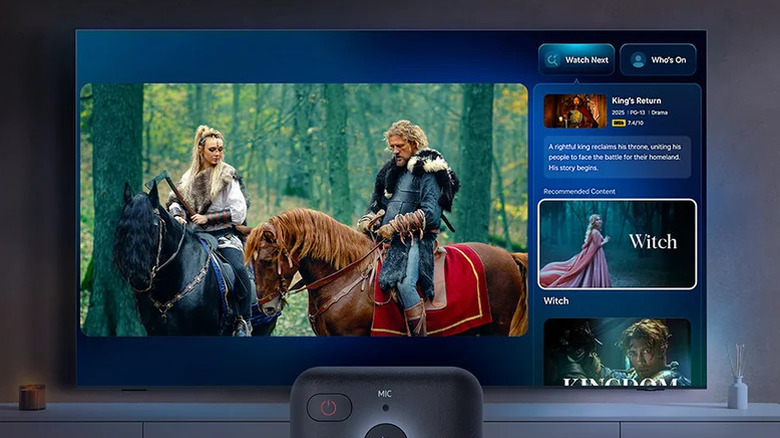
Conversely, budget manufacturers argue that forcing multi-year update commitments on low-cost hardware is economically unviable. Because entry-level smart TVs rely on low-cost, low-power system-on-chips (SoCs) to keep retail prices under $300, these processors quickly run out of computational headroom. Pushing newer, heavier operating system updates to legacy budget hardware often results in severe lag, crashes, and a degraded user experience—a phenomenon well-documented in the smartphone world.
Consumer rights advocates, however, argue that manufacturers have an ethical and environmental obligation to provide clarity. Without transparent end-of-life timelines, consumers are unknowingly purchasing ticking clocks: hardware that may physically last a decade but becomes digitally obsolete within 36 months when essential apps like Netflix, YouTube, or Disney+ drop support for older operating system versions.
Future Outlook: How to Future-Proof Your Next TV Purchase
As the smart TV market matures, the lack of universal standards means consumers must adopt an investigative mindset before swiping their credit cards. If you are shopping for a new television and want to maximize your investment, consider the following strategies:
- Prioritize Brands with Explicit Commitments: If long-term software support is a top priority, lean toward manufacturers like Samsung, which offers a transparent, industry-leading seven-year support window on current-generation models.
- Examine the Operating System: TVs running modular, widely supported platforms like Google TV or Roku TV often benefit from broader developer mindshare than obscure, proprietary vendor-locked interfaces.
- Plan for the Inevitable (Buy a Streaming Stick): Even the best smart TV software will eventually outpace its internal hardware or lose update support. Fortunately, an unsupported smart TV does not belong in a landfill. Purchasing an inexpensive external streaming device—such as an Apple TV, Roku stick, Amazon Fire Stick, or Google Chromecast—is a cost-effective way to bypass an aging smart interface entirely. By plugging a dedicated streaming box into an HDMI port, you instantly inject modern software, lightning-fast navigation, and years of additional life into an otherwise outdated display.
Ultimately, while the smart TV industry has a long way to go before achieving the transparent update standards seen in computing and mobile markets, consumer awareness is shifting the needle. By demanding better policies and voting with their wallets, buyers can encourage manufacturers to treat software longevity not as an afterthought, but as an essential pillar of hardware quality.