Date: October 14, 2026
Author: Catie Owen | Regional Content & Insights Lead
Publication: Capacity Global
Executive Overview
The rapid, relentless scaling of artificial intelligence (AI) workloads has fundamentally outpaced traditional data center design. As next-generation silicon generates unprecedented heat loads, legacy air-cooling systems are reaching their physical limits, forcing a paradigm shift across the global digital infrastructure ecosystem. Operators no longer view infrastructure as a modular assembly of disconnected components; instead, they are urgently seeking holistic, end-to-end partners capable of seamlessly integrating power delivery, advanced liquid cooling, precision mechanical and electrical (M&E) engineering, connectivity, and ongoing facilities management.
Against this high-stakes backdrop, a landmark industry transaction has reshaped the competitive landscape. Announced on October 14, 2026, the strategic merger of 3C and Datalec Precision Installations has officially created 3C Datalec. Backed by heavyweight financial backing from Longbow Capital, S2G Investments, Apogem Capital, and QIC, the newly formed powerhouse is projected to eclipse US$400 million in revenue throughout 2026.
By unifying specialist liquid cooling expertise, hardware manufacturing, and turnkey installation under a single corporate umbrella, 3C Datalec is positioning itself at the vanguard of the AI infrastructure boom. However, the merger reflects more than just corporate consolidation—it serves as a bellwether for an entire industry grappling with hyper-dense server racks, explosive market growth, and an escalating global crisis in specialized engineering talent.
Detailed Chronology: The Making of 3C Datalec
The groundwork for the 3C and Datalec combination reflects months of strategic alignment driven by surging enterprise demand for high-density computing environments.
- Early 2025 – Late 2025 (Market Acceleration): Fueled by the mass deployment of advanced generative AI models and massive graphics processing unit (GPU) clusters, the data center industry experiences a structural break from traditional configurations. Industry metrics tracked by organizations like the Dell’Oro Group reveal that the liquid cooling market doubles over the course of 2025 alone.
- Mid-2026 (Synergy Identification): Recognizing the friction points in traditional data center supply chains—where cooling vendors, M&E contractors, and facilities operators often operate in silos—executives from 3C and Datalec begin formalizing partnership discussions. Financial sponsors including Longbow Capital, S2G Investments, Apogem Capital, and QIC step in to structure and underwrite the transaction.
- October 14, 2026 (Official Merger Announcement): The formal birth of 3C Datalec is announced to the global market. The newly unified enterprise combines deep-rooted liquid cooling capabilities with Datalec’s world-class precision installation, manufacturing, and connectivity infrastructure.
- Post-Merger Roadmap (2026–2027): Immediately following the announcement, 3C Datalec outlines an aggressive international expansion and workforce-scaling strategy. The company announces plans to onboard 200 specialized engineers over the next twelve months while establishing strategic operational facilities in Warsaw, Calgary, and Austin.
Supporting Context & Metrics: The Liquid Cooling Revolution
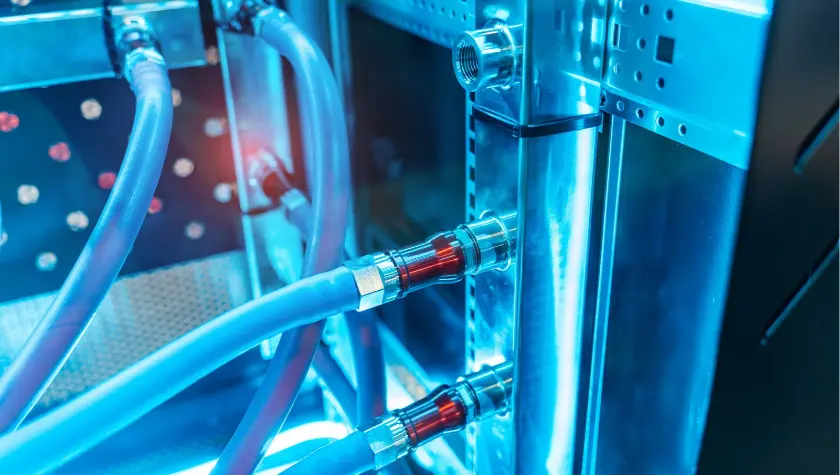
To understand the strategic rationale behind 3C Datalec, one must examine the macroeconomic and thermodynamic realities facing modern data centers. For decades, air cooling sufficed for standard enterprise workloads running at standard rack densities (typically ranging from 5kW to 10kW per rack). However, modern AI and machine learning clusters packed with advanced accelerators routinely demand rack densities scaling from 40kW to well over 100kW.
At these thermal thresholds, traditional air-cooling infrastructure fails. Air lacks the thermal capacity to efficiently extract heat from ultra-dense silicon, making liquid cooling not merely a competitive advantage, but an operational imperative.
"Rack densities have outgrown air, and liquid cooling is no longer optional," asserts Steve Walton, CEO of 3C Datalec. "The challenge facing operators has evolved from simply deploying cooling technology into integrating cooling, power, construction, and operations into a single system at scale."
Market Trajectory and Mainstream Adoption
For years, direct-to-chip and immersion liquid cooling technologies were viewed as niche, expensive solutions reserved exclusively for elite high-performance computing (HPC) research facilities and supercomputers. That narrative has evaporated.
According to market intelligence from the Dell’Oro Group, the liquid cooling sector doubled in 2025, and this exponential curve is projected to steepen through the late 2020s. Walton emphasizes that this trend is irreversible:
- The Silicon Driver: The latest generations of enterprise silicon physically require liquid thermal management to operate without thermal throttling or failure.
- Market Penetration: Liquid cooling has officially transitioned into the default standard for all new high-density deployments, rapidly bleeding into mainstream enterprise data centers and multi-tenant colocation facilities.
Consequently, enterprise procurement behavior is shifting. Rather than purchasing chillers, cooling distribution units (CDUs), and server racks from disparate vendors, data center developers and hyperscalers are demanding unified, pre-tested, turnkey infrastructure stacks.
Official Statements and Industry Insights
The competitive landscape is undergoing a radical transformation as engineering contractors, legacy equipment manufacturers, and pure-play cooling specialists scramble to capture market share. According to Steve Walton, navigating this hyper-growth environment requires a distinct structural philosophy:

"The environment will become more competitive, but it is also a market that is growing exponentially," Walton notes. "At a macro level, it will continue to be geographically diverse, skill sets will evolve, and highly technical, skilled labour will ultimately be the differentiator and the moat."
The "Silicon-Out" Advantage
In a crowded marketplace where traditional engineering firms offer massive scale but lack niche thermal management expertise—and where component manufacturers often focus narrowly on standalone hardware—3C Datalec derives its competitive edge from its architectural lineage.
"Our advantage is our team, which has been in the liquid cooling industry for more than a decade," Walton explains. "We were early advocates who helped bring it into the mainstream and, most importantly, we have always worked from the silicon out, whereas the majority of our competitors work from the primary infrastructure inwards."
By designing cooling and power systems outward from the chip architecture rather than engineering the building inward toward the server rack, 3C Datalec minimizes thermal inefficiencies, reduces latency in deployment timelines, and guarantees structural compatibility with next-generation compute hardware.
The Talent Crisis: The Real Bottleneck in AI Infrastructure
While industry headlines frequently fixate on constraints surrounding regional power grid capacity, electrical switchgear lead times, and water rights, 3C Datalec’s leadership identifies an equally dangerous—and frequently overlooked—bottleneck: the global shortfall of skilled engineers and specialized tradespeople.
"It’s a major challenge," Walton states regarding labor constraints. "There are well-known constraints on natural resources, power, and equipment supply chains in building a data centre, but we see an equally significant challenge to AI’s success, now and especially over the next few years, in the shortfall of engineers and tradespeople."
Strategic Footprint Expansion Tied to Talent
This acute awareness of the talent gap directly dictated 3C Datalec’s immediate post-merger real estate and operational footprint:
- Warsaw, Poland: Positioned as a strategic hub to tap into the deep talent pools and highly technical engineering graduates across Central and Eastern Europe.
- Calgary, Canada: Chosen specifically to absorb and repurpose the sophisticated mechanical and electrical engineering workforce traditionally anchored in the region’s energy and oil-and-gas sectors.
- Austin, Texas: Strategically planted directly in the heart of one of North America’s most dynamic, rapidly expanding technology and data center corridors.
Investing in Human Capital
Recognizing that external recruitment alone cannot solve the engineering deficit, 3C Datalec is investing heavily in internal human capital development. Alongside the expansion of formal apprenticeship programs, the company is rolling out an internal training university. This specialized institution will focus on cross-training professionals in liquid cooling mechanics, electrical engineering, and advanced connectivity disciplines, effectively future-proofing its workforce for the demands of the 2030s.
Future Outlook
The merger of 3C and Datalec Precision Installations into 3C Datalec marks a definitive maturity milestone for the AI infrastructure sector. As data centers evolve into hyper-dense, thermally complex computing factories, the era of piecemeal engineering and fragmented vendor management is drawing to a close.
The companies that will dominate the remainder of the decade are those capable of bridging the gap between high-level architectural design, complex mechanical integration, and global execution. Backed by institutional capital and anchored by a specialized talent strategy, 3C Datalec enters the market with a blueprint that other industry players will likely rush to emulate.
Ultimately, as the artificial intelligence revolution accelerates, the ultimate victor may not be determined purely by capital availability or power access, but by who possesses the intellectual capital and skilled labor required to bring these monolithic facilities online—and keep them running reliably at scale.