Executive Overview
In the modern landscape of consumer electronics, hobbyist computing, and hardware modification, the margin for error is razor-thin. Whether you are assembling a custom liquid-cooled gaming rig, replacing the thumbsticks on a drift-prone controller, or opening up a modern handheld console, the tools required bear little resemblance to the heavy-duty wrenches and bulky drills of the past. Precision, torque control, and ergonomic accessibility have taken center stage.
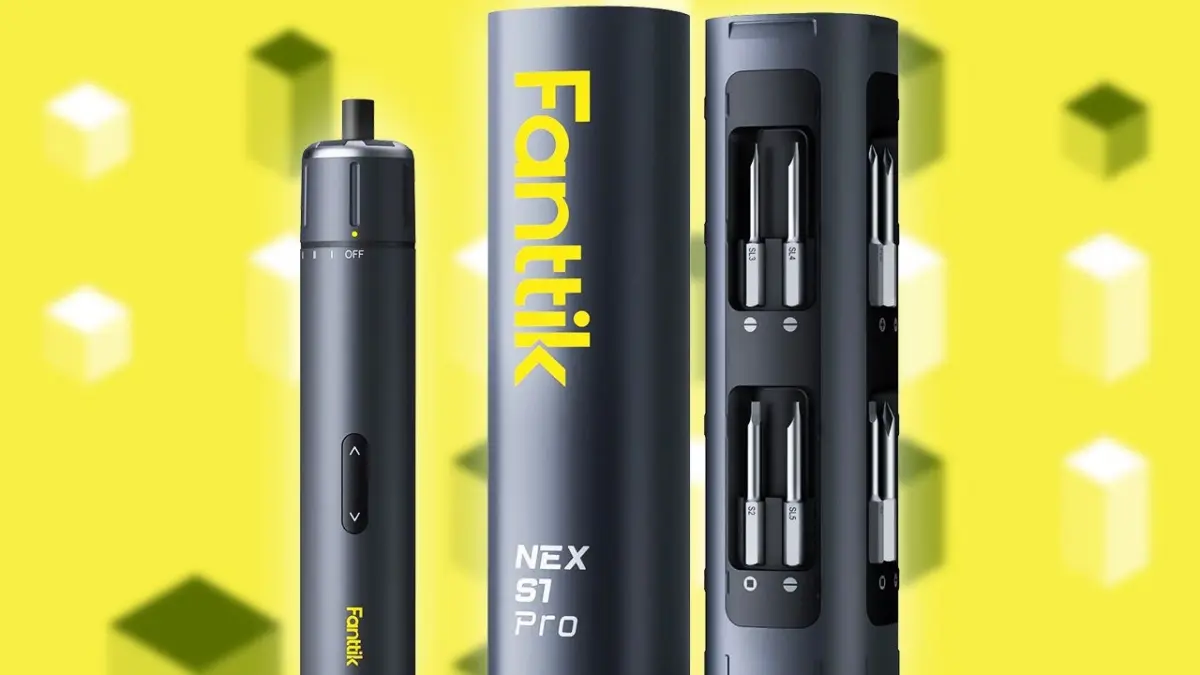
Amidst a crowded market of generic import tools, the Fanttik S1 Pro Electric Precision Cordless Screwdriver Set has emerged as a standout favorite among enthusiasts and professionals alike. Normally commanding a premium price point—retailing for upwards of $90 at major international outlets like Costco—this elite tool is currently seeing a massive promotional price cut on Amazon. By applying a specialized 30% off coupon code (4OH79HXV), buyers can acquire the complete set for just $34.99. Crucially, this significant markdown does not require an Amazon Prime membership, democratizing access to professional-grade precision tooling.
This report provides an in-depth look at the Fanttik S1 Pro, analyzing its engineering specifications, comparing its performance metrics against legacy and budget competitors, examining the shifting economics of hobbyist tech tools, and exploring why this specific discount represents a watershed moment for DIY builders looking to upgrade their workbench arsenal without breaking the bank.
Detailed Chronology: The Rise of Smart Precision Tools
To understand the significance of the Fanttik S1 Pro’s current market positioning, one must first trace the evolutionary timeline of how technicians, builders, and hobbyists have interfaced with hardware over the past two decades.
The Era of Manual Tedium (Pre-2015)
For generations, precision work—defined as fastening screws smaller than 3 millimeters in diameter—was strictly a manual affair. Builders relied on aluminum-handled driver kits populated by interchangeable, non-magnetic bits. While these kits were sufficient for occasional glasses repair or watch battery replacement, the sheer volume of screws found in modern electronics transformed manual screwdriving into an ergonomic bottleneck. A standard ATX desktop build requires upwards of 50 to 80 screws; doing this by hand introduces wrist fatigue, hand cramps, and a higher incidence of stripped screw heads due to inconsistent manual pressure.
The Compromise of Heavy Power Tools (2015–2020)
As cordless power technology matured, lithium-ion battery packs shrank, allowing manufacturers to introduce compact 12V and 18V pistol-grip drills. While these tools were celebrated on construction sites, bringing them indoors to work on a $2,000 graphics card or a delicate motherboard was a dangerous gamble. Standard power drills deliver high RPMs and aggressive shock-impact torque (often exceeding 30 to 50 Nm), which can easily crack circuit boards, strip delicate threading in aluminum enclosures, or shear micro-screws entirely.
The Micro-Motor Revolution (2020–Present)
Recognizing a massive gap in the market between manual fatigue and destructive power tools, engineering firms began developing micro-geared electric precision screwdrivers. Early iterations on platforms like Amazon suffered from a critical flaw: anemic motors. Many early electronic precision drivers topped out at a meager 0.2 to 1 Nm of torque. If a screw was slightly over-tightened or faced minor thread-locking compound, the motor would stall, forcing the user to finish the turn manually anyway.
The entry of the Fanttik S1 Pro shifted this paradigm. By engineering a high-density planetary gearbox powered by a robust internal lithium battery, the S1 Pro successfully breached the 5 Nm and 6 Nm thresholds. This effectively bridged the gap between pocket-sized gadgets and heavy-duty workshop utilities. The current promotional pricing event on Amazon represents the apex of this product’s lifecycle, making high-torque micro-engineering accessible to the masses.
Supporting Context & Metrics: Engineering Breakdown of the Fanttik S1 Pro
To appreciate why industry insiders and commerce experts recommend the Fanttik S1 Pro, one must examine the raw specifications that separate it from the saturated field of budget alternatives.
| Feature / Metric | Fanttik S1 Pro | Standard Budget Amazon Alternative | Heavy-Duty 12V Cordless Drill |
|---|---|---|---|
| Electric Torque | Up to 6 Nm | 0.2 – 1.5 Nm | 25 – 40+ Nm |
| Manual Torque | Up to 8 Nm | N/A (Plastic housing risk) | Not recommended |
| Torque Settings | 3 Adjustable Tiers | Single Speed | Variable Trigger / Clutch |
| Bit Material | S2 Alloy Steel | Carbon Steel / CR-V | N/A |
| Illumination | Integrated LED Array | None or Single Dim Bulb | Single Chuck Light |
| Charging Standard | Universal USB Type-C | Proprietary / Micro-USB | Dedicated Dock Charger |
| Retail Price Range | $35 (Promo) – $90 | $15 – $25 | $60 – $150+ |
Power and Torque Dynamics
The defining metric of the S1 Pro is its dual-stage torque delivery. Operating electronically, the device provides up to 6 Nm of electric torque, paired with a robust 8 Nm manual torque threshold. In practical terms, this means that even if the battery were to run completely dry, the reinforced internal spindle allows the user to treat the device as a heavy-duty manual driver without fear of snapping internal gears.
Furthermore, the inclusion of three distinct torque settings addresses one of the primary anxieties of electronic builders: over-tightening. When securing a motherboard to standoffs or fastening plastic shells on a Nintendo Switch or PlayStation DualSense controller, applying maximum torque can warp the printed circuit board or crack the housing. By stepping down the electronic torque threshold via the onboard control switch, users can ensure consistent, repeatable fastening pressure.
Metallurgy and Ergonomics
The accessory ecosystem accompanying the S1 Pro is built around 16 high-grade S2 alloy steel magnetic bits. Unlike cheaper carbon steel bits that round off or deform under high rotational stress, S2 steel offers superior shock absorption and tensile strength. The selection covers the exact array of profiles required by modern technicians:

- Phillips: Ranging from PH000 to PH1 for standard electronics and chassis screws.
- Flathead (Slotted): For precision adjustments and legacy components.
- Torx and Security Torx: Essential for modern console maintenance (Xbox, PlayStation, Nintendo) and laptop teardowns.
- Hex: For custom PC liquid cooling fittings, radiator mounting, and drone maintenance.
Housed in a tactile, anodized aluminum magnetic storage case, the bits are secured against accidental spills while remaining instantly accessible. The standard 1/4-inch hex shank ensures that users are not locked into proprietary ecosystems; if a specialized or extra-long bit is required for a deep recess, any standard off-the-shelf bit can be seamlessly swapped in.
Usability and Power Management
Gone are the days of keeping specialized alkaline or nickel-metal hydride batteries on hand. The S1 Pro utilizes a modern USB Type-C charging port, aligning with the universal power standard of contemporary smartphones, tablets, and gaming peripherals. Integrated shadowless LED work lights illuminate the immediate fastening zone, proving invaluable when peering into the darkened interior of a dual-chamber PC case or a poorly lit workbench.
Official Statements and Expert Insights
Industry professionals and commerce curators have consistently highlighted the shifting utility of precision tools in consumer workspaces. Eric Song, Commerce Manager and tech-deals specialist, notes the psychological and physical shift experienced by everyday builders:
"The Fantik S1 Pro is a handy tool for situations where your large real power drill might be way too powerful and a manual screwdriver would be too tedious. The screwdriver itself is compact but delivers a good amount of power… I have one and use it all the time on my PC builds."
The sentiment is echoed across hardware modding communities, where the reduction of repetitive strain injuries (RSI) is an increasing priority. Prolonged PC building sessions—involving dozens of tiny screws for M.2 NVMe heatsinks, fan arrays, cable management brackets, and motherboard IO shields—place repetitive stress on the carpal tunnel. Transitioning from manual wrist rotation to a controlled, electric micro-driver significantly reduces cumulative micro-trauma to hand joints.
Costco’s retail valuation of approximately $90 AUD (roughly equivalent in domestic import value) further contextualizes the aggressive nature of the current Amazon promotion. Securing the exact same retail package for $34.99 via coupon code OH79HXV represents a steep discount of over 60%, positioning the tool firmly in impulse-buy territory for hobbyists who might otherwise hesitate to invest in specialized workshop gear.
Future Outlook: The Intersection of Consumer Electronics and Specialized Tooling
As we look toward the future of consumer hardware, several distinct trends suggest that precision electric screwdrivers will transition from niche luxury items to standard household essentials.
1. The Right to Repair Movement
Global legislative pushes—particularly the "Right to Repair" directives gaining momentum in North America and the European Union—are forcing manufacturers to make consumer electronics more serviceable. As laptops, smartphones, appliances, and electric vehicles become easier to open, the volume of domestic maintenance will increase. Consumers will no longer default to discarding broken electronics; instead, modular repairs will become routine, driving demand for accessible, high-quality precision tools.
2. Miniaturization of High-Performance Computing
The computing landscape is moving rapidly toward miniaturization. Mini-ITX builds, compact form-factor (SFF) gaming rigs, and handheld PC gaming devices (such as the Steam Deck and its competitors) utilize dense component layouts packed into tight aluminum and plastic enclosures. These systems rely heavily on micro-fasteners. The manual assembly of an SFF PC is notoriously punishing on the fingers; tools like the Fantik S1 Pro are uniquely tailored to navigate these tight spatial constraints without sacrificing torque accuracy.
3. Smart Tooling and Ergonomic Integration
Looking ahead over the next 3 to 5 years, industry analysts anticipate that precision electric screwdrivers will incorporate further smart features, such as digital torque readouts, Bluetooth-enabled calibration profiles for specific hardware brands, and adaptive motor braking that prevents cam-out entirely. However, for the immediate future, mechanical reliability, battery longevity, and balanced ergonomics remain the primary benchmarks of success.
Conclusion
The convergence of professional-grade specifications, robust S2 steel metallurgy, intelligent torque regulation, and a historic price drop makes the Fantik S1 Pro a compelling proposition. Whether purchased as a strategic investment for upcoming PC builds, a reliable workshop companion for console modding, or an exceptionally practical holiday gift for the tech enthusiast in your life, the current Amazon deal transcends the typical transient discount cycle.
By bringing industrial-grade micro-torque down to a $34.99 price point—without requiring subscription barriers like Amazon Prime—this promotion ensures that high-performance precision tooling is no longer restricted to professional repair shops. For anyone who spends their weekends tinkering with small electronics, securing a unit before inventory depletion or coupon expiration remains a prudent and highly recommended step.