Executive Overview
For years, the public conversation surrounding artificial intelligence and visual media has been dogged by a persistent, mocking pejorative: “AI slop.” Critics point to uncanny valley eyes, mutated six-fingered hands, and sterile, plastic-smooth textures as definitive proof that generative tools are fundamentally incapable of true artistic merit.
According to AI expert and strategist Lauren deVane, this widespread perception is dangerously misguided. Comparing the knee-jerk dismissal of AI imagery to judging the entire history of piano composition by listening to a five-year-old bang keys in a dentist’s office, deVane argues that the technology has evolved past its awkward infancy. “Mozart exists,” she emphasizes. “We just are judging it based on this kid smashing keys.”
The reality is that modern AI image generation—powered by advanced multimodal models like OpenAI’s GPT Image and multi-model creative platforms like Magnific—can produce visuals that are entirely indistinguishable from high-end professional photography. The core issue plaguing digital marketers, copywriters, and business owners is not technological limitation; it is a profound deficiency in prompt execution and design strategy.
When users feed vague, uninspired instructions into an AI model—such as asking for a generic social media flyer with pasted text—the model defaults to predictable fonts, bland layouts, and safe, homogenized aesthetics. To break free from this cycle of generic output, brands must transition from casual users to intentional creative directors. By implementing a structured prompt framework, utilizing targeted reference assets, and leveraging multi-model ecosystems, marketers can unlock unprecedented levels of visual originality, operational scale, and brand cohesion.
Detailed Chronology: The Evolution of AI Imagery
To understand why modern AI images so frequently look alike—and how to fix them—it is necessary to examine how the technology itself has shifted over a remarkably short timeline.
The Diffusion Era: Chipping Away at Noise
When generative AI first burst into the public consciousness via early iterations of tools like DALL-E, the technical framework relied heavily on diffusion models. These foundational systems operated much like a sculptor chipping away at a block of marble. They began with a chaotic field of visual static, or "noise," and iteratively refined that noise based on text instructions until an image emerged.
While groundbreaking for its time, the diffusion process was inherently rigid. It struggled with complex spatial relationships, often mangled human anatomy, and produced the infamous "plastic skin" and textural artifacts that quickly became hallmarks of amateur AI usage. Because these models lacked deep semantic understanding, users had to painstakingly describe every micro-detail—from lighting angles to object textures—just to keep the output from completely breaking down.
The Shift to Semantic Pattern Learning and LLM Integration
The current generation of AI image generation represents a fundamental, architectural paradigm shift. Rather than operating purely through algorithmic noise-reduction, modern models like OpenAI’s GPT Image are backed by sophisticated Large Language Models (LLMs).

These advanced models do not merely search a static library of cat and surfboard photos when prompted to depict "a cat on a surfboard." Instead, they leverage billions of parameters learned from pixel patterns and textual descriptions to synthesize entirely new visual realities from scratch. Furthermore, because they are integrated with LLMs, these models can actually think, analyze context, read real-time data, and interpret uploaded reference images with granular precision.
Consider a practical test: if a user uploads a photograph of a niche peach-pineapple-mango sparkling water and instructs the AI to "create a world around it," older diffusion models would have required an exhausting, itemized list of every fruit and color. Today’s GPT Image natively identifies the peach, pineapple, and mango elements, extracts their color profiles, and constructs a harmonious, contextually relevant 3D environment entirely on its own.
The Text-Rendering Breakthrough
Another historical bottleneck of generative AI was its inability to handle typography. Early models treated text as decorative squiggles, resulting in chaotic, unreadable gibberish.
Today’s leading models can process entire paragraphs of copy, execute specific font directions, respect precise layout placement, and maintain strict brand style guides. Yet, this very capability highlights the human error causing the "AI slop" phenomenon. Because most users continue to input lazy, underdeveloped prompts—such as demanding a flyer while dumping raw text into the input box—the AI defaults to average, uninspired typography and predictable icon placement. The technology is fully capable of extraordinary graphic design; it simply requires the operator to provide professional-grade instructions.

Supporting Context & Metrics: Practical Marketing Applications
For modern enterprises, moving past generic AI imagery is not merely an aesthetic pursuit; it is a massive operational advantage. Content volume demands in contemporary digital marketing routinely outpace the capabilities of traditional photography studios.
Scaling Product-Based Businesses
Consider consumer packaged goods (CPG) brands or e-commerce operations. A company with a core product spanning dozens or hundreds of SKU variations traditionally faced prohibitive costs to photograph every single iteration.
Lauren deVane points to her family’s company, Club Critterz, which manufactures and sells 3D-printed animals across an astounding 800 distinct SKUs. By utilizing structured prompt templates paired with reference images for each animal, the brand bypassed traditional photo shoots entirely. The AI model reads the specific reference animal, maps its distinct color patterns, and drops it into a cohesive, matching 3D-rendered environment. A single core prompt template effortlessly generates 800 unique, brand-consistent product images.
This capability fundamentally changes campaign velocity. Instead of waiting months for quarterly creative refreshes, brands can update visual assets weekly. Whether launching a sudden seasonal campaign, introducing a new flavor profile, or rolling out custom colorways, marketing teams can maintain continuous visual momentum without ever stepping foot inside a physical studio.
Elevating B2B and Service Brands
The utility of advanced AI image generation extends far beyond physical merchandise. B2B service companies and digital enterprises often struggle to maintain a unified visual identity across complex sales funnels.
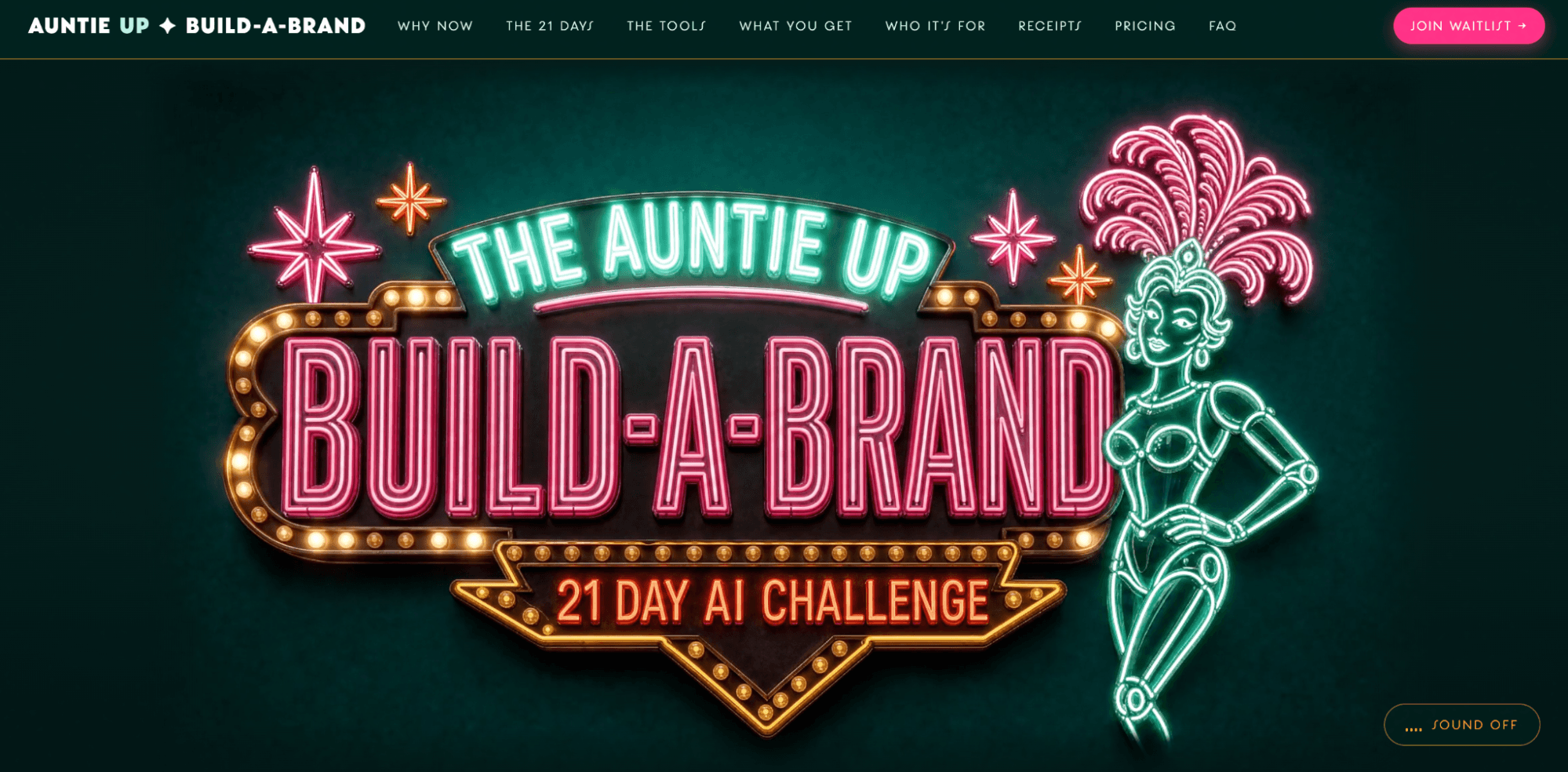
For her sub-brand Auntie Up, deVane architected an entire high-converting sales page centered around a futuristic casino theme. Every single visual element—from top-tier hero banners to granular section illustrations—shares a unified color palette, cinematic lighting scheme, and distinct artistic world. This level of aesthetic harmony was achieved not through a sprawling design agency, but by anchoring every generation to a single, rigorously defined set of reference materials and prompt templates.
Official Strategies: The Frameworks for Mastery
Mastering generative AI requires developing a specific workflow that bridges human creativity with machine execution. Industry experts advocate for two foundational phases before a user ever enters a prompt: cultivating personal taste and deploying a multi-pillar structural framework.
Phase 1: Preparing Before Prompting
The single biggest hurdle for marketers attempting to use AI is the gap between having taste and being able to articulate it. Recognizing exceptional design intuitively is very different from translating those visual cues into descriptive language that an LLM can parse.
- Taste Acceleration: Marketers must practice active visual analysis. When viewing compelling imagery, ask critical questions: Do I like this lighting? Why does this camera angle work? How does this color palette evoke emotion? For those lacking formal design backgrounds, specialized AI skills and custom GPTs can be deployed to break down inspiration images, identifying the exact stylistic mechanics that make them successful.
- Reverse-Engineering Aesthetics: Uploading collections of inspiring imagery to an advanced model like ChatGPT or Claude and asking it to synthesize common denominators provides a repeatable blueprint for brand aesthetics.
- Strategic Reference Management: Less is more. When generating human-centric imagery, uploading one clear face photo and one full-body shot is entirely sufficient. Flooding the system with twenty mixed photos creates algorithmic confusion. For proprietary brand logos, smaller companies must upload clear graphic files and explicitly instruct the model not to alter the iconography. Furthermore, brand colors should always be defined using exact hexadecimal (hex) values rather than vague descriptive terms like "royal blue" or "sunset orange."
Phase 2: The Seven Pillar Prompt Framework
To eliminate generic outputs, deVane developed the Seven Pillar Prompt Framework. This methodology acts as a comprehensive control panel for image generation. Users do not need to check every box for every single image, but the more pillars they define, the more control they exert over the final output. Any pillar left blank is a decision surrendered to the AI’s default, generic programming.
- Medium: Precisely define the visual classification. Is it a hyper-realistic photograph, a 3D clay render, a minimalist vector illustration, or Sharpie line art?
- Subject and Action: Move past static nouns. Instead of "a person," specify "a person looking into a frosted mirror with a contemplative expression." Instead of "a soda can," define "a can of soda dripping with condensation and delicately balanced on its beveled edge."
- Setting and Scene: Displace generic environments. A prompt for "a retro diner" yields predictable jukeboxes and brown leather booths. A prompt for "a retro diner featuring dark wood paneling, flickering neon beer signs, and rain-streaked windows" yields an original atmosphere.
- Composition: Control how the viewer’s eye moves. Specify framing—wide cinematic shot, tight macro close-up, overhead flat lay, or dramatic low angle. For graphic design, dictate whether the layout leans symmetrical, minimalist, or maximalist.
- Lighting: Manipulate emotional tone through light sources. Specify whether the scene is illuminated by harsh midday sun, soft natural light filtering through sheer curtains at daybreak, or a single warm desk lamp casting long shadows.
- Aesthetic and Vibe: Translate stylistic preferences into descriptive language rather than simply copying an artist’s name. Deconstruct why a particular cinematic or artistic style appeals to you—such as symmetrical framing, high color saturation, or nostalgic grain—and feed those structural rules into the prompt.
- Intent: Instruct the model on the psychological objective. What should the viewer feel? Urgency, tranquility, wonder, or trust? Modern LLM-backed image generators process emotional intent and automatically translate it into subtle visual choices like facial micro-expressions and color temperatures.
Future Outlook: Multi-Model Ecosystems and Creative Control
As the generative AI landscape matures, the industry is moving away from isolated, single-platform workflows and toward deeply integrated multi-model ecosystems.
Standalone tools like ChatGPT are exceptionally powerful, but they often present volume limitations, typically returning only a single image per prompt unless extended thinking modes are manually invoked. In professional production environments, this lack of immediate variation can slow down iteration cycles.
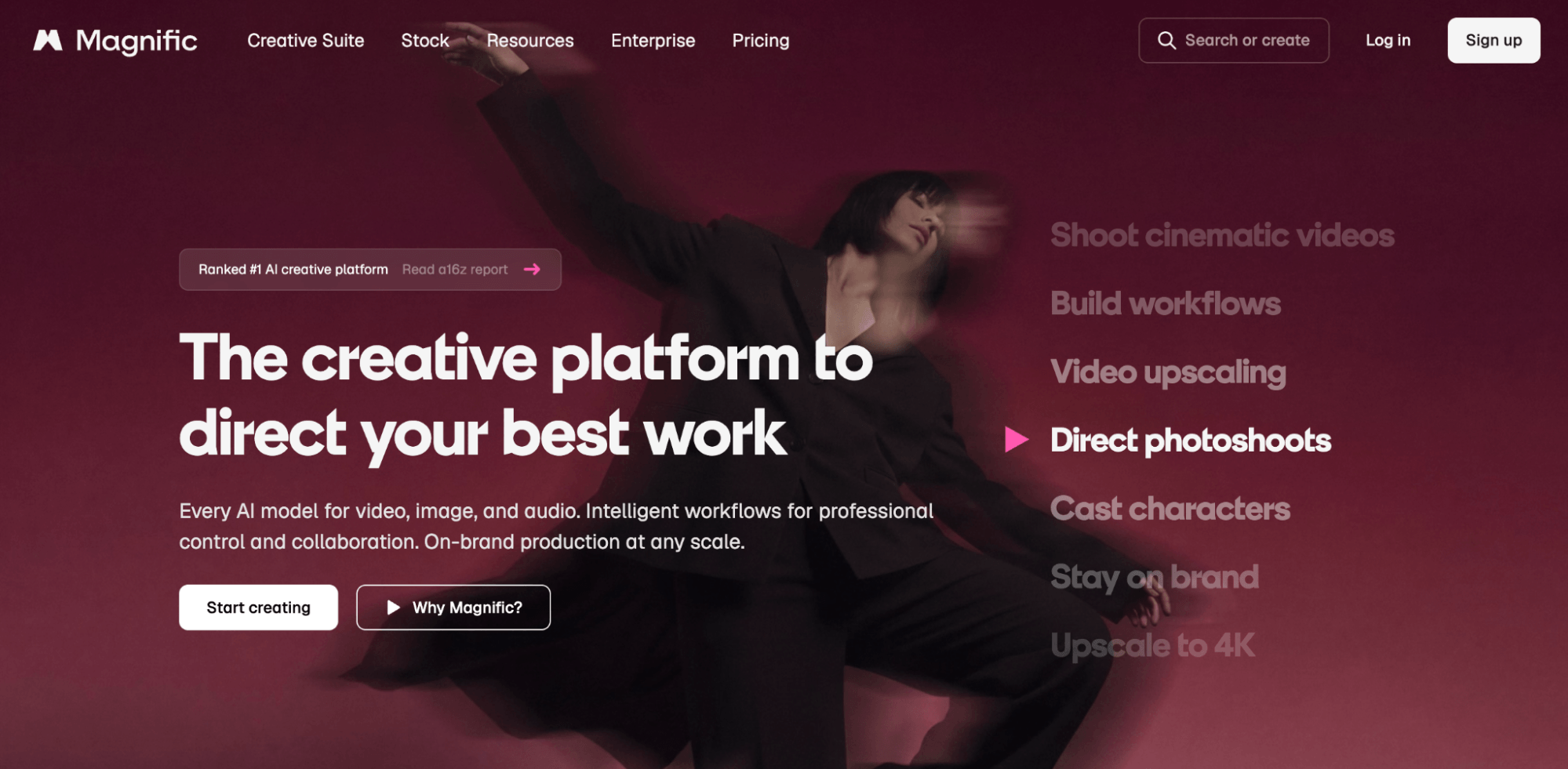
This has driven adoption toward advanced creative platforms like Magnific (formerly Freepik), which allow users to generate up to eight distinct image variations simultaneously from a single prompt. Because generative AI is inherently probabilistic—meaning lighting, text rendering, and spatial alignment will always shift slightly with each run—having multiple variations dramatically increases the probability of capturing a usable, production-ready asset. Furthermore, platforms supporting model comparisons enable marketers to run identical prompts through competing architectures (such as GPT Image and Google’s Imagen) side-by-side to determine which model yields the optimal result for a specific creative task.
The Rise of MCP Connectors and AI Creative Directors
The integration of Model Context Protocol (MCP) connectors—such as seamless integrations between Claude and Magnific—signals the ultimate frontier of digital marketing workflows.
Marketers can now operate entirely within an advanced conversational assistant like Claude, assigning the AI specialized professional roles. By utilizing custom prompts that instruct Claude to think simultaneously like an executive creative director, a director of photography, a lighting expert, and a stylist, the AI writes deeply sophisticated prompts behind the scenes.
Through these integrations, a marketer can converse naturally with Claude to write website code, request specific hero graphics, generate those graphics via Magnific’s multi-model backend, instantly drop them into the design, and even spin up synchronized video assets using models like Seedance or Google Omni—all within a single, unified conversation thread. Furthermore, native design software plugins for Adobe Photoshop and Illustrator mean these AI-generated assets can flow effortlessly back and forth between generative pipelines and traditional editing suites.
Conclusion
The era of resigning oneself to generic "AI slop" is officially coming to a close. The technology has evolved past the point of mechanical excuses; the onus is now entirely on the sophistication of the human operator. By abandoning lazy prompting habits, embracing structured frameworks like the Seven Pillar model, and utilizing advanced multi-model ecosystems, forward-thinking marketers can finally bridge the gap between imagination and execution—turning generative AI from a novelty toy into a powerhouse of original, brand-defining visual media.