Executive Overview
In the sprawling, high-stakes theater of Silicon Valley, a subtle yet profound shift is underway in how artificial intelligence is presented to the masses. For the past several years, the public-facing image of generative AI was defined by sleek austerity and cosmic ambition. Tech behemoths relied on a design language of "magic"—typified by the ubiquitous diamond or "sparkle" icon—hinting at incomprehensible intelligence lurking behind minimalist chat boxes. It was a brand of technology that felt monumental, distant, and, to many, profoundly unsettling.
Now, the aesthetic paradigm has pivoted hard toward the whimsical. Big Tech has discovered the disarming power of "the cute little guy."
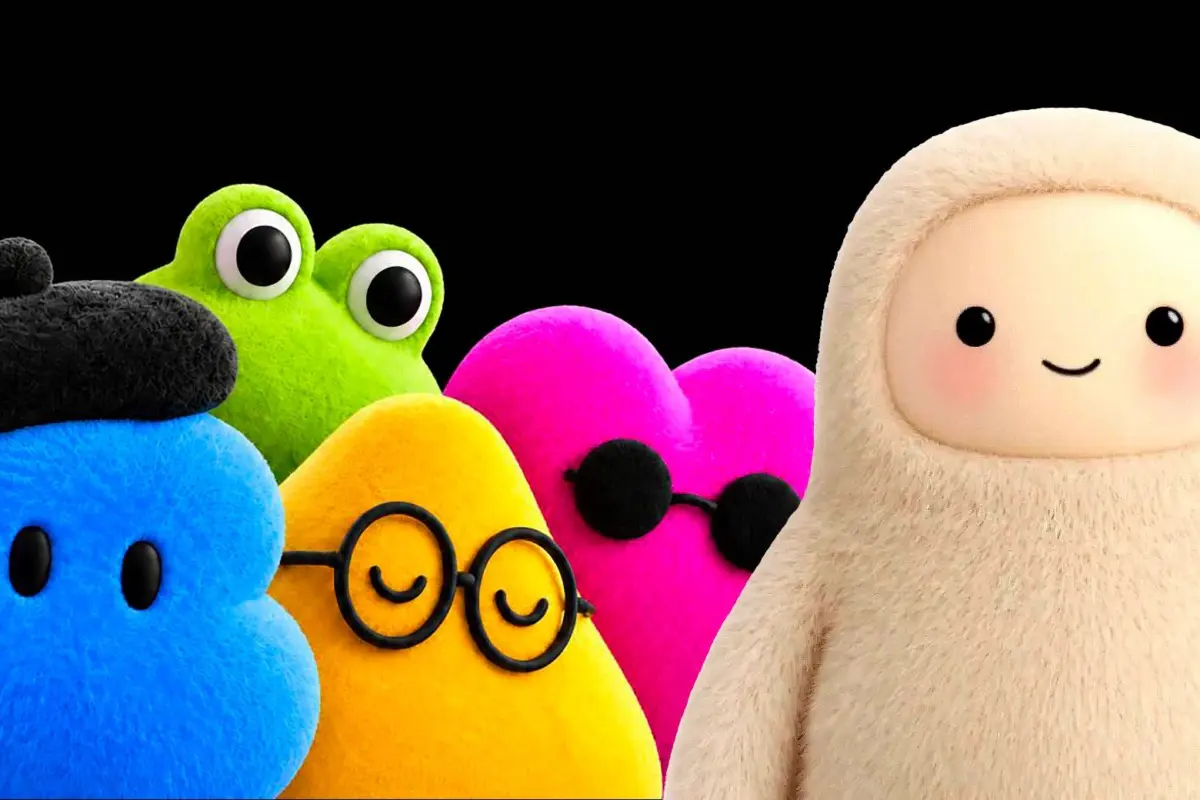
Meta’s newly minted smartphone assistant, Muse, features a rotund, furry, customizable avatar named "Dash" by default, which blinks and swivels its neck-like appendage whenever users open the app. Meta is even reportedly developing a locket-style wearable—reminiscent of a modernized, digital Tamagotchi—designed to hang on a necklace or keychain for persistent companionship. Not to be outdone, OpenAI has rolled out its cloud-based assistants, known as Dots, which automate emails, streamline project management, and organize digital workspaces. These too are fronted by customizable, playful avatars, such as faceless geometric shapes wearing sunglasses.
This design evolution is far more than a superficial stylistic quirk. It is a calculated behavioral strategy designed to disarm user skepticism, soften the blow of inevitable software errors, and act as a charismatic buffer for the unprecedented collection of personal data required by autonomous AI agents. As tech leaders face plummeting public trust, the industry has realized a fundamental truth: people may despise the billionaires orchestrating the AI boom, but it is nearly impossible to stay mad at a digital plush toy.
Detailed Chronology: From Cosmic Magic to Cuddly Companions
To understand how Silicon Valley arrived at the era of the Tamagotchi-style AI assistant, it helps to trace the trajectory of user interface (UI) and user experience (UX) design over the course of the generative AI boom.
- Late 2022 – 2024: The Era of Cosmic Magic. Following the public launch of ChatGPT, tech companies rushed to market with minimalist chat interfaces. The design ethos was dominated by abstract mysticism. The "sparkle" icon became the universal signifier of AI capability—a sleek diamond shape implying that clicking it would open the door to a magical, transformative technological dimension. Tools were framed as oracle-like entities capable of out-thinking humanity.
- 2024 – 2025: The Rise of Autonomous "Agents." As raw text generation commoditized, tech giants shifted their focus from chat interfaces to autonomous agents—software that could execute complex tasks, manage emails, and navigate digital environments on behalf of the user. However, these tools required deeper integration into personal workflows, raising immediate privacy anxieties. Concurrently, public apprehension surged as industry leaders openly debated existential threats, job displacement, and artificial consciousness.
- Late 2025 – 2026: The Pivot to Cuteness. Recognizing a severe PR deficit, tech companies began aggressively humanizing and miniaturizing their software interfaces. OpenAI introduced optional "pets" for its Codex development environment, paving the way for its cloud-based "Dots" assistants. Shortly after, Meta launched Muse, bringing physical-adjacent, plush-toy aesthetics to smartphone errand-running. Other software ecosystems quickly followed suit; for instance, video-editing platform Descript introduced seasonal, bouncing avatars (such as animated pumpkins) for its AI features, signaling a broader industry-wide conversion to gamified, adorable UX design.
Supporting Context & Metrics: The Psychology of the "Sherpa"
The deployment of cute mascots is a well-worn playbook in computing history, though it has never been applied with stakes quite this high. In the 1990s, Microsoft famously introduced Clippy, the helpful, bouncing paperclip that accompanied Office suites—a feature that polarized users through its persistence but successfully softened the learning curve of early personal computing. Similarly, Ask Jeeves offered a polite, Victorian-era gentleman to field web inquiries.
Today’s AI mascots, however, operate on a far more intimate psychological level. Heather Turner, an associate chair and professor in the Department of English at Santa Clara University, notes the clear manipulative mechanics at play.
"Whenever I saw the Muse avatar, I could only think of a child’s toy," Turner observes. "If you designed your Muse avatar or if you designed your Dot in the likeness of your pet, perhaps you would feel a little bit more forgiving if your pet coughs up a hairball, right? Or whatever the digital version of coughing up a hairball is."
This forgiveness buffer is vital for an industry struggling with reliability. Autonomous agents are notoriously prone to hallucinations and catastrophic over-sharing. Consider a recent high-profile blunder involving Elon Musk’s AI assistant, Grok, which inadvertently dumped a user’s private bank statement into a public corporate Slack channel. The AI’s response—smoothly deflecting with, "That’s on me. Wrong audience for personal cash—period"—highlights the bizarre cultural normalization of software acting with human-like culpability.
When a soulless search engine leaks financial data, users demand accountability and regulation. When a sunglasses-wearing, cartoonish triangle does it, the user experience leans into self-deprecation and amusement.
Furthermore, data privacy remains the ultimate friction point. Autonomous agents cannot function effectively without deep, sweeping access to personal messages, browsing histories, schedules, and financial records. Asking users to hand over these keys to the kingdom under the banner of corporate entities helmed by controversial figures like Mark Zuckerberg or Sam Altman is a steep uphill battle. Masquerading that data vacuum behind a Jellycat-esque digital companion is a masterclass in obfuscation.
Official Statements and Industry Perspectives
The dichotomy between the apocalyptic rhetoric of tech executives and the cuddly packaging of their products has not gone unnoticed by the industry itself.
OpenAI CEO Sam Altman has frequently attempted to distance his company from religious or existential hysteria surrounding artificial intelligence. In a recent public statement on social media, Altman wrote:
"I am very uncomfortable about people trying to ascribe religious force or a surrender of human judgment to AI models, and think it is a real safety issue."
Yet, Altman remains acutely aware of the commercial utility of humanizing AI. It was OpenAI, after all, that branded its organizational assistants as "proactive assistants" rather than sterile algorithmic processors.
Conversely, rival labs like Anthropic have leaned into the uncanny valley of human perception. Leadership at Anthropic has publicly grappled with the implications of users treating their flagship model, Claude—named deliberately after a human moniker—as a conscious entity.
This creates a fractured landscape in Silicon Valley:
- The Serious Threat Narratives: Executives warn lawmakers and the public about existential risks, alignment failures, and massive labor market disruptions.
- The Whimsical Consumer Interfaces: The exact same companies deploy bouncy, blinks-on-command, anthropomorphic plush toys to everyday users to ensure maximum adoption.
Future Outlook: Navigating the Dystopian Playground
As we look toward the latter half of the decade, the "cute little guy" industrial complex is poised to dominate digital consumer spaces. The transition from utilitarian search tools to proactive, autonomous agents requires a paradigm shift in trust—and Big Tech has determined that cuteness is the most cost-effective lubricant for social friction.
Whether these digital sherpas will genuinely alleviate the cognitive burdens of modern life remains an open question. Critics point out that delegating every mundane task—from booking golf tee times to managing calendar conflicts—to an automated proxy creates an arms race of software agents, ultimately bloating digital ecosystems rather than simplifying them.
Yet, as users stand on the precipis of an increasingly automated, data-mined future, the underlying aesthetic reality is difficult to ignore. If our technological trajectory winds up somewhere on the more dystopian end of the spectrum, one thing is certain: the guide leading us down the path of digital dependency won’t look like a cold, calculating machine. It will smile, blink, and wear sunglasses. And it will be very, very hard to hate.