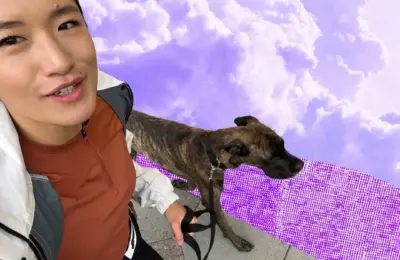
On a Monday afternoon in April 2023, the media landscape shifted dramatically when Fox News announced the departure of its flagship right-wing primetime host, Tucker Carlson. While the abrupt exit sent shockwaves through the conservative political establishment and mainstream media alike, few celebrated the news with quite as much public enthusiasm as Katherine "Kat" Abughazaleh.
Abughazaleh, a 24-year-old senior video producer for the progressive media watchdog group Media Matters for America, spent her workday monitoring the fallout with undisguised glee. For her, the moment was poetic justice. For the past two years, Abughazaleh’s professional life has required her to tune into Fox News’s evening lineup religiously. Her former Twitter bio aptly summarized her daily grind: "I watch Tucker Carlson so you don’t have to."
Yet, Abughazaleh is far more than an anonymous behind-the-scenes researcher. Operating independently on social media platforms like TikTok, YouTube, and Twitter, she has cultivated a rapidly growing following by translating the absurdities of cable news into viral, highly engaging, and biting commentary. Amassing hundreds of thousands of followers, she has leveraged her deep familiarity with right-wing media mechanics into Gen Z social media stardom.
However, this public-facing persona has come at a steep cost. As her online visibility has surged, Abughazaleh has become a primary target for relentless online harassment, gender-based vitriol, and targeted abuse from right-wing trolls. Despite navigating death threats, invasive doxxing attempts, and explicit misogyny, she remains steadfastly committed to her mission: exposing media misinformation, demystifying right-wing propaganda, and proving that holding power accountable can be done with sharp intellect and a heavy dose of irony.
Detailed Chronology: From Dallas Republican to Media Watchdog
A Conservative Upbringing and Ideological Awakening
Abughazaleh’s path to becoming one of progressive media’s most recognizable young voices is marked by an ironic paradox: she grew up immersed in the very ideology she now critiques.
Born into a well-off family in Dallas, Texas, Abughazaleh is a seventh-generation Texan on her mother’s side and the daughter of a Palestinian immigrant father. Her household regularly tuned in to conservative media outlets, and her maternal grandmother—a longtime stalwart of the Texas Federation of Republican Women—worked tirelessly on various Grand Old Party (GOP) campaigns. Abughazaleh’s immersion in conservative culture ran deep; upon her grandmother’s passing, she inherited the mink coat her grandmother wore to President Richard Nixon’s inauguration.
Until her teenage years, Abughazaleh considered herself a staunch conservative. However, a family move to Tucson, Arizona, during her high school years served as a turning point. Confronted with an environment where at least half of her high school peers were low-income or undocumented immigrants, her worldview rapidly expanded. "The bootstrap myth just shattered before my eyes," she recalls.
Entering the Professional Sphere
Carrying this newly formed progressive perspective eastward, Abughazaleh attended George Washington University in Washington, D.C., majoring in international security while intensively studying journalism throughout Donald Trump’s presidency. Graduating in the tumult of 2020, she sought out an organization whose mission aligned with her values.
She found her home at Media Matters for America, a progressive research and information center dedicated to comprehensively monitoring, analyzing, and correcting conservative misinformation in American media. For Abughazaleh, the role was an ideal fit, allowing her to merge her analytical training with a tangible desire to push back against media manipulation.
Supporting Context & Metrics: The Mechanics of Media Monitoring
Inside the Media Matters Operations
Operating primarily from a spacious, largely remote-staffed office overlooking the Anacostia River in Washington’s Navy Yard district, Abughazaleh’s daily work environment contrasts sharply with the frantic energy of her social media feeds.
While some of her colleagues utilize multi-monitor command centers to track cable broadcasts, Abughazaleh executes her tasks with lightning-fast proficiency on a single laptop. Her primary professional duty involves pulling television clips of designated Fox News segments, transcribing them, and disseminating the data to colleagues so the organization can catalog the relentless tide of right-wing narratives.
During a typical evening shift, her screen might feature Carlson launching into culturally inflammatory monologues directed at progressive lawmakers—such as Tennessee state representative Justin Pearson. Rather than being demoralized by the constant stream of grievance politics, Abughazaleh treats it as analytical raw material.
Addressing critics who argue that watchdog groups inadvertently amplify harmful rhetoric by reposting it, Abughazaleh offers a pragmatic defense: "Fox is the most-watched cable news channel in the country. They already had the platform. And just letting them get by scot-free does more damage than it helps."
The Rise of a Gen Z Phenom
While her employment at Media Matters dictates her professional responsibilities, Abughazaleh’s viral social media presence is entirely her own creation. Operating on her own time, she scripts, shoots, and edits her videos—skills she originally honed as a child creating anime music videos (AMVs).
Since launching her TikTok presence in January, her weekly roundups of cable news highlights have amassed nearly 130,000 followers, with multiple videos exceeding one million views. Her content frequently skewers prominent figures on the right, from documenting Donald Trump’s tense, dominating interview dynamics with Tucker Carlson to dissecting Mike Huckabee’s conservative homeschooling curriculum.
Her virality extends to YouTube, where she produces deep-dive video essays exploring alternative right-wing commercial ecosystems, such as the self-described "right-wing Amazon" store, Mammoth Nation, which she diagnoses as a thinly veiled financial grift.
Furthermore, her Twitter footprint—boasting over 182,000 followers—has occasionally intersected with mainstream news. From publicly sharing her harrowing experience of being roofied at a bar to warn other women, to exposing the "cesspool of cringe" on conservative dating apps like The Right Stuff, Abughazaleh has mastered the art of weaponizing digital transparency against bad-faith actors.
Official Statements & The Reality of Online Harassment
The Cost of Digital Prominence
As Abughazaleh’s online profile has expanded, so too has the intensity of the blowback. Because she refuses to conform to misogynistic expectations of how women in political discourse should behave, she has become a lightning rod for explicit, gender-based harassment.
Conservative internet personalities have frequently weaponized her dating profiles and personal images to incite online mobs. In January, a prominent conservative commentator shared a screenshot of her Tinder profile, resulting in a deluge of vile, sexually explicit, and threatening messages. Abughazaleh responded by publicly publishing a random sample of these submissions to highlight the pervasive online harassment women face daily.
The abuse extends far beyond standard political disagreements. Trolls routinely subject her to graphic misogyny, suggesting she belongs in the kitchen "pregnant with two children," or digitally superimposing her likeness into pornographic imagery. The harassment has even taken on bizarrely xenophobic undertones, prompting trolls to demand she "breed white babies"—ignoring her documented Palestinian heritage and prompting her to routinely direct abusers back to her late grandfather’s obituary.
Institutional Security and Resilience
Recognizing the legitimate security threats posed by radicalized internet trolls, Media Matters maintains a vigilant posture regarding employee safety. Publicists actively coordinate with media interviewers to redact granular personal details—such as neighborhood markers or apartment locations—that could aid bad actors in physical tracking.
Meanwhile, everyday internet trolls frequently engage in "snitch-tagging," emailing screenshots of Abughazaleh’s public, non-work social media activity (such as smoking a cigarette) to Media Matters corporate handles in failed attempts to get her fired. Far from cowing her, these transparent attempts at sabotage serve as validation.
"I love it," she remarks of the snitch-tagging attempts. "Thanks for showing them what a great job I’m doing!"
Rather than shrinking from the spotlight, Abughazaleh leans deliberately into her femininity—applying bold makeup and carefully styling her hair before recording—to further provoke her detractors. "They don’t like a woman telling them that everything they believe is bullshit," she observes.
Future Outlook: Life After Carlson
The abrupt departure of Tucker Carlson in April 2023 marked the end of an era for cable news, but Abughazaleh views the event through a structural, long-term lens. Drawing parallels to the 2017 ouster of former Fox News powerhouse Bill O’Reilly, she maintains that the true source of institutional toxicity lies within the network’s primetime timeslot itself, rather than any individual anchor.
"Look at Bill O’Reilly," she notes. "No one knows what he’s up to now, and he was even more powerful than Tucker."
While Fox News navigates its transitional phase—rotating temporary hosts through the 8 p.m. hour and alienating younger demographics through persistent generational antagonism—Abughazaleh’s work continues unabated. For her, the ultimate goal is not endless internet notoriety, but tangible cultural impact. She frequently highlights messages from viewers who report that her videos successfully helped them pull their parents away from the radicalizing influence of Tucker Carlson Tonight and toward more moderate programming.
In an era defined by political polarization and digital cynicism, Kat Abughazaleh represents a new archetype of media watchdog: digitally native, unapologetically feminine, and armed with the sharp tools of internet culture. Whether she is analyzing right-wing propaganda, skewering conservative grifts, or laughing off misogynistic trolls, she remains energized by the fight.
"It feels like I’m doing something—it’s so easy to feel powerless," she reflects. "Being angry and passionate and wanting to push forward because you want to make things better for other people makes it worth it."