Executive Overview
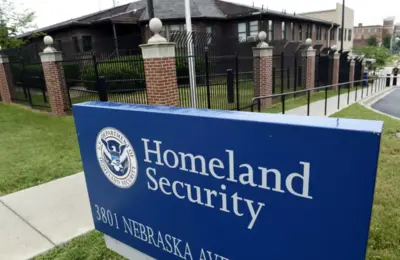
In the modern landscape of digital governance, few issues have highlighted the friction between geopolitical anxiety and economic pragmatism quite like the ongoing saga surrounding TikTok. For years, federal legislators, intelligence agencies, and state executives have sounded the alarm over the popular short-form video platform. Framed as an espionage vector for the Chinese government via its parent company, ByteDance, the application has been subjected to unprecedented restrictions across the United States. To date, more than 30 U.S. states have enacted sweeping bans prohibiting the download and use of TikTok on state-owned devices, government-issued phones, and official institutional networks.
Yet, a glaring, highly profitable contradiction undercuts this unified political front. While governors across the political spectrum sign executive orders banning the app to safeguard state infrastructure, their own state-funded tourism boards continue to post vibrant travel content, cultural showcases, and promotional videos directly onto TikTok.
From the sun-drenched beaches managed by Florida’s regional marketing arms to the sprawling roadside attractions promoted by Texas, official government-backed entities routinely bypass their own states’ security rhetoric. This divergence exposes a striking paradox: TikTok is simultaneously treated as a critical national security threat and an indispensable marketing engine required to attract travelers and tourism dollars. As state governments grapple with the realities of reaching younger demographics, the widespread reliance on TikTok by public tourism boards reveals that economic imperatives and marketing realities often outweigh political warnings.
Detailed Chronology: From Security Bans to Promotional Feeds
The path toward widespread state-level restrictions on TikTok did not happen overnight. It represents the culmination of escalating geopolitical tensions, bipartisan legislative efforts, and a shifting federal landscape regarding data privacy and foreign adversaries.
2020–2022: The Initial Crackdown and State-Level Bans
The scrutiny surrounding TikTok intensified during the Trump administration and carried over with heightened institutional urgency into the Biden administration. Concerns centered around the potential access that Chinese authorities could demand from ByteDance under national intelligence laws.
By late 2022, state governments began taking matters into their own hands. Citing grave risks to sensitive government data and infrastructure, governors nationwide enacted emergency directives.
- Texas: Governor Greg Abbott directed state agencies to ban TikTok on all state-issued devices, describing the platform as one that "offers this trove of potentially sensitive information to the Chinese government."
- Florida: Governor Ron DeSantis spearheaded aggressive cybersecurity measures that effectively barred TikTok and several other foreign-linked applications from state networks and government-owned hardware.
- Montana: Moving even further, Montana attempted a total statewide ban of the app for all residents—a measure later challenged and stalled in the courts, though its initial ban on government devices remained firmly in place.
By the end of 2022, over 30 states had successfully implemented bans targeting TikTok on government-issued technology. State employees could no longer scroll the app on state laptops or government-funded phones.
April 2024: The Federal Ultimatum
The federal government escalated the pressure in April 2024, when President Joe Biden signed a bipartisan legislative package containing a provision specifically targeting ByteDance. The law mandated that the Chinese technology company divest its U.S. assets within a strict timeframe—originally set for early 2025—or face a nationwide ban across app stores and web hosting services in the United States.
The legislative deadline came and went. Despite the looming threat of a federal ban, ByteDance did not sell TikTok, and ongoing legal battles wound their way through federal courts. The platform remained fully operational, continuing to serve millions of American consumers daily.
Present Day: The Tourism Board Conundrum
Even as state legislatures and governors maintain that TikTok poses an existential threat to domestic cybersecurity, public-sector marketing divisions have quietly—and sometimes openly—continued their operations on the platform. Accounts such as @VisitTexas (via associated travel channels) and regional Florida tourism boards like @VisitCentralFL regularly publish high-engagement videos.
These entities operate under the purview of state government oversight yet function as commercial enterprises designed to drive revenue. For these boards, abandoning TikTok would mean walking away from the primary digital town square where younger travelers plan their vacations. The result is a fractured digital policy: banned in the governor’s office, embraced down the hall in the tourism marketing department.
Supporting Context & Metrics: The Scale of the Paradox
To understand why state tourism boards are willing to look past the security warnings issued by their own governors, one must examine the sheer scale and economic dominance of TikTok in the modern media ecosystem.
Growth and Demographic Dominance
TikTok’s meteoric rise shows no signs of slowing, even in the face of intense regulatory headwinds. Key metrics illustrate why marketers find the platform impossible to ignore:
- Global Reach: In 2024 alone, the platform added approximately 100 million new users, pushing its total active global user base to approximately 1.6 billion.
- U.S. Market Penetration: Within the United States, TikTok boasts an audience of over 135 million active users.
- The Gen Z Factor: For younger demographics—specifically Generation Z and Millennials—TikTok functions less like a traditional social media network and more like a primary search engine, discovery tool, and cultural arbiter. Studies consistently show that a significant majority of younger travelers turn to TikTok rather than traditional search engines or travel agencies for vacation inspiration.
The Economics of State Tourism
Tourism is a multi-billion-dollar economic engine for states like Texas, Florida, California, and Montana. It supports hundreds of thousands of hospitality jobs, generates critical sales tax revenue, and fuels local small businesses.
State tourism boards operate on taxpayer-funded budgets with a clear mandate: maximize visitor volume and economic impact. When a platform commands the attention of 135 million Americans—disproportionately influencing travel decisions—marketing executives face immense pressure to deliver return on investment (ROI). Utilizing TikTok is viewed not as a political choice, but as a fiduciary necessity. To ignore TikTok would be to voluntarily cede millions of potential tourists to competing states or international destinations that actively exploit the platform’s algorithmic reach.
Official Statements and Political Rhetoric
The dissonance between state-level bans and tourism marketing has not gone entirely unnoticed, leading to moments of awkward public justification and political acrobatics.
When pressed on why agencies ostensibly bound by executive security directives maintain active presences on restricted platforms, representatives for state tourism organizations frequently point to operational distinctions. Official justifications often rely on technical nuances:
- "Public-Facing vs. Internal Networks": Proponents of the strategy argue that tourism accounts are managed through personal devices, third-party marketing agencies, or isolated networks that do not interface with classified state infrastructure or sensitive government databases.
- "Reaching the Taxpayer": Public relations officials frequently argue that state agencies have a responsibility to meet citizens where they are. If millions of in-state and out-of-state residents consume media on TikTok, government-funded informational and promotional campaigns must utilize that channel to effectively communicate economic opportunities.
Conversely, national security hawks and privacy advocates view these justifications with intense skepticism. Critics argue that the government cannot logically claim an application is dangerous enough to warrant outright bans on state property while simultaneously validating its safety and utility through promotional spending.
Federal lawmakers who championed the divest-or-ban legislation have occasionally highlighted local government inconsistencies, pointing out that public trust is eroded when state leadership speaks out of both sides of its mouth—demanding strict compliance from civil servants while exploiting the very same digital pipeline for promotional gain.
Future Outlook: Where Do State Governments Go From Here?
As the legal and political battles surrounding TikTok continue to evolve, state governments face a reckoning regarding how they reconcile internal cybersecurity policies with external marketing realities.
1. The Legal and Regulatory Horizon
With federal court challenges and potential legislative updates constantly shifting the ground beneath ByteDance’s operations, state policymakers will need to establish clearer, more consistent frameworks. If a federal ban eventually takes effect, the choice will be made for them. However, until a definitive nationwide prohibition is enforced, state tourism boards will likely continue operating in a legal gray area.
2. Diversification vs. Platform Dependence
In response to political friction and regulatory uncertainty, some state marketing agencies are quietly exploring contingency plans. Diversifying social media spending across alternative short-form video formats—such as YouTube Shorts and Instagram Reels—allows tourism boards to capture younger audiences without relying exclusively on a platform embroiled in geopolitical controversy. Nevertheless, marketers note that algorithmic replication is rarely seamless, and TikTok’s unique discovery engine remains uniquely potent.
3. A Redefining of Digital Sovereignty
Ultimately, the TikTok tourism paradox serves as a case study in the limits of state-level digital protectionism. In an interconnected global economy, state lines and institutional firewalls cannot easily insulate public agencies from the gravitational pull of dominant consumer technologies.
Until policymakers can resolve the tension between national security mandates and economic growth, state tourism boards will likely continue doing what they have always done: chasing the audience, wherever the algorithm takes them.