Executive Overview
Twenty-five years after its initial debut, Square Enix’s Final Fantasy X continues to cast a long, luminous shadow over the landscape of Japanese Role-Playing Games (JRPGs). Released in July 2001 for the Sony PlayStation 2, the title was a watershed moment for the industry. It marked a critical technological leap, bridging the gap between pre-rendered backgrounds and fully realized, real-time 3D environments while introducing full voice acting to the historic franchise. Yet, for all its visual innovations, character progression grids, and tactical turn-based combat systems, the most enduring legacy of Final Fantasy X lies in its aural landscape.
Composed by the legendary Nobuo Uematsu, alongside collaborative contributions from Masashi Hamauzu and Junya Nakano, the game’s soundtrack remains an immaculate monument to video game audio design. At its heart sits "Suteki Da Ne" ("Isn’t It Wonderful?"), a vocal centerpiece that defined a generation of gaming emotional storytelling. As the industry reflects on a quarter-century of Spira’s pilgrimage, musicologists and developers alike recognize that the sonic architecture of Final Fantasy X fundamentally changed how interactive entertainment achieves emotional resonance.
Detailed Chronology: The Evolution of Audio in Spira
To understand the cultural and artistic impact of the Final Fantasy X soundtrack, one must trace the technological and creative trajectory that led to its creation at the turn of the millennium.
[1997] Final Fantasy VII establishes pop-adjacent vocal tracks ("Eyes on Me")
  │
[1999] Pre-production begins for PS2 hardware architecture
  │
[July 2001] Final Fantasy X launches in Japan; introduces fully integrated orchestral and vocal scoring
  │
[2013-2016] HD Remaster releases, bringing the timeless score to modern platforms
  │
[2026] 25th Anniversary prompts a global reassessment of the game's musical legacy
The Technological Leap of the PlayStation 2
When Square (now Square Enix) transitioned development from the PlayStation to the PlayStation 2, creators were handed unprecedented computational power. For Nobuo Uematsu, this meant escaping the MIDI constraints of the 32-bit era. The increased memory and processing capacity of the PS2 allowed for cleaner audio samples, richer orchestral arrangements, and, crucially, seamless blending between in-game exploration, dynamic combat themes, and cinematic narrative sequences.
Crafting the Sound of a Dying World
Uematsu approached the world of Spira not as a standard fantasy realm, but as a civilization living under the existential dread of "Sin"—a cyclical, apocalyptic entity. This required a deliberate departure from the medieval fanfares of early Final Fantasy titles. Instead, the composition team integrated ambient acoustic textures, Okinawan folk influences, industrial rock elements, and classical arrangements.
This stylistic diversity is immediately apparent in the progression of the game’s iconic tracks:
- "Otherworld": Blasting through the speakers during the opening Blitzball sequence in Zanarkand, this hard-rock track (featuring vocals by Bill Muir) signaled that Final Fantasy X was breaking completely with convention.
- "Besaid": A serene, plucked-string and wind-instrumental piece that evokes the tranquil, isolated beauty of Yuna’s home village, contrasting sharply with the heavy themes of death and sacrifice.
- "To Zanarkand": The melancholic, piano-driven overarching theme that serves as both the literal and emotional anchor of the entire narrative arc.
The Pivot Point: The Macalania Woods Sequence
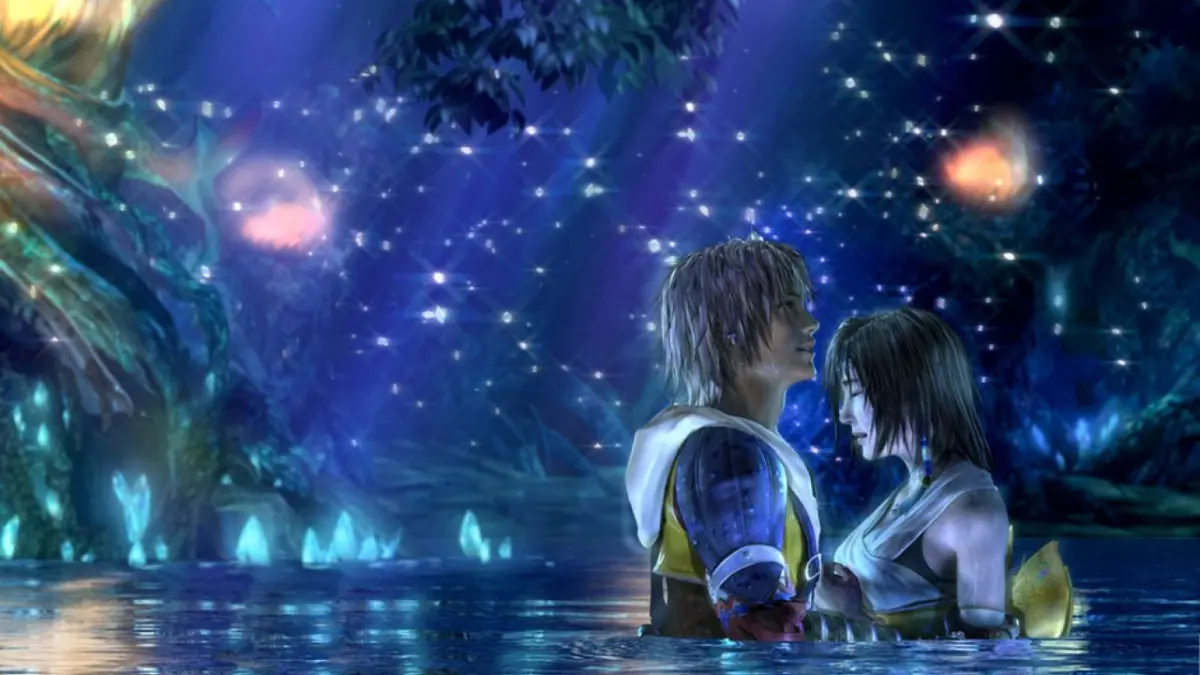
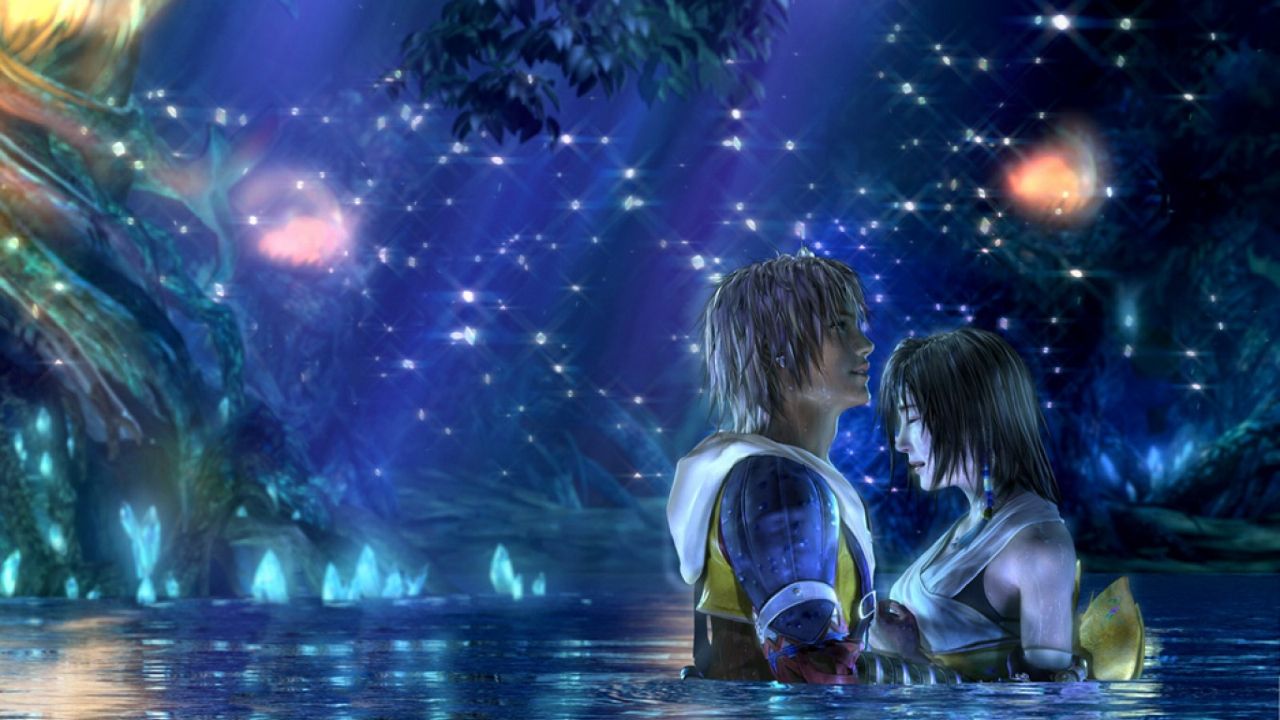
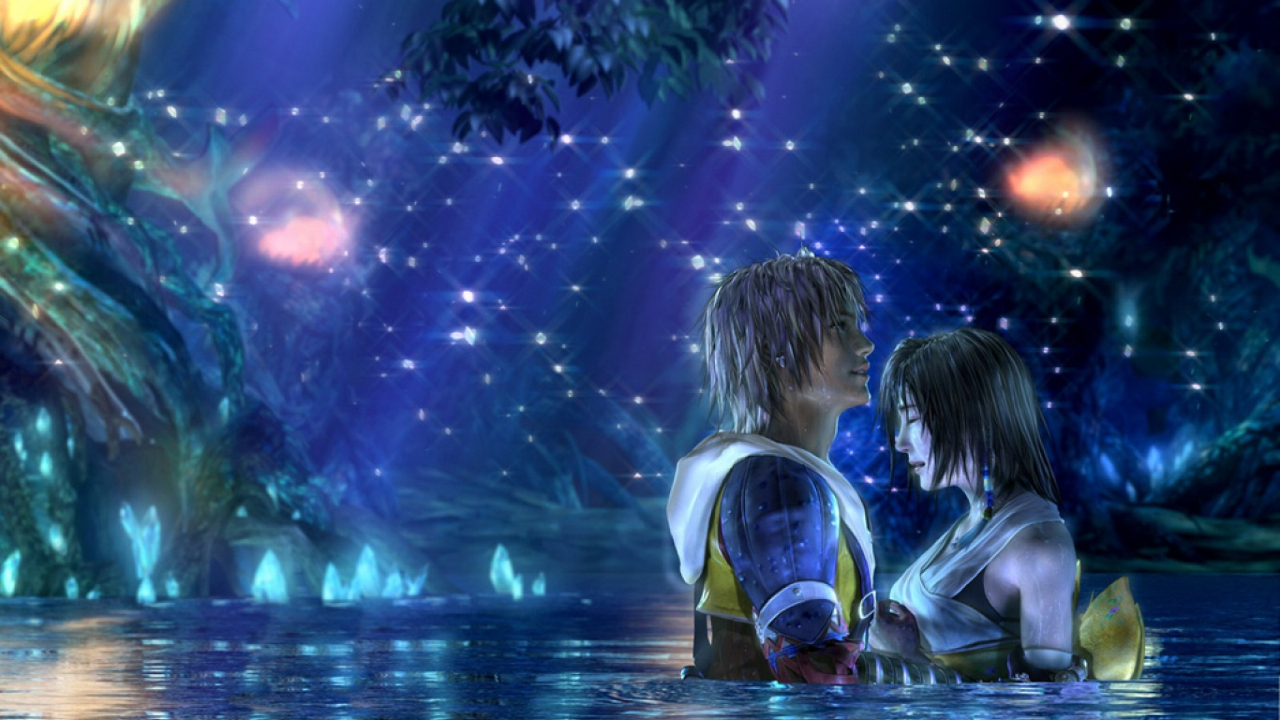
The narrative and emotional peak of the game’s score coalesces in the glistening springs of Macalania Woods. Protagonist Tidus and summoner Yuna share a moment of profound vulnerability, sinking beneath the luminous blue waters to share their first romantic embrace.
This scene is elevated entirely by "Suteki Da Ne," featuring delicate Japanese vocals by J-pop/folk artist RIKKI and a sweeping orchestral backing. Unlike previous entries—such as Final Fantasy VI’s operatic experiments or Final Fantasy VIII’s English-language pop ballad "Eyes on Me"—"Suteki Da Ne" was woven inextricably into the cultural fabric of the game’s universe, functioning as both a romantic leitmotif and a cultural touchstone within Spira itself.
Supporting Context & Metrics: The Anatomy of an Industry-Defining Score
The enduring resonance of Final Fantasy X is supported by critical reception, commercial milestones, and its lasting influence on subsequent video game composition frameworks.
Commercial and Critical Impact
Upon release, Final Fantasy X shattered sales records, shifting over 2 million copies in Japan within weeks and eventually surpassing 8.5 million copies worldwide. A significant driver of this commercial triumph was the cultural saturation of its marketing campaigns, which prominently featured RIKKI performing "Suteki Da Ne."
| Metric / Milestone | Detail |
|---|---|
| Release Date | July 19, 2001 (Japan); December 18, 2001 (North America) |
| Primary Composers | Nobuo Uematsu, Masashi Hamauzu, Junya Nakano |
| Vocal Artist ("Suteki Da Ne") | RIKKI (Kumiko Ōsugi) |
| Global Sales (Original & Remaster) | Estimated 8.5+ million units worldwide |
| Legacy Status | Routinely ranked in global polls among the top three video game soundtracks of all time |
Comparative Analysis: Vocal Tracks Across the Franchise
The evolution of vocal integration within the Final Fantasy series highlights how Final Fantasy X achieved its unique balance between commercial appeal and narrative integration:
- Final Fantasy VI (1994): Featured the "Aria di Mezzo Carattere," an ambitious attempt at simulated operatic vocals using synthesis constraints. While groundbreaking, it lacked linguistic clarity.
- Final Fantasy VIII (1999): Introduced "Eyes on Me," performed by Faye Wong. A brilliant pop ballad, it functioned primarily as an external credits theme rather than an active narrative device within the world’s lore.
- Final Fantasy X (2001): "Suteki Da Ne" bridged the gap. Sung in Japanese across all regional versions, it honored the cultural identity of Spira while acting as an active diegetic and emotional bridge during the game’s most pivotal romantic sequence.
- Final Fantasy XIV (2010–Present): Modern entries like Masayoshi Sokei’s "Flow" draw a direct lineage from Uematsu’s work on Final Fantasy X, using recurring lyrical motifs to anchor players emotionally through decade-spanning expansions.
Official Statements and Industry Perspectives
The creative team behind Final Fantasy X has frequently spoken about the delicate balance required to score a narrative centered on grief, religious corruption, and inevitable tragedy.
Nobuo Uematsu has noted in retrospective interviews that the collaboration with regional folk musicians was essential to giving Spira an identity distinct from traditional medieval European fantasy tropes. By incorporating Okinawan scales and instrumentation, the sound team grounded a fantastical world in a recognizable, earthly human culture, making the impending tragedy of Yuna’s pilgrimage feel painfully intimate.
Critics and industry veterans continue to echo these sentiments. Writing on the game’s silver anniversary, gaming audio critics have frequently highlighted how Final Fantasy X sidestepped the trap of over-orchestration. Instead, it relied on sparse, haunting piano arrangements and vocal purity to communicate loneliness—a design philosophy that influenced modern RPG scoring across the entire medium.
Future Outlook: The Next 25 Years of Spira’s Sonic Legacy
As Final Fantasy X moves further into gaming history, its legacy remains active rather than static. The availability of the HD Remaster across modern platforms—including PC, PlayStation, Xbox, and Nintendo Switch—ensures that new generations of players continue to experience the descent into the Macalania Woods springs.

Furthermore, the ubiquity of symphonic video game concerts, such as Distant Worlds: Music from Final Fantasy, guarantees that pieces like "To Zanarkand" and "Suteki Da Ne" will continue to be performed live by major philharmonic orchestras worldwide. While future installments of the franchise will undoubtedly continue to experiment with cutting-edge audio technology, spatial soundscapes, and dynamic vocal integrations, the acoustic blueprint laid down by Uematsu, Hamauzu, and Nakano in 2001 stands as an unsurpassable standard of emotional composition.
Two and a half decades later, the question posed by RIKKI’s gentle vocals—Suteki da ne? ("Isn’t it wonderful?")—is answered not just by the enduring beauty of Tidus and Yuna’s tragic romance, but by the timelessness of a soundtrack that continues to move players to tears.